Solar Energy Courses in India – Build Your Career in Solar Technology
Learn solar photovoltaic system design, megawatt-scale EPC project engineering, inverter synchronisation, balance-of-system sizing, and battery energy storage. Gain industry-ready competencies through hands-on hardware laboratory training and university-affiliated qualifications.
🔒 Batch 2026–27 Admissions Open • Merit scholarships available for eligible engineering graduates & diploma holders.
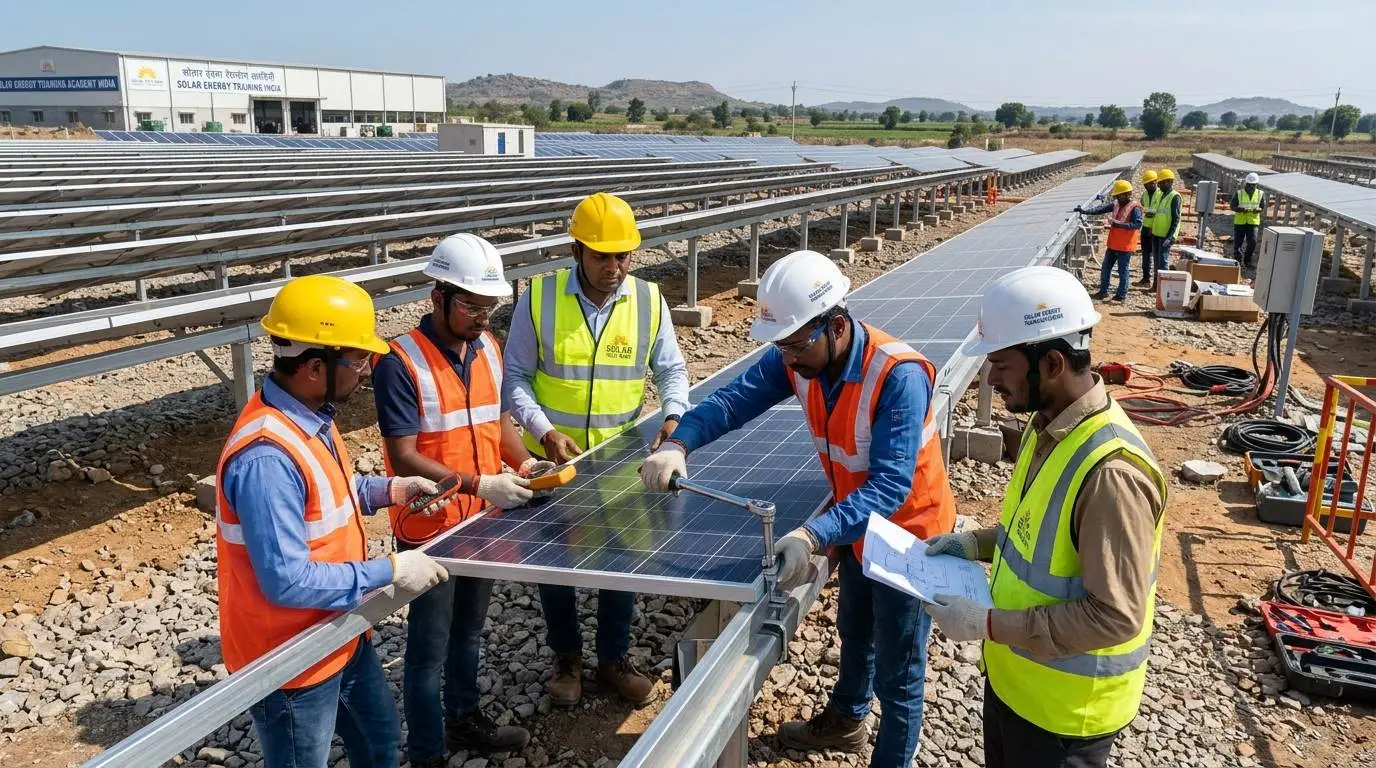
Explore Solar Energy Courses in India at IISE
The clean energy transition is transforming India's power landscape. At the Indian Institute of Solar Energy (IISE), we bridge the gap between classroom theory and real-world solar project execution through structured diplomas, certifications, and vocational degrees.
Engineering & Simulation
Solar PV engineering demands rigorous technical design. Our courses cover system sizing, irradiance assessment, DC/AC cable sizing, single line diagrams (SLDs), and industry-standard simulation software including PVsyst and AutoCAD.
Hardware Rig Laboratory
Textbooks cannot replicate the complexity of real job sites. Students practice on working hardware rigs: string inverters, off-grid charge controllers, PV modules, crimping tools, digital multimeters, insulation testers, and earth resistance meters.
Commercial EPC & Regulations
Master the business of solar energy: Detailed Project Report (DPR) preparation, vendor procurement, state DISCOM net-metering approvals, CEIG electrical safety clearances, and project payback modeling for commercial clients.
Why Technical Solar Education Matters for Your Career
While general degree courses provide broad scientific fundamentals, employers in the renewable energy sector require specialized candidates who can read single-line diagrams, execute shading analysis, calibrate MPPT strings, and manage on-site balance of systems (BoS) installations. The Indian Institute of Solar Energy (IISE) delivers curricula developed in consultation with active EPC leads, consulting engineers, and university faculty — providing every graduate with practical competence that translates directly into employment opportunities and business ventures.
Why Choose Solar Energy as a Career in India?
India's renewable energy sector is experiencing unprecedented expansion backed by progressive national policy, substantial capital investment, and massive decentralized rooftop initiatives. Here is why the timing is ideal for technical professionals.
Ministry of New & Renewable Energy (MNRE) target for non-fossil installed capacity, creating exponential job growth.
Government outlay of ₹75,000+ Cr targeting 1 crore residential rooftop installations across Indian cities and towns.
Council on Energy, Environment & Water (CEEW) estimates over 1 million skilled workers required in clean tech by 2030.
Turnkey commercial and residential rooftop EPC contracting provides lucrative avenues for independent entrepreneurs.
🏢 Commercial, Industrial & Utility Solar
- Utility-Scale Solar Parks: Hundreds of megawatts requiring specialized civil, electrical, and transmission substation engineers.
- Commercial & Industrial (C&I) Rooftops: Factories and corporate parks installing captive solar plants to reduce power tariffs.
- Open Access & Group Captive: Multi-megawatt plants selling green energy directly through state transmission utilities.
- Battery Energy Storage (BESS): Grid-scale battery storage hybridization for round-the-clock (RTC) green power supply.
🏡 Rooftop Solar & Clean-Tech Entrepreneurship
- Residential PM Surya Ghar: Unprecedented demand for local certified installers, DISCOM liaison leads, and EPC contractors.
- Agricultural Solar (PM-KUSUM): Solar water pumping and decentralized rural feeders transforming agricultural power.
- Microgrid & Off-Grid Systems: Energy storage and solar power systems for remote hospitality, healthcare, and telecom infrastructure.
- Operation & Maintenance (O&M): Long-term annuity contracts for module cleaning, inverter thermography, and performance ratio (PR) monitoring.
Solar Energy Courses Offered by IISE
Choose from industry-certified post-graduate diplomas, vocational degrees, professional engineering certificates, and intensive hardware workshops designed to advance your clean energy career.
PG Diploma in Solar Technology (PGDST)
A premier 1-year postgraduate curriculum designed for engineers aiming for senior solar design, megawatt-scale EPC project execution, grid integration, and clean-tech technical consultancy roles.
Advanced Diploma in Solar Technology
Comprehensive 1-year diploma training graduates, polytechnic diploma holders, and ITI technicians in solar PV system engineering, on-site commissioning, electrical safety, and commercial installation.
Solar Engineer Certificate Course
A rigorous 6-month technical training program focused on solar PV system sizing, balance of systems (BoS) integration, physical installation, and practical on-site electrical troubleshooting.
Solar Business Entrepreneur Program
Tailored for electrical contractors, business owners, and graduates seeking to establish, run, and scale profitable rooftop solar EPC, distribution, or consulting businesses across India.
B.Voc in Solar Technology
A 3-year undergraduate vocational degree awarded through university partner framework with flexible exit points (Diploma after Year 1, Advanced Diploma after Year 2, Full B.Voc Degree after Year 3).
D.Voc in Solar Technology
A 3-year vocational diploma pathway enabling 10th-pass students to master practical electrical skills, solar panel wiring, installation maintenance, and field execution directly after secondary school.
Solar Practical Training & Workshops
Intensive on-campus laboratory drills focusing exclusively on physical mounting, inverter synchronization, DC/AC terminations, earth-resistance testing, and live power plant walkthroughs.
Solar Train the Trainer Program
Specialized Master Trainer certification equipping university professors, polytechnic lecturers, and corporate technical trainers with pedagogical methods and experimental demonstration skills.
Compare Solar Courses by Duration, Eligibility and Fees
Compare our solar energy training programs across technical duration, academic eligibility, practical lab commitments, and tuition fees to identify your optimal pathway.
| Course Program | Qualification Level | Duration | Minimum Eligibility | Learning Mode | Practical Lab Hours | Software Tools | Verified Tuition Fee | Action |
|---|---|---|---|---|---|---|---|---|
| PG Diploma in Solar Technology | Postgraduate Diploma | 1 Year (1200 Hrs) | B.E. / B.Tech / Science PG | Hybrid (Online + 5-Day PCP) | 80+ Rig & Site Hours | PVsyst 7.4, AutoCAD, Helioscope | ₹1,24,999 ₹79,999 with Merit Scholarship | Details |
| Advanced Diploma in Solar Technology | Professional Diploma | 1 Year (510 Hrs) | Graduation / 3-Yr Diploma / ITI | Online + 3-Day Practical | 40+ Hands-on Hours | PVsyst, AutoCAD SLD | ₹59,999 ₹39,999 with Scholarship | Details |
| Solar Engineer Certificate Course | Professional Certificate | 6 Months (92 Sess) | 10+2 / ITI / Diploma / Degree | Hybrid (Live Online + Practical) | 30+ Hardware Hours | PVsyst, System Sizing | ₹29,999 All-Inclusive Fee | Details |
| Solar Business Entrepreneur Program | Executive Certificate | 6 Months (64 Sess) | 10th / 12th / Any Graduate | Online + On-site Guidance | DPR & Net-Metering Field Drills | Quotation & Payback Models | ₹29,999 Commercial Kit Included | Details |
| B.Voc in Solar Technology | Bachelor Degree (UGC) | 3 Years (180 Credits) | 10+2 (Any Stream, Science Pref) | Full-time / Blended Vocational | Embedded Apprenticeships | Engineering CAD & MATLAB | ₹41,999 / yr Merit Scholarships | Details |
| D.Voc in Solar Technology | Diploma of Vocation | 3 Years (90 Credits) | 10th Standard (SSC) Pass | Vocational Practical + Classes | Extensive Workshop Practice | Basic CAD, Wiring Schematics | ₹39,999 / yr With 35% Scholarship | Details |
| Solar Practical Training & Workshop | Hardware Certification | 3–5 Days / 6 Mos | Open to All Aspirants | 100% In-Person Hardware Labs | 100% Practical Field Drills | Multimeters, Clamp, Megger | ₹24,999 Tool Usage Included | Details |
| Solar Train the Trainer Program | Master Trainer Cert | 6 Months (51 Mods) | Faculty / Instructors / PG | Blended Pedagogical Masterclass | Lab Rig Demonstration Setup | Simulation Teaching Tools | On Enquiry Institutional Rates | Details |
Not Sure Which Solar Course Is Right for You?
Speak directly with an IISE senior admission counsellor for free curriculum guidance and eligibility evaluation.
Which Solar Course is Right for You?
Match your prior academic qualifications and career aspirations with the most appropriate IISE training program.
Engineering Graduates
Electrical, Mechanical, Civil, and Electronics engineers seeking high-paying EPC design, simulation, and utility-scale plant commissioning roles.
Diploma & ITI Holders
Technicians and polytechnic diploma holders looking to move into supervisory site installation, solar inspection, and O&M engineering.
Working Professionals
Engineers currently working in power, manufacturing, telecom, or civil construction transitioning into clean energy without quitting their jobs.
Entrepreneurs & Contractors
Electrical contractors, traders, and entrepreneurs aiming to launch commercial and residential rooftop solar EPC businesses under PM Surya Ghar.
12th Pass Students
Students completing 10+2 looking for a formal university degree program combined with practical apprenticeships rather than purely theoretical courses.
10th Pass Students
Young aspirants seeking an early technical start in clean energy with structured vocational education, electrical laboratory practice, and certification.
What Will You Learn in Solar Energy Courses?
Our engineering curriculum delivers comprehensive mastery across photovoltaic physics, balance of systems (BoS) design, simulation software, electrical grid compliance, and commercial project commissioning.
PV Physics & Solar Resource
Solar radiation geometry, DNI, DHI, GHI, semiconductor physics, crystalline vs thin-film cell properties, temperature coefficients, and IV-PV curve characteristics.
System Sizing & BoS Design
Load profiling, DC:AC overloading ratios, string sizing, MPPT voltage window matching, DC fuse selection, surge protection devices (SPD), and voltage drop calculations.
PVsyst & AutoCAD Software
PVsyst 7.4 yield simulations, 3D shading scene construction, horizon profiling, loss diagrams, Single Line Diagrams (SLD) in AutoCAD, and Helioscope array layouts.
Inverters & Grid Interconnection
Central vs string inverter architectures, microinverters, Total Harmonic Distortion (THD), anti-islanding protection, transformer sizing, and grid code compliance.
Battery Energy Storage (BESS)
Lithium Iron Phosphate (LFP) chemistries, Battery Management Systems (BMS), C-rates, depth of discharge (DoD), hybrid inverters, and commercial microgrid integration.
Structures & Civil Mounting
Hot-dip galvanized (HDG) & aluminum structures, wind load analysis according to IS 875 Part 3, ballast vs penetrated roof anchors, and waterproofing membranes.
Turnkey EPC & Net-Metering
Site survey checklists, Bill of Materials (BOM), Detailed Project Reports (DPR), tendering, PM Surya Ghar subsidy modeling, and state DISCOM net-metering approvals.
Testing, Commissioning & O&M
Cold and hot commissioning protocols, insulation resistance (Megger) diagnostics, thermal imaging for hotspot detection, IV-curve tracing, and SCADA monitoring.
Learn Solar Technology Through Practical Hands-on Training
True engineering capability is built through direct physical interaction with live solar equipment. At IISE, trainees spend substantial laboratory hours executing real wiring, testing, and commissioning procedures.
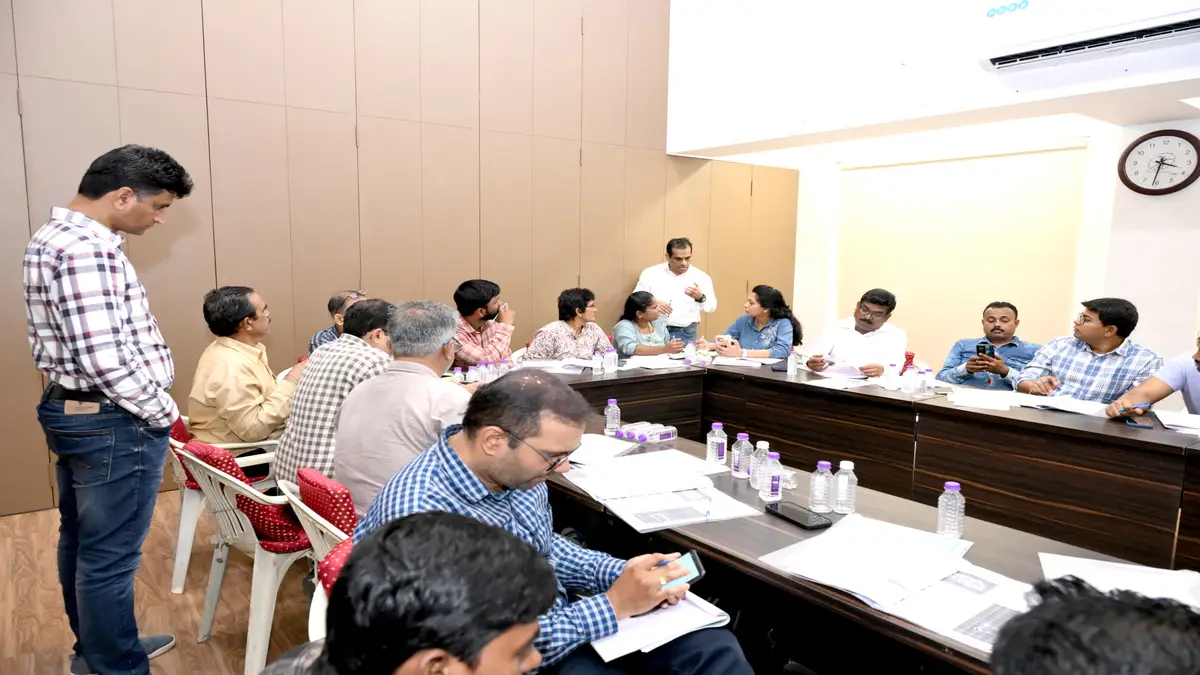
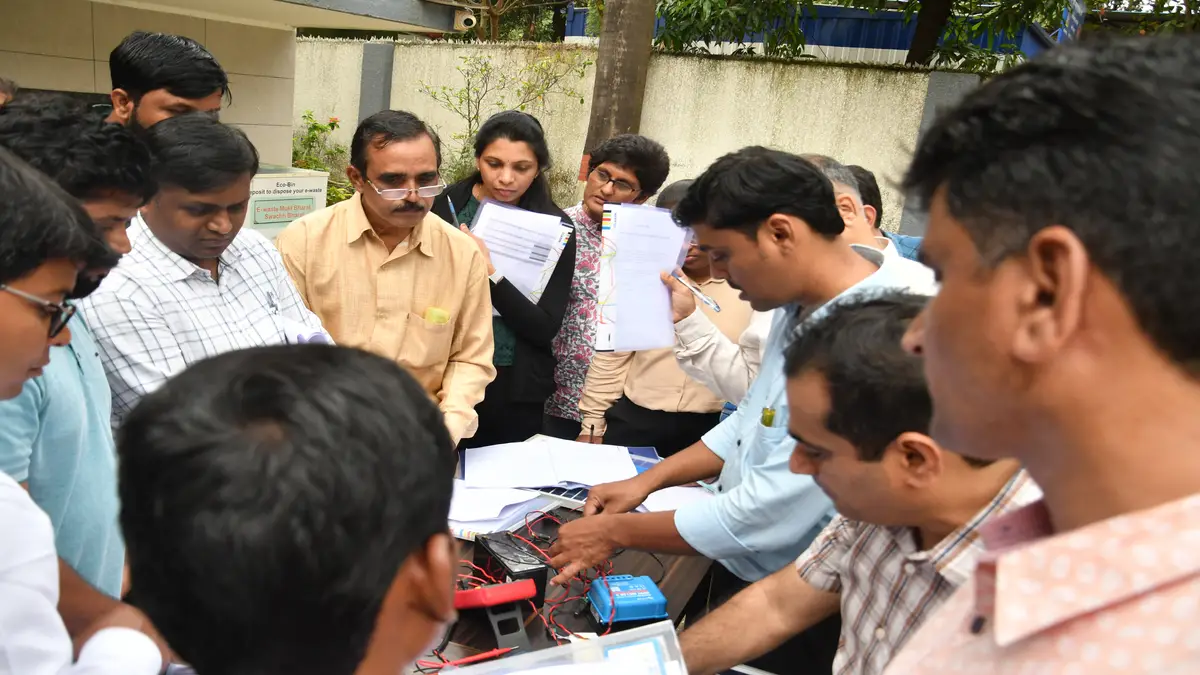
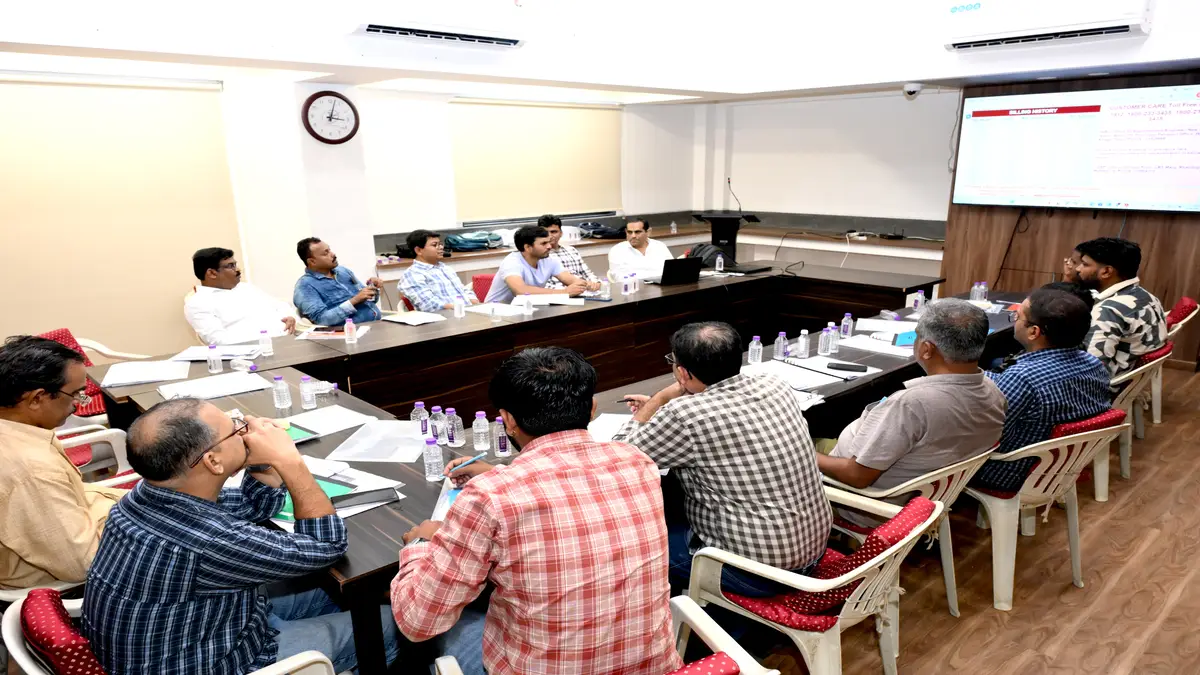
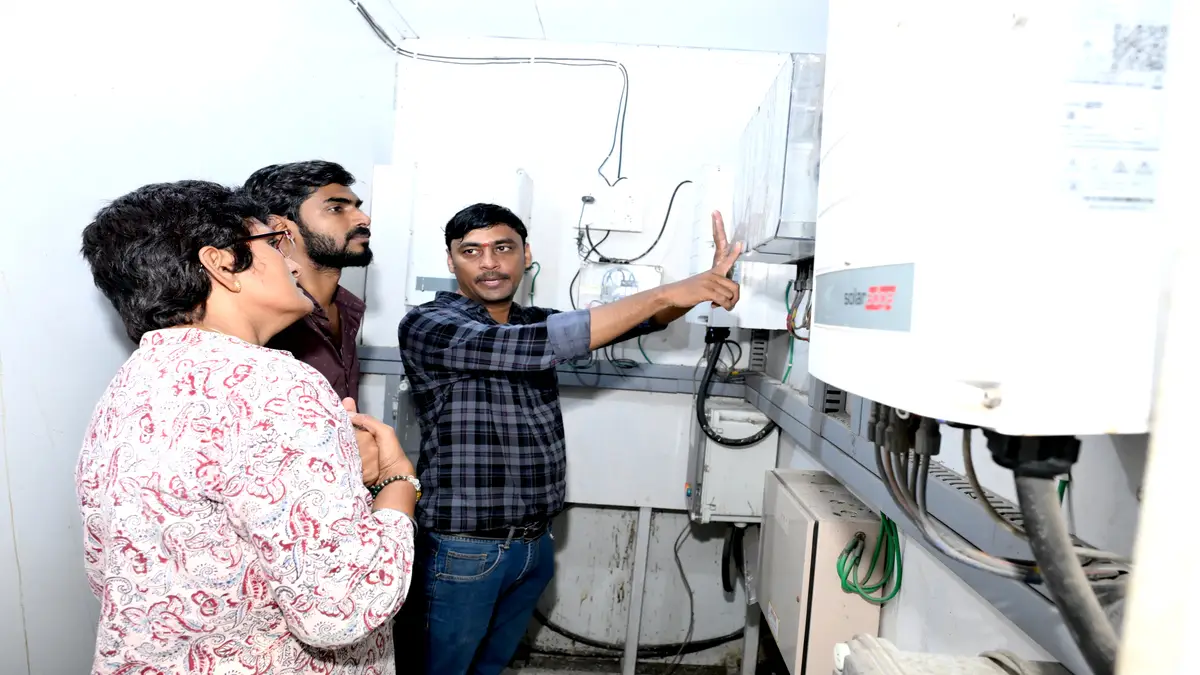
Core Practical Workshop Drills
Solar Training Delivery Models
Whether you are a full-time student, a practicing engineer, or an entrepreneur, our delivery models provide the flexibility you need without compromising on hands-on rigor.
Hybrid Learning Model
Designed specifically for working engineers and outstation candidates. Attend live interactive virtual lectures on evenings and weekends, followed by an intensive campus Personal Contact Program (PCP).
- Live virtual evening & weekend classes
- 3-day or 5-day on-campus hardware laboratory immersion
- Zero disruption to your ongoing employment
Online Interactive Classes
Structured virtual instruction led directly by practitioner faculty. Includes live software screenshares for PVsyst, AutoCAD single-line diagrams, and real-time calculation modeling.
- Interactive live faculty lectures with Q&A
- HD session recordings available on student portal
- PVsyst & AutoCAD simulation assignment reviews
Vocational Campus Model
Full-time semester schedule tailored for B.Voc and D.Voc degree candidates. Blends academic instruction with extensive hardware workshop practice and semester-long industrial apprenticeships.
- Formal UGC-recognized vocational university degree
- Embedded on-site industry apprenticeships
- Continuous laboratory and field evaluation
Career Opportunities After Solar Energy Courses
Graduates of IISE enter diverse professional roles across utility-scale developers, turnkey EPC contractors, solar design consultancies, and independent entrepreneurial ventures.
1. Solar Design & Simulation Engineer
₹4.5L – ₹9L LPASpecializes in energy yield simulations, 3D shading analysis, single-line diagrams (SLDs), and string configuration for rooftop and utility-scale projects.
Recommended Course: PG Diploma in Solar Technology.
2. Solar EPC Project Engineer
₹5L – ₹11L LPASupervises turnkey commercial project timelines, material procurement, Bill of Quantities (BOQ), and contractor coordination from survey to handover.
Recommended Course: PG Diploma / Advanced Diploma in Solar.
3. Solar Electrical Commissioning Engineer
₹4.5L – ₹8.5L LPAManages cold and hot commissioning tests, inverter synchronization, transformer interconnections, and statutory DISCOM net-metering grid connection.
Recommended Course: Solar Engineer Certificate / PG Diploma.
4. Solar Site & Civil Installation Engineer
₹3.5L – ₹6.5L LPALeads mounting structure installation, module alignment, foundation anchor verification, and roof load safety according to engineering drawings.
Recommended Course: Advanced Diploma / Practical Workshop.
5. Solar Operation & Maintenance (O&M) Engineer
₹4L – ₹8L LPAConducts performance ratio (PR) monitoring, preventive electrical maintenance, string inverter servicing, thermographic hotspot inspections, and cleaning routines.
Recommended Course: Solar Engineer Certificate Course.
6. Solar Installation & Assembly Technician
₹3L – ₹5L LPAExecutes hardware mounting, MC4 connector crimping, conduit bending, DC wiring, array grounding, and connection to AC/DC distribution boards.
Recommended Course: D.Voc / Practical Workshop.
7. Solar Technical Sales & Estimation Engineer
₹4.5L – ₹10L LPAEvaluates client electricity bills, performs preliminary rooftop sizing, calculates internal rate of return (IRR), and drafts techno-commercial proposals.
Recommended Course: PG Diploma / Advanced Diploma.
8. DISCOM Net-Metering & Liaisoning Officer
₹4L – ₹8.5L LPAManages statutory regulatory filings with state electricity distribution companies (DISCOMs), CEIG electrical inspections, and bidirectional meter sanctioning.
Recommended Course: Solar Business Entrepreneur / PG Diploma.
9. Independent Solar Energy Consultant
₹8L – ₹18L+ LPAProvides third-party engineering due diligence, detailed project reports (DPR) for bank financing, factory energy audits, and owner's engineer services.
Recommended Course: PG Diploma in Solar Technology.
10. Solar EPC Contractor & Clean-Tech Entrepreneur
High Profit MarginsRuns an independent turnkey rooftop solar contracting firm executing residential PM Surya Ghar projects and commercial industrial installations.
Recommended Course: Solar Business Entrepreneur Program.
Career Guidance and Placement Assistance at IISE
We actively bridge students with leading solar EPC companies, developers, and consulting firms across India through our dedicated institutional recruitment and referral network.
Technical Resume Drafting
Restructuring your resume to showcase engineering software proficiencies (PVsyst, AutoCAD), DC string sizing calculations, and hardware laboratory competencies.
Technical Portfolio Creation
Developing a showcase portfolio containing complete Detailed Project Reports (DPRs), PVsyst generation yield reports, and Single Line Diagrams (SLDs) to prove your capability to interviewers.
Mock Technical Interviews
1-on-1 mock interviews conducted by practicing solar EPC project managers and power electronics researchers, covering inverter topologies, shading losses, and net-metering rules.
Employer Referral Desk
Connecting candidate profiles directly with hiring managers through IISE's institutional B2B recruitment portal, bypassing crowded job boards.
Corporate Hiring Drives
Regular recruitment notifications and placement drives matching students with companies seeking rooftop installers, design engineers, and O&M specialists.
Alumni Mentorship Network
Join a network of over 3,000 alumni working across leading EPCs, developer firms, state utilities, and clean-tech startups across India and abroad.
🛡 Institutional Placement Integrity Notice
IISE provides structured career preparation, corporate recruiter referrals, and continuous interview opportunities. In accordance with ethical educational practices, placement assistance does not constitute an unconditional guarantee of a job offer. Hiring decisions rest solely with recruitment partners.
Why Choose IISE for Solar Energy Training?
Indian Institute of Solar Energy (IISE), a Unit of CERMS India Foundation, is dedicated exclusively to capability-building in renewable technologies, clean mobility, and energy storage.
Dedicated Clean-Tech Focus
Unlike general training centers offering computer or IT courses alongside solar, IISE specializes exclusively in solar photovoltaics, battery energy storage (BESS), and electric mobility.
University Degree Pathways
Our B.Voc and D.Voc degree pathways are awarded through recognized university partner frameworks, providing official academic credentials compliant with National Skills Qualifications (NSQF).
Practitioner-Led Instruction
Learn from instructors who are actively managing solar EPC projects, patenting battery technologies, and directing DISCOM net-metering approvals in India today.
Physical Hardware Rigs
Spend significant hours on physical hardware: string inverters, charge controllers, PV modules, crimping tools, multimeters, Meggers, and ground-resistance meters.
Licensed Simulation Software
Gain practical proficiency in PVsyst 7.4, AutoCAD Single Line Diagrams (SLDs), and Helioscope shading layouts — the exact software demanded by commercial EPC employers.
Pan-India Alumni Network
Join over 3,000 alumni working across India's clean energy landscape. Benefit from direct peer referrals, technical forums, and collaborative clean-tech ventures.
Leadership and Expert Technical Faculty
Learn directly from experienced power-sector directors, patent holders, clean-tech researchers, and active EPC consultants who bring ground-level engineering insight to every lecture.

Er. Rajesh Unnikrishnan
With over 20 years of leadership in India's power sector and more than a decade devoted to solar PV, electric vehicle powertrains, and energy storage systems, Er. Rajesh Unnikrishnan founded IISE to address the acute skills divide between conventional engineering degrees and operational commercial renewable energy assets.

Dr. D.S. Malwad
Ph.D. in Mechanical Engineering (SRTM University). 12+ international research papers, holder of 2 registered patents in solar thermal systems.

Dr. Srinivas M.
Ph.D. in Power Systems & Electronics. Life Member of Indian Physics Association. Specializes in string inverter topology, MPPT & grid compliance.

Dr. Arpan Tewary
Ph.D. from Rajiv Gandhi Institute of Petroleum Technology (RGIPT). Expert in photovoltaic cell physics, photoelectrochemical energy & materials.

Rakesh Ambekar
10+ years field experience leading state DISCOM net-metering approvals, CEIG electrical safety clearances, and open-access utility coordination.
What Our Students and Alumni Say About IISE
Authentic reviews from engineering graduates, clean-tech entrepreneurs, and corporate recruitment partners who have experienced IISE training.
“I was working in a completely different field before joining IISE. Within 3 months of completing my PG Diploma, I had two job offers from solar EPC companies in Mumbai. The practical training with PVsyst and on-site hardware testing was the key to my transition.”
“The entrepreneurship program gave me the technical confidence and commercial clarity to start my own rooftop solar engineering firm. IISE's faculty provided continuous mentorship even after graduation, helping us structure our first 100kW commercial rooftop project.”
“Anyone who completes this course feels dramatically more confident walking onto a commercial solar job site. You understand single line diagrams, cable voltage drop calculations, and inverter synchronization from day one.”
“I highly recommend this program to engineering graduates. The combination of PVsyst simulation, AutoCAD drafting, and live hardware labs gives you a massive advantage when interviewing with leading solar EPC companies.”
“We regularly recruit IISE graduates for our rooftop and ground-mounted solar installations. Their graduates understand practical field challenges, safety standards, and statutory DISCOM procedures without needing months of retraining.”
Solar Course Fees, Flexible EMI and Scholarships
We maintain full transparency across tuition fees, flexible installment schedules, monthly EMI financing, and merit scholarship awards.
Transparent Program Fees
Tuition covers lectures, software training, lab rig usage, study materials, and certification testing. No hidden exam fees.
- PG Diploma: ₹1,24,999 (Merit: ₹79,999)
- Advanced Diploma: ₹59,999 (Merit: ₹39,999)
- Solar Engineer Cert: ₹29,999 all-inclusive
- B.Voc Degree: ₹41,999 / academic year
Flexible EMI & Installments
Spread your tuition across manageable monthly payments through credit/debit card EMI via Razorpay or structured institutional installment phases.
- Razorpay card EMI (3 to 12 months)
- 2 to 3-stage institutional milestone payments
- Affordable monthly budget friendly for engineers
- Zero paperwork card checkout
Merit-Based Scholarships
Eligible candidates scoring 80%+ in the online technical aptitude evaluation can receive up to a 35% tuition fee scholarship.
- Up to 35% fee waiver for top scorers
- Limited scholarship quota per intake batch
- Women in Clean Energy special consideration
- Evaluated transparently via online exam
Need Personalized Fee & Payment Guidance?
Learn more about our official payment arrangements and check scholarship eligibility.
How to Enrol in a Solar Energy Course at IISE
Follow our transparent six-step admission process to verify your eligibility, secure merit scholarships, and begin your technical clean energy training.
Choose Your Program
Review our postgraduate diploma, vocational degree, engineering certificate, or entrepreneurship curriculum to identify the right track.
Submit Enquiry Form
Fill in your educational background, preferred course, contact details, and location via our online admission counselling form below.
1-on-1 Counselling Call
Speak with an IISE senior course advisor to review batch schedules, software prerequisites, lab timings, and career opportunities.
Document & Eligibility Check
Submit academic marksheets and identity proof for administrative verification, and complete the online scholarship evaluation if applicable.
Fee & Payment Confirmation
Confirm your enrollment with a secure payment via Razorpay, choose flexible milestone installments, or set up monthly card EMI.
LMS Access & Batch Onboarding
Receive student portal credentials, course syllabus documents, batch timetables, live lecture links, and schedule for campus practicals.
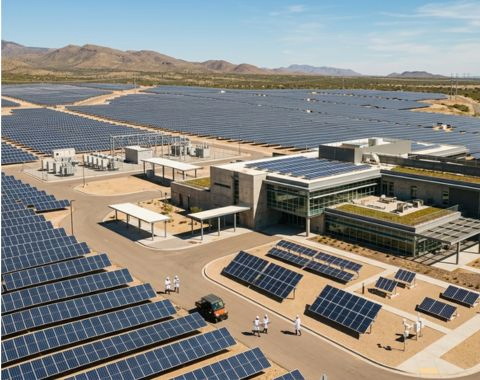
IISE Practical Training & Lab Facilities in Action
Authentic photography from our specialized solar photovoltaic hardware laboratories, rooftop installation rigs, and commercial power plant inspection visits.

Explore Other Renewable Energy Courses
Expand your clean-tech capability across electric mobility, electrochemical battery systems, industrial energy auditing, and specialized simulation software.
Electric Vehicle Courses
Powertrain engineering, motor controllers, EV charging infrastructure, and vehicle-to-grid (V2G) systems.
Explore EV Courses →Battery Systems Courses
Lithium-ion chemistries, Battery Management Systems (BMS), thermal management, and BESS grid integration.
Explore Battery Courses →Energy Auditor Courses
Industrial energy auditing, Bureau of Energy Efficiency (BEE) frameworks, and thermal/electrical optimization.
Explore Auditor Courses →Design Software Courses
Dedicated masterclasses in PVsyst 7.4, AutoCAD Single Line Diagrams (SLD), and Helioscope shading layouts.
Explore Software Courses →Our hiring network powers India's energy transition.
We don’t just teach solar; we provide the bridge to employment. Our partners trust IISE graduates for their hands-on skills and technical precision.


Free Solar Learning Resources & Calculators
Leverage our free engineering calculators, industry policy updates, and technical guides to support your renewable energy learning journey.
Solar Rooftop Calculator
Estimate required solar capacity, annual units generated, roof shadow requirements, and estimated savings based on your monthly DISCOM bill.
Use Rooftop Calculator →Online Solar PV Sizing Tool
Quickly calculate inverter rating, string module numbers, DC cable size, and battery capacity needed for off-grid and hybrid backup installations.
Use PV Sizing Tool →Solar Industry News & Blog
Stay current with MNRE policy announcements, PM Surya Ghar subsidy regulations, state DISCOM net-metering guidelines, and industry tenders.
Read Industry News →Frequently Asked Questions About Solar Energy Courses in India
Find authoritative answers to common questions regarding eligibility, fees, practical laboratory training, career scope, and admissions at IISE.
The best solar energy course depends on your educational background and career objectives. For engineering graduates (B.E./B.Tech in Electrical, Mechanical, Civil, or Electronics), the 1-year PG Diploma in Solar Technology (PGDST) is the premier qualification for senior EPC design, simulation, and project lead roles. For polytechnic diploma holders and ITI technicians, the 1-year Advanced Diploma or 6-month Solar Engineer Certificate provides targeted practical skills. For 10+2 students seeking a formal university degree, the 3-year B.Voc in Solar Technology is ideal, while the Solar Business Entrepreneur Program is tailored for electrical contractors and clean-tech entrepreneurs.
For beginners without an advanced electrical engineering background, the Solar Engineer Certificate Course (6 Months) or the Hands-on Solar Practical Workshop (3 to 5 Days) provides the ideal starting point. These programs begin with foundational solar PV physics, electrical safety, module mounting, and basic string sizing without requiring complex differential mathematics.
Yes. Students who have passed 10th standard (SSC) from any recognized board can enroll in the 3-year D.Voc (Diploma of Vocation) in Solar Technology or participate in intensive on-campus Solar Practical Workshops. The D.Voc curriculum trains students from foundational workshop electrical practice to professional solar PV panel installation, wiring, and maintenance.
Yes. Candidates passing 10+2 (Higher Secondary) with Science or Vocational streams can enroll in the 3-year B.Voc in Solar Technology degree program or the 6-month Solar Engineer Certificate Course. Students from commerce or arts backgrounds seeking clean-tech business opportunities can also pursue the Solar Business Entrepreneur Program.
The 1-year PG Diploma in Solar Technology (PGDST) is specifically tailored for B.E. / B.Tech graduates in Electrical, Mechanical, Civil, and Electronics Engineering. It covers advanced computer simulation tools (PVsyst 7.4 and AutoCAD SLD), megawatt-scale balance of systems (BoS) sizing, harmonic distortion mitigation, utility grid codes, transformer sizing, and battery energy storage (BESS) hybridization.
Applicants for the PG Diploma in Solar Technology must hold a recognized Bachelor's degree in engineering (B.E. / B.Tech in Electrical, Mechanical, Civil, Electronics, Energy Engineering, or equivalent) or a Master of Science (M.Sc / B.Sc) in Physics, Electronics, or Renewable Energy. Prior power-sector experience is welcome but not mandatory.
Program durations vary by qualification level: the PG Diploma and Advanced Diploma are 1-year programs (2 semesters); the Solar Engineer Certificate and Solar Business Entrepreneur Program run for 6 months; the B.Voc and D.Voc degree tracks are 3-year programs (6 semesters); and intensive on-campus Solar Practical Workshops run across condensed 3 to 5-day hardware bootcamps.
At IISE, official tuition fees reflect transparent academic pricing: the flagship PG Diploma in Solar Technology is ₹1,24,999 (with merit scholarship seats available at ₹79,999); the Advanced Diploma is ₹59,999 (with scholarship fee ₹39,999); the Solar Engineer Certificate is ₹29,999; the Solar Business Entrepreneur Program is ₹29,999; the B.Voc degree is ₹41,999 per academic year; and the Solar Practical Workshop is ₹24,999. Monthly EMI options are available via Razorpay on credit and debit cards.
Yes. Practical hardware engineering is the cornerstone of IISE's pedagogy. Our training facility includes physical hardware test benches featuring operational on-grid and off-grid string inverters (Growatt, Sungrow, Solis, Delta), crystalline PV modules, structural mounting rigs, DC cabling conduits, 1000V insulation resistance testers (Megger), earth pit testing meters, digital clamp meters, and live commercial rooftop plant visits.
Yes. IISE offers interactive online live lecture options for candidates across India and overseas. Online classes feature live faculty instruction, virtual software screen-sharing for PVsyst and AutoCAD, and downloadable detailed project report (DPR) calculation templates. All live sessions are recorded and archived on the student portal for self-paced review.
The hybrid model combines the convenience of live online evening/weekend lectures with a mandatory, intensive on-campus Personal Contact Program (PCP). For example, the PG Diploma features live virtual lectures followed by a 5-day immersive laboratory hardware bootcamp, allowing working professionals to master physical wiring and testing without taking extended leave from their current jobs.
Students receive comprehensive training in industry-standard solar engineering software tools: PVsyst 7.4 (irradiance modeling, 3D shading scene construction, system loss diagrams, horizon profiling, and generation yield reports), AutoCAD (Single Line Diagrams - SLD, array layouts, and string conduit paths), and Helioscope for commercial rooftop layout design.
Yes. Hands-on design software training using PVsyst and AutoCAD is an integral core component of the PG Diploma, Advanced Diploma, and Solar Engineer Certificate curricula. Students complete simulated project assignments including residential rooftops, commercial industrial systems, and ground-mounted solar power plants.
A Diploma or Advanced Diploma is open to 10+2, ITI, polytechnic diploma holders, and general graduates, focusing predominantly on rooftop system sizing, Balance of System (BoS) assembly, installation, and field electrical maintenance. A Post-Graduate Diploma (PG Diploma) requires an engineering degree (B.E./B.Tech) and covers advanced engineering topics such as megawatt-scale grid integration, power electronics topologies, central inverters, harmonic analysis, BESS hybridization, and bankable Detailed Project Report (DPR) preparation.
Graduates qualify for in-demand roles including Solar Design Engineer, Solar EPC Project Engineer, Solar Electrical Commissioning Engineer, Solar Site Engineer, Solar O&M Engineer, DISCOM Net-Metering Liaison Officer, Technical Sales Engineer, Third-Party Energy Consultant, and Solar Installation Technician. Many graduates also launch independent rooftop solar contracting businesses.
Yes. IISE maintains an active Corporate Placement and Referral Desk. We support students with professional technical resume drafting, solar project portfolio creation (PVsyst reports & SLDs), mock technical interviews with practicing EPC leads, and direct job vacancy referrals across our network of solar EPCs, developers, and O&M contractors. Placement assistance does not guarantee an unconditional job offer, but provides direct recruiter access.
Yes. Over 60% of IISE postgraduate diploma students are working professionals. Our hybrid learning architecture schedules live virtual lectures during weekday evenings and weekend mornings. The campus hardware laboratory component is delivered in a condensed, focused Personal Contact Program (PCP) designed to fit standard corporate annual leave.
Absolutely. Our Solar Business Entrepreneur Program and PG Diploma specifically equip entrepreneurs with the commercial tools required to run a profitable rooftop EPC firm. You will learn vendor procurement of tier-1 modules and inverters, techno-commercial proposal modeling, internal rate of return (IRR) payback calculations, state DISCOM net-metering liaison, and navigating government subsidies under PM Surya Ghar: Muft Bijli Yojana.
Yes. With India's national mandate to install 500 GW of renewable energy by 2030 and the government's ₹75,000+ crore PM Surya Ghar Muft Bijli Yojana targeting 10 million rooftops, the clean energy industry is among the fastest-growing infrastructure sectors in the country. The demand for qualified solar engineers and technicians vastly outstrips current supply.
To apply, submit the online enquiry form on this webpage with your academic background and preferred program. An admissions counsellor will contact you within 24 hours to conduct an initial counselling session, verify your eligibility documents, and guide you through payment confirmation and LMS portal onboarding.
Yes. IISE awards merit-based scholarships of up to 35% tuition fee reduction to deserving candidates who score 80% or above in the online renewable aptitude evaluation. Scholarships are awarded across limited quota seats per batch. We also offer special consideration for women engineers entering clean energy.
Yes. We offer zero-cost and low-interest monthly credit/debit card EMI options powered by Razorpay. Additionally, students can opt for structured 2 to 3-stage milestone institutional installment plans to spread tuition costs comfortably across their study period.
Indian Institute of Solar Energy (IISE) operates as an institutional unit of CERMS India Foundation (Centre for Energy Research and Training). Our administrative and laboratory training facilities are based in Mumbai, Maharashtra, with degree-granting vocational programs affiliated with recognized university partner frameworks.
You can speak with our admissions desk by calling +91 88509 02306, sending an enquiry on WhatsApp to +91 88509 02306, or completing the online enquiry form at the bottom of this webpage. Our advisors are available Monday through Saturday from 9:30 AM to 6:30 PM IST.
Have a question that is not covered here? Our admission advisors are ready to assist you.
Start Your Career in Solar Energy with IISE
Join over 3,000 engineers, technicians, and entrepreneurs who have built rewarding careers in India's expanding solar and clean-tech sector. Gain industry-oriented technical education, hands-on hardware laboratory training, and career-focused guidance.
Request Free Solar Course Counselling
Fill out the form below to receive detailed course syllabi, batch dates, fee breakdowns, and personal guidance from an IISE technical advisor.
Thank You! Your Enquiry Has Been Received.
An IISE senior course advisor will contact you on your provided phone number and email within 24 business hours.
Chat with Advisor on WhatsApp Now →Solar Panel Installation Training
Next Batch Starts Soon
Seats are filling up fast for the December intake. Secure your future in renewable energy today.
- 00Days
- 00Hours
- 00Minutes
- 00Seconds