D.Voc in Solar Technology – Build Your Career in the Solar Energy Industry
Start your journey in the renewable-energy sector with IISE’s D.Voc in Solar Technology. Develop foundational technical knowledge and practical skills in solar photovoltaic systems through hybrid learning, classroom instruction and practical training.
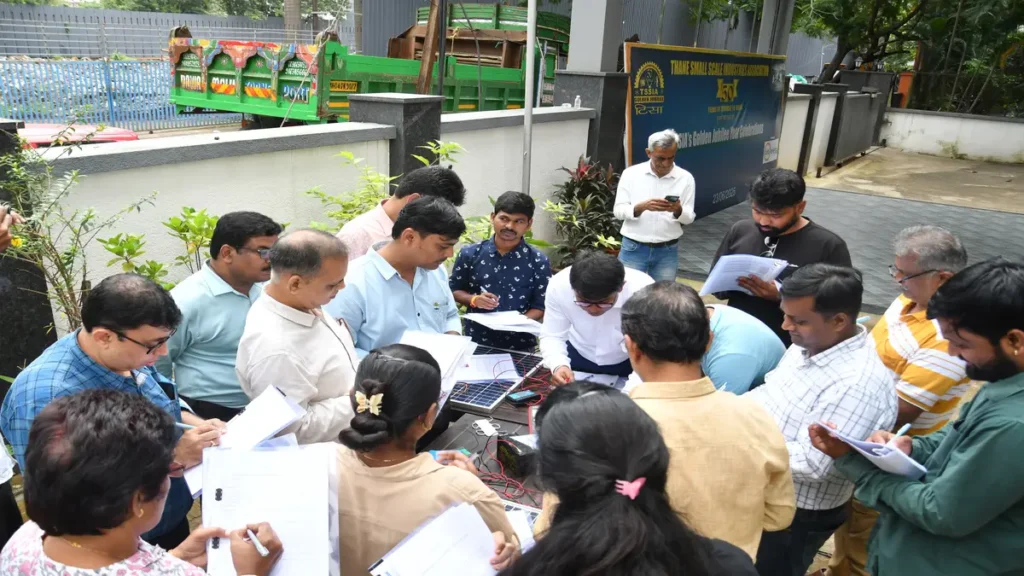
- Batch Intake: 30 Seats per Batch
- Learning Model: Hybrid (Online + Lab)
- Programme Fee: ₹39,999
- Career Support: Placement Assistance
Time is running out. Apply now!
- 00Days
- 00Hours
- 00Minutes
- 00Seconds
Programme at a Glance
A quick overview of key institutional and academic parameters governing the D.Voc in Solar Technology.
About the D.Voc in Solar Technology Programme
The D.Voc (Diploma in Vocation) in Solar Technology at the Indian Institute of Solar Energy (IISE) is a specialized three-year technical programme designed to prepare students for career opportunities in India’s expanding renewable-energy sector. Built on a practical, skill-oriented curriculum, the programme bridges the gap between traditional secondary schooling and the practical engineering skills demanded by solar photovoltaic (PV) installers, EPC contractors, and clean energy developers.
Unlike purely theoretical diplomas, the D.Voc framework allocates substantial training time to practical laboratory exercises, technical demonstrations, component testing, and structured industrial exposure. Students progress systematically from fundamental electrical principles and solar radiation sciences in the first year, to advanced PV system design, hybrid energy storage, and power electronics in the second year, culminating in grid integration, smart microgrids, project management, and solar business planning in the third year.
The Diploma in Vocation framework prioritizes vocational skill development over rote memorization. With approximately 70% emphasis on practical and hands-on learning, students develop physical familiarity with PV modules, inverters, charge controllers, cabling, and safety instruments, making them employment-ready from day one.
With India targeting 500 GW of non-fossil fuel capacity by 2030 and national rooftop initiatives such as PM Surya Ghar: Muft Bijli Yojana aiming to solarize 1 crore homes, the demand for certified technicians, site supervisors, and O&M specialists has expanded dramatically across urban and rural markets.
Graduates are equipped for dual pathways: technical employment with rooftop EPC companies, solar farm developers, and inverter service networks, or launching independent businesses offering rooftop solar installation, module cleaning, maintenance, and equipment distribution services.
Why Choose IISE for Your Solar Vocational Diploma?
Dedicated institutional focus on renewable energy, structured technical training, and industry career pathways.
Unlike generalized polytechnics, IISE focuses exclusively on solar photovoltaic engineering, electric vehicle infrastructure, battery storage, and clean technology education, ensuring deep topical immersion and dedicated faculty expertise.
The curriculum is updated to cover contemporary PV developments: Monocrystalline PERC, TOPCon, and Bifacial modules, string and hybrid inverters, Lithium-ion (LiFePO4) storage, net-metering regulations, and DISCOM interconnection procedures.
Students receive direct practical training with solar panels, multimeters, DC clamp meters, irradiance sensors (pyranometers), MC4 crimping tools, mounting rails, and DC/AC distribution boxes in structured laboratory workshops.
A balanced model combining digital conceptual learning with instructor-led classroom sessions and hands-on weekend practical workshops, providing accessibility for both school leavers and working technical candidates.
The programme integrates solar business modeling, Bill of Materials (BOM) creation, project costing, government rooftop subsidy processes, and statutory registrations (MSME, GST, electrical licensing) for students seeking self-employment.
IISE provides structured placement assistance through its solar hiring partner network, assisting eligible candidates with resume preparation, mock interviews, and employment opportunity referrals in the solar EPC and O&M sector.
Programme Learning Objectives
Ten foundational technical, operational, and commercial objectives that structure the curriculum across all six semesters.
Understand global and Indian clean energy transitions, statutory policies, National Solar Mission, and decarbonization principles.
Master the photovoltaic effect, semiconductor physics, cell architecture, STC vs NMOT ratings, and solar thermal collectors.
Apply DC and AC circuit theory, earthing principles, IEC/BIS standards, personal protective equipment (PPE), and Lockout/Tagout (LOTO).
Evaluate modules (mono, poly, bifacial), string and hybrid inverters, MPPT controllers, DC cables, and Balance of System (BOS) components.
Perform electrical load calculations, string sizing, inverter matching, shading analysis, and single-line diagram (SLD) drafting in CAD.
Execute structural mounting assembly, tin/tile shed clamping, DC cable conduit routing, MC4 crimping, and weatherproof enclosure assembly.
Conduct pre-commissioning checklists, open-circuit voltage (Voc), short-circuit current (Isc), insulation resistance, and anti-islanding tests.
Formulate preventive maintenance schedules, module cleaning SOPs, thermal anomaly identification, and inverter troubleshooting.
Understand DISCOM net-metering interconnection, bidirectional meters, smart microgrids, and Lithium-ion battery storage integration.
Develop project financial models, calculate LCOE and payback, prepare customer proposals, and understand business registrations (MSME/GST).
Eligibility and Admission Requirements
Students who have passed Class 10 (SSC / Matriculation) from any recognized educational board (State Board, CBSE, ICSE, NIOS, or equivalent) in any stream (Science, Commerce, Arts, or Vocational) are eligible to apply.
Who Should Apply for This Programme?
Students seeking a direct, practical technical qualification after Class 10 to start an early career in engineering and green energy.
ITI diploma holders (Electrician, Wireman, Fitter) wishing to specialize in solar PV technology, grid-tied systems, and hybrid storage.
Electrical contractors, wiremen, and site workers seeking formal vocational credentials to advance into supervisory or project roles.
Entrepreneurs seeking end-to-end technical, regulatory, and costing knowledge to launch rooftop solar installation and maintenance agencies.
*Note: The following checklist represents standard verification documents and is subject to the institution's actual admission requirements.*
Programme Duration and Delivery Model
The D.Voc in Solar Technology is structured across three academic years (six semesters), delivering a comprehensive 90+ credit curriculum through an integrated Hybrid Learning Model.
Flexible, self-paced access to foundational theory and engineering principles through the digital LMS.
- Interactive recorded video lectures & module explanations
- Downloadable technical study materials & spec sheet guides
- Self-assessment quizzes & conceptual assignments
- Flexible 24/7 access tailored for working students
Faculty-led interactive lectures providing technical explanations, sizing calculations, and schematic reviews.
- Instructor-led engineering problem-solving sessions
- Single-line diagram (SLD) and electrical CAD drafting tutorials
- Peer case-study discussions & group design projects
- Direct faculty mentoring & academic progress reviews
Hands-on technical workshops focused on physical equipment handling, wiring, and diagnostic procedures.
- Component identification & terminal verification
- Operating multimeters, clamp meters & insulation testers
- Rooftop mounting structure assembly demonstrations
- Preventive maintenance, cleaning & troubleshooting drills
Complete Six-Semester Academic Curriculum
All original subjects and modules have been preserved and substantially expanded with deep technical detail, learning outcomes, and competencies across 90+ academic credits.
4 Credits
- Global & Indian energy matrix: Fossil fuels vs renewable energy resources
- Overview of solar, wind, small-hydro, biomass, and green hydrogen systems
- Climate change, COP commitments, carbon footprint reduction & sustainability principles
- National Solar Mission (JNNSM), MNRE guidelines, and PM Surya Ghar: Muft Bijli Yojana
- State renewable policies, net metering regulations, and clean energy subsidies
5 Credits
- Ohm’s law, Kirchhoff’s current and voltage laws (KCL/KVL), and circuit power formulas
- DC circuits, series and parallel circuit analysis, and voltage drop calculations
- Single-phase and three-phase AC principles, frequency, RMS values, and power factor
- Semiconductor physics: Diodes, Zener diodes, transistors, and rectification circuits
- Electrical protection devices: Fuses, MCBs, MCCBs, RCCBs, and earthing fundamentals
4 Credits
- Sun-earth geometric relations: Declination, hour angle, zenith, azimuth, and elevation
- Solar irradiance (W/m²) vs solar irradiation (kWh/m²/day), and Peak Sun Hours (PSH)
- Extraterrestrial vs terrestrial solar radiation and air mass (AM 1.5 standard)
- Solar resource measurement instruments: Pyranometers, pyrheliometers, and lux meters
- Overview of solar energy applications: Photovoltaic (PV) power and Solar Thermal systems
3 Credits
- Engineering drawing conventions, standard orthographic and isometric projections
- Standard electrical symbols for solar PV, inverters, switches, batteries, and transformers
- Single-line diagrams (SLD) and multi-line schematic representation of PV systems
- Introduction to 2D CAD interface: Coordinates, layers, dimensioning, and blocks
- Drafting basic rooftop layout sketches and solar panel array string arrangements
4 Credits
- Visual identification and terminal inspection of solar panels, inverters, and batteries
- Safe operation of digital multimeters, DC clamp meters, and insulation testers
- Measuring open-circuit voltage (Voc) and short-circuit current (Isc) across varying light
- Connecting PV modules in series and parallel configurations and observing V-I changes
- Basic DC crimping, MC4 connector assembly, wire stripping, and terminal tightening
3 Credits
- Technical English for engineering: Vocabulary, reading spec sheets, and equipment manuals
- Writing site survey logs, incident reports, and installation handover checklists
- Customer interaction etiquette for residential and commercial rooftop solar clients
- Teamwork, conflict resolution, on-site collaboration, and leadership fundamentals
- Presentation skills and technical explanation of solar benefits to prospective clients
- Explain the principles of clean energy transition and key Indian renewable energy policies.
- Analyze and calculate voltage, current, power, and resistance in DC and AC circuits.
- Measure solar irradiance and determine Peak Sun Hours for a given geographic site.
- Interpret electrical single-line diagrams (SLD) and draft basic PV layout schematics in CAD.
- Safely operate multimeters and clamp meters to test PV modules, batteries, and wiring.
5 Credits
- Photovoltaic effect: Photon absorption, electron-hole pair generation, and collection
- Solar cell manufacturing: Crystalline silicon (Monocrystalline, Polycrystalline, Thin-Film)
- Modern cell advances: Passivated Emitter and Rear Cell (PERC), TOPCon, and Heterojunction (HJT)
- Standard Test Conditions (STC: 1000 W/m², 25°C, AM 1.5) vs Nominal Module Operating Temperature (NMOT)
- PV system configurations: Standalone off-grid, grid-tied interactive, and hybrid architectures
4 Credits
- Indian Electricity Rules, Central Electricity Authority (CEA) safety regulations, and BIS standards
- International Electrotechnical Commission (IEC) standards: IEC 61215, IEC 61730, IEC 62109
- DC arc fault hazards, high-voltage shock prevention, and Lockout/Tagout (LOTO) protocols
- Personal Protective Equipment (PPE): Insulated gloves, safety boots, hard hats, safety harnesses
- Equipment earthing, system earthing, earth resistance measurement, and chemical earthing pits
3 Credits
- Indian electricity tariff mechanisms: Telescopic tariffs, Time-of-Day (ToD), and commercial rates
- Cost-benefit analysis of distributed solar vs grid power; Levelized Cost of Energy (LCOE)
- Simple payback period (SPP) and Return on Investment (ROI) calculation for rooftop solar
- Environmental impact assessment: Life cycle analysis, avoided CO2 emissions, and clean energy credits
- Carbon offsetting, Renewable Energy Certificates (RECs), and sustainable green building standards
4 Credits
- Household electrical load auditing: Connected load, daily energy consumption (kWh), and peak wattage
- Determining solar array capacity based on local irradiance and monthly solar insolations
- Sizing solar charge controller, inverter capacity, and battery bank autonomy for 24-hour backup
- Creating bill of materials (BOM), system wiring diagrams, and layout drawings
- Preparing a comprehensive technical project report and presenting design defense
3 Credits
- Observation of professional rooftop mounting structure installation and mechanical clamping
- Inspection of cable routing, conduit placement, DC combiner box integration, and inverter mounting
- Adherence to job-site safety rules, tool handling, and material inventory management
- Daily work log documentation, engineering supervisor mentoring, and field diary maintenance
- Submission of structured internship report and viva voce presentation
- Differentiate between mono-PERC, TOPCon, and polycrystalline PV modules based on efficiency and temp coefficients.
- Apply statutory IEC and BIS electrical safety standards and execute Lockout/Tagout (LOTO) on solar sites.
- Calculate simple payback period, LCOE, and CO2 emissions reduction for a rooftop solar system.
- Design, size, and prepare a complete Bill of Materials (BOM) for a 1kW residential PV system.
- Document real-world site observations and industrial safety practices in an engineering internship report.
6 Credits
- Detailed string sizing: Minimum/maximum string voltage calculations based on ambient temperature extremes
- Array-to-inverter sizing ratios (DC/AC overloading ratio, 1.2 to 1.4 typical range)
- Shading analysis: Solar pathfinder, sun path diagrams, near-shading vs far-shading losses
- Cable sizing calculations: Voltage drop criteria (<2% DC, <1.5% AC) and ampacity derating factors
- Introduction to solar simulation tools: PVsyst, HelioScope, and Solargis workflows
5 Credits
- Architecture of hybrid systems: AC-coupled vs DC-coupled solar hybrid topologies
- Solar-diesel generator (DG) synchronization: Minimum load ratio, reverse power protection, and fuel saving
- Solar-wind hybrid configurations: Complementary resource patterns and controller integration
- Battery Management Systems (BMS): Cell balancing, State of Charge (SoC), State of Health (SoH), and depth of discharge
- Energy management controllers for automated source prioritization (Solar -> Battery -> Grid/DG)
5 Credits
- Rooftop structural mounting: Ballasted, penetration-based, tin-shed clamp (trapezoidal/standing seam)
- Structural wind load considerations, waterproofing, torque specifications, and corrosion protection
- Cable management: UV-resistant ties, metal cable trays, conduit bending, and strain relief
- Preventive maintenance schedules: Visual inspection, cleaning cycles, thermal anomaly screening
- Systematic fault diagnosis: String open-circuit faults, ground faults, isolation faults, and diode failures
4 Credits
- Power semiconductor switches: MOSFETs, IGBTs, and wide-bandgap SiC/GaN devices
- DC-DC converters: Buck, Boost, and Buck-Boost converter operation and duty cycle control
- MPPT algorithms: Perturb & Observe (P&O), Incremental Conductance, and global sweep techniques
- Inverter topologies: Transformerless inverters, central inverters, string inverters, and microinverters
- Harmonics, Total Harmonic Distortion (THD), LC filtering, and grid synchronization phase-locked loops (PLL)
3 Credits
- Entrepreneurial mindset, opportunity identification, and market landscape in Indian rooftop solar
- Business Model Canvas (BMC) tailored for solar EPC contracting and maintenance services
- Legal entity structures: Sole proprietorship, Partnership, LLP, and Private Limited company
- Government business registrations: MSME Udyam, GST registration, and Electrical Contractor licensing
- Marketing strategy, direct customer prospecting, vendor credit negotiation, and cash flow management
- Calculate exact string lengths matching inverter maximum power voltage (Vmp) and open-circuit voltage (Voc) limits.
- Design an AC-coupled hybrid solar-diesel power system with automated reverse power protection.
- Assemble and inspect rooftop mounting structures and manage DC/AC wiring according to standard SOPs.
- Explain MPPT converter operation, inverter harmonic filtering, and grid synchronization mechanics.
- Formulate a viable Business Model Canvas and identify statutory steps to start a solar contracting enterprise.
4 Credits
- Solar thermal principles: Blackbody radiation, selective coatings, and thermal heat transfer
- Flat plate collectors (FPC) vs Evacuated Tube Collectors (ETC): Design, efficiency, and circulation
- Thermosiphon vs forced-circulation pressurized commercial solar water heating systems
- Concentrated solar power (CSP): Parabolic trough, solar tower, and linear Fresnel reflectors
- Solar thermal applications in agro-drying, steam generation, water desalination, and industrial process heat
5 Credits
- Grid-tied system architecture, central vs distributed string inverters, and grid-feeding standards
- Net metering, gross metering, and virtual net metering policies across Indian state DISCOMs
- Bi-directional four-quadrant energy meters, CT/PT metering units, and inter-connection standards
- Grid safety protections: Anti-islanding protection (IEEE 1547 / IEC 62116), over/under voltage, and frequency trips
- Step-by-step DISCOM grid connectivity application, site inspection, feasibility report, and work completion approval
4 Credits
- Battery chemistries: Lead-Acid (Flooded, VRLA, Gel, Tubular) vs Lithium-Ion (LFP, NMC, LTO)
- Lithium Iron Phosphate (LiFePO4) advantages: Cycle life, thermal stability, depth of discharge (DoD), and C-rates
- Battery bank sizing for energy autonomy, surge current handling, and temperature compensation
- Battery room design, ventilation requirements, thermal runaway prevention, and fire suppression
- Emerging storage technologies: Vanadium redox flow batteries, sodium-ion batteries, and green hydrogen storage
4 Credits
- Capital Expenditure (CAPEX) breakdown: Modules, inverters, structures, cables, civil works, and labor
- Operational Expenditure (OPEX): Cleaning, insurance, preventive servicing, spare parts, and land lease
- Financial metrics: Net Present Value (NPV), Internal Rate of Return (IRR), Debt Service Coverage Ratio (DSCR)
- Commercial business models: CAPEX model, RESCO/PPA model, and third-party lease financing
- Building dynamic financial projection spreadsheets for 25-year solar project life cycles
5 Credits
- Detailed site survey: Roof measurements, shading obstacles, azimuth verification, and load profile
- Complete electrical and structural design: String sizing, schematic drafting, and structural layout
- Procurement specification sheet (BOM) creation and vendor cost comparison
- Physical installation: Mounting rails, module fixing, DC cabling, inverter mounting, and earthing connection
- Pre-commissioning testing, grid interconnection simulation, performance ratio (PR) calculation, and project report defense
4 Credits
- Hands-on participation in commercial rooftop solar array installation and string cabling
- Assisting site engineers in DC/AC distribution board termination and inverter wiring
- Performing earth resistance testing, insulation resistance testing, and string voltage logging
- Interacting with DISCOM testing inspectors and understanding commissioning sign-off procedures
- Compilation of detailed engineering logbook, employer evaluation certificate, and viva defense
- Compare and select Flat Plate (FPC) and Evacuated Tube (ETC) solar thermal collectors for commercial applications.
- Complete DISCOM net-metering application documentation and execute anti-islanding compliance tests.
- Size, configure, and safely wire Lithium Iron Phosphate (LiFePO4) battery storage banks with BMS.
- Calculate NPV, IRR, and LCOE for commercial CAPEX and RESCO solar investment proposals.
- Execute end-to-end installation, testing, and commissioning documentation for a 2kW solar PV plant.
6 Credits
- Impact of high-penetration solar PV on distribution networks: Voltage rise, flicker, and reverse power flow
- Power quality challenges: Harmonics, reactive power compensation, and dynamic voltage regulation (STATCOM)
- Microgrid architectures: Islanded and grid-connected microgrids, master-slave vs peer-to-peer control
- Smart grid communication protocols: Modbus, DNP3, IEC 61850, and SCADA monitoring architectures
- Advanced Metering Infrastructure (AMI), smart meters, dynamic time-of-use pricing, and demand-side management
5 Credits
- Solar project life cycle phases: Pre-development, engineering, procurement, construction, and commissioning
- Work Breakdown Structure (WBS), project scheduling, Gantt charts, and Critical Path Method (CPM)
- Utilization of project management software tools: Microsoft Project and Primavera basics
- Supply chain logistics, material inspection at site, contractor management, and inventory control
- Risk management matrix: Technical, regulatory, financial, weather, and safety risk mitigation
4 Credits
- Market segmentation in India: Residential rooftop, C&I clients, institutional, and rural agricultural segments
- Lead generation pipelines: Digital marketing, referral networks, architect/builder partnerships, and cold surveys
- Crafting persuasive techno-commercial proposals: Visual design, energy generation projections, and financial returns
- Sales pipeline management using modern CRM tools; lead tracking from inquiry to commissioning
- Overcoming client objections regarding initial cost, roof integrity, maintenance, and utility grid policies
4 Credits
- Electricity Act 2003 and subsequent amendments regarding open access, captive power, and renewables
- Central Electricity Regulatory Commission (CERC) and State ERC (SERC) tariff regulations and orders
- Power Purchase Agreements (PPA): Structure, tariff escalation, billing clauses, default, and dispute resolution
- Environmental clearance norms, forest and land conversion procedures, and rooftop structural safety clearances
- Statutory subsidies, MNRE national portal guidelines, direct benefit transfer (DBT), and tax depreciation benefits (Section 32)
3 Credits
- Problem identification, site selection criteria, and client requirements definition
- Preliminary resource assessment, solar irradiance analysis, and meteorological data compilation
- Proposed system concept, component selection rationale, and technology architecture
- Work schedule, milestone definition, budget estimation, and safety risk management plan
- Formal proposal document submission and oral defense before academic and industry panel
- Explain power quality mitigation techniques (voltage regulation, harmonic filtering) for utility solar integration.
- Develop a comprehensive project schedule and Critical Path Method (CPM) diagram using MS Project / Primavera.
- Design and pitch a techno-commercial solar proposal addressing commercial client financial requirements.
- Navigate Indian electricity regulations, DISCOM open access norms, and PPA contractual clauses.
- Defend a technically rigorous and financially viable engineering proposal for a 5kW-10kW solar plant.
5 Credits
- Building-Integrated Photovoltaics (BIPV): Solar facades, photovoltaic glass, solar tiles, and architectural integration
- Floating Solar Photovoltaics (FPV): Pontoon design, anchoring, mooring systems, cooling benefits, and water conservation
- Agrivoltaics (Agri-PV): Dual land use, crop selection under panels, elevated structures, and farmer economic enhancement
- IoT sensor networks in solar: Pyranometer integration, string-level current monitoring, and smart edge gateways
- Artificial Intelligence and Machine Learning in solar: Predictive maintenance, soiling detection, and autonomous drone thermography
4 Credits
- Executive summary, company vision, mission, and value proposition in the competitive solar landscape
- Detailed market analysis: Target customer demographics, competitor analysis, and unique selling proposition (USP)
- Operations and execution plan: Procurement network, installation logistics, tooling, and labor subcontracting
- Financial plan: 3-year projected profit & loss, balance sheet, cash flow forecast, break-even point, and working capital needs
- Pitch deck presentation, venture capital / angel investor outreach, and government credit guarantee schemes (CGTMSE)
6 Credits
- Full engineering execution: Architectural and electrical blueprints, string wiring, and inverter commissioning
- Quality assurance: Torque checking, DC isolation testing, string Voc and Isc verification, and phase balancing
- Performance Ratio (PR) testing and Weather-Corrected PR computation according to IEC 61724 standards
- IoT remote monitoring setup: Cloud dashboard configuration, inverter telemetry, and alerting parameters
- Comprehensive project documentation binder: As-built drawings, O&M manuals, warranty cards, and final defense
4 Credits
- Circular economy principles applied to the solar PV life cycle: Raw material sourcing to end-of-life management
- Solar panel recycling technologies: Silicon recovery, silver extraction, glass recycling, and hazardous waste disposal
- Extended Producer Responsibility (EPR) regulations and statutory electronic waste management rules in India
- Corporate Social Responsibility (CSR) funding for rural solar electrification and community solar microgrids
- Carbon credit markets: Verification methodologies, carbon registry trading, and sustainable business governance
3 Credits
- Structuring an industry-grade technical resume highlighting practical lab competencies and project milestones
- Creating a professional digital portfolio showcasing CAD drawings, PVsyst reports, and installation photographs
- Mock technical interviews focusing on solar sizing calculations, troubleshooting scenarios, and safety standards
- Behavioral interview preparation, corporate communication, email etiquette, and salary negotiation skills
- Industry networking strategies: LinkedIn optimization, attending solar trade expos (Intersolar, REI), and alumni connections
6 Credits
- Full-time engagement on live utility-scale, commercial, or industrial rooftop solar projects
- Working under senior project managers on site execution, quality auditing, and contractor coordination
- Active participation in pre-commissioning testing, grid synchronization, and statutory DISCOM handovers
- Exposure to commercial enterprise management, client meetings, vendor negotiations, and warranty claims
- Comprehensive apprenticeship thesis submission, employer evaluation report, and final viva voce examination
- Evaluate techno-commercial feasibility for BIPV, floating solar, and IoT-enabled predictive maintenance systems.
- Draft a comprehensive, bankable business plan and financial model for a renewable energy startup.
- Execute end-to-end management, commissioning, and IEC 61724 PR validation for a 5kW-10kW solar plant.
- Apply statutory E-waste and EPR circular economy guidelines to manage end-of-life solar PV equipment.
- Present a professional technical portfolio, ace corporate technical interviews, and complete an intensive 8-12 week apprenticeship.
Practical Training and Solar Laboratory
Practical training forms the core of the D.Voc curriculum. Students gain hands-on competence through structured laboratory demonstrations, component testing exercises, and rooftop installation simulations.
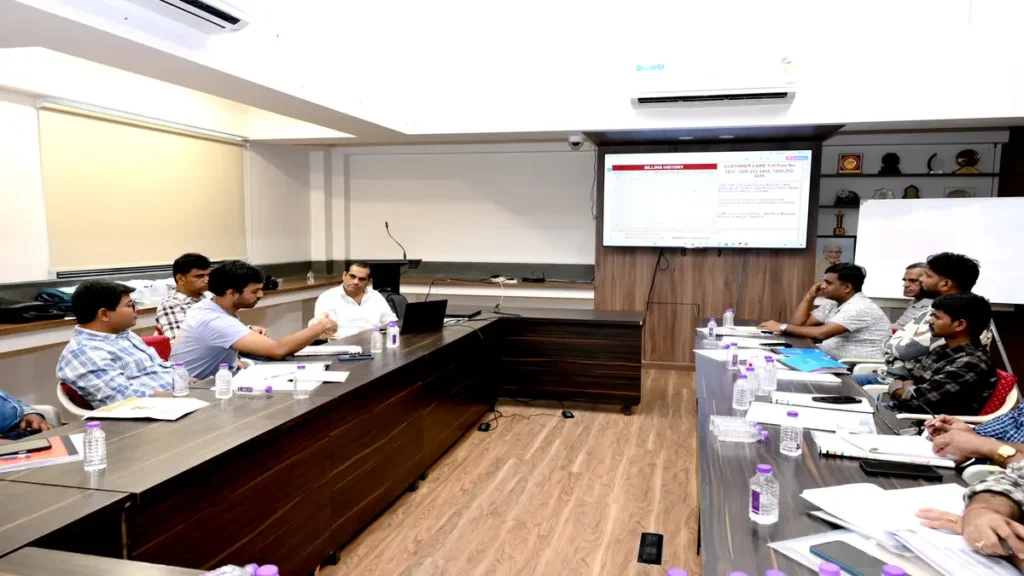
Theory alone is insufficient for solar engineering. At IISE, practical sessions immerse students in actual hardware: handling physical PV modules, crimping industrial MC4 connectors, mounting aluminium rail profiles, wiring DC isolators and AC distribution boards, and programming string inverters.
Students perform real electrical testing using digital multimeters, DC clamp meters, insulation resistance testers, and solar pyranometers to verify open-circuit voltage, short-circuit current, and array irradiance.
Hands-on characterization of Monocrystalline, Polycrystalline, and Bifacial panels. Measuring open-circuit voltage (Voc), short-circuit current (Isc), maximum power point voltage (Vmp) and current (Imp).
Familiarisation with grid-tied string inverters, hybrid inverters, and MPPT charge controllers. Understanding terminal connections, parameter configuration, and monitoring display readings.
Assembly and wiring of DC Combiner Boxes (AJB), AC Distribution Boards (ACDB), DC surge protection devices (SPD), DC isolator switches, and standard MC4 connector crimping.
Safe handling, connection, and testing of tubular lead-acid and Lithium Iron Phosphate (LiFePO4) battery banks. Configuration of Battery Management Systems (BMS) and state-of-charge checks.
Practical training with digital multimeters, DC clamp meters, solar pyranometers (irradiance measurement), insulation resistance testers (Megger), and earth ground resistance testers.
Mounting structure assembly on flat roofs and tin sheds. Understanding rail fixing, mid-clamps, end-clamps, module spacing, tilt angles, and structural waterproofing precautions.
Industrial Exposure and Internship Opportunities
Real-world industrial exposure is integrated throughout the three years to bridge classroom learning with actual project execution, site operations, and professional workplace standards.
Observation-based placement at a solar installation site or workshop. Students observe structural rail assembly, cable routing, personal protective equipment (PPE) adherence, and inventory workflows under engineering supervision.
Hands-on technical engagement assisting project engineers with commercial rooftop installations. Tasks include module clamping, DC string terminations, earthing pit testing, and drafting pre-commissioning checklists.
Comprehensive industry immersion with a registered solar developer, EPC contractor, or O&M service company. Students participate in project planning, grid synchronization handovers, DISCOM approvals, and client handovers.
Assessment and Evaluation
The academic evaluation framework balances continuous practical assessment with semester-end technical examinations to verify both theoretical understanding and field competence.
Periodic module assessments, conceptual tests, and semester-end examinations evaluating electrical calculations, system sizing, and regulatory standards.
Hands-on evaluations in tool handling, multimeter testing, wiring circuit assembly, polarity verification, and troubleshooting demonstrations.
Evaluation of the 1kW Small Solar System (Sem 2), 2kW Mid-Level Project (Sem 4), and final 5–10kW Capstone Plant Installation report and defense.
Assessment of industry training diaries, mentor evaluation reports, technical viva voce examinations, and practical field documentation.
Skills You Will Develop
A well-rounded combination of technical engineering competencies, field skills, and business abilities.
In-depth understanding of cell technologies (mono PERC, TOPCon), IV curves, and temperature coefficients.
Reading and evaluating spec sheets for modules, string inverters, charge controllers, and DC cables.
Applying IEC/BIS standards, Lockout/Tagout (LOTO), arc flash protection, and PPE usage on active sites.
Mechanical structure assembly, tin/tile roof clamping, module alignment, and conduit cable routing.
Calculating load requirements, array sizing, string voltage limits, and DC/AC overload ratios.
Sizing and configuring Lead-Acid and LiFePO4 battery banks with automated Battery Management Systems (BMS).
Operating multimeters, clamp meters, pyranometers, earth pit testers, and running anti-islanding checks.
Module cleaning procedures, thermal anomaly identification, and isolating ground/isolation faults.
Calculating project CAPEX, OPEX, LCOE, simple payback, and estimating PM Surya Ghar subsidies.
Drafting electrical single-line diagrams (SLD) and 2D rooftop panel layouts according to standard conventions.
Preparing Bill of Materials (BOM), DISCOM net-metering dossiers, commissioning reports, and client handovers.
Professional customer consultation, site survey presentations, contractor coordination, and workplace teamwork.
Career Opportunities and Industry Roles
Graduates of the D.Voc in Solar Technology are prepared to enter technical, operational, and supervisory roles across India’s expanding clean energy market.
Executes rooftop mechanical structure fixing, panel clamping, DC string cabling, and connection to inverter terminals on residential and C&I sites.
Supervises on-site installation teams, monitors safety adherence, tracks daily progress against project schedules, and verifies component quality.
Conducts scheduled array cleaning, electrical connection checks, thermal hotspot inspections, and inverter performance monitoring.
Handles AC and DC distribution board wiring, isolators, earthing pit connections, lightning arrestor installation, and grid synchronization.
Diagnoses system underperformance, ground-fault warnings, inverter fault codes, and replaces defective modules or bypass diodes.
Performs rooftop site feasibility surveys, calculates customer load requirements, prepares cost estimates, and explains government subsidies.
Coordinates material procurement, logistics, DISCOM net-metering approvals, and client handover documentation for solar EPC firms.
Supports multi-source hybrid installations, solar-diesel microgrids, battery energy storage systems, and agricultural solar pumping units.
Establishes an independent local rooftop solar installation, O&M service, or solar equipment distribution dealership.
Solar Entrepreneurship and Business Opportunities
India’s national rooftop solar target has created unprecedented self-employment opportunities. The D.Voc curriculum trains students in business planning, costing, and statutory processes to establish independent enterprises.
Launch a residential and commercial rooftop solar installation business, providing complete turnkey design, procurement, structural mounting, wiring, and DISCOM net-metering commissioning for 1kW–50kW systems.
Establish a specialized operations and maintenance agency offering annual maintenance contracts (AMC), automated or manual panel cleaning, inverter diagnostics, and thermal hotspot inspections for residential societies and commercial plants.
Set up a dealership for solar modules, string inverters, hybrid inverters, solar water heaters, DC cables, mounting structures, and Balance of System (BOS) accessories in district and tier-2/3 markets.
Provide solar water pumping systems and solar fencing for rural agriculture under state and central schemes (such as PM-KUSUM), helping farmers reduce diesel expenditure.
Programme Fee and Payment Information
Transparent vocational education pricing with comprehensive academic and practical training inclusions.
- ✓ Complete six-semester academic tuition and instructional access
- ✓ Digital LMS account with recorded lectures, guides & spec sheets
- ✓ On-campus practical solar laboratory and workshop sessions
- ✓ Hands-on equipment handling (panels, inverters, multimeters, BOS)
- ✓ Project mentorship (1kW mini-project, 2kW system, capstone plant)
- ✓ Placement assistance and resume review through hiring partners
Step-by-Step Admission Process
A simple, transparent 5-step journey from initial enquiry to classroom and lab orientation.
Fill the online enquiry form on this page or initiate a quick WhatsApp chat with your name, mobile, and educational background.
Connect with an IISE academic counsellor to understand the hybrid format, batch schedules, practical sessions, and eligibility details.
Receive the complete programme information pack, fee schedule, and documentation requirements directly via email and WhatsApp.
Complete the formal admission application and submit self-attested copies of your Class 10 marksheet and government identity proof.
Complete applicable admission formalities and the programme fee of ₹39,999 to receive your student portal credentials and batch schedule.
Academic Partner and Certification Framework
"The programme's final qualification and awarding arrangements are subject to confirmation of the applicable university partnership and academic requirements. Prospective students may contact IISE for the latest approved programme and certification information."
IISE conducts its technical training in accordance with established vocational education principles, emphasizing rigorous skill competencies, equipment familiarity, and industrial best practices. The D.Voc in Solar Technology is structured to provide distinct academic exit levels: a Certificate-level foundation upon Year 1 completion, an intermediate Diploma-level proficiency upon Year 2, and the full vocational qualification upon completing all six semesters and the capstone internship in Year 3.
Placement Assistance and Career Support
IISE supports students throughout their career transition into the solar energy sector with structured placement assistance through hiring partners.
Expert guidance on drafting industry-standard technical resumes highlighting solar PV lab competencies, tool handling, CAD skills, and internship milestones.
Rigorous practice interviews covering electrical circuit theory, system sizing questions, rooftop safety SOPs, and behavioral communication.
Connecting graduating candidates with active openings across solar EPC firms, inverter manufacturers, installation contractors, and O&M agencies.
Personalized counseling on long-term career growth, pursuing advanced certifications, and exploring solar contracting or entrepreneurial ventures.
Frequently Asked Questions (FAQs)
Find clear, authoritative answers to common questions about eligibility, curriculum, fees, practical training, and career support.
The D.Voc (Diploma in Vocation) in Solar Technology is a comprehensive, practical-oriented three-year vocational programme designed to prepare students for technical, supervisory, and entrepreneurial careers in the rapidly growing renewable energy and solar photovoltaic (PV) industry. The curriculum blends 70% practical, hands-on training with 30% conceptual classroom and digital learning, covering solar cell physics, PV system sizing, rooftop installation, inverter technology, battery storage, testing, commissioning, maintenance, and solar entrepreneurship.
The programme spans three academic years divided into six structured semesters, comprising a total of 90+ academic credits. Each academic year marks a progressive skill milestone: Year 1 delivers foundational electrical sciences and introductory solar component handling (Certificate Level); Year 2 covers intermediate system design, hybrid storage, power electronics, and 2kW system installation (Diploma Level); and Year 3 focuses on utility grid integration, smart microgrids, project management, capstone plant installation, and final apprenticeship (Advanced / Degree Level).
Yes, absolutely. The minimum eligibility criterion for admission to the D.Voc in Solar Technology is passing the Class 10 examination (Secondary School Certificate / Matriculation) from any recognized central or state education board (such as CBSE, ICSE, State Boards, NIOS, or equivalent). Students can enrol directly after Class 10 to commence specialized vocational training in renewable energy.
Yes. Students from any stream—including Science, Commerce, Arts, and Vocational streams—are fully eligible to apply. The foundational first semester starts with fundamental electrical sciences, basic mathematics, and introductory concepts, allowing students from diverse academic backgrounds to develop the required technical competence without prior specialized engineering training.
The confirmed programme tuition fee for the D.Voc in Solar Technology is ₹39,999. This fee covers digital LMS access, classroom instruction, laboratory practical workshops, hands-on tool usage, study materials, and examination administration. Flexible fee schedules and instalment assistance are available through the IISE admissions office to support prospective students.
The hybrid delivery model combines the flexibility of self-paced digital learning with the rigor of in-person technical training. Theoretical concepts, system design principles, and engineering calculations are delivered through interactive online modules, recorded video lectures, and live faculty discussions. Practical laboratory sessions, component testing, inverter configuration, and rooftop mounting exercises are conducted on-campus in structured workshops, ensuring students gain complete hands-on mastery without career disruption.
Yes. Practical learning is the core foundation of the D.Voc programme. Students participate in extensive laboratory and workshop sessions where they physically handle and test solar PV modules, string inverters, charge controllers, DC combiner boxes, and battery banks. They learn to operate essential electrical instruments including digital multimeters, DC clamp meters, solar irradiance meters (pyranometers), and insulation resistance testers (Meggers).
Yes. Practical rooftop solar installation is thoroughly taught across multiple semesters. Students learn rooftop site survey techniques, structural shading analysis, mechanical rail assembly, tile and tin-shed clamping methods, solar module fixing, DC cable routing in conduits, MC4 crimping, and array earthing according to standard operating procedures (SOPs).
Yes. Power electronics is a dedicated subject in the curriculum. Students study grid-tied string inverters, central inverters, microinverters, and off-grid hybrid PCUs. The curriculum covers Maximum Power Point Tracking (MPPT) algorithms, DC-to-DC conversion, inverter parameter programming, harmonic filtering, and grid synchronization protocols.
Yes. Operation and Maintenance (O&M) is extensively covered. Students are trained to perform preventive maintenance schedules, module cleaning protocols, thermal hotspot detection using infrared thermography concepts, string open-circuit voltage tracing, ground-fault isolation, inverter error code interpretation, and performance ratio (PR) evaluations according to IEC 61724 standards.
The six-semester curriculum covers 28+ comprehensive modules including Introduction to Renewable Energy, Fundamentals of Electricity & Electronics, Basics of Solar Energy, Technical Drawing & CAD Basics, Solar PV Technology, Electrical Safety & Standards (IEC/BIS), Energy Economics, Advanced Solar PV System Design, Hybrid Solar Systems, Solar Thermal Technology, Grid-Tied Systems & Net Metering, Battery Energy Storage Systems (BESS), Financial Modeling, Smart Grids, Project Management (MS Project/Primavera), Marketing & Solar Sales, Solar Regulatory Laws, Emerging Solar Technologies (BIPV, Agrivoltaics), and Entrepreneurship Business Planning, along with progressive mini-projects, capstone plant installations, and industry internships.
Graduates can pursue diverse technical and supervisory roles across solar EPC companies, rooftop installation firms, inverter manufacturers, and solar operations agencies. Key job roles include Solar PV Installation Technician, Solar Site Supervisor, Solar O&M Technician, Solar Electrical Technician, Solar Service & Troubleshooting Specialist, Solar Technical Sales & Estimation Executive, and Solar Project Coordinator. Actual employment eligibility depends on individual competency, performance, and employer selection criteria.
Yes. IISE provides structured placement assistance through its network of solar hiring partners, EPC contractors, and clean energy enterprises. The placement cell supports students with technical resume building, professional portfolio development, mock technical interviews, and direct interview referrals. Placement assistance is a supportive service designed to facilitate employment opportunities; actual hiring is determined by employer requirements and student performance.
No institution can legitimately guarantee employment, and IISE adheres to a strict policy of transparency. While IISE provides dedicated placement assistance, interview opportunities, and industry referrals, final job selection depends entirely on the candidate’s technical skills, practical competency, interview performance, and the hiring criteria of the recruiting company.
The programme’s final qualification and awarding arrangements are subject to confirmation of the applicable university partnership and academic requirements. Prospective students may contact IISE admissions for the latest approved programme, university partner details, and certification information.
Yes. Entrepreneurship development is deeply integrated into the curriculum. In Semesters 3, 5, and 6, students learn business model canvas formulation, project costing, customer proposal generation, vendor management, and statutory registrations (such as MSME Udyam, GST, and electrical contractor licensing). Graduates acquire the technical competence and commercial awareness needed to establish independent rooftop solar installation, O&M, cleaning, or equipment distribution businesses.
Applicants typically need to provide: (1) Self-attested copy of Class 10 marksheet and passing certificate, (2) School leaving certificate or transfer certificate (if available), (3) Government-issued photo identity proof (such as Aadhaar card, voter ID, or passport), and (4) Recent passport-size photographs. Specific documentation requirements are verified by the admissions desk during the application review process.
Applying is a simple, structured five-step process: (1) Submit an admission enquiry through the online form on this page or via WhatsApp, (2) Speak with an IISE academic counsellor to discuss your career goals and verify eligibility, (3) Complete the official application form with your Class 10 academic details, (4) Complete document verification and the confirmed admission fee of ₹39,999, and (5) Receive your enrollment confirmation, student portal credentials, and batch orientation schedule.
Start Your Journey in Solar Technology with IISE
Build foundational technical knowledge and practical understanding of solar photovoltaic technology through a structured vocational learning programme.
Enquire for D.Voc in Solar Technology Admission
Submit your details below to receive the complete programme brochure, fee schedule, and admission guidance from IISE counsellors.
Time is running out. Apply now!
- 00Days
- 00Hours
- 00Minutes
- 00Seconds
Stay Connected with IISE on WhatsApp
Get the latest updates on solar courses, practical workshops, admissions, scholarships, career opportunities, industry insights and upcoming events directly on WhatsApp.
Free to join • Unsubscribe anytime • Opens directly in WhatsApp
Indian Institute of Solar Energy
Official Organization Channel • Renewable Energy
What Subscribers Receive
- Solar Course Admissions & Batch Dates
- Practical Workshop Alerts & Hands-on Sessions
- Career Opportunities & Solar Placement Drives
- Scholarships & Gov. Certification Guidelines