About Indian Institute of Solar Energy (IISE)
Building Skills and Careers in Solar Energy and Renewable Technologies
Operating under the Centre for Energy Research and Training (CERT), the Indian Institute of Solar Energy provides industry-oriented vocational education, hands-on laboratory workshops, and research-backed curricula. For over 15 years, we have trained engineers, diploma holders, technicians, and entrepreneurs to lead India’s renewable energy and clean mobility transition with field-ready technical competence.
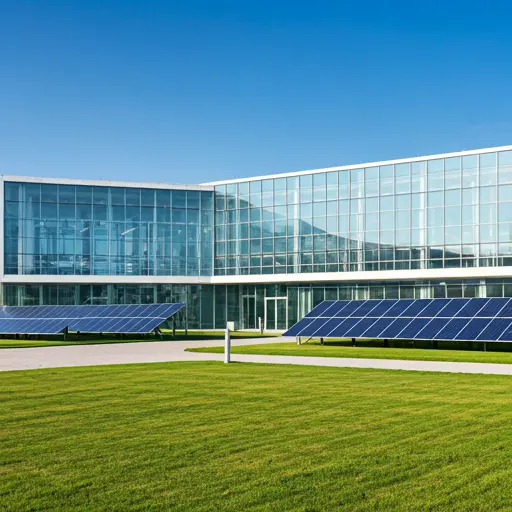
Vocational degree & diploma pathways under recognized university frameworks.
Bridging the Engineering Theory–Practice Divide in Clean Energy
The Indian Institute of Solar Energy (IISE) was established to provide industry-leading technical education, practical skill development, and applied research in renewable energy. As India accelerates its transition toward decentralized rooftop solar, utility-scale solar generation, battery energy storage systems (BESS), and electric mobility, the demand for rigorously qualified technical personnel has expanded exponentially.
Operating as an institutional unit of the Centre for Energy Research and Training (CERT), IISE addresses a critical structural gap in conventional higher education. Traditional academic curricula often emphasize theoretical physics without exposing students to practical challenges—such as Single Line Diagram (SLD) development, DC string sizing, insulation resistance diagnostics, inverter grid synchronization, or state DISCOM net-metering liaison.
Our academic leadership and practitioner faculty engage learners directly in systems engineering, site shadow analysis, bill of materials (BOM) preparation, and commissioning protocols. Through this approach, IISE ensures that every graduate emerges with authentic technical competence, capable of adding immediate value on job sites or launching viable clean-tech enterprises.
The IISE Educational Framework
-
✔Academic Affiliation: UGC-affiliated vocational degree curricula through university partnerships.
-
✔Practitioner Faculty: Courses led by active EPC directors, patent holders, and power electronics researchers.
-
✔Laboratory Execution: Hands-on wiring, inverter synchronization, and multimeter testing on physical hardware.
-
✔Design Software: Practical mastery of PVsyst, Helioscope, and AutoCAD for commercial site engineering.
-
✔Entrepreneurial Mentorship: Direct coaching on tendering, quotation modeling, and net-metering approvals.
Our Story: From Specialized Training to Clean Energy Leadership
Built on a clear mandate to empower individuals, communities, and enterprises through accessible, high-standard technical knowledge.
As India initiated national solar adoption policies, the industry confronted an acute shortage of certified technicians and site engineers. IISE was established under CERT to create focused, intensive training programs that translate complex renewable technology into employable field skills.
Recognizing the need for formal educational pathways, IISE structured modular curricula ranging from short 2-day practical workshops to comprehensive 1-year postgraduate diplomas, collaborating within UGC-affiliated vocational degree frameworks like the B.Voc in Solar Technology.
To address clean mobility and grid modernization, the institute integrated electric vehicle powertrain design, charging infrastructure management, and lithium battery storage technologies into its active course catalog, preparing learners for the next frontier of clean energy.
Our Vision
“To contribute to a sustainable energy future by advancing accessible, practical and industry-relevant education in solar energy and renewable technologies.”
We envision an India powered by technically competent professionals, responsible engineering practices, applied research, and widespread clean technology adoption.
Read Full Vision Charter →Our Mission
Primary Institutional Mission:
- To make India a global leader in solar energy.
- To create solar education that meets the human resource needs of the country.
- To develop leadership qualities, team spirit, and environmental responsibility.
- To spread technical awareness among youth for clean energy adoption.
Institutional Values
- Technical Accuracy: Rigorous adherence to CEA and IEC engineering standards.
- Practical Learning: Genuine hardware competency over passive theoretical memorization.
- Integrity & Transparency: Factual communication of program outcomes and technical specifications.
- Student Mentorship: Accessible practitioner guidance for careers and enterprise creation.
- Continuous Innovation: Continuous curriculum updates reflecting emerging energy technologies.
What We Do: Core Pillars of Activity
Five strategic pillars define IISE's institutional mandate to cultivate technical capability and support clean energy growth across India.
Renewable Energy Education
Structured academic programs including PG Diplomas, B.Voc vocational degrees, and short-format professional certificates across Solar PV, EV Systems, and Battery Storage.
View Academic Programs →Practical Skill Development
Intensive hardware workshops covering photovoltaic module mounting, combiner box termination, inverter wiring, insulation testing, and electrical troubleshooting.
Practical Workshops →Research & Development
Applied scientific investigation in association with CERT into tropical PV degradation, seawater splitting electrodes for hydrogen, and patent-backed battery regeneration.
Scholarly & Applied R&DIndustry Consultancy & Advisory
Professional technical advisory for DISCOM net-metering approvals, third-party EPC quality audits, shadow path analysis, and industrial energy auditing consultancy.
Technical Advisory Services →Entrepreneurship Development
Comprehensive mentorship helping aspiring founders launch independent solar EPC contracting businesses, battery service shops, and solar channel partnerships.
Entrepreneurship Program →Our Integrated Learning Methodology
A structured 6-stage experiential continuum engineered to transform foundational engineering knowledge into field execution competence.
Practical Training: Learn by Direct Execution
Engineering competence in clean technology requires hands-on familiarity with physical balance-of-system hardware, electrical protection devices, and measuring instruments.

PV Array Assembly
Module mounting structure fastening, tilt optimization, panel clamping, and string configuration.

Inverter & BOS Wiring
DC combiner boxes, surge protection devices (SPDs), AC distribution boards, and grid-tied inverters.

Electrical Diagnostics
Testing open-circuit voltage (Voc), short-circuit current (Isc), Megger insulation, and earth resistance.

Battery & Off-Grid Setup
Battery bank interconnection, charge controller programming, hybrid storage setups, and simulated fault finding.
Our Technical Expertise & Program Areas
Comprehensive educational offerings aligned with high-growth sectors across the clean energy and sustainable mobility landscape.
Solar PV Technology
Rooftop and ground-mount photovoltaic systems, monocrystalline & bifacial module characteristics, string inverter selection, and DC cabling standards.
Explore Solar Courses →Solar EPC & O&M
Turnkey project management, site surveying, procurement budgeting, thermographic hotspot inspections, and preventive operation & maintenance.
Explore O&M Training →Battery Energy Storage
Lithium-ion chemistries, Battery Management Systems (BMS), cell testing, cycle life extension, and lead-acid desulfation technologies.
Explore Battery Courses →Electric Vehicle (EV) Tech
EV powertrain engineering, motor controllers, AC Type-2 and DC fast charging infrastructure (CCS/CHAdeMO), and EV charging point operations.
Explore EV Programs →Energy Efficiency & Auditing
Commercial & industrial energy auditing, measurement protocols, harmonic mitigation, power factor correction, and preparation for certified energy manager roles.
Explore Energy Auditing →Solar Design Software
Computer-aided modeling using PVsyst, Helioscope, AutoCAD Electrical for Single Line Diagrams, and 3D SketchUp shadow path simulation.
Explore Software Courses →Applied Research, Innovation & Knowledge Development
Beyond technical vocational education, the Indian Institute of Solar Energy actively supports applied research and clean-technology innovation in association with the Centre for Energy Research and Training (CERT). Our research focus addresses the practical engineering challenges confronting clean energy deployment in tropical, coastal, and high-ambient temperature operating conditions.
Investigating photovoltaic module degradation mechanisms, thermal coefficients under tropical heat, soiling mitigation strategies, and high-efficiency bifacial panel ground albedo optimization.
Faculty-directed doctoral research exploring salt-resistant active electrodes for direct seawater splitting, reducing freshwater reliance for green hydrogen production.
Patent-backed research into electrochemical desulfation, industrial lead-acid refurbishment, and second-life battery pack integration for off-grid renewable applications.
Verified Scholarly Credentials
-
✔12+ Peer-Reviewed Papers: Published in reputed international research journals across solar product engineering.
-
✔3 Granted Patents: Held in solar product development, solar thermal systems, and industrial engineering.
-
✔Doctoral Dissertation: Studies on the development of salt-resistant active electrodes for seawater splitting (RGIPT).
-
✔Academic Society Memberships: Life membership in the Indian Physics Association and editorial board leadership in international luminescence journals.
Meet Our Team of Industry Experts & Scholars
Instruction at IISE is delivered by active EPC directors, university researchers, power electronics specialists, and regulatory consultants.

Dr D S Malwad
PhD in Solar Energy. Author of 12+ research papers in reputed international journals and holder of 3 patents in solar product development.

Dr. Srinivas M
Expert in Power Electronics. Life member of the Indian Physics Association and editorial board member for luminescence applications journals.

Yogendra Kainthola
Founder of Battery Life 2 and co-founder of Revive Battery EU & Zyrone Energy. Patent holder for battery regeneration machinery.

Rajesh Unnikrishnan
IIT Mumbai NCPRE-certified trainer and EV expert. Electrical engineer with an MBA from Bradford University; 20+ years in the power sector.

Dr Arpan Tewary
PhD from Rajiv Gandhi Institute of Petroleum Technology (RGIPT). Research thesis: Salt-resistant active electrodes for seawater splitting.

Rakesh Ambekar
10+ years experience in net metering, open access, and DISCOM regulatory compliance; consultant to regional solar developers.

Sushant Pawar
Leads technical support and project coordination, faculty development programs, industrial plant visits, and student mentorship.

Siddharth Deshpande
Expert in solar PV system design, simulation software, energy modeling, and standardized tender documentation for EPC approvals.

Rajesh Unnikrishnan
Pioneering Practical Renewable Energy Education in India
With more than two decades of senior experience in the electrical power sector, Rajesh Unnikrishnan guides the institutional trajectory and academic rigor of the Indian Institute of Solar Energy. He holds an electrical engineering background, an MBA from Bradford University (UK), and certification as a specialized solar PV trainer from the National Centre for Photovoltaic Research and Education (NCPRE) at IIT Bombay.
His educational philosophy emphasizes that clean technology adoption cannot accelerate without reliable, field-competent engineers who understand practical installation constraints, electrical safety standards, and commercial feasibility. Under his direction, IISE was structured to bridge classroom equations with job-site execution—ensuring learners gain hands-on proficiency in circuit assembly, inverter grid tie, and simulation design before stepping into the field.
“Our objective at IISE has always been straightforward: to cultivate technical confidence. When an engineer or technician understands how equipment functions, how grid protection works, and how to model yield accurately, they become an asset to the entire renewable energy transition.”
Who We Train: Pathways for Diverse Technical Goals
Our vocational curriculum is engineered to support learners at every stage of their technical development—from first career steps to commercial enterprise ownership.
Engineering Graduates
Electrical, mechanical, and civil engineers preparing for EPC project management, design engineering, and site execution roles.
Diploma & ITI Holders
Technical polytechnic students upgrading practical skills in inverter installation, string testing, and site supervision.
Fresh Graduates
BSc, BCA, and general degree holders seeking specialized vocational entry into high-growth clean technology industries.
Working Professionals
Engineers in conventional power, manufacturing, or construction upskilling into solar PV, BESS, and EV technologies.
Electricians & Technicians
Field practitioners formalizing their electrical experience with certified solar PV installation and safety standards.
Solar Installers & Contractors
Contractors expanding capabilities from simple installations into full-scale EPC procurement and net-metering liaison.
Career Switchers
Professionals transitioning from IT, telecom, or retail management into sustainable clean energy roles.
Aspiring Entrepreneurs
Future business owners learning solar system pricing, quotation modeling, vendor sourcing, and project approvals.
Where Renewable Energy Skills Can Take You
A rigorous technical foundation unlocks distinct career avenues across project execution, technical advisory, and clean-tech entrepreneurship.
Rooftop Solar EPC Contractor
Establish an independent contracting firm delivering turnkey rooftop solar installations under national net-metering schemes.
Solar O&M & Maintenance
Provide specialized periodic testing, thermographic fault inspection, panel cleaning, and yield logging for commercial clients.
Technical Advisory Consultant
Conduct shadow path analysis, prepare Detailed Project Reports (DPRs), and manage DISCOM open-access sanctions.
Battery Service & Storage
Offer lithium pack diagnostics, lead-acid refurbishment, and secondary storage integration for off-grid and telecom sites.
EV Charging Operator (CPO)
Plan, install, and operate AC/DC charging stations for public, residential, and corporate fleet locations.
Certified Energy Auditor
Perform comprehensive energy efficiency assessments for commercial complexes, manufacturing units, and utilities.
Institutional Note: Career and commercial outcomes depend on individual learner educational background, field experience, practical diligence, local DISCOM market regulations, and economic demand.
Why Learners and Industry Partners Choose IISE
Verifiable differentiators grounded in technical specialization, experienced practitioner instruction, and hands-on laboratory mastery.
Renewable Energy Focus
A specialized institute dedicated 100% to clean energy, solar PV, energy storage, EV mobility, and auditing—not generic broad coursework.
Industry-Aligned Syllabus
Curricula designed around active state DISCOM net-metering norms, CEA safety guidelines, and real-world EPC procurement procedures.
Practitioner Faculty
Learn directly from professors holding doctorates, granted patents, and 10 to 20+ years of active power systems engineering experience.
Flexible Pathways
Offerings range from intensive weekend practical workshops to full one-year PG diplomas accommodating students and working professionals.
Institutional Structure, Accreditations & Transparency
The Indian Institute of Solar Energy operates as an academic and vocational training unit under the Centre for Energy Research and Training (CERT). To ensure complete clarity for all prospective students, educational authorities, and hiring partners, IISE maintains transparent disclosures regarding its institutional and academic status:
Vocational Degree Framework: Programs such as the Bachelor of Vocation (B.Voc) in Solar Technology and related advanced vocational diplomas are conducted under university affiliations recognized by the University Grants Commission (UGC) within the National Skills Qualifications Framework (NSQF).
Institutional Demarcation: IISE is a specialized vocational training, engineering skill development, and technical research body. It is not an autonomous university and does not award general academic degrees independently. This clear operational structure ensures focused technical excellence while preserving formal accreditation standards.
Institutional Overview
| Operating Unit: | Centre for Energy Research and Training (CERT) |
| Program Framework: | UGC-Affiliated Vocational Curriculum |
| Specialization: | Solar PV, EV, Storage & Auditing |
| Headquarters: | Mumbai, Maharashtra, India |
Student Experiences & Industry Feedback
Authentic reflections from engineering graduates, renewable tech entrepreneurs, and corporate recruitment partners.
“I was working in a completely different field before IISE. Within 3 months of completing my PG Diploma, I had two job offers from solar EPC companies in Mumbai. The practical training was the key.”
“The entrepreneurship program gave me the confidence to start my own solar installation firm. IISE's faculty provided guidance even after I graduated, helping me land my first 100kW project.”
“Solar companies are always reluctant to recruit fresh engineers as they have to spend months training them. IISE does this work for us with an industry-standard syllabus and practical exposure.”
Free Solar Tools & Engineering Calculators for India
As part of our commitment to accessible clean energy education, IISE develops free, calibrated online calculators for system designers, rooftop installers, engineers, and property owners across India and the GCC.
These open-access tools enable users to determine preliminary solar PV system sizing, estimate rooftop panel counts, evaluate battery storage capacity, and check financial metrics under government subsidy frameworks like PM Surya Ghar:
⚡ Available Calculation Hubs
- ✓ Rooftop PV System Sizing: Based on monthly electricity consumption.
- ✓ Panel Count & Roof Area: Sized for standard monocrystalline modules.
- ✓ Battery Bank Capacity: kWh storage sizing for off-grid & backup.
- ✓ PM Surya Ghar Subsidy: Preliminary financial eligibility estimates.
Explore Our Training Programs & Certifications
Select from specialized renewable energy courses structured for technical beginners, practicing engineers, and clean-tech entrepreneurs.
Our Institutional Commitments
Six core operating principles guide our curriculum updates, laboratory safety standards, and student mentorship.
Industry Relevance
Instruction is continuously updated to reflect live equipment specifications, utility net-metering regulations, and DISCOM interconnection codes.
Practical Learning
Knowledge becomes valuable when applied. We prioritize physical wiring, multimeter testing, and CAD simulation tools over abstract lectures.
Technical Accuracy
Rigorous precision in electrical calculations, string sizing, cable ampacity, and safety protocols ensuring job-site compliance.
Continuous Updating
We incorporate emerging clean tech—such as bifacial panels, hybrid microinverters, and high-voltage battery storage—as soon as they enter commercial use.
Practitioner Mentorship
Direct access to faculty for guidance on technical career positioning, commercial EPC bidding, and project troubleshooting.
Entrepreneurial Support
Equipping founders with realistic quotation modeling, vendor evaluation criteria, and net-metering navigation to launch sustainable businesses.
Frequently Asked Questions
Key factual information regarding the Indian Institute of Solar Energy, curriculum standards, eligibility, and hands-on laboratory workshops.
The Indian Institute of Solar Energy (IISE) is a specialized academic, vocational training, and technical research institute focused on clean energy education. Operating as an institutional unit of the Centre for Energy Research and Training (CERT), IISE provides industry-oriented diplomas, professional certifications, and hands-on workshops across solar photovoltaic technology, battery energy storage systems, electric vehicles, and certified energy auditing.
IISE functions as an institutional unit of CERT (Centre for Energy Research and Training). CERT provides institutional governance and research direction, while IISE executes specialized curriculum delivery, practical laboratory training, student admissions, and industrial consultancy programs.
IISE offers programs tailored to various schedules: (1) Short-term intensive workshops (e.g., 2-day PV System Workshop and 15-day Solar Installation Training); (2) Professional certificate courses in solar design software and solar technician skills; and (3) Long-format programs including Diploma and Postgraduate (PG) Diplomas in Solar Technology and Electric Vehicle Technology.
Our courses accommodate a broad spectrum of learners: engineering students and graduates (Electrical, Mechanical, Civil), polytechnic diploma and ITI certificate holders, practicing electricians and solar installers, working professionals seeking clean tech upskilling, and prospective entrepreneurs planning to start solar EPC businesses.
Yes. Hands-on laboratory training is the foundational pillar of IISE’s curriculum. Students work directly with real operating hardware, including photovoltaic panel mounting structures, DC combiner boxes, surge arrestors, grid-tied and hybrid inverters, multimeter testing kits, and insulation resistance testers.
Yes. IISE provides flexible learning pathways including interactive live online classes for engineering theory and software simulation (PVsyst, Helioscope, AutoCAD), paired with dedicated on-site laboratory workshops for hardware assembly, circuit wiring, and practical diagnostics.
Yes. Beyond solar photovoltaics, IISE offers specialized diploma and certificate programs in Electric Vehicle (EV) Technology (powertrain architecture, motor controllers, charging station protocols) and Battery Energy Storage Systems (BESS, Lithium-ion pack engineering, BMS design, and battery regeneration).
Graduates can pursue opportunities such as Solar PV Design Engineer, Solar Site Installation Supervisor, Solar EPC Project Coordinator, O&M Service Specialist, Technical Advisory Consultant, or establish independent rooftop solar contracting and dealership enterprises. Outcomes depend on qualifications, practical diligence, and regional market demand.
Yes. IISE develops open-access online engineering calculators for the public and prospective students, including the Solar Rooftop Calculator and Solar Rooftop Power Calculator, calibrated to estimate system capacity, panel counts, generation yields, and PM Surya Ghar subsidy estimates.
You can contact IISE admissions counselors by calling +91-80 62258 666 or +91 981922 5503, messaging the official WhatsApp support line at +91 88509 02306, emailing info@iise.ac, or submitting the course inquiry form directly on this website.
Build Your Future in Renewable Energy with IISE
Explore technical training, practical laboratory workshops, and industry-oriented renewable energy education pathways that match your professional aspirations.
Learning From Professionals Who Understand the Industry
At IISE, instruction is led by practicing engineers, licensed consultants, and academic researchers who actively work in the renewable energy sector.
Solar EPC & Grid Tie
Direct exposure to turnkey rooftop and ground-mounted solar engineering, procurement, and construction challenges.
Power Electronics
Technical insights into inverter topologies, harmonic distortion mitigation, transformerless design, and protection relays.
Battery Energy Storage
Practical principles of lithium-ion BMS communication, cell balancing, safety compliance, and hybrid solar integration.
Regulatory Liaison
Knowledge of DISCOM policies, net-metering sanctions, open access guidelines, and statutory safety documentation.
From Classroom Knowledge to Industry Capability
Success in renewable energy requires far more than theoretical equations. We systematically develop the tangible capabilities required on job sites and consulting boards.
Design & Engineering
- ✓ Solar PV array layout and tilt optimization
- ✓ Shading analysis and yield generation simulation
- ✓ Single Line Diagram (SLD) and cable sizing
- ✓ Bill of Materials (BOM) preparation for tenders
Installation & Commissioning
- ✓ Module mounting structure (MMS) assembly
- ✓ DC combiner box and surge protection
- ✓ Inverter grid synchronization and startup
- ✓ Insulation resistance (Megger) diagnostics
Safety, O&M & Compliance
- ✓ Earthing pit testing and lightning protection
- ✓ Thermographic hotspot inspection & IV tracing
- ✓ Preventive maintenance and yield logging
- ✓ Net-metering inspection readiness
Programs Designed for Different Career Stages
IISE structures its curriculum across distinct industry sectors, allowing students and professionals to select the specific pathway aligned with their objectives.
Solar Energy
PV system design, installation, operation & maintenance, solar EPC project management, and advanced postgraduate diploma programs.
EV Systems
Electric vehicle architecture, powertrain design, charging infrastructure standards, and specialized mobility engineering courses.
Battery Storage
Battery chemistries, Lithium-ion pack engineering, Battery Management Systems (BMS), testing protocols, and regeneration techniques.
Energy Auditing
Industrial and commercial energy audits, measurement verification, efficiency consultancy, and preparation for certified energy manager exams.
Software Tools
Industry-standard solar simulation software, yield analysis tools, 3D shading modeling, and electrical CAD design programs.
From Skills to Opportunities
Solar energy is uniquely structured for decentralized entrepreneurship. We empower learners with the technical acumen, costing models, and compliance knowledge needed to establish viable renewable energy ventures.
Rooftop Solar EPC Contractor
Design, source, and construct residential and commercial rooftop installations under national net-metering schemes.
Solar O&M & Cleaning Services
Establish specialized periodic maintenance, thermographic fault detection, and panel cleaning contracts for commercial clients.
Technical Advisory & Feasibility
Provide independent DPR (Detailed Project Report) consultancy, shadow analysis, and subsidy application assistance.
Battery Services & Regeneration
Offer battery pack maintenance, lead-acid refurbishment, and lithium-ion testing for clean mobility and off-grid clients.
EV Charging Point Operator (CPO)
Plan, install, and operate AC/DC charging stations for public, residential, and corporate fleet locations.
Certified Energy Auditor
Deliver energy efficiency audits for industrial plants, factories, and commercial complexes to reduce tariff expenditures.
What Guides Our Approach
Six guiding commitments define how our institute develops curricula, trains technicians, and supports graduates in their professional careers.
Industry Relevance
Training should reflect real-world renewable energy requirements, current equipment specifications, and active state utility grid regulations.
Practical Learning
Knowledge becomes valuable when learners can apply it. We prioritize laboratory measurements, physical wiring, and simulation tools over passive study.
Continuous Learning
Renewable energy technology continues to evolve rapidly. We constantly update syllabi to incorporate emerging storage chemistries, bifacial panels, and EV protocols.
Mentorship
Learners receive personalized technical guidance aligned with their professional goals—whether transitioning into jobs or preparing commercial bids.
Innovation
We encourage technical curiosity, research methodologies, and novel engineering solutions for decentralized energy generation and conservation.
Entrepreneurship
Helping learners identify commercial market gaps and develop the execution confidence required to launch self-sustaining clean technology businesses.
Where Renewable Energy Skills Can Take You
A structured progression demonstrating how foundational technical training branches into multiple professional employment and commercial enterprise avenues.