Become a Skilled Solar PV Installer with Practical Industry-Oriented Training
Build practical skills in solar PV installation, rooftop solar systems, electrical integration, testing and commissioning through IISE's 3-month hybrid Solar PV Installer Course.

Course Highlights
Discover why IISE's Solar PV Installer Course is India's leading vocational training programme for aspiring solar technicians and rooftop installers.
1. Three-Month Professional Training
A focused, progressive curriculum covering solar PV fundamentals, site assessment, structural mounting, electrical wiring, testing, and commissioning.
2. Hybrid Learning Delivery
Combines flexible online theoretical instruction in system sizing and electrical codes with intensive in-person practical lab & rooftop sessions.
3. Practical Installation Experience
Work on live rooftop structures, wire real solar panels, configure string inverters, and use multimeters and clamp meters under instructor guidance.
4. Open Eligibility
Accessible to 10th-pass, 10+2, ITI candidates, Diploma holders, Graduates, and working electricians. No prior solar experience is mandatory.
5. Joint IISE & CERT Certification
Eligible successful graduates receive a joint Certificate of Completion from Indian Institute of Solar Energy and CERT, validating their field competencies.
6. Placement Assistance
Dedicated career support, professional resume development, interview guidance, and continuous access to IISE's network of verified hiring partners.
7. Industry-Oriented Curriculum
Built around current rooftop solar practices, CEA & MNRE safety standards, IEC module specifications, and net-metering interconnection protocols.
8. Career Guidance & Mentorship
Expert guidance for career growth as a salaried installer, EPC field supervisor, O&M technician, or establishing your own solar installation venture.
Why Choose Solar PV Installation as a Career?
India is experiencing an unprecedented surge in renewable energy capacity, creating immediate demand for trained, field-competent solar technicians.
The Rapid Transition to Rooftop Solar Across India
India's renewable energy sector is expanding rapidly under ambitious national clean energy commitments and government-backed decentralised solar programmes like the PM Surya Ghar: Muft Bijli Yojana. Residential homeowners, housing societies, commercial institutions, and manufacturing facilities across India are installing solar arrays at historic rates.
While demand for solar installations is growing exponentially, the industry faces a critical bottleneck: a severe shortage of certified, skilled personnel who can physically assemble mounting structures, route DC/AC cabling safely, align panels to optimal azimuth angles, and complete compliant grid interconnections.
Solar Engineering Procurement and Construction (EPC) contractors, local installation businesses, and Operations & Maintenance (O&M) service providers continuously look for certified technicians who have practical hands-on capability rather than mere textbook knowledge.
Practical Capability vs. Theoretical Understanding
Cannot inspect roof load integrity, struggles with DC crimping and torque specifications, unable to troubleshoot inverter fault codes, lacks field electrical safety awareness.
Mastery of structural clamping, correct string sizing, tilt & orientation adjustments, Voc & Isc multimeter verification, inverter commissioning, net-metering paperwork, and proactive preventive maintenance.
Residential & Rooftop Solar
Install 1 kW to 10 kW rooftop systems for individual homes, housing societies, and small commercial establishments benefiting from central government solar subsidies.
Commercial, Industrial & EPC
Work with prominent Solar EPC contractors on large commercial rooftops, industrial factories, ground-mounted installations, and microgrid installations across India.
Entrepreneurship & O&M
Launch your own independent solar installation firm, become an authorized solar dealer/channel partner, or provide ongoing annual maintenance (O&M) contracts.
About the Solar PV Installer Course
An intensive, practice-driven technical programme structured specifically to prepare you for immediate workplace integration.
What Does a Solar PV Installer Actually Do?
A Solar Photovoltaic (PV) Installer is a specialized technical professional responsible for converting solar blueprints and engineering schematics into safe, functioning, grid-connected solar power plants.
Their responsibilities span the full installation lifecycle: from conducting preliminary site shadow audits and verifying roof load integrity, to assembling galvanized iron (GI) or aluminium mounting structures, securing solar modules, executing DC cable stringing, installing inverter and battery subsystems, and conducting electrical safety verification prior to utility grid interconnection.
IISE's 3-month Solar PV Installer Course provides structured, progressive training that removes the guesswork from solar installation. We teach you how to follow national safety standards (CEA, MNRE, IEC), prevent electrical faults, and deliver high-efficiency solar systems that perform reliably for 25+ years.
- Rooftop solar site surveying & shade analysis
- Mounting structure assembly & mechanical panel fixing
- DC/AC electrical string wiring & protection configuration
- On-grid and off-grid inverter setup & grid synchronisation
- Testing with multimeters, clamp meters & insulation testers
- Preventive maintenance, troubleshooting & customer handover
How Rooftop Solar Systems Operate
As an installer, you will master all three standard system topologies used across India:
Generates electricity in parallel with the local DISCOM grid. Surplus energy is exported via a bi-directional net-meter, reducing monthly electricity bills.
Integrates battery energy storage (Lithium-ion or Lead-acid) and a charge controller to provide independent power in remote or frequent power-cut areas.
Combines grid-export capability with battery backup, delivering energy security during grid outages alongside net-metering financial benefits.
What Will You Learn? — Comprehensive 9-Module Curriculum
A rigorous step-by-step training framework guiding you from basic electrical and photovoltaic physics to live rooftop commissioning and commercial handover.
Foundation in Solar Physics & Photovoltaic Conversion:
- Solar energy fundamentals: Global and Indian renewable energy landscape, decarbonisation goals, and grid parity.
- Photovoltaic principles: How semiconductor materials and P-N junctions convert solar photon energy directly into direct current (DC) electricity.
- Solar radiation physics: Direct beam, diffuse, and albedo reflection; solar zenith, azimuth angles, solar constant, and peak sun hours (PSH).
- Solar PV system components overview: Solar modules, mounting structures, string inverters, charge controllers, DC/AC switchgear, and storage batteries.
- Understanding standard test conditions (STC: 1000 W/m², 25°C, AM 1.5) versus normal operating cell temperature (NOCT).
Technical Specifications, Selection & Balance of System (BOS):
- Solar PV modules: Monocrystalline PERC, Polycrystalline, TopCon, and bifacial module architectures; wattage ratings and efficiency factors.
- Solar inverters: Grid-tied string inverters, microinverters, central inverters, and hybrid inverters with MPPT tracking algorithms.
- Mounting structures: Galvanized iron (GI), hot-dip galvanized steel, and anodised aluminium rails, mid-clamps, and end-clamps.
- Cables & connectors: Solar-grade UV-resistant XLPE DC cables (4 sq mm, 6 sq mm), MC4 connectors, and AC multi-core flexible copper cables.
- Protection devices: DC Distribution Boxes (DCDB), AC Distribution Boxes (ACDB), Type II Surge Protection Devices (SPD), and DC isolators.
- Earthing and lightning protection: Chemical earthing rods, earth pits, earthing continuity, and early streamer emission (ESE) lightning arrestors.
Site Inspection, Sizing & Preliminary Layout Planning:
- Rooftop site assessment: RCC flat roofs, metal sheet roofs, tiled roofs, and structural weight load verification.
- Orientation and tilt angle: Optimum south-facing orientation in the Northern Hemisphere; calculating local latitude-based tilt angles.
- Roof shading analysis: Identifying shade from parapet walls, water tanks, trees, and adjacent buildings; using sun path charts.
- Customer load assessment: Analyzing historical electricity bills, Sanctioned Load (kW), Contract Demand, and daytime energy consumption patterns.
- Basic system sizing: Sizing solar PV array capacity to match sanctioned load and available shadow-free rooftop area.
- Solar panel layout planning: Inter-row spacing to prevent self-shading during the winter solstice, walkway allocation, and maintenance access.
Physical Assembly, Tool Mastery & Rooftop Safety Standards:
- Professional tools & equipment: Specialized MC4 crimping tools, wire strippers, torque wrenches, cordless drills, and spirit levels.
- Installation safety & PPE: Full-body safety harnesses, anchor lifelines, safety helmets, electrical safety shoes, and insulated hand tools.
- Mounting structure assembly: Anchoring fastener installation, chemical grouting vs. ballast blocks, rail alignment, and torque verification.
- Module installation & mechanical fixing: Handling fragile solar panels, positioning, tightening mid-clamps and end-clamps without micro-cracking.
- Cable management on roofs: UV-rated cable ties, conduit piping, trays, and ensuring cables do not rest directly on wet rooftop surfaces.
DC Stringing, AC Wiring & Electrical Safety Interconnection:
- DC string connections: Connecting modules in series to build operating voltage (Vmp) within the inverter’s MPPT window.
- Parallel string connections: Ensuring equal voltage strings before combining in multi-string arrays; preventing circulating currents.
- MC4 connector assembly: Proper stripping, crimping, sealing, and testing weather-proof seals to avoid ingress and arcing.
- Inverter electrical installation: Wall mounting with adequate ventilation clearance, DC isolator wiring, and AC grid output termination.
- Protection integration: Installing DC fuses, Miniature Circuit Breakers (MCB), Moulded Case Circuit Breakers (MCCB), and Residual Current Devices (RCD).
- Dedicated solar earthing: Separate earthing for inverter body, structural framework, and lightning arrestor with earth resistance < 5 Ohms.
System Integration on Residential & Commercial Rooftops:
- Residential rooftop installations: Complete walkthrough for 1 kW to 10 kW single-phase and three-phase residential systems.
- Commercial and industrial rooftop systems: Installation techniques on industrial trapezoidal and standing seam tin sheet roofs.
- Grid connection workflow: Interfacing with the main electrical panel (LT panel), phase synchronization, and anti-islanding compliance.
- Net-metering installation: Metering box placement, bi-directional energy meter integration, and Discom inspection standards.
- Module alignment and aesthetics: Ensuring uniform panel angles, clean cable routing, and professional industrial finish.
Pre-Commissioning Inspection & Instrument Measurements:
- Pre-commissioning checklist: Mechanical rigidity check, fastener tightness, cable dressing, and terminal tightness verification.
- Polarity verification: Verifying positive and negative DC polarity with a digital multimeter before inverter connection.
- Open-circuit voltage (Voc) testing: Measuring string Voc under sunlight and comparing with module data sheet specifications.
- Short-circuit current (Isc) testing: Using a DC clamp meter to measure short-circuit current across strings safely.
- Insulation resistance testing (Megger): Principles of insulation resistance between active conductors and ground to detect faults.
- Inverter turn-on sequence: DC energisation, AC grid connection, boot sequence, grid frequency locking, and initial generation verification.
- System performance check: Verifying daily energy production (kWh/kWp) and customer monitoring app configuration (Wi-Fi/GPRS).
Diagnostics, Fault Rectification & Preventive Upkeep:
- Common rooftop installation faults: Loose MC4 crimping, earth fault alarms, DC overvoltage, and inverter grid synchronisation errors.
- Solar panel performance issues: Hot spots, bypass diode failures, micro-cracks, PID (potential induced degradation), and heavy soiling loss.
- Inverter fault codes: Interpreting error messages for grid voltage high/low, grid frequency deviation, and insulation resistance low.
- Preventive maintenance procedures: Safe module cleaning protocols (timing, water quality, non-abrasive tools), and annual tightening audits.
- Electrical safety audit: Verifying earth pit water moisture, checking SPD health indicator flags, and inspecting cable insulation.
Commercial Landscape, Job Roles & Business Setup:
- The Indian solar industry ecosystem: Roles of EPC firms, project developers, DISCOMs, distributors, and independent installers.
- Career pathways: Installer, senior technician, site supervisor, O&M technician, quality inspector, and technical sales executive.
- Solar installation entrepreneurship: How to start a small-scale solar installation business in your town or district.
- Vendor sourcing & procurement: Identifying reliable suppliers for Tier-1 solar modules, inverters, cables, and certified mounting structures.
- Client quotation preparation: Estimating equipment costs, installation labour, net-metering liaison fees, and calculating client payback periods.
- Professional development: Continuous technical learning, keeping pace with new cell technologies (TopCon/HJT) and storage solutions.
Three Full Practical Training Phases
Over a third of this programme is dedicated to hands-on equipment labs and real rooftop environments, building genuine field competence.
Fundamentals & Installation Preparation
Get familiar with actual hardware components, handle specialized tools, master electrical safety practices, and execute site survey measurements.
- Solar module & inverter model identification
- Using crimping tools, wire strippers & torque wrenches
- Rooftop safety equipment & lifeline anchoring
- Compass orientation & tilt angle measurements
- Shadow analysis on physical surfaces
Rooftop Solar Installation & Integration
Step onto live rooftop setups to assemble real mounting structures, mechanically fix solar panels, route DC cables, and wire balance-of-system gear.
- Assembling aluminium & GI mounting structures
- Positioning and fixing panels with mid & end clamps
- DC string cable management & conduit fitting
- Wall mounting and terminating string inverters
- DCDB & ACDB distribution box integration
Testing, Commissioning & Maintenance
Conduct critical safety and quality assurance tests, commission solar inverters, troubleshoot real electrical faults, and manage customer handover.
- Polarity checking & Voc open-circuit voltage verification
- Isc short-circuit current testing with DC clamp meters
- Inverter energization & grid synchronization checks
- Earth pit resistance measurement & safety checks
- Diagnosing common wiring faults & maintenance drills
Hands-On Solar Installation Experience
A glimpse into IISE's rigorous practical training environments, where students work directly on real solar PV mounting, wiring, and testing setups.
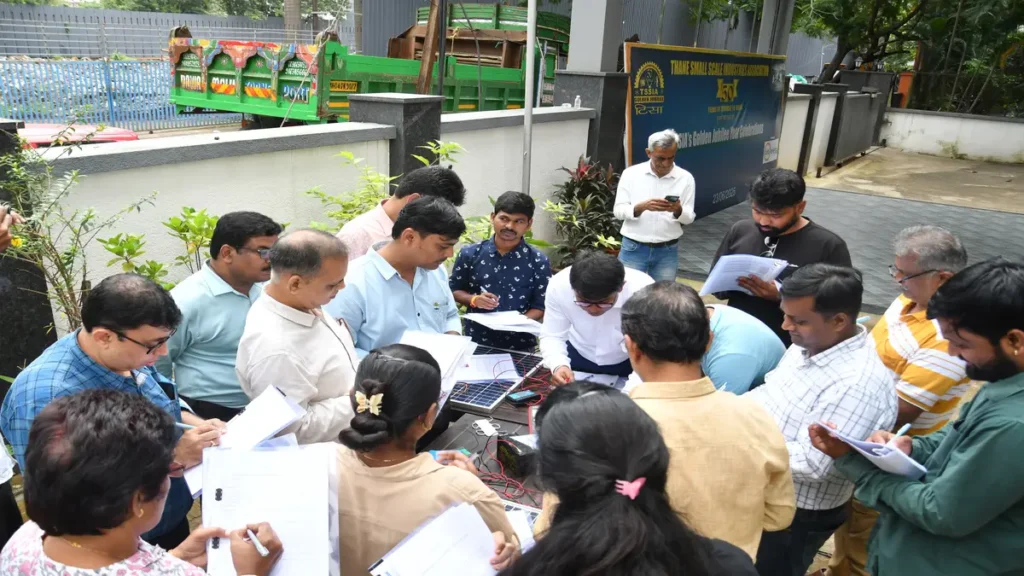
Live Rooftop Solar Panel Installation
Students mounting, aligning, and mechanically fixing photovoltaic modules on live rooftop structures.
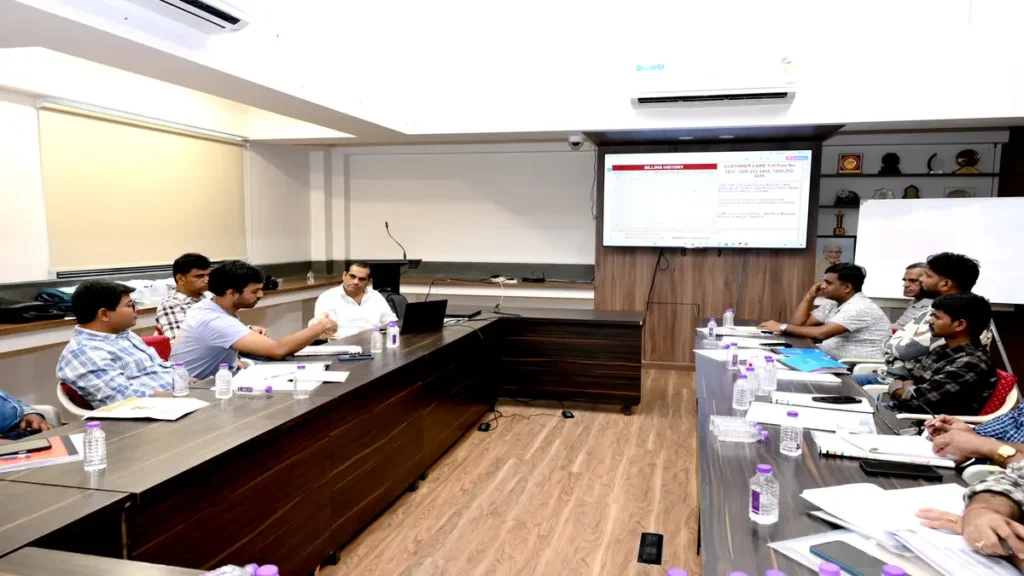
Electrical Testing & Wiring Lab
Hands-on practice wiring DC distribution boxes, measuring Voc/Isc, and verifying circuit continuity.
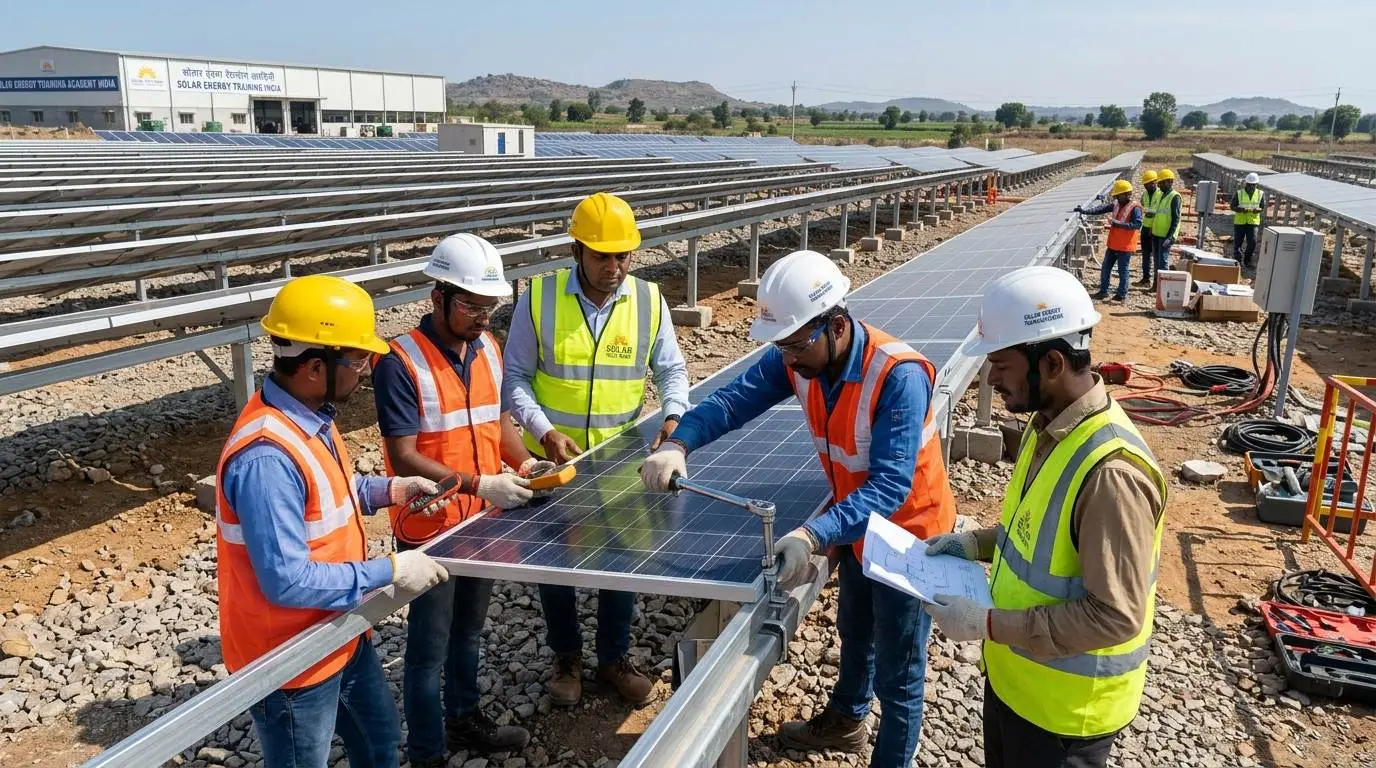
Solar Inverter & System Integration
Configuring string inverters, setting up earthing connections, and testing grid-synchronisation parameters.
Who Can Join the Solar PV Installer Course?
Our practical training programme is designed to be accessible, inclusive, and actionable regardless of your prior background.
10th-Pass Candidates
Freshers WelcomeStart early and build a viable, in-demand technical career in India's expanding clean energy sector.
10+2 / Intermediate Students
School LeaversIdeal vocational foundation for students seeking practical engineering and clean tech credentials.
ITI Candidates & Electricians
Skill UpgradeUpgrade your electrical skills from standard domestic wiring to specialized solar PV installation.
Diploma Holders (Engg / Tech)
Diploma TrackElectrical, Mechanical, and Civil diploma holders looking to enter renewable EPC and project management.
Graduates (B.Sc., B.A., B.Com., B.Tech)
GraduatesGraduates seeking a quick, practical pathway to enter the high-growth renewable energy job market.
Working Professionals & Technicians
UpskillingElectrical contractors, facility technicians, and site supervisors seeking structured solar certification.
Beginners with No Solar Experience
Zero Experience OKThe course starts with foundational principles; no prior solar installation experience is mandatory.
Aspiring Solar Entrepreneurs
Business StartersIndividuals planning to launch an independent rooftop installation business or local solar franchise.
Whether you are an electrical apprentice or transitioning from another sector, our structured curriculum starts from the basics and builds your confidence systematically.
Flexible Hybrid Solar Installation Training
Balanced to accommodate working electricians, out-of-station candidates, and students without compromising on hands-on rigor.
The 3-Month Hybrid Learning Journey
Study photovoltaic principles, system sizing, component datasheets, single-line diagrams (SLDs), and electrical codes through interactive digital lectures and learning materials.
Attend hands-on practical training in physical laboratory environments and on real rooftops: install mounting rails, crimp solar cables, wire inverters, and measure electrical parameters.
Complete guided practical assessments and final evaluation to qualify for the joint IISE and CERT certification.
Cohort Scheduling & Registration
New batches commence regularly. Practical session slots are structured with flexible weekend and weekday options to suit working professionals and students.
Joint Certification from IISE and CERT
A reputable credential that validates your theoretical knowledge and physical solar PV installation capability.
Certificate of Competence in Solar PV Installation
Upon successful completion of all 9 curriculum modules and the supervised practical training assessment, eligible candidates are awarded a Certificate issued jointly by:
Career Opportunities After Solar PV Installer Training
Prepare for high-demand technical roles across India's booming solar EPC contractors, rooftop installers, and operations businesses.
1. Solar PV Installer
Hands-on execution of solar array assembly, module clamping, string wiring, and basic inverter integration on residential and commercial rooftops.
2. Solar Installation Technician
Specialized in balance-of-system electrical connections, AC/DC cabling, conduit routing, inverter terminations, and earthing pit connection.
3. Rooftop Solar Technician
Conducting site surveys, verifying roof structural safety, managing mounting structure installation, and ensuring weather-proof roof penetrations.
4. Solar EPC Field Assistant
Assisting project engineers on multi-kilowatt rooftop and ground-mounted projects with material tracking, mechanical assembly, and safety compliance.
5. Solar O&M Technician
Providing scheduled module cleaning, electrical performance audits, clamp-meter diagnostics, inverter fault resolution, and preventive maintenance.
6. Solar Site Assistant
Coordinating daily site installation activities, supervising module unloading, verifying component quality, and conducting pre-commissioning checklists.
7. Solar Installation Entrepreneur
Starting your own independent solar installation venture, executing turnkey rooftop projects, and providing local after-sales maintenance services.
8. Solar Project Support Professional
Assisting with technical quotations, bill of quantities (BOQ) preparation, Discom net-metering documentation, and client coordination.
Career Guidance and Placement Assistance
We actively support our students in transitioning from training to active employment in the renewable energy sector.
Resume & Portfolio Preparation
Guidance on formatting a professional technical resume that highlights your hands-on rooftop installation and testing competencies.
Interview Preparation & Coaching
Technical mock interviews and guidance on answering real-world solar installation, safety, and troubleshooting questions with confidence.
Access to Verified Hiring Partners
Direct access to employment opportunity updates from solar EPC companies, rooftop installation businesses, and O&M contractors across India.
IISE provides genuine placement assistance and access to verified hiring partners. Please note that placement assistance is not a job guarantee. IISE does not promise or guarantee assured employment, specific starting salaries, or guaranteed income. Hiring decisions depend entirely on employer evaluations and your individual performance.
Course Fees and Special Festive Offer
Transparent fee structure with zero hidden charges. High-caliber technical education made accessible.
Solar PV Installer Course
Complete 3-Month Hybrid Training with Hands-on Practicum
- Full 3-Month Hybrid Learning Programme
- All 9 Technical Curriculum Modules & Lecture Guides
- Dedicated 3-Phase Practical Lab & Rooftop Practicum Sessions
- Joint IISE and CERT Course Completion Certificate
- Placement Assistance & Verified Hiring Partner Access
Why Choose Indian Institute of Solar Energy (IISE)?
Experience technical training delivered by an institution dedicated exclusively to solar energy and renewable technology education.
100% Focus on Renewable Energy Education
Unlike general vocational centres that offer hundreds of unrelated IT or clerical courses, the Indian Institute of Solar Energy (IISE) is focused entirely on clean energy engineering, solar photovoltaic technologies, battery storage, and electric vehicle infrastructure.
As a unit of CERMS India Foundation and in partnership with CERT (Centre for Energy Research and Training), IISE's programmes are developed in close consultation with practicing solar EPC engineers, component manufacturers, and field contractors.
Our instructors bring decades of combined field experience in commissioning rooftop arrays and utility-scale solar projects across India, ensuring you learn real industry practices rather than outdated theoretical notes.

Student Experiences at IISE
Authentic feedback from candidates who completed practical solar training and applied their skills in the field.
"The hands-on practical sessions made all the difference. Learning to use a clamp meter for measuring Voc and Isc and physically mounting panels on the roof gave me the confidence to work on live residential projects."
"I was an electrician doing general house wiring before taking this course. The hybrid format allowed me to study the design theory online and attend the practical workshop on the weekend. Highly recommended."
"Clear explanations of net-metering, inverter connections, and safety protocols. The joint IISE and CERT certificate helped me secure an installer role with a regional solar EPC firm."
Frequently Asked Questions
Find clear, factual answers to all key questions regarding the Solar PV Installer Course, eligibility, fees, practicals, certification, and career support.
Start Your Career in the Solar Energy Industry
Build practical solar PV installation skills through IISE's 3-month hybrid training programme. Gain hands-on rooftop experience, earn a joint IISE & CERT certification, and connect with verified hiring partners.
Course Admission & Enquiry Form
Fill out the form below to register your interest, check cohort eligibility, receive detailed module schedules, and claim the ₹8,999 festive fee.
Admission Enquiry Submission
Direct Admission Support
Have questions about the practical dates, eligibility verification, or course fees? Speak directly with our course counsellors.
Training Campus & Head Office:
Indian Institute of Solar Energy (IISE)
A Unit of CERMS India Foundation
Chembur, Mumbai, Maharashtra 400071, India.
Time is running out. Apply now!
- 00Days
- 00Hours
- 00Minutes
- 00Seconds
Stay Connected with IISE on WhatsApp
Get the latest updates on solar courses, practical workshops, admissions, scholarships, career opportunities, industry insights and upcoming events directly on WhatsApp.
Free to join • Unsubscribe anytime • Opens directly in WhatsApp
Indian Institute of Solar Energy
Official Organization Channel • Renewable Energy
What Subscribers Receive
- Solar Course Admissions & Batch Dates
- Practical Workshop Alerts & Hands-on Sessions
- Career Opportunities & Solar Placement Drives
- Scholarships & Gov. Certification Guidelines