Solar Tools & Renewable Energy Business Services
The Indian Institute of Solar Energy (IISE) bridges technical education and commercial deployment. We empower solar EPC companies, industrial enterprises, electrical consultants, and clean-tech entrepreneurs with India-calibrated solar calculation tools, vendor-neutral engineering consultancy, technical due diligence, and specialized workforce upskilling.
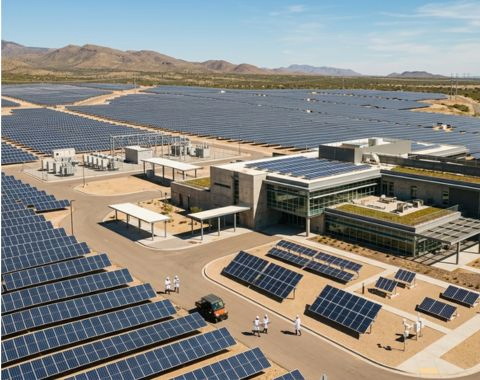
IISE provides unbiased preliminary project evaluation, rooftop capacity audits, and feasibility reviews for C&I facilities across India.
IISE Solar Tools & Engineering Calculators Hub
Accelerate pre-feasibility, sizing, and quotation workflows with India-specific solar algorithms. Explore our suite of 14 specialized engineering and business tools—distinguishing active online calculators from beta frameworks currently in development.
Solar Calculator
Interactive ToolComputes recommended rooftop solar capacity (kW), monthly generation yield, estimated rooftop area, and 25-year cumulative financial savings based on monthly power bills.
Rooftop Solar System Size Calculator
Interactive ToolConverts usable shadow-free rooftop area into optimal peak DC capacity, factoring in standard module dimensions, inter-row pitch, and maintenance walkways.
Solar Panel Capacity Calculator
Interactive ToolDetermines total panel count and DC string layouts based on targeted kilowatt capacity and specified module wattages (e.g. 540W to 590W mono PERC/TOPCon).
Solar Energy Generation Estimator
Interactive ToolModels expected seasonal and annual electrical generation (kWh) across Indian states based on historical Global Horizontal Irradiance (GHI) and Performance Ratio.
Solar Savings and Payback Calculator
Interactive ToolForecasts cumulative utility cost savings and simple payback timeline by comparing solar LCOE against escalating utility grid tariffs over a 25-year lifecycle.
Solar ROI Calculator
Interactive ToolEvaluates commercial project profitability metrics including Internal Rate of Return (IRR), Net Present Value (NPV), and Accelerated Depreciation tax benefits.
Solar Battery Backup Calculator
Interactive ToolCalculates required battery storage capacity (Ah / kWh) to sustain critical electrical loads during grid outages, factoring in Depth of Discharge (DoD) and autonomy days.
Solar Load Calculator
Interactive ToolCompiles comprehensive connected load schedules across residential appliances, lighting, machinery, and HVAC to identify continuous versus surge power requirements.
Solar Inverter Sizing Calculator
Interactive ToolMatches PV array DC peak capacity with inverter nominal AC rating, validating DC/AC oversizing ratios (1.15 to 1.30) and MPPT operating voltage windows.
Solar Installation Cost Estimator
Interactive ToolProvides transparent Capex estimations across system capacities, detailing balance of system (BoS) proportions including modules, inverter, structures, cabling, and GST.
Solar EPC Quotation Calculator
Proposed / Beta TestingAutomates commercial quotation generation for solar EPC businesses, incorporating custom margin tiers, structural engineering provisions, and net-metering liaison fees.
Solar Project Feasibility Calculator
Proposed / Beta TestingComprehensive multi-variable technical scoring tool assessing sanction load limits, transformer spare capacity, roof structural readiness, and local discom policies.
Battery Energy Storage Sizing Calculator (BESS)
Proposed / In DevelopmentSizes containerized and commercial battery systems for peak shaving, time-of-day (ToD) tariff arbitrage, and industrial renewable firming.
EV Charging Energy Estimator
Proposed / In DevelopmentModels required dedicated solar PV capacity and electrical service infrastructure to power 2W/3W/4W commercial EV charging stations without grid penalties.
Featured Tool: Interactive Rooftop Solar Calculator for India
The IISE Solar Rooftop Calculator is built specifically for Indian climatic irradiation and utility tariff frameworks. It eliminates guesswork by providing property owners, EPC sales engineers, and energy consultants with a rapid, transparent technical and financial assessment.
Who Relies on This Calculator?
- Homeowners & Commercial Property Owners: Uncover accurate right-sizing without high-pressure sales pitches or inflated generation claims.
- Solar EPCs & Installers: Generate credible initial numbers during preliminary client walkthroughs to accelerate proposal turnaround.
- Electrical Engineers & Consultants: Verify initial sizing benchmarks before conducting detailed simulation runs in PVsyst or Helioscope.
- Entrepreneurs & Project Developers: Evaluate site feasibility and consumer savings viability across distinct Indian discom tariff slabs.
Engineering Assumptions & Transparent Baselines
• Standard insolation baseline: 4.0 to 4.5 kWh/m²/day average yield across India.
• Roof space benchmark: ~100 sq. ft. of shadow-free area per 1 kWp installed.
• PM Surya Ghar CFA subsidy rules: ₹30,000/kW for first 2 kW, ₹18,000 for 3rd kW (max ₹78,000 for residential).
• Note: Final system design requires physical shading analysis, structural load audit, and utility transformer capacity verification.
Sample 5 kW C&I Rooftop System
* Illustrative calculation based on standard Indian commercial tariffs. Individual system output varies with local irradiance, module tilt, orientation, and discom net-metering regulations.
Business Services - Solar Consultancy & Technical Advisory Services
Objective, vendor-neutral engineering advice to safeguard your capital investment. IISE delivers third-party due diligence, feasibility studies, and system design optimization—completely unaligned with specific equipment manufacturers or commercial sales quotas.
Preliminary Solar Project Feasibility
Evaluating solar insolation, shadow obstacles, structural integrity of rooftops, and transformer interconnection capacity before capital commitment.
Rooftop Solar System Sizing
Engineering right-sized DC array capacity to match daytime load profiles, preventing over-capitalization or discom export restriction penalties.
Load Assessment & Energy Consumption Analysis
Analyzing 15-minute interval demand data, power factor trends, and peak demand charges to maximize behind-the-meter solar self-consumption.
Solar Project Planning & Technical Evaluation
Drafting Detailed Project Reports (DPR), single-line electrical diagrams (SLD), and equipment specifications conforming to CEA & IEC standards.
Solar Design & Component Selection Guidance
Impartial evaluation of Tier-1 mono PERC vs. TOPCon bifacial modules, string vs. central inverters, and galvanised mounting structure resilience.
Solar Project Cost & ROI Assessment
Rigorous financial modeling evaluating levelized cost of energy (LCOE), IRR, accelerated depreciation tax savings, and realistic OPEX projections.
Operations & Maintenance (O&M) Advisory
Establishing preventive maintenance schedules, thermal imaging inspection standards, module soiling mitigation, and performance ratio tracking.
Technical Training for In-House Teams
Customized corporate skill transfer programs empowering facility managers and electrical technicians to operate and troubleshoot solar assets.
Independent Advisory vs. Turnkey EPC
IISE acts as an independent technical advisor and training body. We do not provide turnkey contracting execution directly, ensuring our design reviews and Capex assessments remain 100% objective and free from commercial bias.
Solar EPC Business Support & Enablement
Empowering solar engineering, procurement, and construction (EPC) contractors and rooftop installers with verified technical methodologies, project estimation workflows, and site engineering capability.
Technical Skill Development
Upgrading the technical competency of your field supervisors and project engineers in string design, 3D shading analysis, and national grid code compliance.
Project Estimation & Quotation Preparation
Training sales and estimating teams to produce accurate Bills of Quantities (BoQ) and margin-conscious client proposals using standardized calculation templates.
Procurement Planning & BoM Awareness
Sharing technical insights on tier-1 component reliability, module degradation rates, inverter warranties, and DC protection hardware selection.
Installation & Commissioning Knowledge
Standardizing site execution practices—from structural torquing and string cable management to pre-commissioning testing (insulation resistance, open-circuit voltage).
Operations & Maintenance Training
Building internal team capability to provide long-term AMC services, infrared thermography fault detection, and rapid inverter troubleshooting for clients.
Technical Documentation & Quality Awareness
Equipping EPC teams to compile flawless statutory net-metering dossiers, CEIG inspection packages, and client hand-over documentation.
Thinking of Starting or Scaling a Solar EPC Company?
Read our comprehensive industry whitepaper covering licensing, working capital, vendor management, discom liaisoning, and customer acquisition strategies across India.
Renewable Energy Business Solutions
Addressing modern clean energy challenges across battery storage, electric mobility, corporate workforce development, and institutional collaboration.
Solar Business Entrepreneurship
Structured technical and commercial incubation knowledge for aspiring founders starting solar EPC enterprises, specialized O&M firms, or clean energy distribution channels.
Battery Energy Storage (BESS) Support
Technical advisory on behind-the-meter industrial storage, cell chemistry selection (LFP vs NMC), battery management systems (BMS), and hybrid PV-storage sizing.
EV Charging & Electrification Advisory
Guidance on fleet electrification transitions, EV charging hub power requirement sizing, AC Type-2 vs DC Fast charging integration, and grid demand mitigation.
Corporate Renewable Energy Training
Customized corporate workshops designed for facility engineers, sustainability managers, and maintenance personnel seeking deep technical competence in renewable systems.
Technical Talent & Recruitment Support
Access pre-screened, certified graduates trained in real-world environments through the IISE Career & Placement Cell for immediate deployment across EPC and plant roles.
Institutional & Industry Collaboration
Partnering with universities, technical colleges, and industry bodies to deliver accredited guest workshops, practical lab modules, and curriculum enhancements.
Business Applications by Industry
How commercial facilities, institutions, and industrial plants leverage solar tools and technical guidance to solve real operational energy bottlenecks.
Manufacturing & Industrial Facilities
High connected loads with steep peak daytime tariffs. Solar systems offset expensive daytime grid draws and provide substantial operational cost protection against tariff escalation.
Commercial Buildings & Corporate Offices
Extensive cooling and daytime lighting demands. Rooftop arrays and solar parking canopies lower common area power bills while supporting ESG compliance goals.
Hospitals & Healthcare Facilities
Continuous 24/7 critical load requirements. Solar PV combined with battery storage (BESS) creates a resilient hybrid microgrid, reducing reliance on diesel generators.
MSMEs (Small & Medium Enterprises)
High electricity expenses relative to operating margins. Right-sized solar installations provide rapid payback within 3 to 4 years, dramatically improving business cashflows.
Agriculture & Cold Chain Enterprises
Rural agricultural setups, processing units, and cold storage facilities benefit from solar water pumping, off-grid storage systems, and agro-voltaic roof integrations.
Solar EPC Companies & Installers
Need standardized engineering workflows, accurate preliminary quotation tools, and certified project engineers to scale installations without quality compromises.
Educational Institutions & Universities
Extensive campus roof footprints and daylight occupancy profiles make colleges ideal for solar plants that also serve as live engineering learning laboratories.
Energy Consultants & Project Developers
Require impartial sizing validation, simulation review, and financial model auditing to present credible Detailed Project Reports (DPR) to institutional investors.
How Solar Tools Support Sound Business Decisions
A disciplined six-stage assessment framework that transforms raw utility data into validated, bankable clean energy projects.
Step 1: Gather Consumption & Site Data
Collect 12 months of electricity bills, determine sanctioned demand (kVA), assess daylight load curves, and map shadow-free roof dimensions.
Step 2: Estimate Required Solar Capacity
Use online right-sizing calculators to benchmark the target kilowatt (kW) capacity required to offset daytime power draws without excessive grid exports.
Step 3: Assess Generation Yields & Layout
Calculate expected annual kilowatt-hour (kWh) generation based on local solar irradiation (GHI), module tilt, temperature derating, and inverter efficiencies.
Step 4: Estimate Capex & Potential Savings
Model turnkey capital expenditure, balance of system (BoS) component costs, applicable subsidies or accelerated depreciation benefits, and first-year cost avoidance.
Step 5: Review Payback & Return Assumptions
Perform sensitivity analysis across electricity tariff escalation rates, O&M provisions, and module degradation to confirm simple payback and project IRR.
Step 6: Validate Through On-Site Technical Audit
Confirm preliminary findings with physical shadow analysis, structural load-bearing tests, cable routing surveys, and local discom interconnection clearance.
Practical Benefits of Using IISE Resources
Supportable, real-world value grounded in engineering fundamentals, unbiased calculations, and technical capacity building.
Accessible Technical Learning Resources
Open access to vetted engineering formulas, unit converters, and system sizing checklists that democratize solar engineering knowledge for all stakeholders.
Better Preliminary Project Understanding
Equips property owners and facility managers with independent sizing and cost baselines before they initiate vendor discussions, preventing over-capitalization.
Improved Familiarity with Sizing Assumptions
Transparent engineering models clarify how solar insolation, temperature coefficients, inverter clipping, and degradation impact real-world yields.
Training-Oriented Knowledge Transfer
Our mission is educational capability building. We teach organizations how solar systems work rather than treating solar engineering as a black box.
Support for Informed Contractor Discussions
Empowers commercial clients to evaluate contractor proposals critically, ask the right technical questions, and assess BoM quality objectively.
Bridging Clean Energy Education & Industry Needs
Directly connects classroom instruction and software mastery with the operational constraints faced by EPC contractors and plant operators in India.
Who Should Use These Tools & Services?
Whether you design, install, finance, or operate solar assets, IISE provides tailored tools, training, and technical advisory to match your operational stage.
Solar EPC Owners
Access standardized sizing tools, quotation frameworks, and hire trained site engineers from IISE.
Solar Installers & Technicians
Upgrade from basic rooftop assembly to commercial grid-tied systems, string design, and O&M standards.
Electrical Engineers
Master industry-standard PV simulation tools (PVsyst, Helioscope) and transition into clean energy roles.
Renewable Energy Consultants
Utilize unbiased calculation benchmarks and third-party pre-feasibility checklists for client DPRs.
Facility & Energy Managers
Evaluate on-site solar feasibility, load curves, and battery storage to fulfill corporate net-zero targets.
Business Owners Considering Solar
Demystify contractor quotations, verify real-world generation assumptions, and protect capital outlays.
Students & Working Professionals
Build job-ready practical competencies through certified diploma and masterclass training pathways.
Solar Entrepreneurs
Learn end-to-end solar business management—from licensing and procurement to project execution.
Corporate L&D and HR Teams
Partner with IISE to deliver certified in-house technical training programs for engineering staff.
Training & Capability Development Pathways
Connect engineering theory to practical industry application. IISE offers industry-certified training programs taught by experienced field practitioners.
Solar PV Engineering, Design & Installation
Comprehensive training spanning grid-tied and off-grid PV system design, single line electrical diagrams, module stringing, and field installation.
PVsyst Software Training for Solar Engineers
Master industry-standard PV simulation, 3D near-shading scene modeling, horizon loss calculation, P50/P90 yield probability, and bankable DPR generation.
Helioscope Software Training Program
Rapid cloud-based commercial rooftop layout modeling, CAD export, electrical string optimization, and automated preliminary proposal generation.
Battery Systems, Li-ion Tech & BESS
In-depth engineering on lithium-ion cell chemistries (LFP/NMC), battery management systems (BMS), pack assembly, safety standards (AIS-156), and BESS sizing.
Electric Vehicle (EV) Technology & Charging
Covers EV powertrain engineering, battery pack integration, AC Type-2 / DC Fast charging protocols, and solar-powered EV charging station design.
Certified Energy Auditor & Manager Preparatory
Prepares engineers for Bureau of Energy Efficiency (BEE) certification, covering industrial thermal/electrical utility audits, HVAC optimization, and ISO 50001.
Partnership & Corporate Enquiries
Collaborate with IISE to strengthen technical capability, enhance institutional curricula, or source verified clean energy talent.
Customized Corporate Training
Bespoke engineering training tailored to your company's technology stack, safety guidelines, and operational workflow constraints.
Institutional Knowledge Partnerships
Academic MOUs with universities and engineering polytechnics for renewable curriculum design, faculty development, and student workshops.
Technical Workshops & Seminars
Intensive multi-day technical workshops on rooftop solar installation, high-voltage battery storage safety, and commercial energy auditing.
Employer & Talent Enquiries
Direct hiring access through the IISE Career & Placement Cell to recruit rigorously trained technicians, PV design engineers, and field supervisors.
Renewable Business Collaborations
Joint technical initiatives, specialized testing methodologies, and business development support for clean energy ventures across India and the GCC.
Solar Tool Feedback & Development
Provide feedback on existing calculators or partner with IISE to commission custom engineering calculation models for specific industry applications.
Project Enquiry & Consultation Process
A transparent, four-step technical engagement process designed to deliver objective clarity without sales ambiguity.
Step 1: Submit Initial Enquiry
Share your requirements via our online enquiry form, official WhatsApp channel, or email detailing your facility location and core objectives.
Step 2: Share Technical Scope & Data
Provide available site data—including 12-month electricity bills, single-line diagrams, sanctioned load details, or team training goals.
Step 3: Receive Preliminary Technical Review
IISE technical advisors conduct an initial desk evaluation, review feasibility constraints, and prepare an exploratory discussion brief.
Step 4: Agree on Scope & Implementation Pathway
Mutually define the formal engagement model: an independent technical feasibility study, team training program, or specialized engineering review.
Frequently Asked Questions
Comprehensive answers regarding solar tools, technical consultancy, corporate training, and business collaboration with IISE.
IISE provides a suite of open-access solar engineering tools, including an Interactive Rooftop Solar Calculator, Solar Panel Quantity Calculator, Generation Yield Estimator, Financial Payback & ROI Calculator, Solar Battery Sizing Tool, and Cable Voltage Drop Calculators. We are also actively developing beta frameworks for EPC quotation modeling and BESS capacity planning.
You can estimate your solar capacity by entering your average monthly electricity bill or monthly consumption units (kWh) into the IISE Solar Calculator. In India, a standard guideline is that 1 kW of rooftop solar generates approximately 4 units of electricity per day and requires roughly 100 square feet of shadow-free roof area.
Yes. The IISE Solar Savings Calculator compares your current discom electricity tariff against estimated solar levelized generation costs (LCOE) to compute annual bill savings, net outlays after subsidies (such as PM Surya Ghar for residential users), and simple financial payback timelines.
Online solar calculators provide highly reliable preliminary benchmarking (typically within 10–15% of actual performance) when calibrated with regional irradiance data. However, they cannot account for localized micro-shading, structural roof weight limitations, transformer capacity constraints, or specific distribution utility (discom) net-metering regulations, which require an on-site survey.
Yes. Solar EPC contractors and sales leads frequently utilize the IISE Rooftop Calculator to rapidly determine module count, inverter sizing, and estimated annual yields during preliminary client consultations, drastically reducing proposal turnaround time.
IISE provides independent, vendor-neutral solar technical consultancy and advisory services. These include pre-feasibility assessments, preliminary system sizing, DPR evaluation, and third-party technical due diligence for commercial and industrial facilities. We do not provide turnkey contracting execution directly, ensuring our advice remains unbiased.
Yes. IISE delivers specialized technical guidance and professional training programs covering Battery Energy Storage Systems (BESS), lithium-ion cell chemistries, Battery Management Systems (BMS), and electric vehicle charging hub electrical sizing.
Yes. IISE delivers tailored corporate training programs for EPC engineering teams, facility managers, sustainability directors, and industrial maintenance personnel. Programs can be delivered at our Mumbai campus, on-site at your facility, or via live virtual masterclasses.
Yes. IISE collaborates with engineering colleges, polytechnics, and vocational universities through institutional MOUs. Collaborations encompass curriculum enrichment, guest faculty lectures, hands-on lab workshops, and student skill certification.
You can submit your requirements through our online Business Enquiry Form on this page, connect directly with our advisory desk via WhatsApp at +91 88509 02306, or email your project scope to info@iise.ac.
No. Online estimates are designed strictly for preliminary scoping and initial financial evaluation. Final system engineering requires a physical site audit, shadow analysis, structural load testing, single-line diagram (SLD) preparation, and formal grid interconnection approval from the local power discom.
We welcome engineering feedback. You can report calculation anomalies or suggest new features by selecting ‘Solar Tools’ on our enquiry form or sending technical comments to info@iise.ac with the subject line ‘Solar Tool Feedback’.
Plan Your Next Solar Project with Better Information
Whether you want to run quick sizing numbers using our online solar calculators or schedule a confidential technical discussion regarding corporate advisory or team training, IISE is ready to assist.
Request a Business Consultation or Technical Advisory
Share your project parameters, team training requirements, or partnership proposals. Our technical team will review and respond promptly.
Related Resources & Internal Knowledge Base
Explore verified technical guides, software courses, and engineering calculators across the IISE ecosystem.
Solar Tools & Online Engines
Institutional & Enterprise Programs
Specialized Professional Training
Technical Guides & Industry Whitepapers
- How to Start a Solar EPC Business in India (Complete Guide) →
- Step-by-Step Solar PV System Design Guide →
- PM Surya Ghar Muft Bijli Yojana Central Scheme Guide →
- Solar Power Plant O&M in India: Maintenance Guide →
- Components of a Rooftop Solar System: Technical Guide →
- Solar-Powered EV Charging Station Design & Cost Guide →