PM Surya Ghar Muft Bijli Yojana 2026: Complete Application Guide
The PM Surya Ghar: Muft Bijli Yojana is India's landmark ₹75,021-crore national rooftop solar scheme, designed to deliver up to 300 units of free electricity every month to 1 crore (10 million) residential households. Backed by direct Central Financial Assistance (CFA) subsidies of up to ₹78,000 for general states (and up to ₹85,800 for special-category states), this initiative empowers Indian homeowners to eliminate electricity bills while contributing to India's 500 GW clean energy transition. This authoritative 2026 operational guide provides step-by-step clarity on eligibility criteria, updated capacity slabs, required documents, DISCOM net-metering workflows, and real calculation models — alongside emerging career and business opportunities in India's expanding residential solar sector.
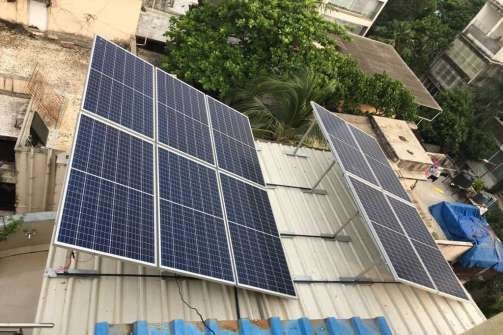
Quick Answer: PM Surya Ghar Muft Bijli Yojana at a Glance
PM Surya Ghar: Muft Bijli Yojana is a central government Direct Benefit Transfer (DBT) program that provides capital subsidies ranging from ₹30,000 for 1 kW, ₹60,000 for 2 kW, up to a maximum cap of ₹78,000 for 3 kW and above (up to ₹85,800 in special category states) to install grid-connected rooftop solar systems on individual residential homes. The generated solar power offsets domestic consumption, delivering up to 300 units of free power each month, with excess electricity exported to the grid via net metering. Applications are submitted exclusively online via the National Portal at pmsuryaghar.gov.in.
- → What Is PM Surya Ghar Yojana?
- → Key Benefits of the Scheme
- → Latest Subsidy Amounts for 2026
- → Comprehensive Eligibility Criteria
- → Required Documents Checklist
- → Step-by-Step Online Application
- → Installation & Inspection Workflow
- → Interactive Subsidy & Savings Calculator
- → Real System Calculation Examples
- → State & DISCOM Considerations
- → How to Check Subsidy Status
- → Common Application Mistakes to Avoid
- → Complaints, Support & Grievances
- → Frequently Asked Questions (FAQs)
- → Related IISE Technical Resources
- → Solar Career & Entrepreneurship Opportunities
- → Professional IISE Solar Training & Courses
- → Summary & Next Practical Steps
What is PM Surya Ghar Muft Bijli Yojana 2026?
Announced by the Prime Minister in February 2024 and ratified by the Union Cabinet with a total national budget of ₹75,021 crore, the PM Surya Ghar: Muft Bijli Yojana stands as India’s most ambitious decentralized renewable energy deployment to date. Its core mission is to facilitate the installation of rooftop solar photovoltaic (PV) power systems across 1 crore (10 million) residential homes throughout India.
Unlike historical capital subsidy programs that involved complicated multi-tier bureaucratic disbursals through local state nodal agencies, the PM Surya Ghar framework operates through an end-to-end digital ecosystem anchored by the National Portal (pmsuryaghar.gov.in). This platform provides single-window integration between residential consumers, power distribution companies (DISCOMs), certified solar vendors, and lending financial institutions.
Core Policy Mechanism: Central Financial Assistance (CFA)
The scheme delivers financial relief through Central Financial Assistance (CFA), which is a non-repayable government capital grant paid directly into the beneficiary’s bank account via Direct Benefit Transfer (DBT). Rather than paying an arbitrary percentage of commercial vendor pricing, the CFA is strictly calculated based on benchmark system capacity:
- First 2 kW: ₹30,000 per kW (up to ₹60,000 for 2 kW).
- Third kW: An additional ₹18,000 for capacity between 2 kW and 3 kW (reaching a total maximum of ₹78,000).
- Capacity Above 3 kW: Capped at a maximum CFA of ₹78,000 for individual residential consumers.
The Crucial Institutional Roles: MNRE, REC, and DISCOMs
To navigate the scheme successfully, consumers must understand the division of regulatory responsibility:
1. Ministry of New and Renewable Energy (MNRE): The central nodal ministry formulating scheme guidelines, defining module compliance standards (ALMM and DCR), allocating state budgets, and releasing central subsidy funds.
2. REC Limited (NPIA): The designated National Programme Implementation Agency managing portal infrastructure, fund flow, and coordinating with partner banks for concessional financing.
3. Power Distribution Companies (DISCOMs): The local electricity utilities (e.g., MSEDCL in Maharashtra, DGVCL/UGVCL in Gujarat, JVVNL in Rajasthan, BSES/TPDDL in Delhi) responsible for approving technical feasibility, testing grid synchronisation, installing the bi-directional net meter, and issuing the official Commissioning Certificate required for subsidy release.
For a broader comparative analysis of historical renewable subsidies, state solar policies, and commercial vs. residential incentives across India, explore our comprehensive technical guide on Solar Subsidy in India: Policy Schemes & Process.
Key Benefits of Installing Rooftop Solar Under PM Surya Ghar
The PM Surya Ghar initiative is structured to deliver tangible financial returns, energy reliability, and environmental decarbonization for Indian households. Here are the five primary benefits:
Up to ₹78,000 Direct CFA Subsidy
Direct Benefit Transfer directly to your bank account reduces initial capital expenditure by up to 50–60% for typical 1 to 2 kW systems, making rooftop solar accessible to middle-income households.
Up to 300 Free Units Every Month
A standard 2 kW to 3 kW system produces 240 to 420 kWh (units) of electricity monthly under standard Indian irradiance, virtually offsetting standard domestic consumption and shrinking monthly utility bills to basic meter rent.
Bi-Directional Net Metering Credits
Daytime surplus generation automatically flows back to the utility grid. Your DISCOM credits these units against evening and night consumption, with surplus units settled as billing credits according to state SERC regulations.
25-Year Long-Term Inflation Hedge
With retail grid tariffs rising by 3% to 6% annually across Indian states, rooftop solar locks in near-zero marginal generation costs backed by 25-year performance warranties on tier-1 solar PV modules.
Substantial Carbon Footprint Reduction
Each 1 kW of installed rooftop solar prevents approximately 1.2 tonnes of CO2 emissions annually. Over a 25-year lifecycle, a 3 kW household system mitigates over 90 tonnes of carbon dioxide.
Latest Subsidy Amounts for 2026: Official Slabs & Capacity Caps
Under the official MNRE operational guidelines for PM Surya Ghar: Muft Bijli Yojana, Central Financial Assistance (CFA) is structured around fixed capacity slabs rather than a flat percentage of installation quotes. The table below outlines the applicable central subsidies for residential installations across India in 2026:
| System Capacity | Typical Monthly Usage | General States / UTs CFA Subsidy | Special Category States / UTs Subsidy | Estimated Roof Area | Subsidy Structure / Cap Status |
|---|---|---|---|---|---|
| 1 kW | 0 – 150 Units / month | ₹30,000 | ₹33,000 | 100 – 120 sq. ft | Fixed ₹30,000 for the 1st kW |
| 2 kW | 150 – 300 Units / month | ₹60,000 | ₹66,000 | 200 – 240 sq. ft | ₹30,000 per kW (₹60,000 total) |
| 3 kW | 300 – 450 Units / month | ₹78,000 | ₹85,800 | 300 – 360 sq. ft | ₹60,000 (first 2 kW) + ₹18,000 (3rd kW) |
| Above 3 kW (e.g., 4 kW, 5 kW, 10 kW) | > 450 Units / month | ₹78,000 MAX CAPPED | ₹85,800 MAX CAPPED | 400 – 1,000+ sq. ft | Capped strictly at the 3 kW threshold. No additional CFA for capacity above 3 kW. |
| Group Housing Societies (GHS / RWA) | Common facilities (lifts, water pumps, lighting, EV charging) | ₹18,000 / kW | ₹18,000 / kW | Varies by roof footprint | Capped up to a maximum aggregated capacity of 500 kW (including individual household limits). |
Crucial Technical Compliance Mandates for Subsidy Release
- Domestic Content Requirement (DCR): Under MNRE rules, all solar PV modules and cells installed under PM Surya Ghar must be manufactured domestically in India. Systems using imported solar cells or non-DCR modules will be automatically rejected during DISCOM inspection and disqualified from CFA.
- ALMM Listing: Both the solar panel manufacturer and the specific PV module model must be actively listed in MNRE's Approved List of Models and Manufacturers (ALMM).
- Special Category States / UTs Definition: Includes Uttarakhand, Himachal Pradesh, Jammu & Kashmir, Ladakh, Sikkim, Arunachal Pradesh, Assam, Manipur, Meghalaya, Mizoram, Nagaland, Tripura, Andaman & Nicobar Islands, and Lakshadweep.
- Market Price vs. Government Subsidy: Gross installation costs in the open market typically range from ₹50,000 to ₹65,000 per kW depending on hardware quality (monofacial vs. bifacial TOPCon/mono-PERC, string inverters vs. micro-inverters, elevated mounting structures). The government provides the fixed CFA grant; it does not set mandatory retail prices.
Comprehensive Eligibility Criteria: Who Can Apply in 2026?
To claim Central Financial Assistance under PM Surya Ghar, applicants must satisfy strict regulatory and technical criteria set by MNRE and regional DISCOMs. Review the checklist below before applying:
Residential LT Electricity Connection
You must possess an active, metered domestic (residential tariff) electricity connection with your local DISCOM in your name or immediate family name.
Adequate, Shadow-Free Terrace or Roof
A minimum of 100 sq. ft of unshaded roof space is required for each 1 kW of solar capacity. Concrete terraces, tin sheds, or elevated roof structures with legal access are accepted.
Grid-Connected Distribution Feeder
Your premise must be connected to the public power grid with net-metering feasibility. Standalone off-grid battery systems without grid synchronisation are strictly ineligible for CFA.
Procurement Through Empanelled Vendors
The solar system must be procured, installed, and commissioned exclusively through a vendor registered with your local DISCOM on the National Portal.
Technical Feasibility Approval (TFA)
The installation must strictly follow DISCOM approval of transformer loading and distribution capacity. Commencing installation prior to TFA will result in subsidy forfeiture.
Strict Commercial & Industrial Ineligibility
Commercial shops, industrial complexes, factories, agricultural pump connections, and institutional meters cannot claim residential CFA under PM Surya Ghar.
Special Housing Scenarios: Homeowners vs. Tenants vs. Apartment Societies
1. Individual Homeowners: Full eligibility if the electricity connection and property ownership match the applicant's credentials.
2. Tenants in Rented Homes: Tenants may only apply if they have a dedicated domestic electricity meter and secure a formal, notarized No Objection Certificate (NOC) from the legal property owner allowing long-term roof utilization and grid interconnection.
3. Apartment Complexes & Housing Societies (RWAs): Individual flat owners cannot independently install on common building terraces unless they possess legally deeded, exclusive roof rights. However, the Resident Welfare Association (RWA) can apply under the Group Housing Society (GHS) component for common meters (elevators, stairwell lighting, community pumps, EV chargers) with a CFA of ₹18,000 per kW up to 500 kW.
Required Documents & Information Checklist
To prevent verification delays and ensure seamless Direct Benefit Transfer (DBT) disbursal, ensure that all documentation is accurate and legally consistent across both stages of the process:
Information Needed to Apply Online
- Consumer Account Number (CA Number): Found on your latest electricity bill, matching your DISCOM database.
- Active Mobile Number: Must be accessible during registration to receive OTP verification codes and status alerts.
- Latest Electricity Bill: Clear PDF or JPEG scan (within last 3 months, file size under 2MB) showing name, service address, and sanctioned load.
- Valid Email Address: Used for official acknowledgement receipts and technical feasibility notices.
- Terrace / Roof Photographs: Clear photo showing shadow-free space and general rooftop condition.
Documents Needed for DBT Subsidy Credit
- Bank Account Details: Bank Name, Account Number, and IFSC code where the CFA subsidy will be transferred.
- Cancelled Cheque or Bank Passbook: Scanned copy clearly showing the beneficiary's name. Crucial: The bank account holder name must match the consumer name on the electricity bill.
- Signed Agreement with Empanelled Vendor: Standard model contract executed via the National Portal.
- Joint Work Completion Report (WCR): Submitted by the vendor detailing DCR panel serial numbers and inverter specifications.
- DISCOM Commissioning Certificate: Generated by the DISCOM inspector after net meter installation and anti-islanding testing.
Step-by-Step Online Application Process on pmsuryaghar.gov.in
The PM Surya Ghar scheme operates entirely through the National Single Window Portal. Follow this 10-step verified procedure to submit your application and track it through to commissioning:
Visit the Official National Portal
Navigate to pmsuryaghar.gov.in and click on the prominent button labeled "Apply for Rooftop Solar".
.gov.in. Do not use unverified third-party mobile apps or unofficial websites.Register with Your DISCOM & Consumer Account
Select your State/UT from the dropdown, choose your local Electricity Distribution Company (DISCOM), and enter your exact Consumer Account (CA) number as shown on your power bill.
Mobile OTP Authentication
Enter your 10-digit mobile number and email ID. Verify using the One-Time Password (OTP) sent to your phone. This mobile number becomes your permanent login credential.
Submit Rooftop Solar Application Form
Log in with your registered mobile number and OTP. Fill out the application form by specifying your sanctioned load, proposing your desired solar system capacity (in kW), and uploading a clean scan of your latest electricity bill.
Obtain Technical Feasibility Approval (TFA)
Your application is automatically routed to your local DISCOM sub-division. The DISCOM evaluates local distribution transformer (DT) capacity and feeder stability. Once cleared, the TFA status is updated directly on the portal (typically within 10–15 business days).
Select an Empanelled Vendor & Sign Agreement
Browse the list of vendors registered with your DISCOM on the portal. Obtain competitive quotations, verify equipment specifications (confirming DCR modules and ALMM inverters), and execute the standard online model agreement with your chosen vendor.
System Installation by Certified Technicians
The empanelled vendor installs the mounting structure, solar panels, grid-tied inverter, AC/DC distribution boxes, dedicated chemical earthing, and lightning arresters in compliance with MNRE technical specifications.
Submission of Work Completion Report (WCR)
Upon finishing installation, the vendor logs in to the portal and submits the Work Completion Report along with module serial numbers, test certificates, and site photographs.
DISCOM Joint Inspection & Net Meter Commissioning
A DISCOM field engineer visits your home, inspects technical wiring, verifies inverter anti-islanding safety features, replaces your unidirectional meter with a bi-directional net meter, and issues the official Commissioning Certificate on the portal.
Bank Details Verification & Direct Benefit Transfer (DBT)
Log in to the portal, confirm your bank account number and IFSC code, and upload a copy of your cancelled cheque. The CFA subsidy is verified through PFMS and credited directly into your bank account within approximately 30 days.
Installation, Inspection & Subsidy Workflow Matrix
To avoid confusion regarding who performs each task, the table below maps out the precise responsibilities of each stakeholder across the post-application installation lifecycle:
| Workflow Stage | Consumer Responsibility | Empanelled Vendor Role | DISCOM Role | National Portal / MNRE |
|---|---|---|---|---|
| 1. Feasibility Stage | Submits portal application with correct CA number & sanctioned load. | Provides preliminary site sizing advice if consulted. | Inspects local transformer capacity and issues Technical Feasibility Approval (TFA). | Automates workflow routing and notifies applicant via SMS. |
| 2. Vendor Contract | Selects vendor from portal directory and signs online agreement. | Submits competitive quote and accepts project terms on portal. | Maintains vendor empanelment registry and performance benchmarks. | Records contract execution and timestamps milestone. |
| 3. Hardware Installation | Provides roof access, civil safety, and electrical hookup space. | Procures ALMM/DCR modules, erects structure, wires inverters & earthing. | None at this stage. | Tracks project progress status. |
| 4. Work Completion | Verifies system is physically installed and operational. | Uploads serial numbers, test reports, and site photos to portal. | Receives inspection request trigger. | Notifies consumer and DISCOM of submission. |
| 5. Inspection & Metering | Signs joint inspection report on site. | Assists DISCOM engineer during anti-islanding and earthing test. | Inspects installation, tests safety, installs bi-directional net meter. | Generates digital Commissioning Certificate. |
| 6. Subsidy Disbursement | Submits verified bank account details & cancelled cheque. | Provides tax invoice and warranty certificates to consumer. | Transmits verified commissioning sign-off to central server. | Releases CFA subsidy directly via PFMS Direct Benefit Transfer (DBT). |
Interactive Residential Solar Subsidy & Savings Calculator
Estimate Your PM Surya Ghar Central Subsidy & ROI
Adjust system capacity, your region, and electricity bills to calculate live CFA grants and financial savings.
Real-World System Calculation Examples (1 kW, 2 kW & 3 kW)
To illustrate how capital subsidies and monthly utility bill offsets interact in practice, explore these three realistic case studies based on standard Indian residential load profiles:
1 kW Solar System
Small 1–2 BHK HomeTypical electricity consumption of 100 to 140 units/month.
2 kW Solar System
Most Popular ChoiceIdeal for medium 2–3 BHK homes using 200 to 300 units/month.
3 kW Solar System
Maximum Subsidy CapLarge independent homes or 3–4 BHKs with air conditioning (350–450 units/mo).
State-Specific & DISCOM Implementation Considerations
While Central Financial Assistance (CFA) subsidy slabs are standardized across India, each state's power distribution companies (DISCOMs) and State Electricity Regulatory Commissions (SERCs) enforce specific procedural rules, net metering regulations, and transformer capacity caps:
Maharashtra (MSEDCL, Adani, Tata Power, BEST)
In Maharashtra, MSEDCL (Mahavitaran) handles the vast majority of applications via seamless portal integration. MERC regulations permit net metering for residential systems up to 100% of sanctioned load. Annual banking settlement occurs on March 31.
Read Full Maharashtra Solar Subsidy & Policy Guide →Gujarat (DGVCL, PGVCL, UGVCL, MGVCL, Torrent)
Gujarat leads national rooftop solar installations. GUVNL allows streamlined digital synchronization between the Surya Gujarat platform and the National Portal. High Direct Normal Irradiance (DNI) delivers superior annual energy yields exceeding 1,500 kWh/kWp.
Explore Gujarat Net Metering & Regulations →Rajasthan (JVVNL, AVVNL, JdVVNL)
Rajasthan boasts the highest solar insolation in India (over 325 clear sunny days annually). RREC and Rajasthan DISCOMs offer rapid feasibility approvals under dedicated fast-track corridors for residential applicants under PM Surya Ghar.
View Rajasthan DISCOM Net Metering Guidelines →Delhi (BSES Rajdhani, BSES Yamuna, Tata Power DDL)
Under the progressive Delhi Solar Policy, residential consumers enjoy a Generation-Based Incentive (GBI) of up to ₹3/unit for systems up to 3 kW, stacked directly on top of the Central PM Surya Ghar CFA subsidy, significantly shortening payback!
Explore Delhi Solar Policy & GBI Structure →How to Check Your PM Surya Ghar Application Status
Monitoring your rooftop solar application online allows you to identify pending approvals quickly and ensure timely subsidy disbursal. Follow these steps to check status on the National Portal:
3 Steps to Track Your Status
- Navigate to pmsuryaghar.gov.in and click on "Consumer Login" in the top navigation header.
- Enter your registered 10-digit mobile number and authenticate using the OTP received on SMS.
- Your personal application dashboard will display your current stage on a visual progress tracker, showing completed milestones and pending actions.
| Portal Status Milestone | What It Means | Action Required by Consumer |
|---|---|---|
| Application Submitted | Application is logged on the central database and awaiting DISCOM allocation. | None. Check back in 3–5 business days. |
| Feasibility Approved | DISCOM has approved transformer capacity and sanctioned your rooftop solar load. | Select your empanelled vendor and execute the online agreement. |
| Work Completion Submitted | Vendor has completed installation and uploaded module serial numbers. | Confirm installation and sign the joint inspection request. |
| Net Meter Installed & Commissioned | DISCOM field engineer has synchronized the plant and uploaded Commissioning Certificate. | Upload bank details and cancelled cheque for DBT release. |
| Subsidy Disbursed via PFMS | Central Financial Assistance has been transferred directly into your bank account. | Check your bank statement for credit from Central Government DBT. |
Common Application Mistakes & How to Avoid Them
Thousands of subsidy claims face unnecessary delays or rejection every month due to minor procedural oversights. Avoid these eight high-frequency errors:
1. Bank Account Name Mismatch
If the name on your bank account / cancelled cheque does not match the name on your DISCOM electricity bill, the automated PFMS payment gateway will reject your DBT subsidy.
2. Installing Hardware Before TFA Approval
Purchasing panels or commencing physical installation before your DISCOM issues formal Technical Feasibility Approval will result in permanent disqualification from CFA.
3. Installing Non-DCR or Unapproved Modules
Using imported solar cells or panels not listed in MNRE's Approved List of Models and Manufacturers (ALMM) leads to immediate rejection during joint physical inspection.
4. Engaging Un-Empanelled Installers
Only solar vendors officially empanelled with your DISCOM on the National Portal have portal credentials to submit the Work Completion Report required for net metering.
5. Exceeding Sanctioned Load Limits
In many states, proposed solar capacity cannot exceed 100% of your sanctioned connected load. If you require a 3 kW solar plant on a 1 kW connection, apply for load enhancement first.
6. Applying Under Commercial / Non-Domestic Tariffs
The PM Surya Ghar CFA subsidy is strictly reserved for residential LT connections. Mixed-use commercial or agricultural pump meters are disqualified.
7. Paying 100% Upfront Without Contract Security
Never pay full upfront costs to vendors before formal agreement signing and milestone verification. Use the standard portal model contract with structured milestone payments.
8. Ignoring SMS & Portal Notification Alerts
Failure to respond to DISCOM discrepancy notices or clarify roof photos within stipulated portal deadlines can cause your application to expire automatically.
Complaints, Official Support & Grievance Redressal
If your application faces unexpected delays at the DISCOM feasibility review, vendor execution, or subsidy disbursal stages, utilize these official government escalation channels:
National Toll-Free Helpline
For immediate portal login assistance, application tracking, and general scheme inquiries.
Official Support Email
For portal technical glitches, document upload failures, and account rectification requests.
Portal Online Grievance Cell
Submit a formal grievance ticket with automated tracking inside your consumer dashboard.
Submit Grievance on Portal →Frequently Asked Questions: PM Surya Ghar Yojana 2026
PM Surya Ghar: Muft Bijli Yojana is India’s national residential rooftop solar scheme approved by the Union Cabinet in February 2024 with an outlay of ₹75,021 crore. It provides capital subsidies directly to 1 crore residential households to install grid-connected rooftop solar, enabling them to generate up to 300 units of free electricity every month.
For General States and Union Territories, the maximum Central Financial Assistance (CFA) is ₹78,000 for residential systems of 3 kW capacity and above. For Special Category States and UTs (including Uttarakhand, Himachal Pradesh, Jammu & Kashmir, Ladakh, and North-Eastern States), the maximum subsidy is capped at ₹85,800.
In General States: 1 kW receives ₹30,000; 2 kW receives ₹60,000 (₹30,000/kW); and 3 kW receives ₹78,000 (₹60,000 for first 2 kW + ₹18,000 for the third kW). In Special Category States: 1 kW receives ₹33,000; 2 kW receives ₹66,000; and 3 kW receives ₹85,800.
No. The residential Central Financial Assistance is strictly capped at the 3 kW rate (₹78,000 in general states / ₹85,800 in special states). You may install higher capacities (e.g., 4 kW, 5 kW, or 10 kW) subject to your sanctioned load and roof area, but any capacity exceeding 3 kW will receive zero additional government subsidy.
Any Indian citizen with an active domestic/residential electricity connection in their name, with legal access to an unshaded roof or terrace suitable for solar panel installation, can apply. Commercial, industrial, and agricultural connections are strictly ineligible.
Applications must be submitted exclusively through the official National Portal at pmsuryaghar.gov.in. There is no offline application process, and government subsidies cannot be claimed through unauthorized third-party apps.
Stage 1 (Application): Consumer Account (CA) number, latest electricity bill (within 3 months), active mobile number, and roof photo. Stage 2 (Disbursement): Bank details with a copy of a cancelled cheque or bank passbook (where the name strictly matches the electricity bill), vendor agreement, and the DISCOM joint commissioning certificate.
Tenants can only apply if they have a dedicated domestic electricity meter in their name (or meter connection linked to the premise) and obtain a formal, notarized No Objection Certificate (NOC) from the property owner granting long-term roof access.
No. PM Surya Ghar Central Financial Assistance is strictly reserved for domestic/residential electricity meters (LT residential tariff). Commercial, industrial, educational, and agricultural connections cannot claim this subsidy, although they may benefit from accelerated depreciation under the Income Tax Act.
You may choose any installer that is officially registered and empanelled with your local DISCOM on the National Portal. Non-empanelled vendors cannot submit the mandatory Work Completion Report, which means your system will not be eligible for net metering or subsidy.
Once the DISCOM inspects the system, installs the bi-directional net meter, and uploads the digital Commissioning Certificate, the subsidy is typically credited to your bank account via Direct Benefit Transfer (DBT) through PFMS within 15 to 30 days.
No. The scheme provides up to 300 free units of electricity by generating clean solar energy that offsets your household consumption. If your consumption exceeds what your solar plant produces, or during cloudy weather, you must pay for grid units imported. Furthermore, fixed meter charges and electricity duties continue to apply according to your DISCOM tariff.
Yes. Major public and private banks (including SBI, Canara Bank, Punjab National Bank, and Bank of Baroda) offer collateral-free rooftop solar loans for systems up to 3 kW at concessional interest rates (~7% p.a., pegged at Repo Rate + 0.5%) with repayment tenures up to 10 years.
Yes. Resident Welfare Associations (RWAs) and Group Housing Societies (GHS) can claim a Central Financial Assistance of ₹18,000 per kW up to a maximum aggregated capacity of 500 kW for common utility meters (elevators, common lighting, water pumps, and EV charging points).
Domestic Content Requirement (DCR) solar modules are panels whose solar cells and modules are manufactured entirely in India. Under MNRE rules, DCR and ALMM compliance is legally mandatory to receive the PM Surya Ghar subsidy. Imported solar panels will be rejected during DISCOM inspection.
Under net metering, a bi-directional meter measures both the power you import from the grid and the excess solar power you export during sunny daytime hours. At the end of each billing cycle, your DISCOM bills you only for the ‘net’ units consumed. If you export more than you consume, surplus credits roll forward to future bills according to state regulations.
Related IISE Technical & Career Resources
Deepen your knowledge of solar policy, engineering design, installation costs, and clean energy career pathways with these authoritative IISE technical guides:
Solar Subsidy in India: Complete Guide to Central & State Schemes
A comprehensive analysis of national solar incentives, PM-KUSUM agriculture schemes, and commercial solar depreciation rules.
Rooftop Solar Subsidy in Maharashtra: MSEDCL & MERC Policy
A detailed operational breakdown of Mahavitaran net metering application procedures, tariff orders, and state incentives.
State-Wise Net Metering Policy 2026: Comprehensive Indian Overview
Comparison of banking cycles, gross vs. net metering, and injection tariffs across Gujarat, Rajasthan, Delhi, and Maharashtra.
HelioScope Tutorial: Step-by-Step Solar PV Sizing & Design
Master 3D shading analysis, single-line diagrams, inverter clipping, and balance-of-systems engineering for rooftop solar projects.
Solar Engineer Salary in India 2026: Benchmark by Role & City
Authentic industry salary benchmarks for design engineers, site supervisors, and project managers across Mumbai, Pune, and Bangalore.
How to Start a Solar EPC & Installation Business in India
A roadmap covering vendor empanelment requirements, DISCOM licensing, equipment sourcing, and financial project management.
Solar Career & Business Opportunities Powered by PM Surya Ghar
The PM Surya Ghar scheme is far more than a consumer subsidy initiative — it represents a historic catalyst for green job creation across India. With a national mandate to install rooftop solar on 1 crore households, the Indian solar industry faces an unprecedented demand for skilled engineering professionals, site technicians, and solar EPC entrepreneurs.
Rooftop Solar PV Design Engineer
Specializes in 3D shading simulations, string sizing, electrical Single-Line Diagrams (SLDs), and energy yield modeling using industry tools like HelioScope and PVsyst.
Solar Site Installation & Commissioning Engineer
Supervises structural anchoring, module mounting, DC/AC cabling, inverter synchronization, chemical earthing resistance testing, and safety compliance.
DISCOM Liaison & Net-Metering Specialist
Manages National Portal documentation, Technical Feasibility Approvals (TFA), bi-directional meter testing protocols, and CEIG statutory clearances.
Solar EPC Entrepreneur & Empanelled Contractor
Launches an independent solar engineering and contracting agency to execute turnkey rooftop projects for residential, commercial, and agricultural clients.
Build Practical Skills for India's Growing Solar Sector
Whether you are an engineering graduate, practicing electrical technician, or aspiring clean-energy entrepreneur, the Indian Institute of Solar Energy (IISE) delivers industry-recognized hybrid training programs combining rigorous system design software mastery with extensive hands-on campus practical workshops.

Solar Engineer Certificate Course
Comprehensive 3-month online + practical program covering on-grid PV system design, single-line diagrams, and DISCOM net-metering workflows.

Diploma in Solar Technology
In-depth technical diploma covering residential, commercial, and utility-scale solar PV engineering, balance of systems, and project commissioning.

PG Diploma in Solar Technology
Advanced postgraduate curriculum designed for degree engineers seeking leadership roles in solar project management, EPC operations, and energy auditing.

Solar Entrepreneurship Program
Specialized practical training for aspiring solar business owners, covering DISCOM empanelment, project costing, customer acquisition, and supply chain management.
Editorial Information & Review Methodology
About the Indian Institute of Solar Energy (IISE): Founded to provide industry-leading technical training and engineering research in renewable energy, IISE empowers professionals, businesses, and clean energy entrepreneurs across India.
IISE Solar Technical Research Group
Faculty of Solar Engineering & Policy, IISE
October 2026 (Operational Policy Slabs)
MNRE Scheme Guidelines • REC Circulars • pmsuryaghar.gov.in
Methodology: Every material policy figure, subsidy slab, and procedural requirement in this guide has been cross-referenced against gazette notifications issued by the Ministry of New and Renewable Energy (MNRE), operational guidelines of REC Limited, and State Electricity Regulatory Commission (SERC) net-metering regulations. Content is periodically updated to reflect regulatory amendments.
Conclusion: Take Action Toward Energy Independence
The PM Surya Ghar: Muft Bijli Yojana represents an unprecedented opportunity for Indian homeowners to protect themselves against escalating grid tariffs, reduce monthly power expenses to near zero, and play an active role in India's clean energy transition. With generous central capital subsidies of up to ₹78,000 (and up to ₹85,800 in special states) and simple payback periods averaging just 2.1 to 2.7 years, the economics of residential rooftop solar have never been more compelling.
Your Practical 3-Step Action Plan:
- Verify Your Eligibility: Confirm that you have an active residential connection and at least 100 sq. ft of unshaded terrace space.
- Register on the National Portal: Visit pmsuryaghar.gov.in and submit your initial application with your DISCOM Consumer Account (CA) number.
- Engage an Empanelled Vendor: Wait for Technical Feasibility Approval, select a verified installer, and ensure DCR/ALMM compliant solar modules are deployed to claim your full DBT subsidy.