IISE's mission statement: Advancing Solar Energy Education in India
The Indian Institute of Solar Energy is dedicated to equipping learners, engineers, and entrepreneurs with verified technical capabilities, practical hands-on mastery, and responsible environmental leadership to power India’s clean energy transition.
🛠️ Practical Hardware Workshops
🎓 Centre for Energy Research & Training
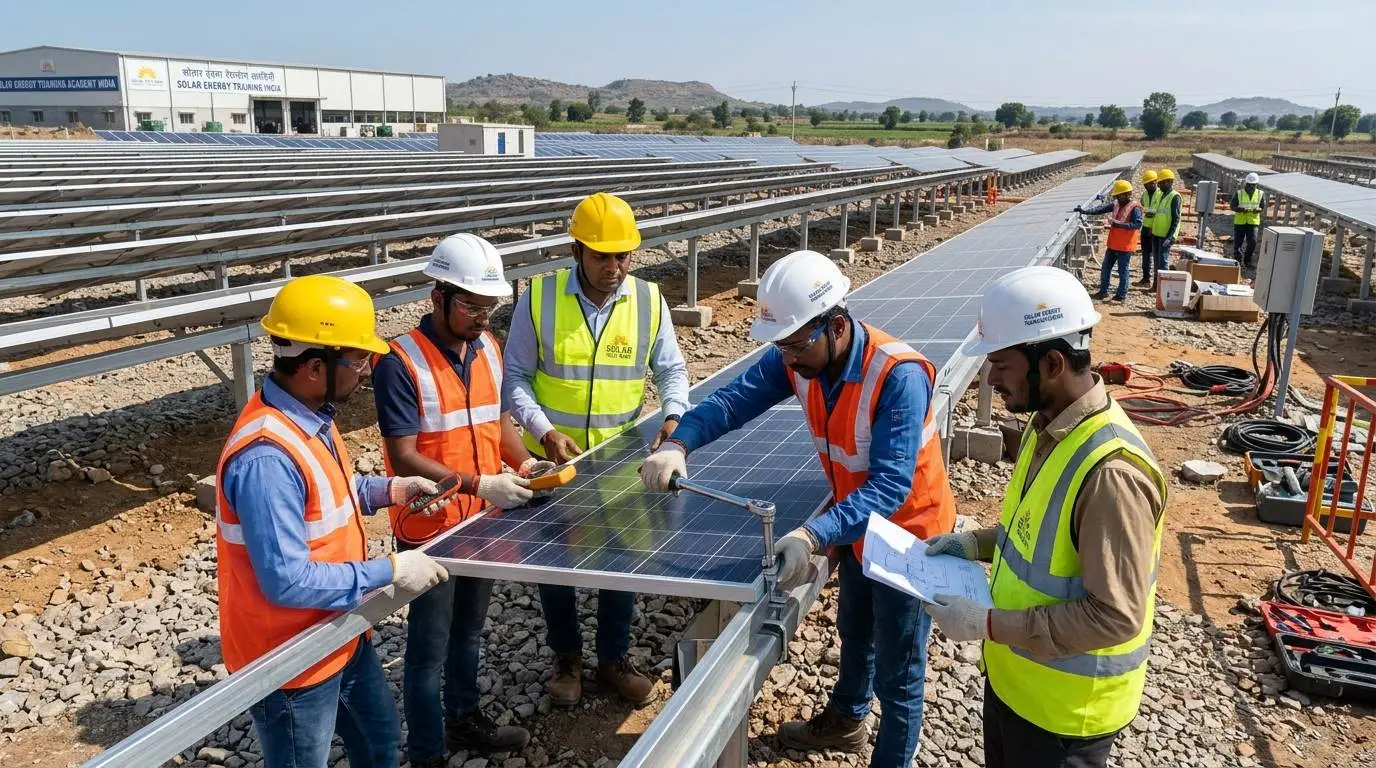
IISE's Mission Statement
We believe passionately that education, cutting-edge research, knowledge, and evidence are crucial in shaping the changes needed to realize our energy requirement and to support people, societies, and institutions to navigate the challenges ahead.
Operating as an academic and technical training division under CERT, IISE translates this institutional mandate into structured vocational curricula, hands-on field laboratories, engineering design masterclasses, and open-access solar tools to prepare India’s renewable workforce for rapid deployment.
The Four Pillars of Our Mission
The core mission of IISE is structured around four primary pillars that guide our course development, faculty mentorship, practical workshops, and community outreach.
Advancing Solar Energy Leadership
Empowering engineers, diploma holders, and clean tech entrepreneurs with technical excellence to strengthen India’s stature as a premier global solar hub, supporting national clean energy targets through rigorous engineering standards.
Developing a Skilled Clean Energy Workforce
Developing structured, job-relevant curricula that meet the surging demand for trained human resources across photovoltaic system design, rooftop installation, electrical testing, and plant operations across all states.
Building Leadership & Environmental Responsibility
Fostering teamwork, engineering ethics, rigorous electrical safety protocols, and a sincere commitment to environmental stewardship so graduates design solar systems with lasting durability and zero safety compromises.
Promoting Renewable Energy Awareness
Spreading accessible clean-energy literacy among youth, students, and property owners, demystifying photovoltaic technology, and promoting informed decisions about adopting solar electricity for daily power needs.
Why Our Mission Matters: The Imperative for Solar Competence
India’s ambitious solar capacity targets require far more than capital investment—they demand rigorous technical competence, verified safety compliance, and informed energy stewardship across every stage of development.
Closing the Solar Technical Skill Deficit
While solar installations expand rapidly across residential, commercial, and utility sectors, the scarcity of formally certified solar engineers risks underperforming arrays, improper string sizing, and premature inverter failures. Structured technical education ensures installations deliver their full projected yield over a 25-year asset lifecycle.
Safeguarding Installation Integrity & Electrical Safety
Direct current (DC) solar circuits operate under high voltages and continuous load conditions. Without rigorous training in earthing, surge protection, DC crimping, and insulation resistance testing, installations carry severe risks of electrical fire, arc faults, and personal hazard. Professional education embeds safety as an inviolable baseline.
Connecting Engineering Theory with Real-World Deployment
Traditional academic degrees frequently overlook practical clean-energy execution—such as DISCOM net-metering liaison, CEIG statutory approvals, shadow analysis with pyranometers, and CAD single-line diagrams. IISE bridges this divide by aligning classroom concepts directly with active industrial EPC practice.
Accessible Learning & Continuous Professional Upskilling
India’s energy landscape is dynamic, with emerging technologies such as bifacial TOPCon cells, battery storage (BESS), and microgrids rapidly gaining adoption. Accessible vocational programs enable electrical diploma holders, working technicians, and engineering graduates to continually advance their professional capabilities.
Empowering Communities to Make Informed Clean Energy Decisions
Accelerating decentralized solar requires informed consumers, business leaders, and rural entrepreneurs. By demystifying kilowatt sizing, capital expenditures, and government subsidy schemes like PM Surya Ghar, IISE helps stakeholders invest with confidence in clean energy solutions.
Our Educational Philosophy: Principles Guiding Learning at IISE
At IISE, technical training is shaped by eight core pedagogical values designed to nurture competent, ethical, and versatile renewable energy specialists.
Strong Technical Fundamentals
Grounding students in electrical physics, solar irradiation dynamics, semiconductor PN-junction physics, and circuit thermodynamics to provide a bedrock for advanced design.
Practical, Application-Oriented Learning
Combining computational simulation with hands-on tool handling, DC wiring, connector crimping, and real balance-of-system (BOS) component examination.
Safety and Quality Consciousness
Instilling strict compliance with IS/IEC standards, CEIG regulations, PPE requirements, and fail-safe earthing methods as non-negotiable operational requirements.
Industry-Relevant Knowledge
Synchronizing curriculum topics with commercial EPC project workflows, real-world vendor datasheets, state net-metering policies, and utility interconnect rules.
Problem-Solving & Critical Thinking
Cultivating diagnostic capabilities to analyze shading derates, string mismatch, thermal hotspots, inverter synchronization faults, and ground leakage issues.
Continuous Learning as Tech Evolves
Preparing engineers to rapidly adapt to emerging technological frontiers, including bifacial n-type TOPCon, HJT, battery storage systems (BESS), and microgrids.
Environmental Responsibility
Teaching students to balance engineering economics with ecological stewardship, lifecycle carbon mitigation, building energy efficiency, and solar module recycling.
Professional Integrity
Upholding truthful solar generation modeling, transparent client consultancy, honest system sizing, and ethical responsibility in all clean-tech commercial endeavors.
From Learning to Real-World Application: The Six-Stage Pathway
A structured vocational methodology taking students from theoretical fundamentals to professional execution in the clean energy industry. (Note: Specific practical exercises and software modules depend on individual course curriculum.)
Understand Solar Fundamentals
Grasp solar geometry, sun-path diagrams, photovoltaic conversion physics, module cell technologies (Mono PERC, TOPCon), and power electronic fundamentals.
Apply Engineering Principles
Master computer-aided solar system simulation and drafting using industry tools such as PVsyst, Helioscope, and AutoCAD single-line diagram generation.
Develop Practical Competence
Gain confidence through physical assembly demonstrations, module mounting structures, DC string wiring, MC4 connector crimping, and inverter connectivity.
Master Testing & Safety Protocols
Conduct rigorous system inspection, open-circuit voltage (Voc) verification, short-circuit current (Isc) testing, insulation resistance checks, and fault diagnosis.
Deploy Knowledge in the Field
Utilize acquired competencies in commercial EPC projects, rooftop solar installation contracting, institutional technical advisory, or green entrepreneurship.
Pursue Lifelong Skill Expansion
Continue advancing technical capabilities as the clean energy sector evolves into battery storage (BESS), electric mobility charging, and smart grid automation.
Making Solar Knowledge More Practical with Solar Tools
Computational design tools and sizing calculators demystify complex engineering calculations. IISE provides verified interactive resources for students, solar installers, and property owners across India.
Free Solar Tools & Calculators Hub
Access IISE’s complete online engineering suite, including rooftop solar capacity estimation, solar panel count calculations, battery storage sizing, cable voltage drop checks, and capital investment payback.
Solar Calculator India
Calculate recommended solar plant capacity, anticipated monthly electricity generation, projected bill savings, and applicable PM Surya Ghar Muft Bijli Yojana government subsidy amounts.
Solar Rooftop Calculator
Assess shadow-free roof area requirements, total solar PV module numbers, estimated turnkey project costs, and return on investment (ROI) tailored specifically for Indian tariff brackets.
Technical Engineering Blog
Explore in-depth technical articles authored by IISE faculty, covering software comparisons (Helioscope vs PVsyst), off-grid battery sizing guides, and solar market job analyses.
Our Contribution to Renewable Energy Awareness
A sustainable clean energy future relies not only on trained engineers but also on informed citizens, supportive institutions, and youth who understand how solar power transforms society.
Introducing Young Learners to Clean Technology
Exposing school students, polytechnic youth, and college graduates to renewable energy principles early, cultivating a curiosity for STEM careers that support environmental stewardship.
Encouraging Evidence-Based Public Discourse
Providing objective, scientifically verified facts regarding solar power reliability, solar-plus-storage feasibility, and lifetime economic returns to counter common consumer misconceptions.
Demystifying Photovoltaic Principles Without Jargon
Translating complex semiconductor physics, grid synchronization, and inverter topologies into accessible, intuitive language for consumers, property managers, and community leaders.
Championing Safety and Responsible Energy Choices
Educating consumers about installation safety, reliable component selection (Tier-1 modules, certified inverters), and mandatory statutory electrical standards to ensure community safety.
Connecting Technology, Sustainability & Society
Illustrating how decentralized solar power generation strengthens local energy access, offsets greenhouse gas emissions, and enhances national energy security.
Technical Competencies for India's Growing Clean Tech Sector
IISE’s vocational courses develop actionable engineering and field capabilities directly relevant to India's solar EPC companies, rooftop installation contractors, and power utilities.
String voltage calculation, temperature coefficient derates, tilt angle optimization, and azimuth solar orientation.
Comprehensive mastery of PVsyst energy modeling, Helioscope 3D layout drafting, and AutoCAD electrical single-line diagram creation.
DC surge protection devices (SPDs), DC disconnector switches, string fuse sizing, earthing pits, and lightning protection compliance.
Rooftop ballast and penetrating structure assembly, wind load tolerance considerations, solar cable sizing, and weatherproof MC4 crimping.
Central, string, and micro-inverter topology comparison, inverter clipping ratio optimization, and utility grid interconnection rules.
Open-circuit voltage (Voc) checks, short-circuit current (Isc) testing, insulation resistance measurements, and pre-commissioning checklists.
IV curve analysis, thermal hotspot detection using infrared thermography, preventative maintenance schedules, and string troubleshooting.
Battery sizing for off-grid and backup applications, lithium-ion vs lead-acid chemistries, BMS architecture, and hybrid inverter configuration.
Our Core Institutional Values
Six foundational values govern our curriculum development, instructional methods, academic ethics, and community relationships.
Technical Competence
01Commitment to rigorous engineering fundamentals, verifiable scientific accuracy, and precision in calculation and system modeling.
Practical Learning
02Prioritizing experiential understanding through hands-on laboratory hardware, simulation software, and real balance-of-system exercises.
Safety and Quality
03Uncompromising adherence to electrical codes, personal protection standards, and robust installation methods that ensure 25-year reliability.
Integrity & Professional Responsibility
04Championing honesty in generation projections, transparent engineering advice, and ethical conduct across commercial and academic engagements.
Environmental Awareness
05Instilling genuine ecological consciousness, carbon mitigation ethics, and sustainable resource management throughout the clean energy lifecycle.
Continuous Improvement & Lifelong Learning
06Relentlessly updating curriculum modules to reflect technological breakthroughs in solar cells, storage systems, and national grid regulations.
Our Wider Purpose: Empowering India’s Clean Energy Transition
Renewable energy education extends beyond individual careers—it directly accelerates national decarbonization, local energy resilience, and sustainable economic opportunity.
Building a Highly Capable Green Workforce
Supplying India’s renewable ecosystem with qualified solar engineers, technicians, and project managers equipped to design, install, and maintain utility-scale and rooftop PV infrastructure to national standards.
Fostering Informed Clean Energy Decisions
Empowering homeowners, commercial building managers, agricultural operators, and industrial facilities with reliable technical knowledge to make prudent investments in solar systems.
Raising Solar Quality & Asset Durability Standards
Mitigating frequent causes of system underperformance and equipment failure across the distributed generation sector by training the workforce in verified quality assurance protocols.
Driving Entrepreneurship & Decentralized Economic Growth
Providing technical, commercial, and regulatory foundations that enable graduates to establish sustainable solar EPC, maintenance, and energy auditing enterprises in their home regions.
Related Learning Pathways and Institutional Pages
Connect with specialized programs, academic frameworks, and technical resources across the Indian Institute of Solar Energy.
Solar Energy Courses
Comprehensive PG Diploma, Diploma, and certificate programs in solar engineering and system design.
Renewable Energy Courses India
Specialized vocational training across solar PV, EV technology, and clean energy applications.
Battery Systems Courses
In-depth technical training on lithium-ion cells, lead-acid technology, BMS, and energy storage.
IISE Institutional Vision
Discover our forward-looking institutional vision for renewable education and national impact.
About IISE & CERT
Learn about our institutional background, parent organization CERT, and leadership team.
Quality Statement
Review our institutional quality assurance policy, curriculum governance, and feedback protocols.
Free Solar Tools & Calculators
Use verified interactive calculators for rooftop sizing, battery storage, and solar economics.
Why Train With IISE
Explore our practical training model, faculty credentials, live workshops, and institutional strengths.
Frequently Asked Questions About Our Mission
Answers to common inquiries regarding the Indian Institute of Solar Energy's institutional purpose, educational approach, and learning resources.
The mission of the Indian Institute of Solar Energy (IISE) is to help India strengthen its position as a global leader in solar energy by developing high-quality solar education that addresses national workforce needs. Operating under the Centre for Energy Research and Training (CERT), IISE develops technical leadership, professional responsibility, and environmental awareness among learners, while promoting public and youth awareness of renewable energy.
India is undergoing an unprecedented expansion in renewable energy deployment across utility solar farms and distributed rooftop systems. Specialized technical education is crucial to prevent system underperformance, ensure strict electrical safety standards, adhere to DISCOM grid-interconnection regulations, and build durable clean-tech infrastructure that operates reliably for its full 25-year design life.
IISE supports skill development through structured, industry-aligned curricula that combine electrical engineering theory, computer-aided simulation (PVsyst, Helioscope, AutoCAD), laboratory hardware demonstrations, and hands-on installation workshops. This integrated model ensures diploma holders, engineering graduates, and practicing technicians develop field-competent capabilities.
While classroom theory explains semiconductor physics and irradiance mathematics, field execution requires practical competence in DC string wiring, MC4 connector crimping, structural mounting torque, inverter parameter configuration, and electrical safety testing. Practical exposure bridges the gap between textbook knowledge and live EPC site execution.
Wider public and youth awareness demystifies clean energy technology, encourages informed consumer decisions, dispels common myths regarding solar reliability, and builds broad community support for climate action and decentralized renewable power generation.
Prospective learners can explore our comprehensive course catalog online at indianinstituteofsolarenergy.com/solar-energy-courses-in-india/, review specialized tracks in solar PV, electric vehicles, and battery systems, or contact our academic admissions team directly via our course inquiry form.
IISE provides free interactive engineering calculators and sizing tools at indianinstituteofsolarenergy.com/free-solar-tools/, including our Solar Calculator India and Solar Rooftop Calculator, along with in-depth technical design articles on our official blog.
Be Part of a More Sustainable Energy Future
Whether you are an engineering student preparing for your clean-tech career, a working professional seeking specialized solar engineering competence, or an entrepreneur planning a renewable energy enterprise—IISE provides the rigorous technical foundation you need.