⚡ ADMISSIONS ANNOUNCED | 2-DAY HYBRID TECHNICAL WORKSHOP | JOINT IISE + CERT CERTIFICATION
Advance EV training Workshop in India
Explore Electric Vehicle Technology Through Practical, Industry-Oriented Training
⏱️ 2-Day Workshop
💻 Hybrid Training (Online + Lab)
🔧 Practical Demonstrations
👥 Open to Beginners
📍 Mumbai / Navi Mumbai
📜 Joint IISE + CERT Certificate
*Note: ₹999 is the initial seat booking amount to reserve your seat in the upcoming batch. The remaining balance fee is payable according to the verified admission instructions prior to training commencement.
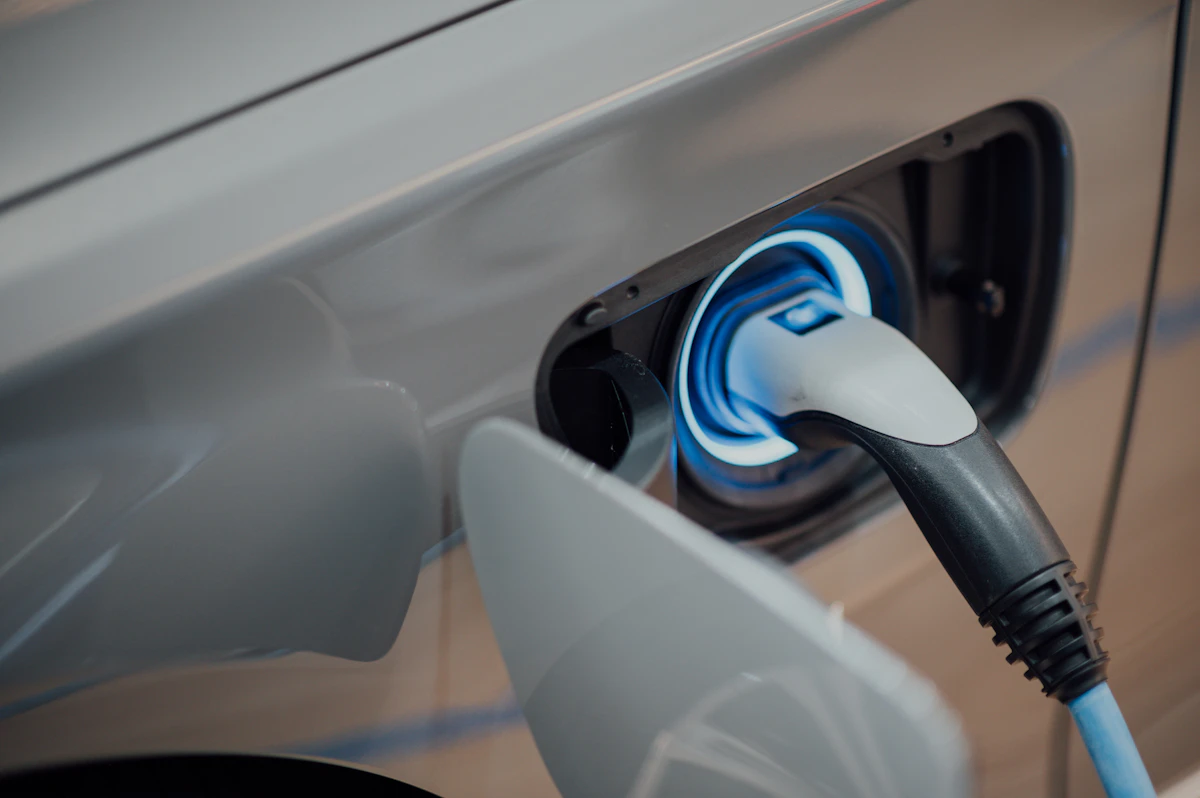
Hands-on EV Powertrain & Battery Testing Setup
Pioneering Clean Energy & Electric Vehicle Education - EV training Workshop
IISE Technical Heritage
Indian Institute of Solar Energy (IISE), a Unit of CERMS India Foundation, has spent over a decade delivering specialized renewable energy, battery storage, and technical engineering training in India.
CERT Technical Partner
Centre for Energy Research and Training (CERT) collaborates as technical partner, ensuring the workshop curriculum aligns with current industrial EV architecture, power electronics, and battery testing standards.
Practical Component Exposure
Participants gain direct visual and hardware exposure to real EV components, including lithium-ion battery packs, BMS boards, electric motors, motor controllers, and EV charging interfaces.
Flexible Hybrid Delivery
Our balanced hybrid format blends interactive online technical foundations with classroom demonstrations in Mumbai/Navi Mumbai, making high-caliber learning accessible without workplace interruption.
About the Advance EV Technology Training Workshop
Electric Vehicle (EV) technology represents a fundamental paradigm shift in modern automotive engineering and clean transportation. Unlike conventional internal combustion engine (ICE) vehicles that rely on mechanical drivetrains and fossil fuels, electric mobility operates through the seamless coordination of electrochemical energy storage, advanced high-frequency power electronics, and electromagnetic traction motors. As India advances its national electric mobility transition across two-wheelers, three-wheelers, commercial fleets, and passenger cars, qualified technical professionals with a structured understanding of EV hardware and subsystem architecture are increasingly essential.
At the heart of every modern electric vehicle is an intricate energy and power ecosystem. High-voltage lithium-ion battery packs supply direct-current (DC) power to sophisticated traction inverters, which convert electrical energy into precisely modulated alternating current (AC) to drive high-efficiency permanent magnet or brushless DC electric motors. Simultaneously, an intelligent Battery Management System (BMS) continuously monitors cell-level voltages, thermal states, and current flow to optimize safety, enforce balancing, and compute State of Charge (SOC) and State of Health (SOH). Integrating these high-voltage systems requires dedicated on-board DC-DC converters, AC Level 2 and DC fast charging protocols, and rigorous high-voltage electrical safety standards.
The Advance EV Technology Training Workshop is deliberately crafted as an intensive, focused two-day technical learning experience. It provides engineers, students, technicians, solar professionals, and entrepreneurs with foundational-to-technical comprehension of EV component interactions and practical demonstrations. Rather than claiming to replace a multi-year academic degree, this workshop equips participants with actionable, authentic engineering perspectives, component familiarity, and diagnostic insights needed to evaluate career paths and commercial opportunities in India’s emerging e-mobility sector.
EV Powertrain Dynamics
Battery Chemistry & Packs
BMS & Protection Circuits
Charging & Safety Protocols
Why Learn Electric Vehicle Technology?
1. Electric Mobility Transition
Automakers and fleet operators across India are rapidly introducing electric models, creating sustained demand for technical understanding of electric drivetrains.
2. Battery Engineering & Chemistries
Lithium iron phosphate (LFP) and nickel manganese cobalt (NMC) chemistries require strict cell balancing, thermal management, and safety engineering.
3. Motor & Traction Control
Understanding brushless DC (BLDC) and permanent magnet synchronous motors (PMSM) enables technicians to evaluate torque curves and regenerative braking.
4. Power Electronics & Inverters
Power semiconductors, IGBT switching modules, and DC-DC converters form the nervous system of modern electric vehicle energy distribution.
5. EV Charging Infrastructure
Public DC fast chargers (CCS-2, CHAdeMO) and AC home chargers create a massive infrastructural ecosystem requiring skilled deployment and maintenance.
6. Battery Diagnostics & Safety
Diagnosing cell deterioration, thermal runaway risks, and insulation leakage is vital for reliable fleet operation and warranty validation.
7. Solar-EV Synergies
Combining solar photovoltaic generation with EV charging stations creates zero-emission microgrids, expanding opportunities for solar energy professionals.
8. Entrepreneurship & New Ventures
From EV retrofitting and battery assembly to operating commercial charging hubs, foundational technical insight is the basis for successful e-mobility ventures.
What Will You Learn in This EV Technology Workshop?
Introduction to Electric Vehicles
Classification of modern e-mobility: Battery Electric (BEV), Hybrid (HEV), Plug-in Hybrid (PHEV), and Fuel Cell (FCEV) layouts.
EV Architecture & Working Principles
System-level integration of traction batteries, inverters, motors, transaxles, and high-voltage distribution networks.
EV Battery Technologies
Electrochemistry review of Lithium Iron Phosphate (LFP), NMC, and Lithium Titanate cells; cycle life, energy density, and C-ratings.
Battery Pack Fundamentals
Cell connection topologies (series/parallel), busbar design, thermal management, module construction, and pack enclosing.
Battery Management Systems (BMS)
Core BMS functions: voltage monitoring, temperature sensing, passive vs. active cell balancing, and protection thresholds.
Electric Motors Used in EVs
Working principles and electromagnetic design of Brushless DC (BLDC) motors, Permanent Magnet Synchronous Motors (PMSM), and AC Induction.
Motor Controllers & Drivers
Pulse-Width Modulation (PWM), Field Oriented Control (FOC), speed and torque loops, and throttle signal processing.
Power Electronics Overview
Role of power semiconductors (MOSFETs, IGBTs) in managing high-current, high-voltage switching with minimal thermal losses.
DC-DC Converters & Inverters
Converting high-voltage traction DC to low-voltage 12V auxiliary power and generating 3-phase AC power for traction motors.
EV Charging Systems
On-board chargers (OBC) vs. off-board DC fast charging systems; electrical power requirements and efficiency curves.
AC & DC Charging Fundamentals
Differences between single-phase/three-phase AC charging (Level 1 & 2) and high-power direct-current fast charging.
Charging Infrastructure & Standards
Connectors (Type 2, CCS-2, CHAdeMO), Open Charge Point Protocol (OCPP), and EVSE safety interlocking.
EV Diagnostics & Measurement
Basic troubleshooting approaches, CAN bus communication concepts, multi-meter measurements, and fault code identification.
Electrical Safety & High-Voltage Protocols
High Voltage Interlock Loops (HVIL), manual service disconnects (MSD), personal protective equipment (PPE), and Class 0 insulation.
EV Maintenance Fundamentals
Preventive service procedures, coolant loop inspection, electrical harness checkups, and battery pack degradation monitoring.
Future EV Technology Developments
Emerging solid-state battery research, silicon carbide (SiC) inverters, bi-directional vehicle-to-grid (V2G), and wireless EV charging.
Advance EV Technology Workshop – Detailed Curriculum
*Note: Module depth, practical hardware demonstrations, and session pacing are calibrated specifically for the intensive two-day delivery structure.
Module 1
Fundamentals of Electric Vehicles
- Evolution of electric mobility and historical transition from mechanical to electric drivetrains
- Types of electric vehicles: BEV (Battery EV), HEV (Hybrid), PHEV (Plug-in Hybrid), and FCEV (Fuel Cell)
- EV powertrain architecture and major component interconnection
- Comparative performance analysis: Internal Combustion Engines (ICE) vs. Electric Powertrains
- Energy efficiency, regenerative braking energy capture, and environmental impact
Module 2
EV Battery Technology
- Battery working principles, electrochemical cells, and redox reactions
- Lithium-ion chemistries: LFP (Lithium Iron Phosphate), NMC, NCA, and LTO comparison
- Cylindrical (18650, 21700), Prismatic, and Pouch cell construction and characteristics
- Voltage, capacity (Ah), energy (kWh), and C-rating discharge dynamics
- Series-parallel cell configurations to achieve high-voltage pack specifications
- Battery aging mechanisms, thermal behavior, and safety considerations
Module 3
Battery Management System (BMS)
- Role and architecture of BMS in automotive battery packs
- Cell-level voltage monitoring, shunt resistor current sensing, and thermistor arrays
- State of Charge (SOC) estimation and State of Health (SOH) calculation methods
- Cell balancing methods: Passive dissipative balancing vs. Active energy-redistribution balancing
- Over-voltage, under-voltage, over-current, short-circuit, and thermal runaway protection
- CAN bus communication fundamentals between BMS and vehicle control unit
Module 4
Electric Motors and Controllers
- Principles of electric motors used in electric mobility
- Brushless DC (BLDC) motors: Hall sensors, trapezoidal back-EMF, and applications in light EVs
- Permanent Magnet Synchronous Motors (PMSM): Sinusoidal control, field weakening, and high torque density
- Three-phase AC induction motors in heavy-duty electric vehicles
- Motor controllers: PWM gating, H-bridge / 3-phase inverter topology, and throttle response
- Regenerative braking fundamentals and reverse power transfer
Module 5
EV Power Electronics
- Role of power electronics in modern electric vehicle powertrain systems
- Traction inverters: DC to 3-phase AC conversion using IGBT and MOSFET power modules
- DC-DC buck converters: Stepping 400V/800V traction voltage down to 12V auxiliary systems
- On-Board Chargers (OBC): AC to DC rectification, power factor correction (PFC), and galvanic isolation
- Thermal dissipation, heatsink design, and liquid cooling in power electronic assemblies
Module 6
EV Charging Infrastructure
- Overview of EV charging levels: AC Level 1, AC Level 2, and DC Fast Charging
- Charging connector standards: Type 2 (Mennekes), CCS-2 (Combined Charging System), CHAdeMO, and GB/T
- Electric Vehicle Supply Equipment (EVSE) architecture and control pilot (CP) signaling
- Public charging stations, grid integration, transformer sizing, and electrical safety
- Open Charge Point Protocol (OCPP) communication between chargers and central management systems
Module 7
EV Diagnostics and Safety
- Introduction to electric vehicle troubleshooting and diagnostics concepts
- High-Voltage Interlock Loop (HVIL) and Manual Service Disconnect (MSD) operation
- Electrical insulation resistance testing and ground fault detection
- Personal Protective Equipment (PPE): 1000V Class 0 rated insulated gloves, arc shields, and insulated tools
- Safe handling protocols for damaged, submerged, or thermally compromised lithium-ion packs
- Routine inspection procedures and preventive maintenance best practices
Practical EV Technology Training
Theoretical concepts alone cannot replace physical familiarity with high-voltage components. In this critical workshop component, participants receive physical hardware demonstrations and guided component inspections under verified safety supervision.
EV Battery Packs
Inspection of multi-cell series-parallel arrangements, structural casing, and insulation materials.
Battery Cells & Busbars
Examination of cylindrical (18650/21700) and prismatic cells with nickel/copper laser-welded busbars.
BMS Protection Units
Hands-on review of BMS hardware, balance leads, temperature thermistors, and MOSFET switching banks.
Electric Motors
Direct inspection of BLDC hub and mid-drive PMSM motor cutaways, stator windings, and permanent magnets.
Motor Controllers
Analysis of automotive motor controller interfaces, throttle inputs, Hall sensor harnesses, and phase wires.
Power Electronics & Inverters
Overview of power semiconductor bridges, DC-DC step-down modules, and heat-sinking structures.
EV Charging Equipment
Hands-on demonstration with on-board chargers (OBC) and dedicated EVSE AC charging hardware.
Charging Connectors & Guns
Inspection of physical pin configurations on Type 2 AC connectors and CCS-2 DC fast charging interfaces.
Diagnostic Hardware
Demonstration of digital multimeters, insulation testers, and CAN communication bus readers.
High-Voltage Safety Gear
Class 0 1000V rated insulated safety gloves, dielectric eye protection, and insulated hand tools.
⚠️ Safety Disclaimer: Practical demonstrations are conducted using dedicated instructional demonstration hardware and bench-test units in accordance with strict high-voltage educational safety protocols.
Two-Day EV Technology Workshop Schedule
Core EV Systems
EV Fundamentals & Core Components
- Introduction to Electric Vehicles: Powertrain classifications (BEV, HEV, PHEV, FCEV) and comparative analysis with ICE.
- EV Architecture & Subsystems: High-voltage vs. low-voltage distribution, motor transaxles, and controller placement.
- Battery Chemistries: Working principles of LFP, NMC, and LTO cells; voltage, capacity, energy, and C-rates.
- Battery Pack Construction: Series-parallel matrix calculations, busbar interconnects, and pack housing safety.
- Battery Management Systems: Cell-voltage monitoring, thermal mapping, passive/active balancing, and SOC/SOH estimation.
- Electric Motors in EVs: Operating dynamics of BLDC and PMSM traction motors; stator windings and magnet configurations.
- Hardware Demonstration Session: Physical inspection of cells, battery modules, BMS protection boards, and motor assemblies.
Power & Charging
Power Electronics, Charging & Diagnostics
- Motor Controllers & Drives: PWM switching, speed loops, throttle inputs, Hall sensor feedback, and torque response.
- Power Electronics: Traction inverters (DC to 3-phase AC) and high-voltage to 12V DC-DC auxiliary converters.
- Charging Infrastructure: AC Level 1/Level 2 on-board charging vs. high-power commercial DC fast charging stations.
- Charging Standards & Protocols: Type 2 AC connectors, CCS-2 DC guns, EVSE safety interlocking, and OCPP overview.
- EV Diagnostics & Troubleshooting: Measurement approaches, CAN communication review, insulation resistance, and fault checking.
- High-Voltage Safety Protocols: 1000V PPE usage, Manual Service Disconnect (MSD), and emergency shutdown procedures.
- Interactive Review & Summary: Hands-on charging connector demonstration, question-and-answer session, and learning recap.
📌 Notice on Batch Arrangements: Detailed hour-by-hour session timings, daily break schedules, and specific classroom joining arrangements will be officially communicated to registered participants prior to batch commencement.
Who Should Attend This EV Technology Workshop?
✨ Open to Everyone: No prior EV training or solar-course qualification is mandatory! The workshop begins with foundational concepts.
Engineering Students
Mechanical, electrical, electronics, and automotive engineering students seeking practical orientation in electric mobility.
Diploma & ITI Candidates
Technical technicians and diploma holders wanting hands-on component familiarity to support EV assembly and servicing.
Fresh Graduates
Graduates looking to build distinctive technical understanding of clean tech to enhance entry-level career prospects.
Automobile Professionals
Traditional garage owners, auto technicians, and service managers upskilling for electric vehicle powertrains.
Electrical & Power Engineers
Engineers working in power distribution seeking to understand EV charging loads and battery storage interfaces.
Solar Energy Professionals
Solar installers and EPC professionals looking to integrate solar PV with electric vehicle charging stations and storage.
Entrepreneurs & Investors
Individuals evaluating business models in EV charging stations, battery assembly, fleet transition, or retail dealerships.
EV Enthusiasts & Learners
Anyone curious about clean energy and future mobility who wants structured, authentic technical foundation.
What Will You Gain From This Workshop?
1
Comprehensive understanding of EV powertrain architectures, high-voltage wiring, and energy flow pathways.
2
Clear working knowledge of lithium-ion cell chemistries, capacity ratings, C-rates, and pack sizing fundamentals.
3
Practical insight into Battery Management System (BMS) roles, cell voltage sensing, and balancing techniques.
4
Familiarity with BLDC and PMSM traction motor operations, controller PWM modulation, and speed regulation.
5
Understanding of power electronics, traction inverters, and DC-DC step-down converters for auxiliary systems.
6
Working knowledge of AC Level 2 and DC fast charging protocols, connector pin layouts (Type 2, CCS-2), and EVSE safety.
7
Rigorous awareness of high-voltage electrical safety standards, personal protective gear (PPE), and isolation testing.
8
Practical exposure through component demonstrations and hardware examination under guided supervision.
9
Realistic perspective on current market trends, supply chain dynamics, and commercial applications across India.
⚠️ Scope Note: The workshop is designed to impart foundational and applied technical knowledge over two days. It does not certify independent automotive service competence, warrant professional repair licensing, or guarantee employment.
Career Opportunities and Business Applications in the EV Sector
India’s expanding electric mobility ecosystem creates multidirectional pathways across manufacturing, maintenance, supply chain, and entrepreneurial ventures. The technical knowledge gained in this workshop applies across several domains:
EV Manufacturing & Assembly
Understanding sub-assembly lines for electric two-wheelers, three-wheelers, and commercial vehicles.
EV Service & Maintenance
Assisting in electric vehicle workshops, preventive checkups, and diagnostic troubleshooting.
Battery Pack Fabrication
Participating in custom lithium-ion battery pack assembly, testing, and energy storage integration.
EV Charging Infrastructure
Planning, installing, and managing commercial AC charging hubs and public fast charging stations.
Battery Testing & Quality Control
Conducting incoming cell quality checks, capacity verification, and internal resistance testing.
Component Distribution & Sales
Supplying motors, controllers, BMS boards, chargers, and wire harnesses to the growing retrofitting market.
Fleet Electrification Projects
Assisting logistics, delivery, and transport operators in evaluating and transitioning fleets to electric power.
Solar-EV Charging Integration
Building integrated renewable microgrids combining solar rooftop generation with EV charging stations.
⚠️ Disclaimer: This workshop provides introductory-to-technical knowledge and practical component exposure. It is not an employment guarantee, placement contract, or government trade license. Career advancement depends upon individual dedication, prior background, and broader industry qualifications.
Why Learn with IISE and CERT?
Specialized Clean Tech Focus
IISE has over a decade of dedicated educational focus in solar energy, battery storage systems, and emerging sustainable technologies.
CERT Technical Partnership
Collaborating with the Centre for Energy Research and Training ensures academic rigor and alignment with contemporary industry standards.
Application-Oriented Methodology
Balancing core engineering principles with real physical hardware inspections to demystify complex high-voltage architectures.
Accessible Hybrid Format
Engineered for students and busy working professionals to gain valuable technical skills without disrupting full-time schedules.
Joint Workshop Credential
Participants receive a verified joint certificate issued by IISE (CERMS India Foundation) and CERT upon successful completion.
Active Professional Network
Connect with fellow participants, engineers, solar professionals, and entrepreneurs across India’s clean energy ecosystem.
Hybrid EV Training in Mumbai and Navi Mumbai
Interactive Online Knowledge Sessions
Comprehensive coverage of EV powertrain architecture, lithium-ion battery electrochemistry, BMS protection schematics, motor electromagnetic theory, and charging infrastructure standards delivered through live, interactive digital sessions.
In-Person Practical Demonstrations
Classroom and laboratory practical demonstrations conducted in Mumbai / Navi Mumbai. Participants examine physical battery modules, BMS protection boards, BLDC/PMSM motors, controllers, and charging connectors under guided safety supervision.
Specific classroom venue details, travel directions, and batch scheduling arrangements will be officially communicated to registered candidates upon admission confirmation.
Workshop Fees and Registration
Limited Workshop Batch
Advance EV Technology Training Workshop
💡 Important Fee Explanation: Secure your workshop seat by paying the ₹999 booking amount through the verified admission process. The remaining balance fee will be payable according to the official admission joining instructions prior to training.
What is Included in Your Registration:
- Full 2-Day Hybrid Training (online technical sessions + Mumbai/Navi Mumbai practical demonstrations).
- Hands-on component exposure to battery packs, BMS, electric motors, controllers, and chargers.
- Comprehensive digital course materials, presentation notes, and reference technical slides.
- Joint Workshop Certificate of Completion issued by IISE and CERT.
- Interactive Q&A and technical guidance with engineering instructors.
How to Join the EV Technology Workshop
Submit Enquiry or WhatsApp
Send an admission enquiry online or contact our admissions team directly via WhatsApp to register your interest.
Receive Batch Information
Our academic coordinators share upcoming batch schedules, detailed syllabus guides, and joining options.
Book Your Seat with ₹999
Pay the initial ₹999 seat-booking amount through official admission channels to lock your registration in the upcoming batch.
Confirmation & Joining Access
Receive your formal registration confirmation, digital study materials, and practical classroom joining instructions.
*Note: Registration and batch confirmation are subject to official confirmation through IISE’s verified admission desk.
Joint Workshop Certificate from IISE and CERT
Verified Completion Credential
Joint Certificate of Completion
Participants who successfully attend and fulfill the required components of the two-day workshop will receive an official joint certificate issued collaboratively by:
1. Indian Institute of Solar Energy (IISE)
A Unit of CERMS India Foundation — recognized for over a decade in clean technology, solar energy engineering, and emerging sustainable systems.
2. Centre for Energy Research and Training (CERT)
Serving as technical partner, certifying academic and practical hardware demonstration standards in electric vehicle technology.
Certificate Details & Authentication:
- Participant’s Full Registered Name.
- Workshop Title: Advance EV Technology Training Workshop.
- Instructional Duration: 2 Days (Hybrid Delivery Mode).
- Core Curriculum Areas: EV Powertrain, Battery Chemistries, BMS, Motors, Power Electronics & Charging Infrastructure.
- Institutional Seals, Signatures, and Unique Certificate Verification Number.
⚠️ Regulatory Clarification: This document certifies technical workshop participation and completion. It is not an academic university degree, diploma, or government licensing credential.
Frequently Asked Questions About EV Technology Training
Explore More Electric Vehicle Training Programmes
Looking for longer-term academic qualifications or specialized battery engineering programs? Explore IISE’s comprehensive educational portfolio:
Online Programme
Fundamentals of Electric Vehicle Technology
Foundational introduction to EV concepts, power electronics, and electrical vehicle subsystems for beginners.
Diploma Course
Diploma in Electric Vehicle Technology
Comprehensive multi-month technical diploma covering EV design, battery sizing, powertrain engineering, and diagnostic protocols.
Post Graduate Diploma
PG Diploma in Electric Vehicle Technology
Advanced postgraduate curriculum tailored for engineering graduates seeking in-depth specialization in EV powertrain systems.
Battery Technology
Battery Systems Courses in India
Specialized programs in lithium-ion battery technology, pack assembly, battery management systems, and thermal engineering.
Renewable Energy
Solar Energy Courses & Engineering
IISE’s flagship solar PV engineering, system design, and rooftop installation programs connecting clean energy with EV charging.
UPCOMING WORKSHOP BATCHES ANNOUNCED PERIODICALLY
Start Your Journey into Electric Vehicle Technology
Build your understanding of electric vehicle systems, battery technologies, electric motors and charging infrastructure through IISE’s two-day Advance EV Technology Training Workshop.
💻 Hybrid Delivery
👥 Open to Beginners
📍 Mumbai / Navi Mumbai
📜 Joint IISE + CERT Certificate
Related EV & Clean Technology Learning Resources
Electric Vehicle Courses in India →
Overview of India’s electric mobility revolution and training pathways.
Battery Systems Courses in India →
Guide to lithium-ion battery pack manufacturing and BMS technology.
Why Train with IISE? →
Learn more about IISE’s clean tech training mission and academic philosophy.
Frequently Asked Course Questions →
Answers to general queries on batch schedules, fees, and certificates.
Student Reviews & Testimonials →
Read genuine feedback from students and professionals trained at IISE.
How to Reach IISE Center →
Travel directions and location guides for our Mumbai training facilities.
|
Technical Partner: CERT (Centre for Energy Research and Training)
For batch registrations, technical syllabus enquiries, and corporate training:
info@indianinstituteofsolarenergy.com
|
WhatsApp: +91 88509 02306
|
Phone: +91 981922 5503
This webpage is designed for seamless integration with the existing IISE website theme footer.