PG Diploma in Solar Technology – One-Year Hybrid Programme in India
Build Advanced Skills in Solar PV Design, Engineering, Installation and Renewable Energy Project Management.
Develop the technical and professional capabilities required to participate in India’s growing solar energy sector through a comprehensive postgraduate professional diploma. Delivered in a flexible hybrid format combining interactive live online instruction with immersive, on-site Personal Contact Programme (PCP) practical training at active solar installations.
Hybrid: Online Lectures + Practical PCP
Standard Fee: ₹1,25,000
Up to 35% Merit Scholarship Available*
IISE (Unit of CERMS India Foundation)
University Partner Pathway: Medhavi Skill University
Time is running out. Apply now!
- 00Days
- 00Hours
- 00Minutes
- 00Seconds
Designed for Working Professionals
The programme lets students from any industry, utility, or consultancy background complete the coursework without leaving their current job. Graduates get equipped to design, install, commission, and evaluate the technical and economic viability of renewable energy and energy-efficiency projects.
Industry Accredited

Why India Needs Trained Solar Leaders
India is targeting 500 GW of renewable energy capacity by 2028 — and the country doesn’t yet have enough trained people to design, install, and manage it. Industry estimates point to roughly a million new roles opening up across engineering, installation, and plant operations, including well over a hundred thousand senior management positions alone. Most short online certificates teach theory and stop there. Few combine real curriculum depth with hands-on contact sessions at an active solar installation — which is the gap this diploma is built to close.
Programme Highlights at a Glance
Engineered to bridge academic theory and active site execution, equipping graduates for senior technical and leadership roles across India’s clean energy sector.
One-Year Intensive
Structured two-semester curriculum tailored for engineering graduates and practicing professionals.
Hybrid Delivery Mode
Weekly live interactive online classes balanced with mandatory in-person practical contact sessions.
Complete PV Curriculum
From solar cell physics to residential rooftop and multi-megawatt utility-scale plant engineering.
Practical PCP Sessions
Hands-on hardware installation, string wiring, inverter synchronization, and diagnostic testing.
Solar PV Design Mastery
Single Line Diagrams (SLD), array sizing, cable loss calculations, and PVsyst / AutoCAD simulation.
Battery Storage (BESS)
Advanced energy storage technologies, lithium battery management systems (BMS), and microgrids.
Solar Project Finance & EPC
Techno-commercial feasibility, DPR preparation, PPA contracts, ROI/LCOE analysis, and tendering.
Academic Pathway & Career
In academic partnership with Medhavi Skill University with placement cell support from day one.
About the PG Diploma in Solar Technology
A premier postgraduate technical qualification preparing engineers and managers to lead India’s clean energy transition.
Bridging the Engineering Theory–Practice Divide in Clean Energy
The Indian Institute of Solar Energy (IISE), operating as a specialized unit of CERMS India Foundation with technical knowledge partner CERT (Centre for Energy Research and Training), offers this intensive 1-year postgraduate programme for aspiring leaders in renewable energy.
Traditional engineering degrees often concentrate on broad thermodynamic and semiconductor physics without exposing students to real-world commercial challenges—such as Single Line Diagram (SLD) validation, DC string voltage calculations, inverter clipping ratios, insulation resistance fault-tracing, or state DISCOM net-metering approvals.
The PG Diploma in Solar Technology closes this gap. Through a rigorous combination of synchronous online engineering lectures and hands-on Personal Contact Programme (PCP) practical modules, students master the full lifecycle of solar power plants—from initial resource assessment and software simulation to procurement, installation, grid commissioning, and performance monitoring.
Programme Specifications
| Programme Title: | Post Graduate Diploma in Solar Technology |
| Duration: | 1 Year (2 Semesters) |
| Learning Mode: | Hybrid (Live Online Lectures + Practical PCP) |
| Batch Size: | Strictly Limited to 30 Seats |
| Standard Fee: | ₹1,25,000 (Installments & EMI Available) |
| Scholarship: | Up to 35% (Subject to Eligibility & Batch Approval) |
| Academic Partner: | Medhavi Skill University (UGC-recognized) |
| Knowledge Partner: | CERT – Centre for Energy Research and Training |
Why Study Solar Technology Today?
India is undergoing one of the world’s most aggressive renewable energy transformations. Qualified solar engineers and techno-commercial managers are urgently needed.
1. Commercial & Industrial Rooftop Solar
Driven by high grid tariffs and corporate ESG commitments, C&I rooftop installations are booming across India, demanding skilled engineers for load profiling and structural integration.
2. Utility-Scale Solar Power Plants
India's massive ultra-mega solar parks require specialized EPC design engineers, high-voltage substation specialists, and central inverter commissioning experts.
3. Solar EPC Contracting & Turnkey Execution
Engineering, Procurement, and Construction (EPC) firms require techno-commercial managers capable of balancing bill of materials (BOM), supply chains, and commissioning deadlines.
4. Battery Energy Storage Systems (BESS)
As renewable penetration deepens, grid stability mandates utility and commercial battery storage integration, making BESS engineering one of the highest-paying skill domains.
5. Smart Grids & Open Access Regulations
Modern clean-tech professionals must navigate Green Energy Open Access, virtual net metering, wheeling banking charges, and state DISCOM compliance rules.
6. Clean Energy Entrepreneurship
The rooftop solar market under national subsidy initiatives creates immense scope for independent EPC contractors, channel partners, and techno-commercial energy consultants.
Why Choose the Indian Institute of Solar Energy?
Verified institutional credentials, dedicated clean-energy laboratories, and active industry leadership since 2018.
Established in 2018
Over 15+ years of institutional clean energy heritage through parent foundation CERMS India Foundation and training partner CERT since 2011.
CERT Technical Partnership
Backing from the Centre for Energy Research and Training ensures real-world testing data, lab rigs, and applied research methodologies.
University Partner Pathway
Collaborative vocational pathway with Medhavi Skill University (UGC-recognized), providing recognized academic certification.
100% Practical Rig & Plant Exposure
Physical hands-on training with working solar modules, string inverters, battery storage racks, DCDB/ACDB boxes, and diagnostic instruments.
Practicing EPC Faculty
Courses are led by active solar EPC directors, project managers, and energy auditors who share practical field problem-solving skills.
3,000+ Alumni Network
A thriving network of alumni deployed across top renewable developers, Tier-1 EPC contractors, DISCOMs, and clean-tech startups across India.
Programme Structure & Academic Roadmap
A structured one-year technical learning journey divided into two rigorous semesters, blending live online theory with immersive site training.
Core Solar Engineering & Design
Focuses on technical foundations, photovoltaic science, balance of systems (BOS), single-line diagrams, and hands-on installation protocols.
- Module 1: Solar Energy Fundamentals & Electrical Basics
- Module 2: Solar PV System Components & Balance of Systems (BOS)
- Module 3: Solar PV System Design & Engineering (PVsyst & AutoCAD)
- Module 4: Solar Installation, Commissioning, Safety & O&M
- PCP Practical Session 1: 5-Day On-Site Field Training (Live Plant Near Mumbai)
Advanced Storage, Project Finance & Capstone
Advanced specializations covering battery storage (BESS), grid integration, energy auditing, EPC contracting, financial modeling, and thesis capstone.
- Module 5: Energy Auditing, Load Profiling & Plant Economics
- Module 6: Battery Storage (BESS), Smart Grids & Net Metering
- Module 7: Solar Business, EPC Contracting, PPA & Tendering
- Module 8: Research Methodology, Capstone Project & Technical Defense
- PCP Practical Session 2: 5-Day Advanced Testing & Commissioning Session
Comprehensive Course Curriculum (8 Modules + Capstone)
Organized into 8 comprehensive knowledge clusters designed to build complete technical mastery and techno-commercial authority.
Topics Covered:
- Photovoltaic materials, semiconductors, p-n junction physics, and photon absorption mechanisms.
- Solar radiation geometry: Global Horizontal Irradiance (GHI), Direct Normal Irradiance (DNI), and Diffuse Irradiance (DHI).
- Standard Test Conditions (STC) vs. Nominal Operating Cell Temperature (NOCT) rating standards.
- Fundamentals of electricity: Ohm’s law, Kirchhoff’s laws, AC vs DC circuits, power factor, and harmonics in solar systems.
- Solar resource assessment tools, Pyranometers, satellite solar databases (NASA, Meteonorm, MNRE).
Topics Covered:
- Solar cells and module technologies: Monocrystalline PERC, Bifacial, TOPCon, and Heterojunction (HJT) cells.
- Inverter technologies: String inverters, microinverters, central inverters, hybrid inverters, and Maximum Power Point Tracking (MPPT) algorithms.
- Balance of Systems (BOS): DC combiner boxes, AC distribution boards (ACDB), surge protection devices (SPD), and DC disconnect switches.
- Solar cabling: UV-resistant solar DC cables, voltage drop formulas, ampacity derating, and MC4 connector termination standards.
- Module mounting structures (MMS): Fixed tilt, seasonal tilt, and single/dual-axis solar trackers with wind load civil engineering considerations.
Topics Covered:
- Comprehensive site assessment, roof load bearing capacity analysis, azimuth, and tilt angle optimization.
- Shadow analysis using 3D modeling tools and Sun Path diagrams to determine inter-row pitch and row spacing.
- String sizing calculations: Matching open-circuit voltage (Voc) at minimum ambient temperature with inverter MPPT voltage windows.
- Single Line Diagram (SLD) creation: Busbar ratings, transformer sizing, breaker selection, and switchgear design.
- Simulation software mastery: In-depth design modeling using PVsyst, Helioscope, and AutoCAD Solar layouts.
Topics Covered:
- Standard installation procedures: Civil foundation, structure assembly, module clamping, and torque specifications.
- Electrical wiring and termination: String polarity verification, array grouping, and grounding/earthing pit design (chemical earthing).
- Electrical safety and compliance: Indian Electricity Rules, CEA safety guidelines, Lockout/Tagout (LOTO), and arc-flash protection.
- Pre-commissioning and commissioning protocols: Open-circuit voltage (Voc), short-circuit current (Isc), and insulation resistance testing.
- Plant Operations & Maintenance (O&M): Preventative cleaning cycles, thermal drone imaging for hot-spot detection, IV-curve tracing, and SCADA monitoring.
Topics Covered:
- Load profiling methodology: Identifying peak demand, baseload, and power quality across residential, commercial, and industrial facilities.
- Utility electricity bill auditing: Time-of-Day (ToD) tariffs, maximum demand charges, power factor penalties, and energy efficiency opportunities.
- Harmonics analysis and power factor correction (APFC panels) in solar-tied facilities.
- Life Cycle Costing (LCC) and Levelized Cost of Electricity (LCOE) calculations for solar power plants.
- Environmental impact assessment, carbon offset calculations, and renewable energy certificate (REC) mechanisms.
Topics Covered:
- Battery chemistries: Lead-acid, Gel, Lithium Iron Phosphate (LiFePO4), and emerging Sodium-ion storage systems.
- Battery bank sizing calculations based on days of autonomy, depth of discharge (DoD), and C-rate parameters.
- Battery Management System (BMS) architecture: Cell balancing, state-of-charge (SoC), state-of-health (SoH), and thermal runaway mitigation.
- Grid integration architectures: Grid-tied with battery backup, off-grid standalone, and hybrid solar-diesel-storage microgrids.
- Net Metering and Gross Metering regulations, DISCOM interconnection agreements, and Open Access wheeling banking frameworks.
Topics Covered:
- Preparation of Detailed Project Reports (DPR) and bankable techno-commercial proposals for institutional lenders.
- EPC project lifecycle: Procurement strategies, milestone scheduling (Gantt charts), vendor negotiation, and quality control (QA/QC).
- Power Purchase Agreements (PPA): CAPEX vs OPEX/RESCO business models, tariff determination, and contract risk allocation.
- Government tenders and competitive bidding processes (SECI, state nodal agencies, and private clean-energy RFPs).
- Entrepreneurial guidance: Company incorporation, channel partner registration, DISCOM vendor empanelment, and MNRE subsidy schemes.
Topics Covered:
- Formulating applied engineering research questions in renewable energy and clean-tech systems.
- Execution of a real-world commercial or utility-scale capstone project (e.g., 500kW rooftop or 5MW ground-mount complete engineering dossier).
- Preparation of complete design package: PVsyst simulation report, AutoCAD layout, detailed SLD, bill of materials (BOM), and financial model.
- One-to-one mentorship sessions with senior practicing solar EPC directors and academic faculty.
- Formal project thesis submission and viva voce technical defense before an expert academic panel.
Learn Solar Technology Beyond the Classroom
Field-level mastery through our immersive Personal Contact Programme (PCP) combining equipment familiarization, electrical safety, and live plant commissioning.
Mandatory Hands-On Immersion at Live Solar Power Plants
Unlike purely theoretical online certificates, the IISE PG Diploma in Solar Technology includes mandatory Personal Contact Programme (PCP) modules. Students travel to active solar installations and testing laboratories to work directly with industrial equipment under the direct supervision of veteran solar EPC engineers.
PV Hardware & Array Testing
Hands-on stringing of monocrystalline and bifacial modules, open-circuit voltage (Voc) testing, and short-circuit current (Isc) measurement using calibrated multimeters and clamp meters.
Inverter Synchronization & SCADA
Configuring grid-tied string inverters, setting MPPT parameters, monitoring live generation waveforms, and troubleshooting communication protocols (RS-485 / Modbus).
Electrical Safety & Earthing
Testing earth pit resistance using digital earth testers, verifying surge protection devices (SPDs), and practicing Lockout/Tagout (LOTO) protocols for site safety.
📌 Official Personal Contact Programme (PCP) Information
*Informational Note: The Personal Contact Programme schedule, dates and training venue will be communicated to admitted students by IISE through official communication channels. Practical sessions are held at IISE-affiliated live solar power plant installations and technical workshops.
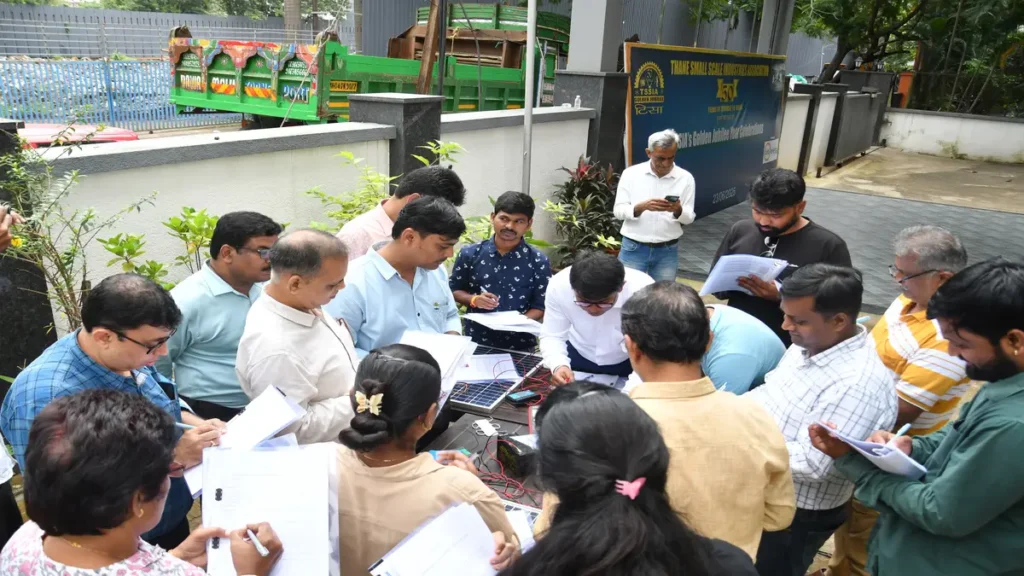
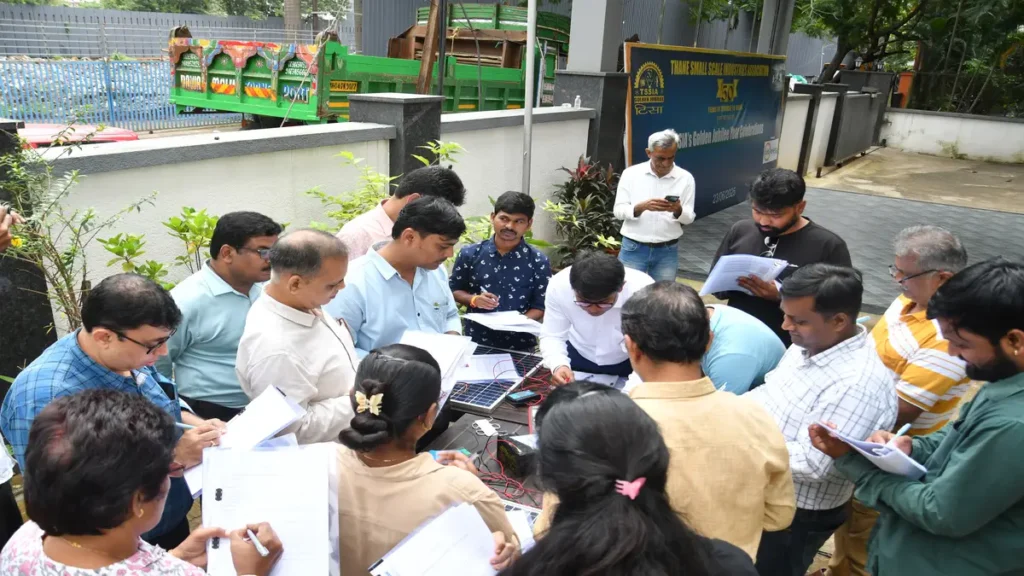
Authentic Field Photo: IISE students conducting live PV string and inverter diagnostic tests at an active solar facility.
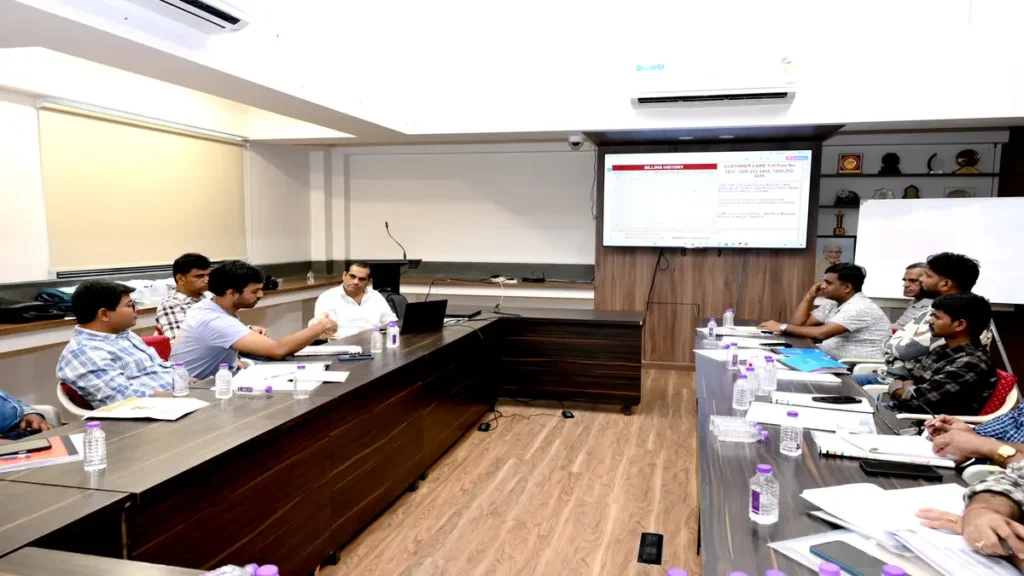
Authentic Workshop Photo: Hands-on electrical wiring, DCDB assembly, and component fault analysis session.
What You Will Master: Verified Learning Outcomes
Graduates develop technical precision and executive confidence to lead clean energy projects from initial design to long-term plant operations.
✔ Solar PV Design & Sizing Mastery
Perform comprehensive load analysis, solar resource evaluation, tilt angle optimization, and precise array sizing for residential, commercial, and industrial sites.
✔ Single Line Diagram (SLD) & Cable Sizing
Draft production-grade SLDs, determine busbar capacities, size DC/AC copper/aluminum cables using voltage-drop formulas, and select switchgear breakers.
✔ Industry Design Software Proficiency
Generate bankable yield simulations, loss diagrams, and 3D near-shading models using PVsyst, Helioscope, and AutoCAD Solar.
✔ Balance of Systems (BOS) Evaluation
Evaluate and specify tier-1 solar modules (Bifacial/TOPCon), string/central inverters, DCDB/ACDB panels, surge arrestors, and chemical earthing systems.
✔ Plant Commissioning & Safety Protocols
Execute pre-commissioning testing checklists, insulation resistance megger testing, open-circuit polarity checks, and strict Lockout/Tagout (LOTO) safety standards.
✔ Operations, Maintenance & Fault Diagnostics
Implement preventive and corrective O&M schedules, analyze SCADA performance ratio (PR) data, identify hot-spots via drone thermography, and trace string IV-curves.
✔ Battery Energy Storage (BESS) Integration
Design lithium battery storage banks, configure Battery Management Systems (BMS), and integrate storage with hybrid inverters and diesel backup microgrids.
✔ Techno-Commercial Feasibility & Project Finance
Build financial cash flow models, calculate Levelized Cost of Electricity (LCOE), Net Present Value (NPV), Payback Period, and Internal Rate of Return (IRR).
✔ DISCOM Net Metering & Open Access Liaison
Navigate state DISCOM grid interconnection regulations, net-metering approvals, virtual net metering, and Green Energy Open Access wheeling charges.
✔ EPC Project Management & Tendering
Manage EPC schedules, draft tender documents, negotiate vendor quotations, prepare Detailed Project Reports (DPR), and structure bankable Power Purchase Agreements (PPA).
Who Can Apply for the PG Diploma in Solar Technology?
We welcome candidates from diverse technical and academic backgrounds who satisfy IISE’s approved admission policy.
1. Engineering Graduates (B.E. / B.Tech)
Graduates holding a Bachelor's degree in Electrical, Mechanical, Electronics, Civil, Instrumentation, Renewable Energy, Chemical, or related engineering streams from a recognized university.
2. Science & Applied Tech Graduates
Graduates with B.Sc. or M.Sc. in Physics, Chemistry, Mathematics, Electronics, or Environmental Sciences seeking professional specialization in renewable energy engineering.
3. Industry Practitioners & Approved Degrees
Diploma engineers with verified industrial work experience, working professionals in the energy sector, or candidates holding other officially approved qualifications meeting IISE's admission criteria.
Final-Year Students Policy & Individual Verification
Final-year undergraduate students may apply provisionally, subject to completing all graduation requirements before commencement of the batch.
Career Pathways & Industry Roles
Prepare for high-growth technical, managerial, and entrepreneurial opportunities across India’s booming solar ecosystem.
Solar PV Design Engineer
Key Roles: Prepares PVsyst simulations, shadow analysis, string sizing calculations, Single Line Diagrams, and AutoCAD layouts for residential, commercial, and utility projects.
Design & EngineeringSolar EPC Project Engineer
Key Roles: Oversees site civil and electrical construction, coordinates component delivery, supervises subcontractor wiring, and monitors project execution milestones.
Site & ExecutionSolar EPC Project Manager
Key Roles: Leads end-to-end turnkey delivery, manages multimillion-rupee project budgets, manages vendor procurement contracts, and interfaces with client leadership.
Project ManagementSolar Plant O&M Engineer
Key Roles: Ensures maximum plant uptime and performance ratio (PR), analyzes SCADA generation logs, conducts thermal drone audits, and manages inverter preventive maintenance.
Operations & Asset CareRenewable Energy Consultant
Key Roles: Formulates techno-commercial feasibility reports, drafts tender bidding documents, models PPA financial returns, and advises commercial clients on Open Access.
Advisory & FinanceSolar EPC Entrepreneur
Key Roles: Launches independent solar EPC contracting business, taps government rooftop subsidy schemes, establishes DISCOM empanelment, and executes turnkey projects.
Entrepreneurship*Notice: Career pathways and salary indicators represent general Indian renewable sector industry benchmarks. Placement assistance is comprehensive and proactive, but does not guarantee employment; outcomes depend on candidate merit, interviews, and employer requirements.
Industry Applications & Hiring Ecosystem
Our curriculum and training methodologies align with the technical demands of leading solar developers and turnkey EPC contractors.
Representative Clean Energy Employers & Technology Ecosystem


Faculty & Practitioner Leadership
Instruction at IISE is led by active clean-tech consultants, design engineers, and technical trainers with extensive utility and rooftop track records.
Senior Solar EPC Directors
Turnkey Execution & Project Engineering
Veteran engineers with 15+ years experience designing and commissioning multi-megawatt ground-mount and commercial rooftop installations.
CERT Research Faculty
Centre for Energy Research and Training
Applied clean-tech researchers guiding students through PVsyst simulations, inverter synchronization, and laboratory equipment diagnostics.
Storage & Power Electronics Specialists
Battery Energy Storage & Grid Interconnection
Technical consultants specialized in lithium BMS architectures, high-voltage switchyards, SCADA, and net-metering regulatory liaison.
Institutional Foundation & University Partnership
A clear, transparent division of institutional roles ensuring rigorous technical execution and recognized academic credentialing.
Indian Institute of Solar Energy (IISE)
A Unit of CERMS India Foundation
IISE designs and executes the professional curriculum, hosts interactive live lectures, coordinates the Personal Contact Programme (PCP), and manages the dedicated student placement cell.
CERT
Centre for Energy Research and Training
CERT provides core technical validation, power plant laboratory testing protocols, energy auditing frameworks, and applied research methodologies for capstone projects.
Medhavi Skill University
UGC-Recognized Skills University
Medhavi Skill University serves as the academic university partner, providing the academic credentialing framework, assessment verification, and formal certification pathway.
PG Diploma in Solar Technology – Course Fees & Scholarship
Transparent fee schedule with merit scholarships and flexible installment/EMI arrangements.
*Provisional scholarship fee applicable to candidates qualifying in the entrance assessment and document verification for approved seats.
Includes complete one-year hybrid tuition, online learning management system (LMS) access, live interactive sessions, study materials, and practical Personal Contact Programme (PCP) instruction.
Admission Process & Enrollment Workflow
A streamlined, transparent 8-step journey from initial course enquiry to batch onboarding.
Submit Course Enquiry
Fill out the course enquiry form or initiate a dialogue with the admissions desk via WhatsApp.
Academic Counselling
Discuss eligibility, engineering background, career goals, and batch timings with a counsellor.
Complete Application
Submit formal application details and pay the standard processing fee (₹999 Indian / $40 Foreign).
Document Verification
Upload academic transcripts (B.E./B.Tech/B.Sc), government ID, and work experience documents.
Merit & Scholarship Check
Evaluation of merit and scholarship eligibility (entrance assessment where required).
Provisional Offer
Receive formal offer letter stating final payable fee, batch schedule, and onboarding terms.
Payment / EMI Setup
Complete tuition deposit or activate interest-free monthly installment plan via approved gateways.
Batch Commencement
Gain access to LMS portal, attend batch orientation, receive study kits, and begin lectures.
Dedicated Career Advisory & Placement Assistance
Bridging academic credentialing with professional engineering careers across India’s renewable energy landscape.
Technical Portfolio Building
Our placement mentors work with you to curate a high-impact engineering dossier—including complete PVsyst yield simulations, Single Line Diagrams, and AutoCAD layouts produced during coursework.
Mock Technical Interviews
Rigorous mock interviews conducted by active solar EPC project managers covering electrical safety, string sizing calculations, inverter troubleshooting, and DISCOM net-metering regulations.
Direct Corporate Outreach
IISE's placement desk communicates verified student profiles directly to hiring managers across solar EPCs, project developers, and energy consultancies seeking PG-level talent.
Placement Policy Disclosure: IISE provides comprehensive career advisory, resume enhancement, and corporate recruitment opportunities. However, placement assistance does not constitute an unconditional guarantee of employment or specific salary packages. Employment offers depend entirely on individual candidate merit, academic standing, technical competence, and hiring employer requirements.
Student Testimonials & Verified Graduate Experiences
Authentic feedback from engineering graduates, working professionals, and clean-tech entrepreneurs who trained with IISE.
“I did my PG Diploma in Solar Technology from Indian Institute of Solar Energy and it really helped me grow. The training was practical and easy to understand. After completing the course, I got a proper job in the solar industry.”
“I was working in a completely different field before IISE. Within 3 months of completing my PG Diploma, I had two job offers from solar EPC companies in Mumbai. The practical training was the key.”
“The entrepreneurship program gave me the confidence to start my own solar installation firm. IISE's faculty provided guidance even after I graduated, helping me land my first 100kW project.”
“If you're serious about a solar career, join this institute. The course is job-oriented and covers both theory and practicals well. They also help with interview preparation and career guidance.”
“I am very much impressed by trainer Mr Rajesh sir deep n vast knowledge about this Solar subjects n overall about other aspects of life also... He is very enthusiastic while training, always on time.”
“Switching to clean technology was the best decision for my career. The hands-on labs and industry-expert faculty at IISE made complex engineering concepts straightforward. Highly recommend this institute.”
Time is running out. Apply now!
- 00Days
- 00Hours
- 00Minutes
- 00Seconds
Frequently Asked Questions
Detailed answers to common questions regarding admissions, eligibility, hybrid learning, PCP dates, fees, and career outcomes.
The PG Diploma in Solar Technology is an intensive one-year postgraduate professional qualification designed to equip engineers and technical professionals with comprehensive capabilities in solar PV design, load calculation, software simulation (PVsyst), balance of systems, on-site installation, commissioning, battery energy storage (BESS), and project finance.
The programme has a duration of 1 Year, structured into two academic semesters encompassing 8 core modular clusters, continuous design assignments, practical Personal Contact Programme (PCP) sessions, and a comprehensive capstone research project.
The standard tuition fee for the Post Graduate Diploma in Solar Technology is ₹1,25,000. This covers all online academic lectures, learning management system (LMS) access, study guides, software tutorials, and in-person practical Personal Contact Programme (PCP) instruction.
Yes, merit-based scholarships up to 35% are available for eligible candidates, subject to academic verification, entrance evaluation, and availability for the applicable admission batch. The scholarship is awarded on merit and batch quotas approved by institutional leadership.
When the 35% scholarship is formally approved for a candidate in an eligible batch, the scholarship value is ₹43,750, resulting in a provisional payable course fee of ₹81,250. This benefit requires confirmation from the admissions team upon review of academic credentials.
Graduates holding a B.E. / B.Tech degree in any engineering branch (Electrical, Mechanical, Electronics, Civil, Instrumentation, etc.), B.Sc./M.Sc. graduates in physical sciences or mathematics, or candidates with other approved technical qualifications meeting IISE’s official admission policy are eligible to apply.
Yes. While Electrical and Mechanical engineering graduates naturally align with power systems and mounting structures, candidates from Electronics, Civil, Chemical, Computer Science, and other branches are fully eligible to apply and benefit from the foundational electrical modules.
Yes. Graduates with B.Sc. or M.Sc. degrees in Physics, Chemistry, Mathematics, Electronics, or Environmental Sciences are welcome to apply, provided they satisfy the technical aptitude requirements during admission assessment.
Absolutely. The programme is specifically architected for working engineers and consultants. Live lectures are conducted on weekends or evening schedules, with recorded sessions accessible 24/7 on the LMS portal, allowing professionals to upskill seamlessly.
Yes. Students currently in their final year or final semester of undergraduate degree programmes may apply provisionally. Final admission confirmation is subject to successfully passing all graduation exams before batch commencement.
The hybrid learning methodology combines the convenience of live, interactive online weekend lectures with mandatory, intensive on-site Personal Contact Programme (PCP) practical modules held at working solar installations and diagnostic laboratories.
PCP is IISE’s hands-on practical immersion programme. Students gather in person to receive hands-on training on physical solar panels, string inverters, charge controllers, DC junction boxes, earthing systems, and testing equipment under expert supervision.
PCP Schedule: To Be Announced. PCP Dates: To Be Confirmed. PCP session dates are scheduled around mid-term and semester ends to accommodate working professionals and are communicated well in advance through official IISE channels.
PCP Venue: To Be Confirmed. Practical sessions are conducted at IISE-affiliated live solar power plant installations, testing rigs, and specialized technical workshop facilities in the greater Mumbai region / designated partner locations.
The curriculum spans 8 comprehensive modules: Solar Fundamentals & Radiation, PV Components & BOS, PV System Design (PVsyst & AutoCAD), Installation & O&M Safety, Energy Auditing & Load Profiling, Battery Storage (BESS) & Grid Integration, EPC Business & Project Finance, and Capstone Research.
Yes. Students receive dedicated training in industry-standard software tools including PVsyst (yield prediction and loss analysis), Helioscope (commercial 3D layout), and AutoCAD (Single Line Diagrams and physical array drafting).
Yes. Module 6 is specifically dedicated to energy storage, covering Lithium-ion chemistries (LFP/NMC), Battery Management Systems (BMS), thermal runaway prevention, microgrid integration, and utility-scale BESS applications.
Yes. Module 7 covers Detailed Project Report (DPR) preparation, EPC procurement scheduling, Power Purchase Agreements (PPA), CAPEX/OPEX models, LCOE, Net Present Value (NPV), Payback Period, and Internal Rate of Return (IRR) calculations.
Yes. Every candidate must complete an independent or group Capstone Project (Module 8)—typically consisting of a complete techno-commercial engineering dossier for a real-world commercial rooftop or utility solar project—and defend it before an expert faculty panel.
Graduates receive the Post Graduate Diploma in Solar Technology awarded through the established academic partnership pathway with Medhavi Skill University (UGC-recognized), alongside technical course completion transcripts from IISE.
Medhavi Skill University serves as the UGC-recognized academic university partner, providing the overarching vocational higher education framework, curriculum oversight, and recognized degree/diploma credentialing.
CERT is the technical and knowledge partner of IISE, providing research support, testing standards, real-world utility performance datasets, and curriculum alignment with national clean-energy policies.
Yes. IISE facilitates flexible semester-wise installment plans as well as interest-free monthly EMI arrangements through approved banking and educational financing partners to minimize upfront financial friction.
IISE operates a dedicated placement cell that assists PG Diploma candidates with technical resume building, design portfolio preparation (PVsyst & SLDs), mock technical interviews, and direct placement referrals to solar EPCs and developers.
No educational institution can legitimately guarantee employment. While IISE provides dedicated placement assistance and maintains strong employer connections, job offers depend on individual candidate performance, academic achievement, and employer criteria.
Yes. The curriculum specifically incorporates techno-commercial proposal drafting, vendor procurement negotiations, DISCOM net-metering liaison, and startup guidance to enable engineers to launch independent solar contracting ventures.
Graduates pursue roles such as Solar PV Design Engineer, Solar EPC Project Engineer, Solar EPC Project Manager, Solar O&M Engineer, Renewable Energy Consultant, Certified Energy Auditor, and Clean-Tech Business Entrepreneur.
You can begin by submitting an enquiry on this page or clicking ‘Apply for Admission’. An admissions counsellor will review your academic qualifications, verify eligibility, and guide you through the application and scholarship assessment process.
Build Your Future in India's Solar Energy Industry
Develop the technical knowledge and professional capabilities required to participate in the renewable energy transition. Cohort size is strictly capped at 30 seats to ensure individualized attention during laboratory and site PCP training.
Enquire About Admission & Scholarship
Receive immediate counseling, syllabus download, and eligibility confirmation.
Course Admission & Scholarship Enquiry Form
Submit your details below. An IISE admissions advisor will contact you within 24 hours with complete curriculum details, batch timings, eligibility verification, and fee structures.
Explore Related Clean Energy Programmes
Expand your technical competence across Solar PV, Electric Vehicles, and Energy Auditing pathways.
PG Diploma in EV Technology
1-year hybrid postgraduate programme covering electric vehicle powertrain, BMS, and charging infrastructure.
Explore Course →Diploma in Solar Technology
1-year intensive technical diploma focusing on solar rooftop installations and site execution skills.
Explore Course →Diploma in EV Technology
1-year diploma training engineers and technicians in electric mobility and battery pack assembly.
Explore Course →B.Voc in Solar Technology
3-year UGC-affiliated vocational bachelor's degree in solar energy and electrical systems.
Explore Course →Solar Engineer Certificate
6-month technical certification covering residential and commercial grid-tied solar electric systems.
Explore Course →Solar Entrepreneurship Program
Focused entrepreneurial coaching on setting up and scaling a solar EPC firm, dealership, or consultancy.
Explore Course →Certified Energy Auditor Course
Professional preparation for industrial and commercial energy efficiency audits and tariff management.
Explore Course →Solar Practical Workshop
Short intensive 2-day hands-on hardware training session covering wiring, inverters, and testing.
Explore Course →Related Learning Resources & Technical Insights
Deepen your solar technical knowledge with guides, research papers, and market reports authored by IISE faculty.
Solar PV System Design & Sizing Guide
Step-by-step engineering principles for array sizing, inverter matching, battery calculations, and tilt optimization.
Read Article →Solar Job Market Report India 2026
Detailed analysis of who is hiring, key engineering competencies required, and compensation benchmarks across India.
Read Article →Helioscope vs PVsyst for Solar Design
Technical comparison of simulation tools, yield algorithms, shading models, and bankability for Indian solar projects.
Read Article →Battery Management Systems (BMS) Explained
Comprehensive guide to cell balancing, state-of-charge calculation, thermal protection, and storage integration.
Read Article →Top 10 Solar Panel Brands in India
Technical comparison of cell architectures (TOPCon vs HJT vs PERC), efficiency degradation rates, and pricing.
Read Article →Official IISE Clean Energy Knowledge Base
Explore our comprehensive library of technical whitepapers, regulatory updates, and solar engineering insights.
Explore Knowledge Base →Time is running out. Apply now!
- 00Days
- 00Hours
- 00Minutes
- 00Seconds
Stay Connected with IISE on WhatsApp
Get the latest updates on solar courses, practical workshops, admissions, scholarships, career opportunities, industry insights and upcoming events directly on WhatsApp.
Free to join • Unsubscribe anytime • Opens directly in WhatsApp
Indian Institute of Solar Energy
Official Organization Channel • Renewable Energy
What Subscribers Receive
- Solar Course Admissions & Batch Dates
- Practical Workshop Alerts & Hands-on Sessions
- Career Opportunities & Solar Placement Drives
- Scholarships & Gov. Certification Guidelines
Training Events & Certificate Programs
Diplomas, certificate courses and workshops in solar and EV technology — industry-ready, hands-on training with limited seats per batch.