Advance Diploma in Solar Technology – Build Your Career in the Solar Industry
Build Professional Skills in Solar PV Design, Installation, Operation and Maintenance.
Develop industry-relevant technical knowledge in solar photovoltaic systems, electrical fundamentals, system design, installation, troubleshooting, operation and maintenance, and solar entrepreneurship. Complete practical laboratory training and receive joint certification from IISE and its university partner upon successful completion.
Key Highlights of the Advance Diploma in Solar Technology
A comprehensive professional credential structured across two rigorous semesters, engineered to equip you with complete end-to-end solar engineering competencies.
510 Hours & 34 Credits
Structured over 2 academic semesters with 510 total hours of structured learning, coursework, and laboratory sessions conferring 34 recognized academic credits.
10 Detailed Curriculum Modules
From solar fundamentals and semiconductor physics to grid-connected PV sizing, off-grid storage, O&M, SCADA telemetry, and solar business models.
2 Hands-on Practical Labs
Direct laboratory training on real PV panels, string inverters, charge controllers, mounting structures, and electrical testing instruments.
Joint Academic Certification
Conferred jointly by the Indian Institute of Solar Energy (IISE) and its academic university partner upon satisfying all evaluation and assessment criteria.
Software & Design Tools
Hands-on exposure to industry-standard solar engineering tools including PVsyst system simulation, Helioscope 3D modeling, and AutoCAD electrical drawings.
Career & Placement Support
Dedicated resume building, technical interview prep, corporate recruiter networking, and solar entrepreneurship guidance across 10 career pathways.
Why Study Solar Technology in India Today?
India is at the epicenter of the global clean energy transition, backed by sovereign targets, major central government schemes, and massive private capital investment.
National Renewable Target by 2030
The Government of India has committed to establishing 500 GW of non-fossil fuel energy capacity by 2030, with over 300 GW projected to come directly from solar photovoltaic installations.
PM Surya Ghar Rooftop Solar Push
The PM Surya Ghar: Muft Bijli Yojana aims to solarize 10 million residential households across India, creating unprecedented demand for certified solar design engineers, installers, and project managers.
Skilled Workforce Demand
Industry reports estimate that achieving India's solar goals will require over one million skilled professionals in PV design, civil mounting, electrical interconnection, SCADA telemetry, and maintenance.
Bridging the Engineering Skills Gap in Renewable Energy
While academic degrees provide broad theoretical concepts, real-world solar projects require specialized domain knowledge: DC string voltage calculation under extreme temperatures, inverter clipping ratio optimization, loss factor accounting in PVsyst, net-metering regulatory compliance, and thermal imaging diagnostics. The Advance Diploma in Solar Technology bridges this exact gap, converting foundational qualifications into job-ready engineering competence.
Who Should Enrol in the Advance Diploma in Solar Technology?
This programme is purposely structured to cater to distinct academic backgrounds and career stages, delivering targeted technical mastery for each pathway.
University Graduates
Bachelor's degree holders (B.E., B.Tech, B.Sc., BCA, B.Com, B.A.) looking to enter the high-growth renewable energy industry with practical technical credentials.
3-Year Diploma Holders
Diploma engineers in Electrical, Mechanical, Civil, or Electronics seeking specialized PV system sizing, project management, and site supervision skills.
10+2 with ITI Technicians
Electricians, wiremen, and fitters aiming to upgrade from routine electrical wiring to certified solar commissioning, O&M, and plant supervision roles.
Aspiring Entrepreneurs
Contractors, distributors, and business founders planning to launch a solar EPC contracting firm, dealership, component agency, or solar maintenance service.
Career Opportunities in the Solar PV Sector
Graduates of the Advance Diploma in Solar Technology are equipped to step into diverse technical, managerial, and entrepreneurial roles across India's booming renewable energy market.
Solar PV Design Engineer
Rooftop and ground-mount PV layout design, string sizing, shadow analysis, and PVsyst energy yield simulation.
Solar Installation Engineer
Supervising mechanical racking, module mounting, DC/AC cabling, inverter connection, and site safety compliance.
Solar Project Supervisor
Managing daily on-site execution, workforce allocation, material inventory, and project milestone delivery.
Solar Site Engineer
Civil foundation inspection, structural stability assessment, earthing verification, and electrical connection sign-off.
Solar O&M Technician
Routine preventive maintenance, thermal imaging hot-spot detection, IV-curve testing, and performance optimization.
Solar Commissioning Technician
Pre-commissioning electrical testing, grid synchronization, inverter parameter configuration, and CEIG clearances.
Solar Technical Sales Executive
Customer energy auditing, payback period calculation, techno-commercial proposal drafting, and client closing.
Solar EPC Entrepreneur
Launching your own solar turnkey engineering, procurement, and construction (EPC) business for rooftop projects.
Solar Project Coordinator
Government subsidy portal filing, DISCOM net-metering liaison, vendor contract handling, and compliance management.
Renewable Energy Business Owner
Establishing an authorized solar dealership, component retail outlet, or third-party solar AMC enterprise.
Detailed 10-Module Curriculum — 2 Semesters, 510 Hours, 34 Credits
Click on any module below to inspect the complete syllabus, key learning objectives, lecture hours, and academic credit allocations.
Foundation in Solar Energy Physics & Indian Energy Framework:
- Overview of global and Indian renewable energy scenarios, decarbonisation targets, and national energy mix
- Solar radiation physics: Direct beam, diffuse, and albedo radiation; solar angles, zenith, solar azimuth, tilt angle, and solar constant
- Solar radiation measurement instruments: Pyranometers, pyrheliometers, sunshine recorders, and satellite solar databases (Meteonorm, NASA, MNRE)
- Introduction to solar photovoltaic (PV) vs. solar thermal technologies and thermodynamic cycles
- Indian solar policy landscape: Jawaharlal Nehru National Solar Mission (JNNSM), state rooftop solar policies, PM-KUSUM, and PM Surya Ghar: Muft Bijli Yojana
PV Semiconductor Physics, Cell Types, and Balance of System:
- Semiconductor physics & photovoltaic effect: P-N junction operation, silicon crystalline structures, Mono-PERC, Polycrystalline, TopCon, and HJT cell technologies
- Solar PV module anatomy, encapsulation, backsheet, busbars, bypass diodes, and half-cut cell architectures
- I-V and P-V characteristic curves: Open-circuit voltage (Voc), short-circuit current (Isc), maximum power point (Vmp, Imp), and Fill Factor (FF)
- Environmental impact factors: Temperature coefficients of power, voltage, and current; hot-spot formation; and soiling loss dynamics
- Balance of System (BOS) components: String inverters, central inverters, microinverters, DC distribution boxes (DCDB), AC distribution boxes (ACDB), and surge protection
- Maximum Power Point Tracking (MPPT) operating principles, algorithms (Perturb & Observe, Incremental Conductance), and tracking efficiency
Electrical Engineering Principles, Standards, Earthing, and Safety:
- Fundamentals of electricity: AC vs. DC circuits, Ohm’s law, Kirchhoff’s laws, power factor, reactive power, and three-phase power distribution
- Electrical safety standards and codes: Indian Electricity Rules (IE Rules), IS 732, IS 3043, IEC 60364, and CEA safety guidelines
- Electrical measurement instruments: Digital multimeters, AC/DC clamp meters, insulation resistance testers (Megger), and earth ground resistance testers
- Earthing design and execution: Pipe earthing, plate earthing, maintenance-free chemical earthing, dedicated inverter/AC earthing, and lightning protection (Franklin rods / ESE)
- DC and AC cable sizing: Current carrying capacity, derating factors, voltage drop calculation (max 2% DC, max 3% AC), and UV-resistant solar cable selection
Site Feasibility, System Sizing, PV Simulation Tools, and Interconnection:
- Site survey methodology: Rooftop shadow analysis, structural load capacity assessment, azimuth determination, and electrical consumer load profiling
- Grid-connected system sizing: String sizing calculation based on inverter MPPT min/max voltage limits under extreme local temperatures
- Solar simulation and design software: Detailed PVsyst system modeling, 3D shading analysis, Helioscope layout design, and AutoCAD Single Line Diagrams (SLD)
- Grid interconnection and regulations: Net metering, gross metering, bi-directional energy meters, and DISCOM interconnection compliance
- Protection engineering: DC string fuse sizing, DC disconnect switches, AC circuit breakers (MCCB/MCB), and anti-islanding protection (IEEE 1547 / IEC 62116)
Hands-on Component Testing, Mechanical Assembly, and Small-Scale Array Setup:
- Component identification: Mono/poly modules, mounting aluminium rails, mid/end clamps, inverters, charge controllers, and MC4 connectors
- Electrical parameter verification: Hands-on testing of Voc, Isc, Vmp, and Imp on individual panels and series strings using solar irradiance meters
- Series and parallel string wiring, polarity checks, open string voltage measurement, and short-circuit troubleshooting
- Mounting structure assembly: Roof penetration, chemical anchoring, ballast block layout, tilt angle alignment, and torque wrench verification
- Hands-on installation with small-scale educational PV training kits: Assembling functional 1 kW to 3 kW grid-tie and off-grid setups
Standalone PV Systems, Battery Energy Storage (BESS), and Hybrid Controllers:
- System architectures: Standalone off-grid solar systems, DC-coupled vs. AC-coupled hybrid systems, and renewable microgrids
- Battery energy storage technologies: Lead-acid (tubular, gel, VRLA) vs. Lithium-ion (LFP, NMC); C-ratings, Depth of Discharge (DoD), and cycle life
- Solar charge controllers: Pulse Width Modulation (PWM) vs. Maximum Power Point Tracking (MPPT) charge controllers, sizing rules, and temperature compensation
- Hybrid inverters: Bi-directional inverter operation, grid power blending, automatic transfer switching (ATS), and diesel generator synchronization
- Load prioritization, critical load sub-panels, days of autonomy calculation, and remote telecommunication tower / rural electrification case studies
Plant Telemetry, Preventative Maintenance, Diagnostics, and Asset Management:
- O&M classifications: Scheduled preventative maintenance, corrective reactive maintenance, and predictive condition-based maintenance
- Performance monitoring systems: Data Acquisition Systems (DAS), remote telemetry units (RTUs), SCADA architecture, and cloud IoT monitoring platforms
- Key Performance Indicators (KPIs): Performance Ratio (PR) calculation, Weather-Corrected PR, Capacity Utilization Factor (CUF), and generation loss breakdown
- Diagnostic procedures: Infrared thermographic imaging for hot-spot detection, string-level I-V curve tracing, insulation resistance degradation, and earth fault finding
- Module cleaning management: Robotic cleaning systems, wet vs. dry cleaning, water quality criteria, soiling loss monitoring, and drafting Annual Maintenance Contracts (AMC)
Solar Business Development, Project Costing, Tendering, and Government Schemes:
- Solar business models: CAPEX (direct ownership), OPEX / RESCO (power purchase agreement / PPA), and deferred payment / solar EMI models
- Financial modeling: Capital expenditure estimation, Levelized Cost of Electricity (LCOE), Net Present Value (NPV), Payback Period, and Internal Rate of Return (IRR)
- Tendering and procurement: Bill of Quantities (BOQ) preparation, component vendor selection, competitive bidding, and contract negotiation
- Government subsidy workflows: National Portal for Rooftop Solar registration, DISCOM net-metering portal application, and subsidy disbursement
- Solar entrepreneurship setup: MSME registration, collateral-free credit schemes (CGTMSE), green finance access, authorized dealerships, and company scaling
Full-Scale Array Erection, Inverter Commissioning, and Live Fault Rectification:
- Full-scale physical erection: Complete assembly of commercial rooftop grid-tied and hybrid solar PV demonstration arrays
- Inverter commissioning: Grid code selection, MPPT channel configuration, communication cable termination (RS485 / Wi-Fi), and firmware configuration
- Electrical termination: Perforated cable tray routing, DC conduit sealing, distribution box busbar wiring, and MC4 connector crimping and pull-testing
- Pre-commissioning verification: Polarity checks, continuity testing, insulation resistance (Megger test), earth loop impedance, and phase angle matching
- Live troubleshooting scenarios: Diagnosing simulated ground faults, inverter error codes, shading mismatch, open strings, and blown surge protectors
- Commissioning documentation: Site handover checklists, safety compliance certificates, and client O&M manual handover
Real-World Solar Engineering Project or Supervised Industry Internship:
- Supervised internship or comprehensive capstone project with leading solar EPC companies or commercial rooftop project developers
- Real-world field exposure: On-site engagement with rooftop or utility-scale ground-mounted solar power plants
- Detailed engineering project report: Site shadow analysis, technical sizing, 3D plant layout, complete Single Line Diagram (SLD), BOQ, and financial payback model
- Project submission and evaluation: Formal project report submission, academic assessment, and defense before an expert panel in a final viva voce examination
Practical Laboratory & On-Site Installation Training
Solar engineering cannot be mastered from slides alone. The Advance Diploma incorporates 105 hours of intensive laboratory and field training across two dedicated practical modules.
Practical Lab I: Solar PV Components & Basic Installation
- Physical inspection and parameter verification of mono-PERC, poly, and bifacial PV modules
- Open-circuit voltage (Voc) and short-circuit current (Isc) measurement under varying solar irradiance
- Series vs. parallel string configuration, polarity verification, and open-circuit testing
- Mounting structure assembly: Aluminium rail installation, mid/end clamp fastening, and torque calibration
- Hands-on installation with small-scale educational demonstration PV arrays (1 kW to 3 kW)
Practical Lab II: Advanced Installation & Troubleshooting
- Full-scale physical erection of grid-tied and hybrid commercial rooftop solar power plants
- Inverter commissioning: Grid code setting, anti-islanding verification, and RS-485/Wi-Fi telemetry setup
- Electrical terminations: Perforated cable tray routing, DC conduit sealing, and MC4 connector pull-testing
- Pre-commissioning tests: Insulation resistance (Megger test), earth resistance, and phase sequence verification
- Live fault diagnosis: Simulated earth faults, inverter error codes, string open circuits, and surge events
Field Study & Live Solar Power Plant Visits
Students participate in scheduled site visits to operational commercial rooftop installations and utility-scale solar farms to observe industrial O&M in real time.
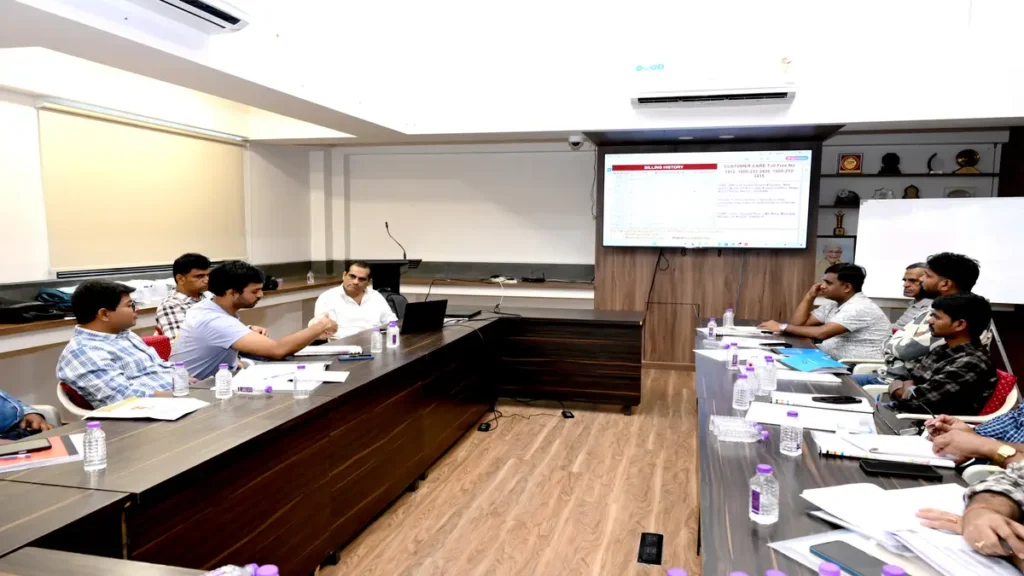
Industry-Standard Solar Software & Technical Tools
Gain hands-on proficiency in the exact software suites and diagnostic instrumentation utilized by leading engineering consultancies, EPC contractors, and IPPs worldwide.
PVsyst Simulation Software
Global industry gold standard for PV system simulation. Model grid-tied, standalone, and hybrid plants, simulate 3D near-shading scenes, and generate bankable yield reports.
Bankable P50/P90 Yield ReportsHelioscope Cloud PV Design
High-velocity commercial rooftop design tool. Rapid satellite layout drafting, 3D setback mapping, electrical stringing optimization, and client proposal output.
Commercial Rooftop LayoutsAutoCAD Electrical (Solar)
Drafting complete Single Line Diagrams (SLDs), General Arrangement (GA) drawings, cable routing plans, earthing layouts, and interconnection schematics for DISCOM approvals.
SLDs & Engineering BlueprintsDiagnostic Hardware Stack
Direct laboratory handling of digital multimeters, AC/DC clamp meters, thermal imaging cameras for hot-spot identification, Megger insulation testers, and I-V curve tracers.
Thermography & I-V TracersAll software workflows are taught step-by-step with real-world case studies and project data files provided during the course.
What You Will Master: Key Learning Outcomes
Upon successful completion of the Advance Diploma in Solar Technology, graduates will have developed measurable, end-to-end technical engineering competencies:
Site Survey & Solar Resource Assessment
Perform detailed solar radiation analysis, rooftop structural evaluations, 3D shading calculations, and electrical load profiling for optimal array sizing.
PV System Design & Energy Yield Modeling
Engineer complete grid-tied, off-grid, and hybrid solar systems utilizing PVsyst and Helioscope to generate bankable yield predictions and loss diagrams.
Electrical Engineering & SLD Preparation
Prepare professional Single Line Diagrams (SLDs), size AC/DC cables, design dedicated chemical earthing systems, and specify surge protection equipment.
Installation, Racking & Cable Routing
Execute physical mounting structure erection, module clamping, DC string routing, MC4 connector crimping, and distribution board termination safely.
Inverter Commissioning & Telemetry Configuration
Program grid-tie and hybrid inverters, verify anti-islanding compliance, configure SCADA and cloud IoT monitoring, and interpret telemetry data streams.
Diagnostics, O&M & Solar Entrepreneurship
Perform thermal imaging hot-spot inspections, calculate Performance Ratio (PR), structure solar business models, prepare bids, and access MSME financing.
Who Can Apply for the Advance Diploma in Solar Technology?
Admission to the Advance Diploma programme is open to candidates satisfying any one of the following four approved qualification categories, subject to academic document verification:
Graduates
Candidates holding a Bachelor's degree in any discipline (B.E., B.Tech, B.Sc., BCA, B.Com, B.A., or equivalent) from a recognized university.
Three-Year Diploma Holders
Candidates holding a 3-year Polytechnic Diploma in Engineering or Technology (Electrical, Mechanical, Civil, Electronics, or allied disciplines) from a recognized Board.
Science Graduates
Graduates with a Bachelor of Science (B.Sc.) degree in Physics, Chemistry, Mathematics, Electronics, Environmental Science, or applied sciences.
10+2 with ITI
Candidates with 10+2 (Higher Secondary) qualifications combined with an ITI certificate in Electrician, Wireman, Fitter, or related vocational trades.
Document Verification & Admission Counselling Protocol
All applicants must submit copies of their marksheets, qualifying certificates, and government-issued photo ID during admission. Candidates with borderline or exceptional qualifications are reviewed individually by the IISE Academic Admissions Committee rather than being rejected automatically.
Course Duration, Academic Structure & Delivery Mode
Engineered to deliver high-rigour engineering training with maximum scheduling flexibility for working professionals and full-time learners across India.
Structured over two full academic semesters covering 10 detailed modules, progressive laboratory practicals, and a capstone project.
Comprises theory instruction, software workshops, 105 hours of hands-on laboratory exercises, and a 90-hour capstone project.
Rigorous credit-based evaluation system with continuous module assignments, laboratory evaluations, and a final viva voce examination.
Interactive live online lectures delivered by industry experts combined with mandatory hands-on practical training on live solar power plants.
Learning Management System (LMS) & Recorded Archive
All live lectures are recorded in high-definition and uploaded to the dedicated IISE student portal within 24 hours. Enrolled students receive 24/7 access to session archives, simulation templates, software datasets, lecture slides, and self-assessment quizzes throughout the programme duration.
Joint Certification from IISE and Its University Partner
Accurate and transparent institutional recognition reflecting rigorous academic oversight and applied technical training standards.
Approved Academic Certification Statement:
"On successful completion of the programme and fulfilment of applicable academic and assessment requirements, students receive the applicable joint certification from IISE and its university partner."
1. Technical Training Entity
Indian Institute of Solar Energy (IISE), a Unit of CERMS India Foundation, delivers the technical curriculum, software labs, practical hands-on sessions, and industry capstone project oversight.
2. Academic University Partner
The programme's academic framework operates under an institutional joint certification arrangement involving IISE and its university partner, ensuring curriculum standardisation and evaluation integrity.
3. Assessment Requirements
Certification is awarded strictly upon fulfilling minimum 75% attendance, completing all 10 module assignments, passing laboratory examinations, and defending the capstone engineering project report.
Career Support and Verified Placement Outcomes
IISE operates a dedicated career guidance and placement assistance division connecting qualified solar technicians, design engineers, and site supervisors with India's expanding clean energy industry.
Area A: Industry Engagement & Recruiter Connect
IISE students and alumni are actively engaged with prominent renewable energy developers, EPC contractors, and equipment manufacturers across India:
Recruiter interactions encompass technical campus interviews, internship referrals, and direct industry recruitment drives for qualified candidates.
Area B: Comprehensive Career Support Services
- Resume & Portfolio Crafting: Preparing technical engineering profiles featuring PVsyst simulation reports, AutoCAD SLDs, and lab certifications.
- Technical & HR Interview Coaching: Mock interview sessions covering electrical safety codes, inverter error codes, and site troubleshooting.
- Career Pathway Counselling: One-on-one sessions guiding candidates toward design engineering, installation supervision, or O&M paths.
- Solar Entrepreneurship Mentorship: Guidance on establishing EPC contracting businesses, vendor dealerships, and navigating MSME financing.
Mandatory Placement & Career Disclaimer: Placement assistance and career support are provided in accordance with IISE's applicable policies. Employment outcomes depend on individual qualifications, skills, performance and employer requirements. Placement statistics, where displayed, relate to the stated reporting period and verified records. IISE does not guarantee employment.
Invest in Your Future in Solar Energy
Explore professional learning opportunities in solar photovoltaic technology, installation, system design and renewable energy applications through IISE's Advance Diploma programme.
All-inclusive tuition covering 2 academic semesters, 10 curriculum modules, 510 total learning hours, practical laboratory training sessions, software workshops, and joint institutional certification upon successful completion.
Simple 4-Step Admission Process
A transparent, structured enrollment procedure designed to verify your eligibility and seamlessly onboard you into the upcoming cohort.
Online Enquiry & Application
Submit your application via the official online admission enquiry form, selecting your highest qualifying category (Graduate, 3-Yr Diploma, Science Graduate, or 10+2 + ITI).
Document Verification
Upload or email self-attested copies of your educational certificates, marksheets, and government ID proof. The admissions team reviews documents within 24 to 48 hours.
Academic Counselling & Offer
Participate in a one-on-one consultation with an academic advisor to discuss career objectives, schedule options, and receive your formal cohort admission confirmation.
Enrolment & Onboarding
Complete the programme fee payment (₹49,999) through approved secure institutional channels, receive student LMS portal login credentials, and attend cohort orientation.
Why Choose the Indian Institute of Solar Energy (IISE)?
As a dedicated unit of CERMS India Foundation, IISE has established a benchmark of excellence in renewable energy technical education and workforce training.
Dedicated Clean Energy Focus
Unlike generic training institutes, IISE focuses 100% on renewable energy, solar photovoltaic systems, battery energy storage, and EV technology ecosystems.
Live Plant & Lab Infrastructure
Students work directly on industrial-grade solar PV panels, grid-tie string inverters, charge controllers, and diagnostic instrumentation during lab modules.
Practicing Industry Faculty
Instruction is led by practicing solar project directors, chartered electrical engineers, and EPC entrepreneurs with decades of combined execution experience.
Nationwide Alumni Network
Join an active network of thousands of successful IISE alumni working across top solar developers, government clean energy missions, and thriving EPC startups.
CERMS India Foundation Institutional Governance
IISE operates under the aegis of the CERMS India Foundation, ensuring strict academic quality standards, validated curricula, transparent admissions, and student-first educational governance.
Faculty and Industry Engineering Expertise
Our curriculum is developed and delivered by seasoned renewable energy professionals, chartered electrical consultants, and veteran solar EPC project managers.
Senior Solar PV Design Specialist
15+ years experience modeling utility-scale solar parks and commercial rooftop installations across India and the GCC. Certified PVsyst master practitioner with over 500 MW of bankable solar projects designed.
Lead Electrical Safety Consultant
Chartered electrical engineer with 18+ years specializing in HT/LT power distribution, DISCOM grid interconnection regulations, net-metering approvals, CEIG safety inspections, and chemical earthing systems.
Solar O&M & SCADA Director
Expert in solar asset management, cloud IoT telemetry, thermal imaging diagnostics for hot-spot detection, string I-V curve analysis, and drafting commercial Annual Maintenance Contracts (AMCs).
Solar EPC Entrepreneurship Mentor
Successful founder of a turnkey solar EPC contracting enterprise. Mentors students on capital budgeting, National Portal for Rooftop Solar workflows, BOQ estimation, and vendor distribution channels.
All master trainers hold real-world project portfolios, ensuring direct transfer of practical, execution-grade knowledge.
Student Feedback and Alumni Career Trajectories
Hear directly from graduates who transformed their engineering foundations into rewarding solar industry careers and successful entrepreneurial ventures.
"The Advance Diploma provided the exact practical grounding I needed. Coming from a mechanical diploma background, the modules on PVsyst system sizing and hands-on lab wiring gave me the confidence to handle commercial rooftop projects independently."
"Module 8 on solar entrepreneurship and tendering was a game-changer for me. After completing the course and the practical lab sessions, I registered my own solar EPC firm and have already commissioned over 150 kW of residential rooftop systems."
"As an ITI electrician, I wanted to move beyond basic house wiring. IISE's faculty explained inverter commissioning, Megger testing, and net metering in depth. I secured a role as an O&M technician with a leading solar developer."
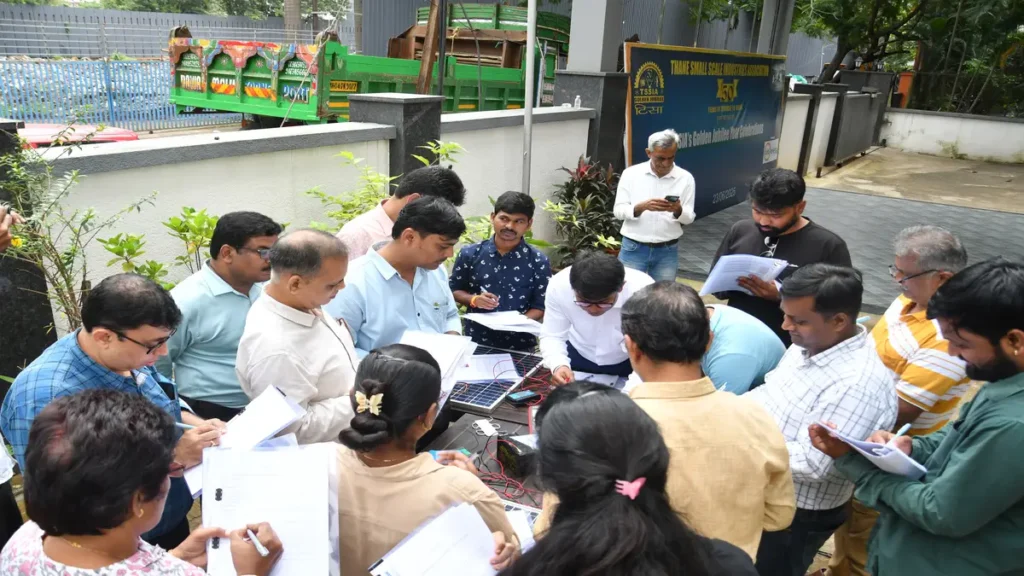
Hands-on Practical Training & Student Gallery
A visual look at IISE students engaged in live rooftop PV installation, electrical testing, inverter commissioning, and practical laboratory exercises.


Practical labs are conducted under strict electrical safety guidelines with certified PPE and calibrated instrumentation.
Comparison with Other IISE Solar Programmes
Evaluate our solar training programmes side-by-side to choose the credential that best matches your academic background and professional objectives.
| Parameter | Advance Diploma in Solar Technology | PG Diploma in Solar Technology | Solar Engineer Certificate Course |
|---|---|---|---|
| Programme Fee | ₹49,999 | Contact Admissions Desk | ₹29,999 |
| Duration | 2 Semesters (510 Hours) | 2 Semesters (1200 Hours) | 6 Months (92 Lectures) |
| Academic Credits | 34 Credits | 40 Credits | Professional Certificate |
| Eligibility | Graduates / 3-Yr Diploma / Science Grads / 10+2 + ITI | Bachelor's Degree (Engg / Science) | 10+2 / Diploma / Engineers |
| Delivery Mode | Online Learning + Practical Lab Training | Online Live + 3-Day Practical Training | Hybrid Online + Practical Sessions |
| Primary Focus | Fast-track technical mastery, installation & entrepreneurship | Postgraduate-level deep engineering specialization | Practical solar design and installation skills |
| Certification | Joint IISE & University Partner Award | Joint University Partner PG Diploma | IISE Professional Certificate |
Unsure which programme aligns best with your background? Speak directly with an academic counsellor.
📞 Get Personalized Course CounsellingGot Questions? We Have Answers.
Clear, transparent information regarding course fees (₹49,999), eligibility categories, joint certification, practical lab schedules, and career support.
Still have questions? Our academic counselling desk is available Monday to Saturday.
📞 Call Admission Helpline: +91 8850902306Related Professional Programmes at IISE
Expand your clean-technology expertise across electric vehicle systems, battery storage, and advanced postgraduate engineering.

PG Diploma in Solar Technology
Comprehensive postgraduate engineering specialization in utility-scale PV systems and grid integration.
View Course Details →
Solar Engineer Certificate Course
6-month practical technical training program covering solar PV design, installation, and commissioning.
View Course Details →
PG Diploma in EV Technology
Master battery powertrains, BMS architecture, motor drives, and solar EV charging infrastructure.
View Course Details →
Solar Entrepreneurship Program
Launch and scale your own turnkey solar EPC contracting business, dealership, or distribution network.
View Course Details →Take the Next Step Towards a Rewarding Solar Career
Build professional skills in solar PV design, installation, operation & maintenance, and entrepreneurship with practical training and joint certification.
Admission Enquiry & Application Form
Submit your details below to check eligibility, request the curriculum handbook, and speak directly with an IISE academic counsellor.
info@indianinstituteofsolarenergy.com
Indian Institute of Solar Energy (IISE)
A Unit of CERMS India Foundation · Mumbai, India
Time is running out. Apply now!
- 00Days
- 00Hours
- 00Minutes
- 00Seconds
Course Curriculum — 2 Semesters, 510 Hours, 34 Credits
Module-by-module breakdown. Click any module to see key topics covered.
- Overview of global and Indian energy scenarios
- Solar radiation: types, measurement, and analysis
- Introduction to solar PV and thermal technologies
- Solar policy, subsidies, and missions in India (e.g. JNNSM)
- Solar cells: working principle, types, and characteristics
- PV module design and performance / module interconnections
- Balance of System (BOS) components
- MPPT and system efficiency calculations
- Fundamentals of electricity and electrical circuits
- Electrical safety procedures and standards (IS, IEC)
- Use of measuring instruments (multimeter, clamp meter, insulation tester)
- Earthing, wiring techniques, and cable sizing
- Load estimation and energy demand assessment
- PV design tools and software (PVsyst, Helioscope basics)
- System sizing: panels, inverters, cables, protection devices
- Grid integration: net metering and grid standards
- Identification and testing of PV components
- Series/parallel connections and troubleshooting
- Mounting structures, tilt angle, and orientation
- Hands-on with small-scale PV installation kits
- Types of off-grid and hybrid systems
- Battery technologies and storage integration
- Charge controllers and hybrid inverters
- Load prioritization and backup systems
- Performance monitoring and data logging
- Fault diagnosis and rectification
- Cleaning, preventive maintenance, and AMC practices
- Remote monitoring (SCADA, IoT-based)
- Business opportunities in the solar sector
- Components of a solar business plan
- Tendering, costing, and vendor selection
- Introduction to MSME schemes and financing options
- Full-scale system installation (grid/off-grid)
- Wiring, inverter integration, and system testing
- Troubleshooting scenarios and repairs
- Site commissioning checklist
- On-site project or internship with solar companies
- Real-world solar plant exposure (rooftop or ground-mounted)
- Data collection, reporting, and presentation
- Project documentation and viva
Skills You'll Gain
Advance Diploma vs. PG Diploma in Solar Technology
Not sure which program fits you? Here's how the two compare.
| Feature | Advance Diploma in Solar Technology Fast-Track | PG Diploma in Solar Technology |
|---|---|---|
| Duration | 2 Semesters (1200 hours) | 2 Semesters (1200 hours) |
| Total Credits | 30 | 40 |
| Eligibility | Bachelor's degree / Diploma+ITI / 10+2+ITI | Bachelor's degree |
| Fee | ₹59,999/-( full Scholarship fee - ₹39,999/-) | ₹1249,999/-( full Scholarship fee - ₹79,999/-) |
| Delivery Mode | Online Live + 3-Day Practical Training | Online Live + 3-Day Practical Training |
| Placement Rate | 90% | 90% |
| Ideal For | Fast-track entry into solar careers or entrepreneurship | Engineers/graduates seeking deeper postgraduate-level specialization |
Considering the postgraduate route instead? Explore the PG Diploma in Solar Technology →
Built for India's Growing Solar Workforce
As India scales toward its 500 GW renewable energy target, demand for trained solar installers, technicians, and design engineers continues to grow. The solar and EV sectors are also converging — rooftop solar increasingly powers home EV charging setups, so graduates with cross-disciplinary exposure stand out. If you want to explore that overlap further, our EV Systems courses → (including the PG Diploma in Electric Vehicle Technology →) are a natural next step.
Stay current with policy updates, technology shifts, and market trends on our Solar Energy blog →.
Ready to Start Your Own Solar Business?
Module 8 of this diploma covers solar business models, costing, tendering, and MSME financing. Once you're ready to act on it, IISE's business network can help you take the next step — as a dealer, distributor, or channel partner.
Eligibility & Admission Process
Bachelor's degree holder / graduate from a recognized university
3-year Diploma in Engineering / Science graduates / 10+2 + ITI candidates may apply
International / SAARC graduates from an accredited university or institution
Preference given to candidates already working in the solar sector or related energy sector
Course Fee
Related Learning Paths
Battery & Storage
Specialize further in lithium-ion systems, BMS, and off-grid storage integration.
Explore Battery & Storage Courses →EV Systems
Solar and EV charging infrastructure increasingly overlap — build cross-disciplinary skills.
Explore EV Systems Courses →Solar Energy Insights
Stay current with policy updates, technology trends, and market insights.
Read Solar Energy Insights →Also see the Battery & Storage category → and the Career & Education hub → for more learning paths.
Start Your Solar Career or Business Journey Today
Join the next batch (July 2026) of the Advance Diploma in Solar Technology — UGC approved, 90% placement rate, and built for both career-seekers and aspiring entrepreneurs.
Enroll Now →Time is running out. Apply now!
- 00Days
- 00Hours
- 00Minutes
- 00Seconds
Training Events & Certificate Programs
Diplomas, certificate courses and workshops in solar and EV technology — industry-ready, hands-on training with limited seats per batch.
Stay Connected with IISE on WhatsApp
Get the latest updates on solar courses, practical workshops, admissions, scholarships, career opportunities, industry insights and upcoming events directly on WhatsApp.
Free to join • Unsubscribe anytime • Opens directly in WhatsApp
Indian Institute of Solar Energy
Official Organization Channel • Renewable Energy
What Subscribers Receive
- Solar Course Admissions & Batch Dates
- Practical Workshop Alerts & Hands-on Sessions
- Career Opportunities & Solar Placement Drives
- Scholarships & Gov. Certification Guidelines