Verified 2026 Market Rates • MNRE & ALMM Aligned
Looking to purchase solar panels or evaluate turnkey rooftop quotations in India? In 2026, individual monocrystalline and TOPCon solar panel prices in India range from ₹20 to ₹32 per watt (₹/Wp) before taxes, depending on cell technology (Mono PERC vs N-Type TOPCon) and compliance status (DCR-compliant domestic cells vs Non-DCR).
For a typical 540W to 550W high-efficiency module, prices generally range between ₹12,400 and ₹17,050 per panel (ex-factory / distributor price). However, buying standalone modules differs fundamentally from purchasing a complete grid-connected rooftop solar system, which includes bi-directional metering, inverters, structures, balance-of-system (BOS), and DISCOM liaising under the PM Surya Ghar: Muft Bijli Yojana. Below is our comprehensive, transparent, data-driven pricing analysis compiled by the solar engineering faculty at IISE.
Average Price / Watt
₹20 – ₹32/Wp
Tier-1 Mono PERC & TOPCon
550W Panel Cost
₹12,650 – ₹17,050
Ex-GST (5% applicable)
PM Surya Ghar Subsidy
Up to ₹78,000
Mandatory DCR Indian Cells
GST On Solar Modules
5% GST
Rolled back from 12% by GST Council
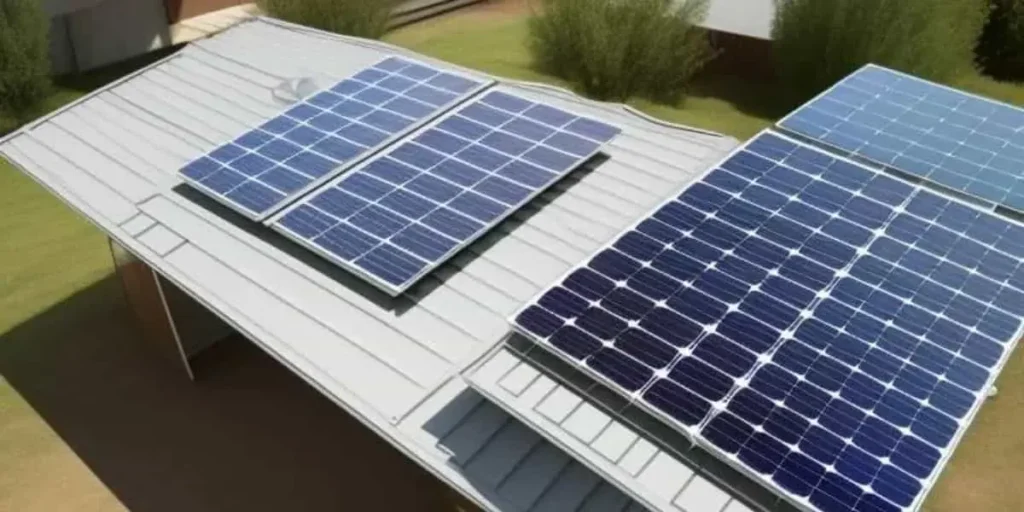
Executive Price Briefing
Quick Solar Panel Price Summary (India 2026- Solar panel price in india)
A fast, high-level overview of observed market prices across technologies, purchasing volumes, and system scopes in the Indian solar market.
Category 01
Standard Workhorse
Mono PERC Modules
₹18 – ₹28 / Wp
- Non-DCR Price: ₹18 – ₹23 / Wp
- DCR Price (Subsidy eligible): ₹22 – ₹28 / Wp
- Typical Panel (540W): ₹12,400 – ₹15,120
- Efficiency Range: 20.0% – 21.5%
Category 02
Market Leader 2026
N-Type TOPCon Modules
₹21 – ₹32 / Wp
- Non-DCR Price: ₹21 – ₹26 / Wp
- DCR Price (Domestic cells): ₹25 – ₹32 / Wp
- Typical Panel (550W–580W): ₹14,000 – ₹18,500
- Efficiency Range: 21.8% – 23.2%
- Lower heat derating (-0.30%/°C)
Category 03
Bifacial Gain
Bifacial Glass-Glass
+₹1.00 – ₹2.50 premium
- Module Rate: ₹24 – ₹34 / Wp
- Rear-Side Generation: 5% – 25% extra yield
- 30-Year Linear Performance Warranty
- Dual tempered glass (2.0mm + 2.0mm)
Category 04
Turnkey Scope
Complete Rooftop System
₹55 – ₹75 / Wp (Gross)
- Includes Panels + Inverter + BOS + Labor
- 3 kW System Gross: ₹1,75,000 – ₹2,20,000
- Less PM Surya Ghar Subsidy: -₹78,000
- Net Consumer Out-of-Pocket: ₹97,000 – ₹1,42,000
Important Market Note: Standalone panel prices shown above reflect ex-factory or regional distributor benchmark rates excluding 5% GST and regional freight. Complete residential rooftop system costs are turnkey figures that include net metering, structure fabrication, earthing, lightning arresters, wiring, and certified labor.
Solar Panel Price Per Watt (₹/Wp) in India: Explained
In the photovoltaic industry, comparing solar modules solely on total per-panel price is misleading because panels come in vastly different wattages (from 335W polycrystalline to 600W+ TOPCon). To compare products accurately across different manufacturers, engineers and procurement specialists use Price Per Watt Peak (₹/Wp).
The Standard Sizing Formula
Price Per Watt (₹/Wp) = Total Module Cost (₹) ÷ Rated Module Wattage (Wp)
Practical Worked Example:
Suppose you receive a quotation for a 550 Wp Tier-1 Mono PERC panel quoted at ₹13,750 (ex-GST) from a regional distributor:
- Base Price per Watt: ₹13,750 ÷ 550 Wp = ₹25.00 / Wp (ex-factory).
- Applicable GST (5%): ₹13,750 × 5% = ₹687.50 per panel.
- Total Landed Cost per Panel: ₹13,750 + ₹687.50 = ₹14,437.50.
- Landed Price per Watt (incl. GST): ₹14,437.50 ÷ 550 Wp = ₹26.25 / Wp.
Note: If fragile palletized shipping adds ₹350 per module, the total delivered cost rises to ₹14,787.50, or ₹26.88/Wp delivered. Always clarify whether quotations are ex-warehouse or delivered on-site.
Why Panel Wattage Alone Does Not Determine Value
A 550W module is not automatically superior to a 450W module simply because of its nameplate rating. Engineering value depends on several critical PV parameters:
1. Power Density (Efficiency %):
A 22.5% efficient 550W panel takes up ~2.4 m², whereas a 17% efficient 335W polycrystalline module takes up ~1.95 m². You generate significantly more energy from limited roof area using higher-efficiency panels.
2. Temperature Coefficient:
In hot Indian summers where rooftop panel temperatures exceed 55°C, N-Type TOPCon panels derate at only -0.30%/°C compared to -0.36%/°C for older Mono PERC panels, yielding 3–5% more annual kilowatt-hours.
3. Annual Degradation Rate:
Tier-1 TOPCon panels experience near-zero Light-Induced Degradation (LID) in Year 1 (<1.0%) and degrade at only ~0.40% annually, retaining over 87.4% output at Year 30 vs 80% at Year 25 for basic modules.
4. Structural & Handling Cost:
Very large 650W+ utility modules (2.3m+ tall) require heavy-duty reinforced mounting structures to withstand 150 km/h wind loads, which can increase Balance of System (BOS) steel expenses.
Technical Comparison
Solar Panel Prices in India by Cell Technology (2026)
Solar panel technology in India has evolved rapidly from older Polycrystalline cells to P-type Mono PERC, and now predominantly to N-type TOPCon (Tunnel Oxide Passivated Contact) and Bifacial architectures. Here is how current technologies compare in price, efficiency, and real-world application.
| Technology | Indicative ₹/Wp (ex-GST) | Typical Wattage | Module Efficiency | Temp. Coefficient | Key Advantages | Best Fit |
|---|---|---|---|---|---|---|
|
Polycrystalline Legacy Tech | ₹16 – ₹20 | 330W – 350W | 16.0% – 17.5% | -0.39%/°C | Lowest upfront cost; mature manufacturing. | Solar water pumps, remote agricultural, legacy replacements. |
|
Mono PERC (P-type) Standard Residential |
Non-DCR: ₹18 – ₹23 DCR: ₹22 – ₹28 | 400W – 550W | 20.0% – 21.5% | -0.35%/°C | High bankability, excellent reliability, widely available DCR models. | Budget-conscious residential rooftops claiming PM Surya Ghar subsidy. |
|
N-type TOPCon Primary 2026 Choice |
Non-DCR: ₹21 – ₹26 DCR: ₹25 – ₹32 | 540W – 600W+ | 21.8% – 23.2% | -0.30%/°C | Zero LID, superior performance in Indian heat, 30-year warranty, lower degradation. | Modern residential rooftops, commercial rooftops, C&I solar parks. |
|
Bifacial (Dual-Glass) Reflective Yield |
₹24 – ₹34 (+₹1–2.5/Wp over mono) | 540W – 620W | 21.5% – 22.8% (Front) | -0.30%/°C | Generates power from both sides; up to 25% rear albedo gain; high PID resistance. | Elevated rooftop sheds, white-tiled terraces, ground-mount industrial parks. |
|
HJT (Heterojunction) Ultra-Premium | ₹32 – ₹42 | 500W – 700W | 22.5% – 24.5% | -0.26%/°C | Industry-lowest temperature coefficient, highest bifaciality (up to 90%). | Space-constrained luxury residences, specialized C&I with premium budgets. |
Engineering Recommendation: In 2026, N-type TOPCon bifacial modules represent the optimal cost-to-performance sweet spot for residential and commercial rooftops in India. Although priced ~8–12% higher than standard Mono PERC, the 3–5% higher annual energy yield and 30-year warranty deliver a lower Levelized Cost of Energy (LCOE) over the project lifespan.
Capacity Guide
Solar Panel Prices in India by Wattage (400W – 600W)
Whether you are adding panels to an existing inverter or planning a new 3 kW, 5 kW, or 10 kW solar array, panel capacity dictates both module dimensions and string inverter voltage sizing. Below are observed retail and distributor price ranges for popular module capacities in India.
| Rated Wattage | Technology Type | Base Price (Ex-GST) | Landed Price (Incl. 5% GST) | Equivalent ₹/Wp | DCR Available | Application Suitability |
|---|---|---|---|---|---|---|
| 400 Wp | Mono PERC Half-Cut | ₹8,000 – ₹10,500 | ₹8,400 – ₹11,025 | ₹20.00 – ₹26.25 | Yes (Select brands) | Small residential roofs, tight shadow zones, off-grid cabins. |
| 450 Wp | Mono PERC Half-Cut | ₹9,450 – ₹12,150 | ₹9,922 – ₹12,758 | ₹21.00 – ₹27.00 | Yes | 1 kW to 3 kW residential systems with compact dimensions (~2.1m × 1.05m). |
| 500 Wp | Mono PERC / TOPCon | ₹11,000 – ₹14,500 | ₹11,550 – ₹15,225 | ₹22.00 – ₹29.00 | Yes | Versatile residential & small commercial rooftop installations. |
|
540 Wp Top Seller | Mono PERC / Bifacial | ₹12,400 – ₹16,200 | ₹13,020 – ₹17,010 | ₹22.96 – ₹30.00 | Yes (High Stock) | Standard for PM Surya Ghar 3 kW (takes exactly 6 panels) & 5 kW arrays. |
|
550 Wp Benchmark 2026 | TOPCon / Mono PERC | ₹12,650 – ₹17,050 | ₹13,282 – ₹17,902 | ₹23.00 – ₹31.00 | Yes (Wide Availability) | Most widely quoted panel in India for 2026 residential & C&I projects. |
| 580 Wp | N-Type TOPCon Bifacial | ₹14,500 – ₹19,140 | ₹15,225 – ₹20,097 | ₹25.00 – ₹33.00 | Yes | Commercial rooftops, factory sheds, high-power residential systems. |
| 600 Wp+ | N-Type TOPCon / HJT | ₹15,600 – ₹20,400 | ₹16,380 – ₹21,420 | ₹26.00 – ₹34.00 | Select Utility Lines | Large ground-mounted solar farms and heavy C&I installations. |
Pricing Qualification: Lower range figures reflect distributor wholesale purchases (100+ panels) or Non-DCR projects. Upper range figures reflect single-pallet retail orders, DCR compliance for PM Surya Ghar subsidy eligibility, or premium dual-glass construction.
Manufacturer Analysis
Top 10 Solar Panel Brands in India: Technical & Price Comparison
India’s domestic solar manufacturing capacity has expanded dramatically under MNRE’s Approved List of Models and Manufacturers (ALMM). Below is an objective, editorial evaluation of the leading Tier-1 Indian manufacturers offering ALMM-approved and DCR-compliant modules in 2026.
| Brand & Tier | Representative Series | Typical Wattage | Module Efficiency | Indicative ₹/Wp (ex-GST) | Warranty (Prod / Perf) | Best Application | Official Website |
|---|---|---|---|---|---|---|---|
|
Waaree Energies ALMM List-I Enlisted | Aditya / Elite / Arka Series | 540W – 660W | 21.2% – 22.8% | ₹23 – ₹30 | 12 Yrs / 30 Yrs | Residential PM Surya Ghar, C&I, Utility scale. | waaree.com |
|
Tata Power Solar High Bankability | TP Mono PERC / TOPCon | 400W – 550W | 20.8% – 22.4% | ₹24 – ₹32 | 12 Yrs / 25 Yrs | Premium residential, institutional buildings, microgrids. | tatapowersolar.com |
|
Adani Solar Vertically Integrated | Elan / Eternal / Shine Series | 530W – 585W | 21.4% – 22.7% | ₹24 – ₹31 | 12 Yrs / 30 Yrs | C&I rooftop arrays, utility solar projects, export. | adanisolar.com |
|
Vikram Solar ALMM Tier-1 | Hypersol / Ultima / Somera | 440W – 600W | 21.0% – 22.6% | ₹24 – ₹32 | 12 Yrs / 25–30 Yrs | Harsh climate zones, airport installations, rooftops. | vikramsolar.com |
|
Premier Energies Leading Cell Maker | DCR TOPCon & Mono PERC | 540W – 590W | 21.5% – 22.8% | ₹23 – ₹30 | 12 Yrs / 25 Yrs | Domestic subsidy projects requiring certified DCR cells. | premierenergies.com |
|
Goldi Solar Gujarat Hub | Goldi HELOC Plus / VAMA | 440W – 550W | 20.9% – 22.3% | ₹22 – ₹29 | 12 Yrs / 25 Yrs | Residential solar rooftops, agricultural feeders. | goldisolar.com |
|
RenewSys Encapsulant & Cell Maker | DESERV Galactic / Diamond | 335W – 540W | 20.5% – 21.8% | ₹22 – ₹28 | 10–12 Yrs / 25 Yrs | Residential rooftop arrays, off-grid systems. | renewsysworld.com |
|
Emmvee Solar South India Leader | SpMarker / Diamond Series | 400W – 550W | 20.6% – 22.2% | ₹23 – ₹30 | 12 Yrs / 25 Yrs | Commercial rooftops, residential solar installations. | emmvee.com |
|
Saatvik Green Energy North India Hub | Varun Mono PERC Series | 400W – 550W | 20.5% – 22.1% | ₹22 – ₹29 | 12 Yrs / 25 Yrs | North India rooftop projects, government tenders. | saatvikgroup.com |
|
Rayzon Solar Fast-Growing | Alpex / N-Type TOPCon | 440W – 580W | 21.0% – 22.5% | ₹23 – ₹29 | 12 Yrs / 25 Yrs | Commercial rooftops, residential rooftop networks. | rayzonenergy.com |
Editorial & Compliance Disclosure: The Indian Institute of Solar Energy does not endorse any single manufacturer commercially or rank brands arbitrarily. All listed manufacturers are prominent Tier-1 Indian suppliers registered on MNRE’s ALMM List-I. To learn more about brand warranties and performance testing, read our companion guide on Top 10 Solar Panel Brands in India 2026.
Policy & Compliance
DCR vs Non-DCR Solar Panels: What Indian Buyers Must Know
Understanding the distinction between Domestic Content Requirement (DCR) and Non-DCR solar panels is the single most critical factor determining whether you qualify for government subsidies under the PM Surya Ghar: Muft Bijli Yojana.
Subsidy Mandatory
₹24 – ₹32 / Wp
DCR-Compliant Panels
To qualify as DCR under MNRE rules, both the solar photovoltaic cells AND the final solar module must be manufactured in India. Even if a module is assembled in India, if it utilizes imported cells (from China, Vietnam, or Malaysia), it is strictly classified as Non-DCR.
- Mandatory For: PM Surya Ghar residential subsidies, CPSU defense projects, and government tenders.
- Cost Premium: Costs ~₹4 to ₹7 more per watt due to limited domestic cell manufacturing scale.
- Verification: Enclosed RFID chip inside module laminate + Manufacturer DCR Undertaking Certificate on official letterhead with cell batch numbers.
Commercial / Unsubsidized
₹18 – ₹24 / Wp
Non-DCR Panels
Non-DCR panels are typically assembled in India using high-efficiency imported silicon cells, or are imported as complete modules from ALMM-enlisted global production lines.
- Permitted For: Commercial & industrial (C&I) rooftop plants, unsubsidized residential installations, open-access solar farms, and captive installations.
- Cost Benefit: ₹4 to ₹7 cheaper per watt; provides maximum commercial ROI where government subsidies do not apply.
- ALMM Requirement: Still must be listed in MNRE's ALMM List-I if connecting to the Indian distribution grid with net metering.
How to Protect Yourself from DCR Fraud:
Before approving a residential rooftop quotation under PM Surya Ghar, demand that the installer provide the exact module serial numbers and the manufacturer's DCR Certificate. DISCOM engineers scan the RFID chip embedded beneath the solar module glass during the physical inspection prior to net-meter commissioning. If the RFID chip does not match the MNRE portal's DCR database, your subsidy claim will be rejected outright.
Solar Panel Prices in India by Procurement Category
Solar module pricing in India is heavily volume-dependent. A homeowner purchasing 4 loose panels online faces completely different cost structures than an EPC company ordering full container loads (1,000+ panels) directly from the factory gate.
Volume: 1 – 4 Panels
Single-Panel Retail / DIY
₹30 – ₹38 / Wp
Purchased through e-commerce or local electrical shops. Carries high distributor margins and significant wooden-crate packaging and courier freight fees (₹1,500–₹3,000 extra per shipment).
Volume: 6 – 20 Panels (3–10 kW)
Residential Rooftop Project
₹24 – ₹30 / Wp
Standard pallet purchases (typically 31 to 36 panels per pallet) delivered directly to residential sites by regional empanelled solar contractors. Pallet pricing avoids individual uncrating fees.
Volume: 50 – 1,000 Panels (25–500 kW)
Commercial & Industrial (C&I)
₹21 – ₹26 / Wp
Factory-shed installations and enterprise microgrids. Direct wholesale distributor pricing. Eligible for GST Input Tax Credit (ITC) and 40% accelerated depreciation (AD) benefits.
Volume: 2,000+ Panels (1 MW+)
EPC Bulk & Utility Scale
₹18 – ₹23 / Wp
Direct factory-to-project-site agreements with containerized multi-truck logistics. Prices negotiated on bilateral quarterly contracts linked to international polysilicon pricing indices.
System Cost Breakdown
Solar Panel Cost vs. Complete Rooftop Solar System Cost
A common point of confusion for consumers is comparing raw solar panel prices directly with turnkey rooftop installation quotations. Solar modules account for only 40% to 48% of the total cost of an operational on-grid solar plant. The remaining 52% to 60% consists of essential balance-of-system (BOS) electrical components, engineering fabrication, and statutory utility approvals.
Where Does Your Money Go? Rooftop Solar Capex Anatomy:
Solar PV Modules (Tier-1 DCR / TOPCon)
42% – 48%
Solar Inverter (Grid-Tied String Inverter / MPPT)
18% – 22%
Module Mounting Structure (HDGI / Aluminium Elevated)
10% – 13%
BOS & Protection (DC/AC Cables, ACDB/DCDB, Earthing & Lightning Arrester)
12% – 15%
Installation, Testing, DISCOM Net Metering & Commissioning
10% – 15%
Residential Rooftop Solar Cost in India (1 kW – 10 kW)
| System Capacity | Typical Panel Count (550W) | Gross Turnkey Cost (ex-subsidy) | PM Surya Ghar Subsidy | Estimated Net Cost to Consumer | Monthly Energy Generation |
|---|---|---|---|---|---|
| 1 kW | 2 Panels | ₹65,000 – ₹85,000 | ₹30,000 | ₹35,000 – ₹55,000 | 120 – 140 Units (kWh) |
| 2 kW | 4 Panels | ₹1,25,000 – ₹1,55,000 | ₹60,000 | ₹65,000 – ₹95,000 | 240 – 280 Units (kWh) |
|
3 kW Max Subsidy Sweet Spot | 6 Panels | ₹1,75,000 – ₹2,20,000 | ₹78,000 (Max) | ₹97,000 – ₹1,42,000 | 360 – 420 Units (kWh) |
| 5 kW | 9–10 Panels | ₹2,80,000 – ₹3,50,000 | ₹78,000 | ₹2,02,000 – ₹2,72,000 | 600 – 700 Units (kWh) |
| 10 kW | 18–19 Panels | ₹5,20,000 – ₹6,50,000 | ₹78,000 | ₹4,42,000 – ₹5,72,000 | 1,200 – 1,400 Units (kWh) |
For a comprehensive state-by-state analysis of DISCOM net metering charges and state subsidies, visit our specialized guide: Rooftop Solar System Cost in India (2026): State-Wise Price Guide.
Central Government Scheme
PM Surya Ghar: Muft Bijli Yojana — 2026 Subsidy Rules
Approved by the Union Cabinet with an outlay of ₹75,021 crore, the PM Surya Ghar: Muft Bijli Yojana provides direct financial assistance to 10 million residential households in India to install rooftop solar systems and access up to 300 units of free electricity per month.
System Sizing: Up to 2 kW
₹30,000 per kW
For systems up to 2 kW, the Central Financial Assistance (CFA) is fixed at ₹30,000 for 1 kW and ₹60,000 for 2 kW.
System Sizing: 3 kW & Above
₹78,000 Flat Maximum
For systems larger than 2 kW, an additional ₹18,000 is granted for the 3rd kW, capping the total central subsidy at ₹78,000 for systems 3 kW and higher.
Societies & RWAs (GHS/RWA)
₹18,000 per kW
For Group Housing Societies and Resident Welfare Associations, CFA is provided at ₹18,000/kW up to 500 kW for common EV charging and elevator power.
Mandatory Subsidy Requirements:
- DCR Modules Only: Solar panels must utilize cells manufactured indigenously in India and be listed on MNRE ALMM List-I.
- Empanelled Vendors: The installation must be executed by a registered vendor on the National Portal (pmsuryaghar.gov.in).
- Net Metering Verification: The subsidy is transferred directly via Direct Benefit Transfer (DBT) into the applicant’s Aadhaar-linked bank account within 30 days after the local DISCOM inspects the plant, installs the net meter, and issues the commissioning certificate.
Cost Breakdown Analysis
What Affects Solar Panel Prices in India? Key Cost Drivers Explained
Solar photovoltaic (PV) module rates are not static commodity numbers. A solar panel's final invoiced price per watt (₹/Wp) is influenced by raw material economics, cell architecture, regulatory mandates, and supply-chain logistics. Understanding these 10 core factors enables buyers and developers to negotiate effectively and assess fair market quotes.
1
Cell Technology & Efficiency
Advanced cell architectures command higher manufacturing investments. N-Type TOPCon (22.0%–22.8% efficiency) and HJT (22.5%–23.5%) require advanced chemical passivation layers and precision metallization, pricing them ₹2.00–₹5.00/Wp above mature P-Type Mono PERC (20.5%–21.5%). However, higher efficiency yields more kilowatt-hours per square meter of roof space.
2
Domestic Content Requirement (DCR)
Under MNRE guidelines for subsidized rooftop schemes (PM Surya Ghar), modules must incorporate both solar cells and modules fabricated domestically in India. Because domestic wafer-to-cell capacity remains tighter than module assembly capacity, DCR panels cost ₹3.00 to ₹7.00/Wp more than Non-DCR panels manufactured with imported cells.
3
Polysilicon, Silver & Glass Cycles
Polysilicon feedstock represents ~30% of total cell cost. Global polysilicon pricing cycles directly determine ingot and wafer spot costs. Secondary inputs like high-purity silver paste for front-contact fingers, tempered low-iron solar glass (2.0mm/3.2mm), and anodized aluminum extrusion profiles introduce cyclical price swings of 3%–8%.
4
Procurement Volume & Tier
A homeowner buying 6 panels (3.3 kW) from an over-the-counter retailer absorbs distributor markups, local freight, and inventory storage costs (₹26–₹32/Wp). An EPC purchasing multiple 40-foot HQ container loads (30–35 pallets / ~900 modules / ~500 kWp) procures factory-direct at wholesale benchmark rates (₹17–₹23/Wp ex-factory).
5
Freight, Packaging & Breakage Insurance
Solar panels are fragile, heavy capital goods measuring over 2.2 meters in length and weighing 27–33 kg each. Inland transport from manufacturing clusters in Gujarat or Tamil Nadu to northern or northeastern states adds ₹0.60 to ₹1.80/Wp in dedicated trailer freight, pallet strapping, and transit insurance coverage.
6
Applicable GST & Trade Tariffs
Standalone solar module purchases attract 12% GST (HSN Code 8541). When purchased as part of a turnkey EPC works contract, GST applies on a split ratio (70% goods @ 12% + 30% services @ 18%, producing an effective 13.8% composite GST). Basic Customs Duty (BCD) on imported cells (25%) and modules (40%) further insulates domestic price baselines.
Crucial Takeaway for Procurement Teams
Always confirm whether a quoted price is Ex-Factory or FOR Site (Free on Road at delivery site) and whether it includes 12% GST. An apparently "cheap" quotation of ₹20.00/Wp ex-works often matches or exceeds a ₹24.00/Wp quote once freight, transit insurance, and GST are invoiced.
Procurement Strategy
How to Choose the Right Solar Panel: Strategic Decision Matrix
There is no single "best" solar panel for every situation. The optimal module is the one that minimizes your Levelized Cost of Electricity (LCOE) while complying with local physical, climatic, and regulatory constraints. Use our objective evaluation matrix tailored to your installation category.
| Buyer Category | Primary Constraint | Recommended Technology | Target Wattage | DCR Mandatory? | Target Price Range (ex-GST) |
|---|---|---|---|---|---|
| 1. Subsidized Homeowner (1 kW to 3 kW Systems) | PM Surya Ghar Subsidy Eligibility & Limited Terrace Space | DCR Mono PERC or DCR TOPCon (Monofacial) | 540W – 550W | YES (Strict) | ₹24.00 – ₹29.00 / Wp |
| 2. Non-Subsidized Residential (5 kW to 10 kW+ Luxury Homes) | Roof Aesthetics, Maximum Generation per Sq. Ft. | N-Type TOPCon or HJT All-Black / Glass-Glass | 580W – 620W | Optional | ₹22.00 – ₹27.00 / Wp |
| 3. Commercial & SME Rooftop (20 kW to 200 kW Systems) | Fastest Payback Period, Low Thermal Degradation | N-Type TOPCon Monofacial or Bifacial (high albedo) | 550W – 590W | No (ALMM only) | ₹19.50 – ₹23.00 / Wp |
| 4. Industrial Factory Shed (250 kW to 2 MW+ Installations) | Shed Load Weight Limit, Corrosion Resistance | Lightweight High-Efficiency TOPCon (Mono-Glass) | 575W – 600W | No (ALMM only) | ₹18.00 – ₹21.00 / Wp |
| 5. Utility / Large Scale Ground (5 MW+ Utility Projects) | Lowest LCOE, BOS Cost Reduction, High Tracker Yield | Dual-Glass Bifacial TOPCon / HJT (1500V system) | 620W – 715W | Per PPA Terms | ₹16.50 – ₹19.50 / Wp |
Essential Datasheet Parameters to Audit Before Signing
• Temperature Coefficient of Pmax: Look for values better than -0.30% / °C (standard in TOPCon). In hot Indian climates (40°C+ summers), low thermal loss adds 3%–5% more annual kilowatt-hours.
• First-Year & Linear Degradation: N-Type TOPCon offers ≤1.0% first-year loss and ≤0.40%/year thereafter, guaranteeing ≥87.4% rated output at Year 30 vs 84.8% on Mono PERC.
• Bifaciality Factor: If installing over reflective white roofs or gravel ground, bifacial modules with ≥80% bifaciality generate an additional 8%–20% power from rear diffuse irradiance.
• Certifications (BIS & IEC): Ensure modules hold valid BIS R-Number (IS 14286 / IS 61730) and are listed in the latest active ALMM revision issued by MNRE.
Procurement Due Diligence
How to Compare Solar Quotations: 10-Point Technical Checklist
Solar EPC and module quotes often look identical on the surface but vary vastly in scope, tax treatment, and hardware quality. When comparing multiple proposals from vendors or distributors, benchmark every item line-by-line using our standardized evaluation table.
| Checklist Item | What to Look For | Low-Quality / Risky Quote | Transparent / Gold Standard Quote |
|---|---|---|---|
| 1. Exact Module Model | Specific manufacturer series number (e.g., Waaree WST-545M10) | Vague description ("540W Tier-1 Panel" or "Imported Mono") | Exact datasheet attached with certified serial number sequence |
| 2. Price Unit Clarification | Whether pricing is per Watt-peak (₹/Wp) or per complete panel | Lump-sum price hiding the underlying cost per watt | Explicit line-item: ₹/Wp base + quantity + total wattage |
| 3. DCR Certificate Included | Proof of Indian-made cell and module for subsidy claims | Verbal assurance of DCR without written manufacturer certificate | OEM DCR Undertaking letter with RFID serial verification |
| 4. GST Rate & Treatment | 12% on solar goods; 13.8% composite on turnkey works contract | "Taxes extra as applicable" or hidden 18% charge on entire goods | Itemized GST breakout with valid GSTIN and HSN 8541 |
| 5. Freight & Unloading (FOR) | Delivery terms (Ex-factory warehouse vs Delivered to site) | Ex-Works quote with buyer liable for freight & transit damages | FOR Site with hydraulic tailgate unloading & transit insurance |
| 6. Warranty Documentation | Separate product workmanship (12–15 yr) vs performance (25–30 yr) | "25-year warranty" claiming full replacement for 25 years | Clear OEM warranty certificate specifying linear power decay rate |
| 7. Breakage & RMA Terms | Policy regarding transit breakage and microcracks during transit | No replacement once delivery vehicle departs the gate | Free replacement on proof within 48 hours of delivery |
Pro Tip: Check Inverter Compatibility Before Finalizing Panels
High-wattage modules (550W+) generate maximum short-circuit current ($I_{sc}$) exceeding 13.5–14.5 Amps. Verify that your string inverter's Maximum Input Current ($I_{dc,max}$) per MPPT tracker accommodates the module's rated current without thermal clipping.
Interactive Sizing & Costing
Solar Panel Quantity & Procurement Cost Calculator (2026)
Estimate the exact number of solar panels, installed DC capacity, and estimated procurement budget required for your solar project in real-time. Adjust your system size and module wattage below.
Project Parameters
3.0 kW
1 kW (Home)
5 kW
10 kW (Large)
50 kW (Commercial)
₹24.00
₹16 (Wholesale)
₹24 (DCR Residential)
₹35 (Premium/Retail)
Apply 12% GST to Estimate:
Calculation Summary
Total Panels Required:
6 Panels
Actual DC Wattage:
3,300 Wp (3.3 kW)
Base Cost (ex-GST):
₹79,200
GST @ 12%:
+ ₹9,504
Total Estimated Module Cost
₹88,704
Includes modules + 12% GST. Excludes inverters, BOS & installation.
Note: Figures indicate solar panel procurement only. Turnkey rooftop installations incur additional costs for inverters, mounting structures, cabling, net-metering DISCOM fees, and labor (approx. 50%–60% of total system budget).
Procurement Pitfalls
8 Common Mistakes When Buying Solar Panels in India (And How to Avoid Them)
A rooftop solar power plant is an asset expected to operate reliably for 25 to 30 years. However, uninformed buyers frequently fall into common technical and financial traps that compromise long-term generation or forfeit government subsidies.
Pitfall #1
Confusing Module Cost with Complete System Cost
Seeing an advertisement for "550W panel at ₹13,000" leads buyers to assume a 3 kW system costs under ₹80,000. In reality, panels represent only 40%–45% of a grid-tied rooftop system. Inverters, HDG structures, DCDB/ACDB, lightning arrestors, net metering, DISCOM fees, and certified installation comprise the rest.
Pitfall #2
Purchasing Non-DCR Modules When Seeking Subsidies
Buying cheaper Non-DCR modules (which use imported cells) forfeits the entire PM Surya Ghar subsidy (up to ₹78,000). A homeowner saving ₹5,000 on panels forfeits ₹78,000 in government subsidy benefits and DISCOM net-metering sanction.
Pitfall #3
Choosing Modules Solely on the Lowest Price per Watt
Sub-standard modules manufactured from B-grade off-spec cells or uncertified EVA encapsulants suffer from Potential Induced Degradation (PID), hot spots, and early delamination. A 10% lower purchase price costs 25% in lost generation over 10 years.
Pitfall #4
Confusing Product Warranty with Performance Warranty
A "25-year warranty" usually refers to linear power degradation (≥80% output at Year 25). The product workmanship warranty covering physical defects, frame loosening, and junction box failure is typically 10 to 12 years. Always check both distinct terms.
Pitfall #5
Overlooking Temperature Coefficient in Hot Climates
Under direct sunlight in central or northern India, panel surface temperatures regularly reach 60°C–65°C (35°C–40°C above STC standard 25°C). Older polycrystalline panels (-0.41%/°C) lose over 15% rated output, whereas modern TOPCon (-0.30%/°C) retains significantly higher generation.
Pitfall #6
Ignoring Module Dimensions and Structural Roof Load
Modern 580W–660W utility panels measure ~2.38m × 1.13m and weigh over 32 kg. Handling these massive modules on cramped residential rooftops is dangerous and creates severe wind load stress on tin sheds if mounting structures are undersized.
Pitfall #7
Ignoring GST and FOR Freight Terms in Quotations
Comparing an Ex-Factory quote against a site-delivered (FOR) quote leads to expensive surprises. Interstate freight, trailer unloading cranes, and 12% GST add ₹2.50 to ₹4.00/Wp to an ex-works price quote.
Pitfall #8
Neglecting Inverter MPPT Voltage and Current Matching
Pairing modern high-current panels (14A–17A $I_{mp}$) with an older string inverter rated for 11A–12A causes current clipping during peak solar noon hours, wasting peak harvest energy and overheating inverter input stages.
Direct Answers to Buyer Questions
Frequently Asked Questions: Solar Panel Prices & Procurement in India (2026)
Find verified, expert answers addressing market costs, wattage pricing, subsidy mandates, brand reliability, and procurement due diligence.
Q1. What is the price of a solar panel in India in 2026?
In 2026, solar panel prices in India range from ₹16.00 to ₹32.00 per Watt-peak (₹/Wp) ex-GST depending on technology, order volume, and DCR compliance. A single 550W residential panel typically costs between ₹11,000 and ₹15,500 (plus 12% GST), whereas utility-scale EPC bulk procurement is priced at ₹16.50 to ₹19.50/Wp.
Q2. What is the average solar panel price per watt in India?
The average benchmark price across all market segments is ₹20.50 to ₹24.50/Wp (ex-GST). Standard Non-DCR Mono PERC averages ₹18–₹21/Wp, modern N-Type TOPCon averages ₹20–₹24/Wp, and DCR-compliant modules mandated for residential subsidies average ₹24–₹28/Wp.
Q3. How much does a 550W solar panel cost in India?
A 550W Mono PERC or TOPCon panel costs between ₹11,500 and ₹14,500 ex-GST (approximately ₹12,880 to ₹16,240 including 12% GST). DCR-compliant 550W panels with Indian-manufactured cells sit toward the higher end of this range (₹13,200 to ₹15,400 ex-GST).
Q4. What is the price of a 540W solar panel in India?
A standard 540W half-cut Mono PERC module costs between ₹10,800 and ₹13,500 ex-GST (₹12,096 to ₹15,120 incl. GST). These are widely deployed across residential 3 kW to 10 kW rooftop installations under the PM Surya Ghar scheme.
Q5. What is the difference between DCR and Non-DCR solar panels?
DCR (Domestic Content Requirement) panels must incorporate solar photovoltaic cells and modules manufactured locally in India. Non-DCR panels are assembled in India using imported solar cells. DCR panels cost ₹3 to ₹7/Wp more but are strictly mandatory to claim the central government residential subsidy under PM Surya Ghar Muft Bijli Yojana.
Q6. Which solar panel technology offers the best value: Mono PERC, TOPCon, or HJT?
In 2026, N-Type TOPCon offers the best balance of efficiency (22.0%–22.8%), lower temperature coefficient (-0.30%/°C), minimal degradation, and accessible pricing (only ₹1.50–₹2.50/Wp premium over Mono PERC). Mono PERC remains viable for budget-conscious commercial sheds, while HJT provides maximum generation in extreme heat at a premium price.
Q7. Which are the top solar panel brands in India?
The leading Tier-1 Indian manufacturers listed on MNRE's Approved List of Models and Manufacturers (ALMM) include Waaree Energies, Tata Power Solar, Adani Solar, Vikram Solar, Premier Energies, Goldi Solar, RenewSys, Rayzon Solar, Emmvee, and Saatvik Solar.
Q8. How much do 3 kW and 5 kW rooftop solar systems cost in India?
A turnkey 3 kW on-grid rooftop solar system costs approximately ₹1,80,000 to ₹2,20,000 before subsidy. Under the PM Surya Ghar scheme, an eligible subsidy of ₹78,000 reduces the homeowner's net cost to ₹1,02,000–₹1,42,000. A 5 kW system costs ₹2,80,000 to ₹3,40,000 (net cost ₹2,02,000–₹2,62,000 after the maximum ₹78,000 central subsidy).
Q9. Is the solar panel price the same as the complete solar system price?
No. Solar modules typically account for only 40% to 50% of the total turnkey rooftop system cost. The remaining 50% to 60% comprises grid-tied inverters, galvanized mounting structures, AC/DC distribution boxes, solar DC cabling, earthing & lightning arrestors, net-metering DISCOM liaisoning, and certified installation labor.
Q10. Does solar panel pricing include GST in quotations?
Most wholesale and distributor price quotes list rates Ex-GST. Solar photovoltaic modules attract 12% GST under HSN 8541. When contracted as part of a turnkey EPC works contract, a composite tax formula applies (70% goods @ 12% + 30% services @ 18% = 13.8% effective GST). Always verify tax terms before purchase.
Q11. How can I verify solar panel authenticity and ALMM listing?
Authentic modules carry an embedded RFID tag inside the laminate, readable with an RFID scanner, detailing the serial number, cell origin, and manufacturing timestamp. Cross-reference the manufacturer and model series against the latest ALMM Order list published on the official MNRE portal (mnre.gov.in) and check the BIS Registration Number (R-Number).
Q12. How do I compare solar panel quotations effectively?
Benchmark quotations line-by-line across: 1) Exact module model and datasheet, 2) Price per watt (₹/Wp) breakdown, 3) DCR undertaking letter, 4) GST rate, 5) Delivery and freight terms (FOR Site vs Ex-Works), 6) Separate product warranty (10–15 yr) vs performance warranty (25–30 yr), and 7) Inverter MPPT current compatibility.
Q13. Which solar panels qualify for PM Surya Ghar residential subsidies?
Only ALMM-enlisted, DCR-compliant solar panels installed by an empaneled DISCOM vendor qualify for the PM Surya Ghar Muft Bijli Yojana subsidy. Commercial, industrial, and ground-mount projects can use Non-DCR ALMM panels.
Q14. How long do solar panels last and what is the annual degradation rate?
Tier-1 solar panels are engineered to operate for 25 to 30 years. Modern N-Type TOPCon panels exhibit ≤1.0% degradation in Year 1 and ≤0.40% annually thereafter, guaranteeing at least 87.4% of original rated capacity at the end of Year 30. Mono PERC panels guarantee ~84.8% at Year 25.
Q15. What warranties should I check before purchasing solar panels?
Always check two separate warranties: 1) Product Workmanship Warranty (covers manufacturing flaws, junction boxes, delamination, and frame corrosion; typically 10 to 15 years), and 2) Linear Power Performance Warranty (guarantees power generation degradation thresholds; typically 25 to 30 years).
Q16. How can I calculate the number of solar panels required for my project?
Divide your desired DC capacity in Watts by the rated module wattage, then round up to the nearest integer. For example, for a 3 kW (3,000 W) system using 550W modules: 3,000 ÷ 550 = 5.45, rounded up to 6 panels (actual capacity: 6 × 550W = 3,300 Wp or 3.3 kWp).
Knowledge Center
Related IISE Technical Guides & Rooftop Solar Resources
Deepen your technical knowledge with our authoritative research reports and engineering guides on Indian renewable energy installations.
Manufacturer Guide
Top 10 Solar Panel Brands in India 2026: Comparison & Prices
In-depth technical review of Tier-1 Indian manufacturers, factory capacities, ALMM compliance, and module efficiency rankings.
Turnkey Cost Guide
Rooftop Solar System Cost in India 2026: State-Wise Price Guide
Complete breakdown of 1kW to 10kW residential turnkey installation costs, DISCOM charges, net metering rules, and state subsidies.
Engineering Tool
IISE Solar Rooftop Power & Generation Calculator
Compute expected daily and annual kWh energy harvest based on roof area, geographical solar insolation, and tilt angles.
Storage Technology
Battery Energy Storage Systems (BESS) & Microgrids
Explore lithium battery chemistry (LFP), hybrid inverter synchronization, and commercial energy storage integration.
Career Development & Engineering
Master Solar PV Engineering, Sizing & EPC Business with IISE
Solar is India's fastest-growing renewable energy sector. Whether you are an electrical engineer, contractor, project developer, or aspiring entrepreneur, practical engineering knowledge of module selection, string design, shadow analysis, and EPC financial modeling is critical.
✓
Hands-on system sizing, string design & inverter MPPT matching
✓
Complete MW & rooftop financial modeling with LCOE & ROI analysis
✓
Comprehensive DCR, ALMM, and PM Surya Ghar regulatory compliance
Flagship Certified Programs
PG Diploma in Solar Energy
Comprehensive multi-module technical certification covering PV physics, plant engineering, and EPC project execution.
Solar PV Design & Simulation (HelioScope / PVsyst)
Industrial 3D shading modeling, single-line diagrams (SLD), and bankable yield simulation reports.
Solar Rooftop Entrepreneurship & Business
Tendering, DISCOM vendor empanelment, DISCOM net metering liaisoning, and procurement negotiations.
Recognized under CERMS India Foundation / CERT. Over 10,000+ engineers and solar professionals trained across India.
Editorial Transparency
Research Methodology & Editorial Attribution
This comprehensive market comparison guide is published by the Indian Institute of Solar Energy (IISE) Editorial & Technical Research Board. IISE operates as an independent educational and research body dedicated to advancing solar PV engineering, vocational skill training, and industry transparency.
Published By: IISE Editorial Board
Original Publication Date: February 18, 2024
Substantial Technical Update: 2026 Comprehensive Edition
Data Refresh Cycle: Quarterly market audit against ALMM listings & EPC spot indices
Original Publication Date: February 18, 2024
Substantial Technical Update: 2026 Comprehensive Edition
Data Refresh Cycle: Quarterly market audit against ALMM listings & EPC spot indices
Data Integrity & Research Standards
- No Commercial Sponsorship: IISE does not accept sponsored placement fees from solar module manufacturers or EPC contractors. Brand rankings and evaluations are strictly objective.
- Verified Benchmark Cross-Referencing: Price ranges reflect actual invoiced spot prices gathered from regional EPC contractors, wholesale distributors, and public MNRE tender awards.
- Regulatory Alignment: Subsidy terms, DCR classifications, and ALMM rules are cross-referenced directly against official Ministry of New and Renewable Energy (MNRE) notifications.
Disclaimer: Prices are indicative benchmark averages and vary with geographical delivery location, order volume, and currency fluctuations. Readers must obtain site-specific quotes from empaneled vendors.
Authoritative Verification
Official References & Authoritative Sources
All policy mandates, ALMM guidelines, and subsidy frameworks referenced in this document are verified against official government portals:
- Ministry of New and Renewable Energy (MNRE): Approved List of Models and Manufacturers (ALMM) for Solar PV Modules. Official Gazette notifications and enlistment revisions. Available at: https://mnre.gov.in
- PM Surya Ghar Muft Bijli Yojana Portal: Central Financial Assistance (CFA) subsidy guidelines, state-wise empaneled vendor lists, and national rooftop solar portal. Available at: https://pmsuryaghar.gov.in
- Bureau of Indian Standards (BIS): Compulsory Registration Scheme (CRS) for Photovoltaic Modules (IS 14286 / IEC 61215 and IS/IEC 61730). Verified via: https://www.services.bis.gov.in
- Central Electricity Authority (CEA): Technical Standards for Connectivity of the Distributed Generation Resources Regulations.
- Goods and Services Tax Council (GST Council): Circular notifications governing solar photovoltaic modules (HSN 8541 @ 12%) and composite EPC turnkey works contracts (13.8%).
- Manufacturer Technical Datasheets: Waaree Energies Ltd, Tata Power Solar Systems, Adani Solar, Vikram Solar Ltd, Premier Energies, and Goldi Solar technical specification archives (2025–2026).
Take the Next Step
Ready to Build Your Expertise or Plan Your Solar Installation?
Connect with the Indian Institute of Solar Energy for accredited training programs, professional engineering advisory, or direct course counseling.
Campus: Indian Institute of Solar Energy, Mumbai, India
Email: info@indianinstituteofsolarenergy.com
Website: indianinstituteofsolarenergy.com
Sign In
The password must have a minimum of 8 characters of numbers and letters, contain at least 1 capital letter