Solar Entrepreneurship Development Program – Build Your Career & Solar Business Course in India Solar Energy Industry
Learn solar PV technology, system design, installation, project costing, business planning and commercial operations through IISE's 6-month hybrid Solar Entrepreneurship Development Program.
Course Snapshot - Solar Business Course in India
Essential specifications and academic structure of the 6-Month Solar Entrepreneurship Development Program.
Turn Your Interest in Solar Energy into a Professional Skillset or Business Opportunity
India's renewable energy landscape is undergoing historic expansion. Driven by national clean energy targets, decentralized rooftop mandates like the PM Surya Ghar Muft Bijli Yojana, corporate decarbonization, and commercial power optimization, solar photovoltaics (PV) has transitioned from an experimental niche into one of India's fastest-growing commercial sectors.
However, building a resilient solar business or advancing as a renewable energy leader requires far more than basic technician skills. A successful solar entrepreneur or business associate must master the complete project lifecycle — bridging technical solar engineering with commercial acumen, project costing, customer acquisition, vendor negotiation, and statutory DISCOM compliance.
Whether you aim to launch a rooftop installation venture, provide specialized engineering consultancy, distribute Tier-1 solar equipment, or offer long-term operations and maintenance (O&M) services, this program equips you with the end-to-end capabilities needed to succeed in India's competitive market.
Why Enter the Solar Energy Business in India?
The transition towards clean energy is creating unprecedented commercial opportunities across diverse consumer, commercial, and industrial segments throughout India.
1. Residential Rooftop Solar
Accelerated by central rooftop initiatives such as PM Surya Ghar Muft Bijli Yojana, urban and semi-urban homeowners are adopting 1 kW to 10 kW grid-tied systems to eliminate monthly utility bills.
2. Commercial Rooftops
Schools, colleges, hospitals, malls, and commercial complexes face steep commercial electricity tariffs. Installing 25 kW to 250 kW solar rooftop systems delivers immediate operational expense reductions.
3. Industrial Solar Installations
Manufacturing units, cold storages, textile mills, and chemical factories utilize extensive shed roof space for 100 kW to multi-megawatt captive solar power plants to secure competitive energy costs.
4. Solar EPC Services
Turnkey Engineering, Procurement, and Construction (EPC) providers manage site feasibility, structural design, component procurement, civil foundation, electrical installation, and DISCOM synchronization.
5. Solar Design & Engineering Consultancy
Consultants provide pure technical expertise: 3D shadow analysis, PVSyst generation reports, Single Line Diagrams (SLD), Detailed Project Reports (DPR), and lender technical advisory services.
6. Operations & Maintenance (O&M)
As thousands of solar plants are commissioned, owners require recurring maintenance: automated and manual robotic cleaning, thermography scans, string health analysis, and inverter servicing.
7. Equipment Sales & Distribution
Establish wholesale dealerships or retail distributorships for Tier-1 TOPCon solar panels, on-grid and hybrid string inverters, solar water pumps, DC cables, surge protection, and mounting structures.
8. Battery Energy Storage (BESS)
With the fall in lithium-ion (LiFePO4) battery pricing, solar-plus-storage systems are replacing polluting diesel generators for critical hospitals, hotels, remote telecom towers, and data centers.
9. Solar + EV Charging Integration
The rapid adoption of electric two-wheelers, three-wheelers, and passenger EVs creates a strategic demand for captive solar charging stations, solar carports, and integrated depot power management.
8 Proven Solar Business Models
Explore the core commercial models participants are trained to develop, establish, and operate. Each model requires distinct technical competence, capital outlay, and operational capabilities.
1. Solar EPC Entrepreneur
Turnkey Projects2. Rooftop Solar Installer
High Volume3. Solar Design & Engineering Consultant
Asset-Light4. Solar Sales & Equipment Distribution
Trading & Supply5. Solar Project Development Consultant
Large Scale6. Solar O&M Service Provider
Recurring Revenue7. Battery & Energy Storage Solutions (BESS)
High Growth8. Solar & EV Charging Integration
Future SynergyWho Should Enrol in This Program?
Designed for ambitious individuals looking to capitalize on India's clean energy transition — from aspiring founders to technical professionals and seasoned business owners.
1. Aspiring Entrepreneurs
Individuals with an entrepreneurial mindset seeking to enter a high-growth, sunrise industry. You will learn how to identify customer segments, select viable business models, structure quotations, and build vendor partnerships.
2. Existing Business Owners
Electrical contractors, civil builders, HVAC distributors, and industrial suppliers looking to diversify their current offerings and cross-sell high-margin solar solutions to their existing commercial clients.
3. Electrical & Mechanical Engineers
Graduates and experienced engineers who want to bridge academic engineering theory with real-world solar PV design, shadow analysis, balance of system sizing, and project management.
4. Diploma & ITI Holders
Technical diploma and ITI certificate holders aiming to upgrade from field-level technician jobs into project supervisors, system designers, or independent licensed solar contractors.
5. Solar Technicians
Experienced solar installers and electricians who have hands-on wiring experience but lack mastery in detailed project costing, DPR creation, DISCOM approvals, and commercial client negotiations.
6. Working Professionals
Professionals from traditional power, manufacturing, telecom, or IT seeking a strategic career shift into sustainability, renewable energy project management, or green enterprise creation.
7. Sales & Marketing Executives
Business development professionals looking to specialize in renewable energy sales. Learn how to conduct consultative client audits, explain ROI and payback periods, and close rooftop solar deals.
8. Science & Commerce Graduates
Graduates across disciplines seeking to enter the clean energy sector with structured technical fundamentals, commercial project understanding, and practical operational capabilities.
9. Career Transition Seekers
Individuals seeking purposeful, climate-resilient livelihoods. Learn how decentralized solar power works, how to navigate DISCOM paperwork, and how to serve regional clean energy needs.
What Makes This Program Different?
Most training courses focus solely on basic installation wiring or abstract classroom theory. IISE integrates engineering precision with practical field exposure and commercial execution.
Pillar 1: Technical Mastery
Develop comprehensive competence in solar PV engineering fundamentals:
- Solar radiation, insolation, and tilt angle calculations
- Mono-PERC, Bifacial & TOPCon module selection
- String and central inverter topology and sizing
- DC cable sizing, voltage drop, and switchgear protection
- Earthing pit design, surge arresters, and lightning protection
- Battery storage (LiFePO4) & hybrid inverter integration
Pillar 2: Practical Application
Bridge theory with authentic field and laboratory execution:
- Component identification and datasheet verification
- Rooftop site assessment and shadow trajectory profiling
- Mounting structure assembly and torque verification
- DC & AC string crimping, MC4 connectors, and combiner boxes
- Pre-commissioning electrical testing and insulation resistance
- Troubleshooting inverter error codes and string faults
Pillar 3: Business & Operations
Learn the operational mechanics of running a solar enterprise:
- Project costing, bill of materials (BoM), and margin planning
- Detailed Project Report (DPR) preparation for bank financing
- DISCOM net metering applications and inspection guidelines
- Vendor sourcing, Tier-1 OEM negotiations, and credit cycles
- Consultative client sales, proposal creation, and objection handling
- O&M recurring revenue contracts and service level agreements
Detailed 6-Month Integrated Curriculum
Six progressive learning modules designed to build complete mastery — combining technical solar PV engineering with hands-on installation protocols, project finance, regulatory frameworks, and commercial entrepreneurship.
Detailed Topics Covered:
- Introduction to renewable energy systems & global energy transition
- The Indian power ecosystem: Generation, transmission, and state DISCOM distribution
- Electrical engineering fundamentals: Voltage, Current, Power (W, kW, MW), Energy (kWh), and Power Factor
- DC vs AC power, Ohm's law, Kirchhoff's laws, and series vs parallel circuits
- Solar radiation basics: Global Horizontal Irradiance (GHI), Direct Normal Irradiance (DNI), and Diffuse radiation
- Solar geometry: Sun path diagrams, zenith angle, azimuth angle, solar altitude, and seasonal variations
- Photovoltaic cell physics: P-N junction operation, bandgap principles, and photovoltaic conversion
- Solar cell technology: Polycrystalline, Monocrystalline (Mono-PERC), TOPCon, and Heterojunction (HJT)
- Solar module anatomy: Tempered glass, EVA encapsulant, backsheet, junction box, bypass diodes
- Solar module electrical parameters: Voc, Isc, Vmp, Imp, Temperature coefficients, and Fill Factor
- PV system architectures: Grid-connected (On-grid), Standalone (Off-grid), and Hybrid solar systems
- Essential solar terminology, standard test conditions (STC), and NOCT ratings
Detailed Topics Covered:
- Module selection criteria: Watt-peak ratings, degradation rates, warranties, and Tier-1 manufacturer audits
- Solar inverter technologies: String inverters, microinverters, central inverters, and hybrid bidirectional inverters
- Inverter MPPT (Maximum Power Point Tracking) concepts, voltage operating windows, and efficiency curves
- Balance of System (BoS) hardware: DC combiner boxes, AC distribution boards (ACDB), surge protection devices (SPD)
- DC solar cables: Cross-linked polyethylene (XLPE), UV resistance, ampacity ratings, and voltage drop calculations
- Mounting structures: Galvanized Iron (GI), anodized aluminum, ballasted, elevated, and shed-roof clamps
- Earthing & lightning protection: Earth pits (chemical vs pipe), earth resistance testing, and Type-1/Type-2 arresters
- Rooftop site survey methodology: Structural load-bearing capacity, roof inclination, compass orientation
- Shadow analysis: Horizon profiling, near-shading objects, chimney/parapet setbacks, and 3D simulation tools
- Electricity bill audit: Tariff rate structure, sanctioned load, connected load, TOD (Time of Day) charges
- System sizing: Energy consumption analysis, array sizing, string length calculation, inverter capacity matching
- Preparation of professional Technical Proposals, Single Line Diagrams (SLD), and Bill of Materials (BoM)
Detailed Topics Covered:
- End-to-end solar installation workflow: Mobilization, site logistics, staging, and subcontractor supervision
- Structural erection: Anchor bolting, chemical grouting, waterproofing sealants, and torque specification checks
- Module mounting: Handling precautions, clamping positions, thermal expansion gaps, and inter-panel alignment
- DC electrical execution: String series wiring, MC4 connector crimping, cable management, UV conduits, and labeling
- AC integration: Inverter mounting, ACDB connection, bidirectional net meter wiring, and grid synchronisation
- Workplace safety: PPE requirements, working at heights, harness tie-offs, lockout-tagout (LOTO) protocols
- Pre-commissioning testing: Polarity verification, open-circuit voltage (Voc) checks, and insulation resistance (Megger)
- Earthing resistance testing: Fall-of-potential test, neutral-to-earth voltage, and loop impedance
- Commissioning protocols: Inverter boot sequence, grid code parameter setup, anti-islanding test
- Performance monitoring: Remote telemetry, dataloggers, Wi-Fi/4G dongles, and mobile monitoring apps
- Operations & Maintenance (O&M): Panel cleaning protocols, soiling loss calculations, thermal scanning for hotspots
- Preventive & corrective maintenance workflows, troubleshooting inverter error codes, and maintenance checklists
Detailed Topics Covered:
- Battery chemistry evolution: Flooded lead-acid, tubular gel, and Lithium Iron Phosphate (LiFePO4)
- Battery technical metrics: Ampere-hour (Ah), Watt-hour (Wh), C-rating, Depth of Discharge (DoD), and cycle life
- Battery Management Systems (BMS): Cell balancing, over-voltage/under-voltage protection, and thermal runaway prevention
- Battery bank sizing: Autonomy day calculations, temperature derating, inverter DC bus matching, and cable drops
- Hybrid solar systems: DC-coupled vs AC-coupled battery architectures, bidirectional hybrid inverters
- Commercial Battery Energy Storage Systems (BESS): Peak shaving, time-of-use (TOU) arbitrage, diesel displacement
- Microgrids & rural electrification: Off-grid community power, hybrid solar-diesel systems, load prioritization
- Electric Vehicle (EV) charging ecosystem in India: AC Slow chargers (Type-2) vs DC Fast chargers (CCS2 / CHAdeMO)
- EV charging station sizing: Transformer capacity analysis, peak demand surcharges, and charger site planning
- Solar + EV charging integration: Solar canopy carports, solar-assisted fleet charging depots, and energy storage buffering
- Commercial feasibility and business models for solar-powered EV charging hubs
Detailed Topics Covered:
- The Indian solar business landscape: Industry value chain, competitive mapping, and regional market demand
- Solar business model selection: Turnkey EPC vs Subcontracting vs Design Consultancy vs Equipment Dealership
- Target market segmentation: Residential rooftop vs Commercial & Industrial (C&I) vs Agricultural pumps
- Business incorporation & compliance: Private Limited vs LLP vs Proprietorship, GST, MSME/Udyam, and shop licenses
- Formulating a comprehensive Solar Business Plan: Value proposition, operational budget, and break-even analysis
- Vendor identification & Tier-1 procurement: Module manufacturers, inverter distributors, and structural fabricators
- Procurement strategies: Credit terms, advance guarantees, warranty back-to-back clauses, and inventory management
- Team structure: Hiring solar site supervisors, technicians, sales associates, and electrical drafting specialists
- Marketing & lead generation: Hyperlocal marketing, Google Business profiles, referral programs, and B2B industrial outreach
- Consultative solar sales: Analyzing client electricity bills, identifying tariff pain points, and presenting financial savings
- Quotation & proposal preparation: Structuring multi-option quotes (Standard vs Premium Tier-1) and contract clauses
- Sales negotiation, objection handling, payment milestone structuring, and customer relationship management (CRM)
Detailed Topics Covered:
- Solar project costing: CAPEX (Capital Expenditure) breakdown per watt-peak vs OPEX (Operational Expenditure)
- Financial analysis metrics: Simple payback period, Return on Investment (ROI), Internal Rate of Return (IRR), and LCOE
- Cash flow planning, working capital cycles, and project payment milestone management
- Preparation of bankable Detailed Project Reports (DPR) for MSME, green business loans, and commercial debt
- Tendering & procurement: Government e-Marketplace (GeM), state renewable tender portals, earnest money deposits (EMD)
- EPC contract awareness: Scope of work, performance ratio guarantees, liquidated damages, and force majeure clauses
- Power Purchase Agreements (PPA): CAPEX model vs OPEX / RESCO model fundamentals
- Net metering, gross metering, and virtual net metering regulations across different Indian states
- State DISCOM liaisoning: Online portal applications, load sanctioning, CEIG electrical safety approvals, and meter testing
- Central & state subsidy schemes: National Portal for Rooftop Solar, PM Surya Ghar guidelines, and vendor empannelment
- Important regulatory compliance, solar module ALMM (Approved List of Models and Manufacturers) guidelines
- Structuring Annual Maintenance Contracts (AMC) to build long-term recurring revenue streams
Practical Training & Industry Exposure
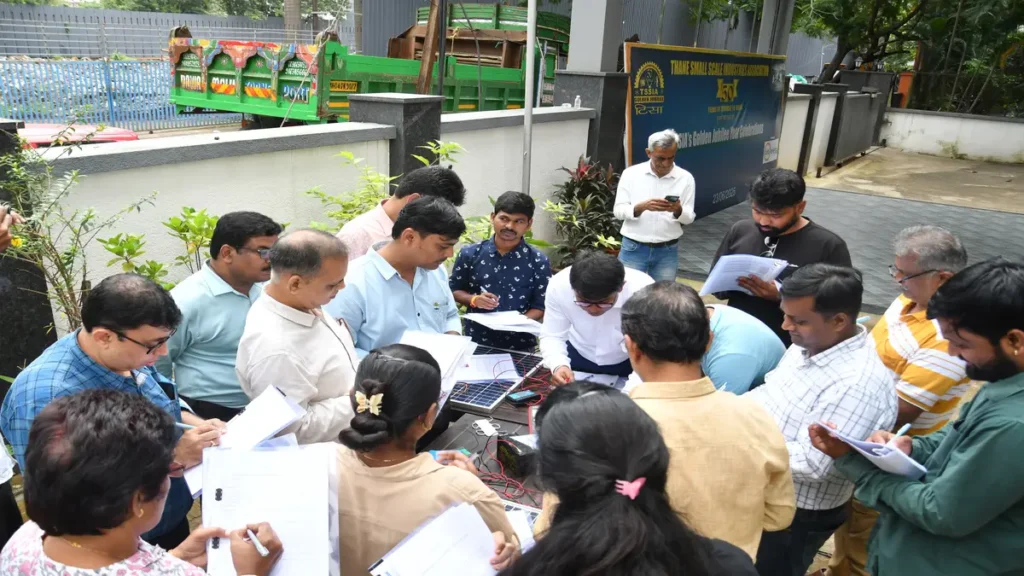
Theory without real-world application creates uncertainty. IISE's hybrid learning architecture integrates structured practical exercises, hardware inspections, and live field simulations.
Applied Practical Exposure Includes:
- Component Identification: Physical inspection of Mono-PERC, TOPCon, and Bifacial modules, microinverters, string inverters, DC disconnects, and copper/aluminum earthing electrodes.
- Site Survey Simulations: Conducting roof compass orientation, tilt angle measurements using inclinometers, and 3D shadow mapping of obstruction profiles.
- Electrical System Sizing: Real load calculation exercises from client electricity bills to determine optimal kW capacity, string configuration, and BoM.
- Assembly & Mounting: Understanding aluminum rail clamping, rail splices, L-feet anchors, and torque limits for sheet metal and concrete flat roofs.
- Inverter & Battery Wiring: Practical crimping of MC4 connectors, string combiner box wiring, inverter terminal hookup, and battery rack interconnects.
- Pre-Commissioning Testing: Multimeter testing for Voc and Isc, insulation resistance (Megger) checks, and fall-of-potential earthing pit resistance tests.
- Troubleshooting Case Studies: Analyzing real failure modes — earth fault 318, inverter grid-voltage out of range, shading hot-spots, and blown DC string fuses.
10-Step Solar Business Startup Roadmap
A systematic, battle-tested roadmap taking participants from foundational market analysis to closing contracts and building recurring O&M revenues.
Step 1: Understand Market Demand
Study regional electricity tariff structures, local DISCOM net metering policies, and consumer willingness to switch to solar power in your target operational area.
Step 2: Identify Target Customer Segment
Determine your initial focus — high-volume residential rooftops (PM Surya Ghar), high-margin commercial/institutional installations, or agricultural pump solutions.
Step 3: Select Your Business Model
Choose between asset-light design consultancy, turnkey EPC contracting, equipment dealership, or post-installation O&M service operations based on your capital capability.
Step 4: Develop Core Technical Competence
Complete IISE's rigorous training in system sizing, shadow analysis, string design, BoM preparation, and electrical safety standards to eliminate costly field engineering mistakes.
Step 5: Identify Equipment Suppliers
Establish direct relationships with Tier-1 module distributors, inverter OEMs, structure fabricators, and balance-of-system vendors to secure favorable pricing and credit terms.
Step 6: Business Registration & Compliance
Complete entity incorporation (Pvt Ltd/LLP), obtain GST registration, Udyam MSME certificate, vendor empannelment on state rooftop portals, and electrical contractor licensing.
Step 7: Formulate Costing & Pricing Architecture
Build detailed per-watt costing sheets including hardware, transport, labor, civil foundation, statutory approval fees, and gross margins to maintain healthy cash flow.
Step 8: Build Inbound Marketing & Sales Systems
Set up localized digital marketing, customer testimonial videos, Google Business profiles, and consultative sales presentation decks that clearly demonstrate customer ROI.
Step 9: Qualify Leads & Present Proposals
Perform on-site surveys, verify electricity bills, design tailored PV solutions, present payback projections, assist with rooftop solar loan financing, and secure signed contracts.
Step 10: Execute, Commission & Secure O&M
Execute quality-controlled installation, manage DISCOM net meter synchronization, deliver customer orientation, and enroll the client into a multi-year Annual Maintenance Contract (AMC).
Business & Financial Skills Developed
Technical proficiency alone does not guarantee business profitability. The program develops the core commercial, financial, and operational skills required to launch and sustain a solar enterprise.
Project Costing & BoM
Master per-watt system costing models covering Tier-1 solar modules, inverters, DC cabling, structural mounting, civil works, logistics, and labor overheads.
Financial Modeling & ROI
Calculate simple payback periods, Internal Rate of Return (IRR), Net Present Value (NPV), and Levelized Cost of Electricity (LCOE) to demonstrate clear savings to clients.
DPR Preparation
Learn to author bankable Detailed Project Reports (DPR) with technical specifications, generation forecasts, and financial sensitivity tables for debt and subsidy financing.
Vendor Negotiation & Credit
Develop supplier sourcing acumen — negotiating credit periods, securing OEM warranty back-to-backs, and managing distributor inventory cycles to protect working capital.
Consultative Client Proposals
Prepare compelling commercial proposals with 3D layout visuals, bill-savings projections, equipment datasheets, and structured payment milestones.
O&M Service Contracts
Structure multi-year Annual Maintenance Contracts (AMC) with service level agreements (SLAs), module cleaning schedules, and thermography testing to generate recurring income.
Career & Entrepreneurship Pathways
Graduates possess the rare dual competency of solar engineering knowledge and commercial execution capability — unlocking distinct opportunities across professional employment and independent business ownership.
Employment-Oriented Roles
For professionals seeking high-impact, salaried roles within established renewable energy developers, EPC enterprises, and equipment manufacturers:
Entrepreneurial Opportunities
For ambitious founders, electrical contractors, and business owners building independent clean energy commercial operations:
Hybrid Learning Methodology
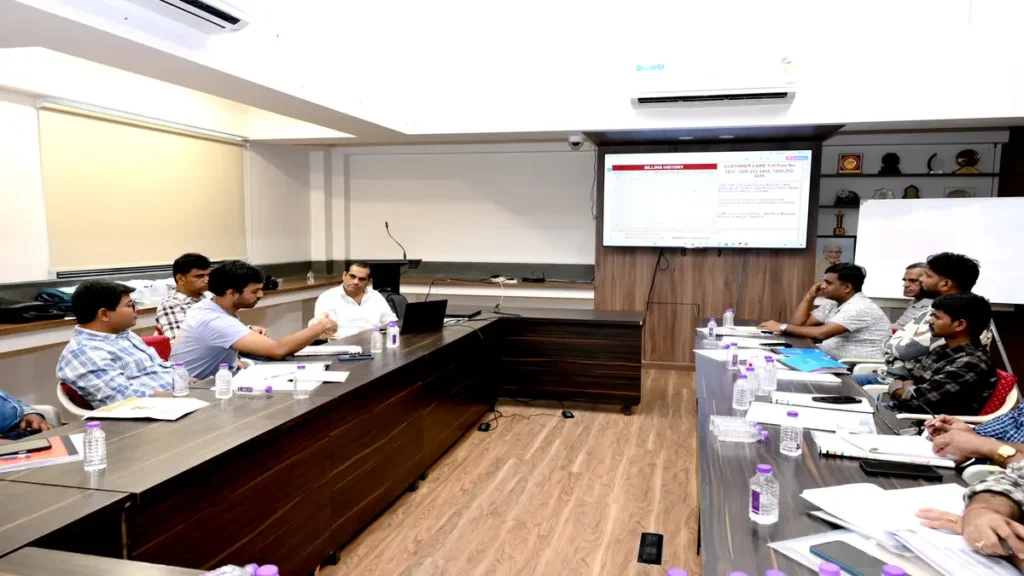
Designed for working professionals, entrepreneurs, and students — combining live interactive online instruction with guided self-paced resources, hands-on practical sessions, and real-world case studies.
1. Live Online Classes
Interactive sessions with veteran renewable energy faculty covering engineering theory, system design, software simulations, and business strategy.
2. Guided Resources
Curated digital course materials, design reference manuals, calculation spreadsheets, Single Line Diagram templates, and recorded lecture archives.
3. Practical Exposure
Structured physical training covering component identification, mounting structure assembly, wiring crimping, safety equipment, and electrical testing.
4. Case Studies & Capstone
Real Indian rooftop and ground-mounted project case studies, client proposal drafting exercises, and a comprehensive end-of-course capstone submission.
Capstone Project & Assessment Framework
Participants consolidate their 6-month learning by completing an integrated Capstone Project under faculty mentorship — proving their ability to design, cost, and plan a real-world solar installation or business venture.
Choose from 6 Specialized Capstone Tracks:
Perform complete site assessment, 5 kW solar array design, shadow mapping, BoM costing, and PM Surya Ghar client quote with payback timeline.
Conduct technical-economic feasibility for a 100 kW industrial factory shed, including load profiling, SLD, tariff savings, and net metering filing.
Develop a comprehensive operational roadmap for launching an EPC startup — vendor matrix, manpower plan, marketing funnel, and 3-year cash flow.
Prepare a bankable Detailed Project Report for a commercial rooftop plant — calculating LCOE, IRR, sensitivity tables, and debt service coverage.
Design a hybrid solar-plus-LiFePO4 storage system for a commercial healthcare facility to displace diesel generator fuel consumption and enhance uptime.
Author standard operating procedures (SOPs) for site erection safety, pre-commissioning testing checklists, and 5-year AMC preventative maintenance.
Eligibility & Admission Process
A transparent, structured admission workflow designed to evaluate applicant motivation, educational prerequisites, and alignment with India's solar industry opportunities.
Eligibility Criteria
The program is open to candidates with a minimum qualification of 10+2 (Higher Secondary) and above across any recognized educational board or discipline:
6-Step Admission Workflow
Professional Solar Entrepreneurship Training from IISE + CERT
Upon successful completion of the 6-month curriculum, continuous practical assignments, capstone project, and final assessment, participants are awarded the prestigious Joint Certificate in Solar Entrepreneurship Development issued by:
Indian Institute of Solar Energy (IISE)
& Centre for Energy Research and Training (CERT)
Course Fee & Admission Guidelines
Transparent admissions process via IISE's approved digital registration gateway. Enrolment is conducted on a merit-cum-eligibility basis for each upcoming hybrid cohort.
Course fees and batch schedules are confirmed directly by the IISE Admissions Office based on cohort availability, practical training batch allocations, and candidate eligibility.
What Your Enrolment Includes:

About the Indian Institute of Solar Energy
The Indian Institute of Solar Energy (IISE), operating as a dedicated educational unit under CERMS India Foundation, is committed to advancing professional training, practical engineering skills, and entrepreneurial capacity in India's clean energy sector.
In collaboration with the Centre for Energy Research and Training (CERT), IISE develops specialized training programs designed to bridge the gap between academic theory and real-world industrial practice — covering solar photovoltaics, battery energy storage systems (BESS), and clean mobility infrastructure.
Frequently Asked Questions
Clear, transparent answers regarding the Solar Entrepreneurship Development Program, curriculum, admissions, practical training, and certification.
Related Renewable Energy Programs at IISE
Complement your solar entrepreneurship training with IISE's verified technical certifications and engineering programs.
Solar Off-Grid Design & Installation
Specialized engineering course on standalone photovoltaic systems, battery bank calculations, charge controllers, and off-grid project deployment.
View Course Details →Solar Engineer Certificate Course
Technical engineering certification focusing on system design, AutoCAD layouts, PVSyst generation modeling, and electrical compliance.
View Course Details →PG Diploma in Solar Technology
Comprehensive post-graduate diploma covering utility solar engineering, MW-scale plant architecture, and renewable project management.
View Course Details →B.Voc in Solar Technology
UGC-recognized 3-year Bachelor of Vocation program offering structured vocational education with multiple exit points (Diploma/Adv Diploma/Degree).
View Course Details →Advance EV Design Engineering
Professional training in electric vehicle powertrain engineering, motor sizing, battery pack engineering, and vehicle dynamics.
View Course Details →Battery Systems Courses in India
In-depth technical programs covering Li-ion cell chemistry, battery pack assembly, thermal management, BMS design, and BESS applications.
View Course Details →Ready to Build Your Future in India's Solar Energy Industry?
Develop the technical engineering knowledge, practical hands-on understanding, and business planning skills required to establish or expand your venture in the renewable energy sector.
Admissions & Course Enquiry Desk
Speak directly with IISE's academic counsellors regarding batch availability, syllabus questions, practical workshop locations, and admission formalities.
Admissions Hotline
+91 8850902306