Best Solar Energy Courses in Mumbai: Complete 2026 Guide
Navigating solar energy training in the Mumbai Metropolitan Region requires clarity on qualifications, practical exposure, and real-world software skills. Whether you are an engineering graduate targeting solar PV system design, an ITI technician building installation competence, or an entrepreneur planning rooftop EPC projects, this guide provides a verified, objective comparison of technical curriculum, eligibility requirements, delivery modes, and career pathways in Maharashtra.

IISE Technical Training Approach
The Indian Institute of Solar Energy (IISE) structures training around engineering rigor: theoretical live sessions for system fundamentals, followed by software simulation modules and practical contact workshops on live photovoltaic arrays, string inverters, and protection systems.
Quick Answer: Which Solar Course Should You Choose in Mumbai?
Direct Summary: There is no single “best” solar course for every student. The right solar training program in Mumbai depends strictly on your existing educational qualification, your technical experience, and your specific career objective:
Fundamentals in Solar PV
Ideal for beginners, sales executives, and non-technical professionals seeking a solid overview of solar irradiance, module types, net metering principles, and market basics.
Outcome: Solar Sales & Project CoordinationSolar Technician / Workshop
Designed for ITI electricians, technicians, and wiremen focusing on physical mounting, DC cabling, inverter termination, earth resistance testing, and maintenance drills.
Outcome: Solar Installer & Site TechnicianSolar Engineer Certificate
Tailored for diploma holders and engineers needing comprehensive coverage of technical sizing, shadow analysis, string calculation, single-line diagrams, and EPC workflows.
Outcome: Solar Site Engineer & Design AssociatePG Diploma in Solar Technology
Flagship UGC-affiliated qualification for B.E. / B.Tech / B.Sc graduates combining advanced PV simulation, MW-scale utility engineering, project management, and software labs.
Outcome: Solar PV Design Engineer & Project ManagerB.Voc in Solar Technology
Three-year UGC-recognized degree program for Class 12 / HSC science students seeking formal university credentials combined with multiple exit points (Diploma/Advanced Diploma/Degree).
Outcome: Technical Consultant & Renewable EngineerSolar Entrepreneurship Program
Created for contractors, business owners, and engineers launching rooftop solar EPC businesses. Covers DISCOM liaisoning, PM Surya Ghar subsidies, bidding, and supplier procurement.
Outcome: Solar EPC Contractor & Business OwnerImportant Distinctions: Short-term certificate workshops focus on practical skill acquisition and software tools, whereas 1-Year Diploma, PG Diploma, and 3-Year B.Voc programs provide formal academic and vocational credentials awarded through university partnerships.
Explore This Guide: Complete Table of Contents
Why Consider Solar Energy Training in Mumbai & Maharashtra?
The renewable energy ecosystem in Maharashtra is undergoing an unprecedented expansion driven by residential rooftop adoption under the PM Surya Ghar: Muft Bijli Yojana, heavy Commercial & Industrial (C&I) installations across industrial corridors, and large utility-scale projects throughout central and western Maharashtra.
However, the transition from conventional electrical work or generic engineering to solar PV requires specialized technical expertise. Companies operating in the Mumbai Metropolitan Region (MMR)—including Thane, Navi Mumbai, and surrounding industrial belts—frequently report that general engineering graduates lack specific competence in photovoltaic electrical calculations, DC distribution, high-voltage safety, and energy yield simulation software.
🏠 Rooftop & Residential Growth
With state DISCOM net-metering regulations and central capital subsidies, residential housing societies across Mumbai, Thane, and Navi Mumbai are transitioning to rooftop PV systems, driving sustained demand for licensed installers and survey technicians.
🏭 Commercial & Industrial (C&I) EPC
Manufacturing hubs in Bhiwandi, Taloja, Rabale, and Chakan demand captive solar power plants ranging from 100 kW to multiple megawatts to hedge rising commercial grid tariffs, requiring skilled PV design engineers and site managers.
⚡ High-Voltage Electrical Safety
Solar arrays generate continuous Direct Current (DC) at up to 1,500V. Proper selection of DC circuit breakers, surge protection devices (SPDs), correct earthing pits, and arc-fault prevention are critical safety competencies taught in professional training.
💻 Bankable Simulation Software
Financial institutions and institutional project developers in Mumbai do not fund solar projects based on rough estimations. They require bankable PVsyst simulation yield reports with near-shading 3D calculations and loss diagrams.
Employability Impact: A structured solar education provides direct technical differentiators: candidates who can read single-line diagrams (SLDs), configure string inverters, run shadow simulations, and manage net-metering paperwork integrate immediately into project delivery teams with significantly shorter onboarding periods.
How to Choose the Right Solar Course for Your Career Profile
Solar educational programs vary dramatically in technical depth, mathematical rigor, and career orientation. Enrolling in a program misaligned with your technical foundation leads to frustration. Use the decision pathways below to identify the exact qualification best suited to your background:
1. Class 12 / HSC (Science) Students
Students completing high school science should not pursue standalone short certificates if they lack higher degrees. A university-recognized Bachelor of Vocation (B.Voc) provides formal graduation credentials while embedding industry internships and hands-on PV design skills.
2. ITI Students, Wiremen & Technicians
Electricians and wiremen already understand basic AC circuits. Your focus should be mastering DC solar specifics: MC4 crimping, string voltage verification, DC combiner box wiring, inverter mounting, chemical earthing, and fault diagnosis.
3. Diploma Holders (Electrical, Mechanical, Civil)
Polytechnic diploma holders have solid applied foundation. Transitioning to solar requires bridging technical sizing formulas, single-line diagrams (SLD), site survey shading measurements, and solar CAD layout generation.
4. Engineering Graduates (B.E. / B.Tech)
Engineers targeting design offices and EPC project engineering require rigorous training in PVsyst simulation, loss tree analysis, financial modeling (IRR, LCOE, payback), and utility-scale substation interconnection standards.
5. Working Professionals Transitioning to CleanTech
Professionals from thermal power, automotive, oil & gas, or civil construction need schedule flexibility. Look for programs offering live interactive evening sessions combined with weekend practical contact workshops in Mumbai/Maharashtra.
6. Solar Entrepreneurs & EPC Contractors
Entrepreneurs need more than circuit theory. You need project costing, supplier procurement pipelines, rooftop net-metering liaisoning with MSEDCL/Tata Power/Adani, and PM Surya Ghar subsidy application execution.
Comparison Table: Best Solar Energy Courses in Mumbai (2026)
The following table compiles verified details across Indian Institute of Solar Energy (IISE) technical training programs. All duration figures, eligibility prerequisites, and delivery modes reflect official institutional specifications:
| Program / Category | Typical Learner | Verified Eligibility | Duration | Core Learning Focus | Practical Training Format | Career Direction | Official Link |
|---|---|---|---|---|---|---|---|
|
PG Diploma in Solar Technology UGC-Affiliated | Engineering & Science Graduates | B.E. / B.Tech / B.Sc / M.Sc | 1 Year | Advanced PV engineering, MW-scale utility design, PVsyst simulations, BOS engineering | Hands-on contact workshops, software simulation labs, project DPR preparation | Solar PV Design Engineer, Solar Project Manager | View Course |
|
Diploma in Solar Technology UGC-Affiliated | Polytechnic diploma holders & 12th pass | 10th / 12th / ITI / Diploma | 1 Year | Photovoltaic technology, rooftop installation, inverter wiring, Helioscope & PVsyst basics | Field contact program, array assembly, testing drills, tool handling | Site Engineer, Solar Technician Supervisor | View Course |
|
Solar Engineer Certificate Course Technical Certificate | Engineers, diploma holders, site supervisors | Open / Technical Diploma / Degree | 6 Months | System sizing, string voltage calculations, shadow analysis, single-line diagram (SLD) | Online live learning + optional practical contact workshop session | Solar Site Engineer, Design Associate | View Course |
|
B.Voc in Solar Technology 3-Year UGC Degree | Class 12 / HSC science graduates | 10+2 Science (Physics / Maths / Chem) | 3 Years | Complete vocational university degree, electronics, thermodynamics, advanced solar PV | Continuous semester laboratory training, industry apprenticeships, live site visits | Renewable Energy Engineer, Technical Specialist | View Course |
|
Solar Practical Workshop Hands-On Field Lab | Technicians, electricians, site engineers | Open (Technical interest) | Short Intensive Lab | Physical array assembly, inverter termination, earth resistance testing, IV curve tracing | 100% in-person practical lab in Maharashtra on operational solar equipment | Solar Installer, Commissioning Technician | View Course |
|
Solar Entrepreneurship Program Commercial & Business | Contractors, entrepreneurs, business owners | Graduates / Business background | Modular / Contact | Solar EPC business setup, PM Surya Ghar subsidies, DISCOM liaisoning, bidding & procurement | Business case simulations, project bidding workshops, vendor contact networks | Solar EPC Contractor, Solar Business Founder | View Course |
*Note: Duration refers to the total academic curriculum length. Practical workshop sessions run as intensive contact modules within or accompanying the formal programs.
Detailed Official Solar Courses at IISE
Each course below is officially offered by the Indian Institute of Solar Energy with structured technical modules, professional faculty, and dedicated certification:

PG Diploma in Solar Technology
Comprehensive post-graduate engineering program designed to transform technical graduates into senior solar design engineers and EPC project leads capable of handling multi-megawatt systems.

Solar Engineer Certificate Course
Fast-track technical engineering certification focused on core solar system sizing, string voltage matching, DC protection switchgear, shadow analysis, and site survey execution.

Diploma in Solar Technology
Comprehensive one-year technical diploma providing balanced exposure to solar PV fundamentals, installation standards, inverter integration, testing, and operations management.
B.Voc in Solar Technology
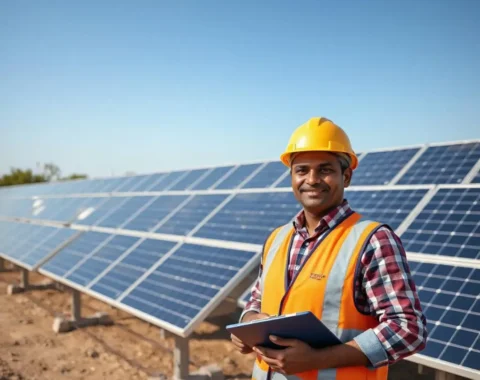
Three-year vocational graduation degree aligned with the National Skills Qualifications Framework (NSQF). Features multiple exit points with formal university degrees.

Solar Practical Workshop
Dedicated, hands-on field workshop held on operational photovoltaic arrays. Students work directly with real modules, inverters, clamp meters, Meggers, and chemical earthing systems.

Solar Entrepreneurship Program
Tailored for contractors, engineers, and entrepreneurs launching residential and commercial solar EPC operations. Focuses on DISCOM net metering, PM Surya Ghar, quotation modeling, and procurement.
Hands-On Practical Training: The Foundation of Field Competence
Theoretical knowledge alone cannot prepare an engineer or technician for the physical realities of solar photovoltaic installations. Field engineering demands real-world competence in dealing with high DC voltages, structural mechanical loads, wind uplift calculations, and rigorous electrical safety protocols.
At the Indian Institute of Solar Energy, practical training takes place during dedicated contact programs where students work directly with operational rooftop and ground-mount photovoltaic systems:

Safety-First Engineering Standards
Direct current (DC) from solar arrays does not have a zero-crossing like alternating current (AC), meaning DC electrical arcs do not extinguish easily. Training emphasizes Personal Protective Equipment (PPE), arc-flash prevention, lock-out/tag-out (LOTO) protocols, and safe working at heights on industrial roofs.
Solar Design & Engineering Software Mastery Hub
In modern solar engineering, software competence is non-negotiable. Leading EPC contractors and design firms in Mumbai require engineers who can accurately model energy yields, create bankable documentation, and draft millimeter-precise single-line diagrams. Below is the software toolstack taught across IISE engineering programs:
PVsyst Simulation
The global gold-standard software for bankable energy yield predictions. Students learn 3D near-shading construction, meteorological data importation (Meteonorm/NASA), albedo modeling, and loss tree interpretation (IAM, ohmic, soiling, thermal, inverter clipping).
HelioScope
Widely used for commercial and rooftop layout drafting. Enables rapid roof polygon tracing, automated module orientation, obstacle keep-out zones, automated stringing, and instant single-line diagram (SLD) generation directly in the web browser.
AutoCAD (Solar Electrical & Civil)
The universal CAD platform used by EPC engineering offices. Focuses on drafting accurate Single-Line Diagrams (SLDs), DC & AC conduit routing layouts, module mounting structural drawings, and earthing grid layout plans.
SketchUp 3D & Curic Sun
Essential for residential client presentations and aesthetic building-integrated photovoltaic (BIPV) design. Generates photorealistic 3D visual models, shadow animation timelapses across summer/winter solstices, and client-ready proposals.
Eligibility, Recognition & Admission Evaluation Guidelines
Before enrolling in any solar training program, prospective learners must understand how academic qualifications, institutional recognitions, and employer acceptance interact. Selecting the right program requires evaluating academic prerequisites, mode of study, and formal certification status:
1. Academic Prerequisites
Programs enforce strict entry thresholds based on mathematical and technical rigor:
- PG Diploma: Requires a completed bachelor’s degree in engineering (B.E. / B.Tech) or science (B.Sc / M.Sc).
- Diploma: Requires Class 10th/12th or ITI/Polytechnic diploma.
- B.Voc: Requires Class 12th / HSC (Science stream).
- Certificates / Workshops: Open to technical students, electricians, and working professionals.
2. Understanding Qualifications
It is critical to distinguish academic degrees from skill certificates:
- UGC-Affiliated Programs: The 1-Year PG Diploma, Diploma, and 3-Year B.Voc are awarded through recognized university partnerships, providing formal academic standing.
- Autonomous Certificates: Short-term workshops award IISE institutional skill certifications, valued by private solar EPC employers for demonstrated practical proficiency.
3. Delivery Mode & Contact Hours
How training is delivered directly impacts working learners:
- Live Interactive Online: Technical lectures and software simulations held on scheduled evenings or weekends.
- In-Person Contact Sessions: Scheduled practical lab blocks at IISE facilities in Maharashtra where hands-on array work is conducted.
- Recorded Archives: Access provided to session recordings for working professional revision.
4. Project & Assessment Criteria
Graduation requires demonstrating applied competence:
- Detailed Project Report (DPR): Submission of a complete solar project design including PVsyst simulation, BOM, SLD, and financial yield analysis.
- Practical Assessment: Tool handling, multimeter testing, inverter connection drills, and theoretical examinations.
Course Fees & Value Comparison: Making an Informed Investment
When evaluating solar training programs in Mumbai, comparing tuition fees in isolation is misleading. The true value lies in whether the curriculum includes bankable simulation software, physical hands-on hardware training, and verifiable qualification credentials:
Solar Engineer Certificate
Includes 6 months of comprehensive solar system sizing, string design, single-line diagram generation, and BOS specification modules.
B.Voc in Solar Technology
Three-year UGC-recognized degree program with annual fee structure, semester laboratory modules, and industry apprenticeships.
Solar Entrepreneurship
Commercial execution program covering PM Surya Ghar subsidy processing, DISCOM liaisoning, bidding financial models, and vendor contacts.
PG Diploma & 1-Yr Diploma
Full 1-year UGC-affiliated programs. Fees vary between online-first and intensive in-person contact tracks. Inquire directly with admissions for current batch schedule.
Key Value Factors to Compare Across Training Providers
Career Opportunities After Solar Training: 9 Key Industry Roles
The solar photovoltaic sector features diverse engineering, field execution, and project leadership roles. Below are 9 primary career profiles accessible through structured solar education:
1. Solar Technician
Responsibilities: Mounting solar panels on rooftops/structures, crimping MC4 connectors, pulling DC cables, connecting combiner boxes, and assisting inverter installation.
Core Skills: Electrical safety, conduit bending, basic circuit testing, working at heights.
2. Solar Installation Professional
Responsibilities: Managing mechanical alignment of module mounting structures (MMS), ensuring waterproofing integrity on metal/RCC roofs, and verifying torque specifications.
Core Skills: Structural anchoring, roof penetration sealing, array layout adherence.
3. Solar PV Design Engineer
Responsibilities: Designing rooftop and ground-mount PV plants in PVsyst and HelioScope, preparing detailed Single-Line Diagrams (SLD), calculating string voltages and cable drops.
Core Skills: PVsyst, AutoCAD, electrical sizing, shading simulation, loss tree analysis.
4. Solar Site Engineer
Responsibilities: Supervising on-site installation, coordinating civil and electrical contractors, managing material inventory, and verifying compliance with drawings.
Core Skills: Drawing interpretation, contractor oversight, quality control, safety protocols.
5. Commissioning Engineer
Responsibilities: Pre-energization checks, Megger testing, IV curve measurements, inverter parameter configuration, grid synchronization, and DISCOM inspection coordination.
Core Skills: Protection relays, grid codes, inverter firmware, electrical testing tools.
6. Operations & Maintenance (O&M) Technician
Responsibilities: Monitoring daily Generation Performance Ratio (PR), coordinating module washing cycles, performing thermal drone/handheld IR inspections, and repairing string faults.
Core Skills: Thermography, multimeter diagnostics, inverter fault codes, SCADA monitoring.
7. Solar Project Engineer
Responsibilities: Bridging office engineering with field construction, tracking milestone schedules (Gantt charts), managing vendor BOM procurement, and resolving technical site queries.
Core Skills: Project management tools, vendor coordination, balance of system procurement.
8. Solar Project Manager
Responsibilities: Complete ownership of EPC contract delivery, client stakeholder communication, budget adherence, regulatory CEIG approvals, and formal project COD handover.
Core Skills: P&L management, EPC contracts, stakeholder management, regulatory approvals.
9. Solar EPC Entrepreneur
Responsibilities: Sourcing residential and commercial rooftop solar projects, managing PM Surya Ghar portal registrations, supplier procurement, local DISCOM net metering, and installation crews.
Core Skills: Business development, quotation financial modeling, vendor networks.
Solar Industry Salary Expectations in India (2026 Benchmarks)
Compensation in the renewable energy sector in Mumbai and Maharashtra varies significantly depending on software design capabilities, electrical licensing, field troubleshooting competence, and project delivery scale. Below are realistic, evidence-based compensation ranges:
| Career Experience Tier | Typical Job Roles | Annual Salary Range (Gross CTC) | Key Compensation Differentiators |
|---|---|---|---|
| Entry-Level (0–2 Years) | Solar Technician, Junior Site Supervisor, Graduate Trainee Engineer | ₹2.5 – 4.5 LPA | Hands-on tool handling, multimeter testing, string cabling, electrical wiring fundamentals. |
| Specialized Design (1–3 Years) | Solar PV Design Engineer, Solar CAD Specialist, Yield Analyst | ₹4.0 – 7.5 LPA | Bankable PVsyst yield simulation, loss tree modeling, SLD drafting, shading mitigation. |
| Mid-Level (3–5 Years) | Solar Site Engineer, Commissioning Engineer, O&M Supervisor | ₹5.5 – 9.5 LPA | Independent substation commissioning, inverter synchronization, contractor management. |
| Senior Project Roles (5–8+ Years) | Senior Solar Project Manager, EPC Lead, Head of Engineering | ₹9.0 – 16.0+ LPA | MW-scale project delivery, DISCOM/CEIG approvals, P&L budget ownership, contract negotiation. |
Data Context & Caveats: Figures reflect gross annual CTC across Mumbai, Thane, Navi Mumbai, and Pune industrial corridors. Salaries depend on candidate academic degree, prior electrical experience, software proficiency, and whether the employer is a local contractor, regional EPC firm, or multinational developer.
Why Choose IISE for Your Solar Career in Mumbai?
The Indian Institute of Solar Energy (IISE) was founded with a clear technical mission: to provide industry-aligned engineering and vocational education that bridges academic theory with field execution realities:
Industry-Oriented Curriculum
Courses are regularly updated to reflect real-world solar technology: TOPCon cells, bifacial modules, 1500V DC architectures, and latest MNRE subsidy guidelines.
Flexible Hybrid Learning
Enables working professionals and college students to master theoretical principles and software tools live online, followed by weekend practical contact sessions.
Dedicated Field Workshops
Students perform real physical drills: multimeter Voc/Isc validation, Megger insulation tests, string inverter connections, and chemical earthing installation.
Experienced Technical Faculty
Training is delivered by practicing solar EPC engineers, design consultants, and energy auditors with decades of combined project execution experience.
Real Stories, Real Careers: Verified Student Alumni
"If you're serious about a solar career, join IISE. The course is job-oriented and covers both theory and practicals well. Totally worth the time and investment."
"I completed my PG Diploma and it really helped me grow in the industry. I got a promotion and now manage solar projects on my own. Highly recommended."
"I was thoroughly impressed by the deep practical knowledge of the trainers. I recommend others to join if they want real engineering knowledge about solar PV."
"Excellent hub for solar energy training. The focus on hands-on skill development is commendable. A strong launchpad for building a technical career."
The 6-Step Solar Engineering Learning Journey at IISE
A structured, competency-based progression ensures learners transition smoothly from basic electrical concepts to advanced PV system simulation and field project execution:
Evaluate & Select Program
Consult with IISE admissions counselors to map your prior educational qualification (10th/12th/ITI/B.E.) to the right curriculum track (Certificate, Diploma, PG Diploma, or B.Voc).
Master Fundamentals
Build rock-solid theoretical foundation in solar irradiance, photovoltaic cell physics, Mono PERC vs TOPCon technologies, DC electricity, and Balance of System (BOS) components.
Develop Software & Design
Perform mathematical string sizing, voltage drop calculations, and learn industry software tools: PVsyst yield simulation, HelioScope layouts, and AutoCAD Single-Line Diagrams.
Hands-On Field Contact
Attend practical workshops on live arrays: module mounting, MC4 connector crimping, string inverter termination, chemical earthing installation, and Megger insulation testing.
Capstone Project & DPR
Complete an end-to-end Detailed Project Report (DPR) for a simulated rooftop or MW-scale plant, compiling Bill of Materials (BOM), financial yields (IRR), and SLD schematics.
Industry Placement & EPC
Leverage IISE's alumni network and career cell for resume optimization, technical interview preparation, EPC recruitment drives, or launching your own solar installation venture.
Local Relevance for Mumbai, Navi Mumbai, Thane & Maharashtra
Learners in the Mumbai Metropolitan Region (MMR) and across Maharashtra face distinct logistical considerations when planning technical solar training:
📍 Practical Training Locations
While live theoretical lectures and design software tutorials are accessible online from home across Mumbai, Navi Mumbai, Thane, and Pune, hands-on practical lab modules are conducted at designated operational facilities in Maharashtra.
🕒 Schedule for Working Professionals
Working engineers from corporate offices in BKC, Lower Parel, Andheri, and Belapur attend evening and weekend live batches. Practical contact workshops are scheduled over dedicated weekend blocks to avoid work disruption.
🚆 Regional Commuter Logistics
Learners traveling from Pune, Nashik, or Western Maharashtra receive detailed batch itineraries, site travel coordinates, and accommodation guidance from IISE student support prior to workshop commencement.
⚡ DISCOM Net Metering Alignment
The curriculum specifically addresses Maharashtra DISCOM regulations—including MSEDCL (Mahavitaran), Tata Power Mumbai, and Adani Electricity net-metering interconnection procedures and Rooftop Solar Portal workflows.
8 Common Mistakes to Avoid When Choosing a Solar Energy Course
Prospective renewable energy students frequently make costly enrollment errors by prioritizing marketing promises over technical substance. Avoid these 8 critical pitfalls:
Frequently Asked Questions About Solar Courses in Mumbai
Find direct, factual answers to common queries regarding solar energy courses, eligibility, software tools, practical contact sessions, and career pathways in Maharashtra:
Your choice depends on your educational background: Engineering and science graduates should choose the 1-Year UGC-Affiliated PG Diploma in Solar Technology. Polytechnic diploma holders and site supervisors should select the Solar Engineer Certificate Course or 1-Year Diploma. Class 12 science students should enroll in the 3-Year B.Voc in Solar Technology. ITI electricians and wiremen should prioritize the Solar Practical Workshop.
For Class 12 (HSC) students with a science background (Physics, Chemistry, Mathematics), the UGC-recognized B.Voc in Solar Technology is ideal. It offers a 3-year graduation pathway with multiple exit points (Diploma after Year 1, Advanced Diploma after Year 2, and B.Voc Degree after Year 3) combined with vocational apprenticeships.
Yes. ITI electricians, wiremen, and fitters have strong hands-on electrical backgrounds. IISE’s Solar Practical Workshop and Diploma in Solar Technology are specifically structured to bridge AC electrical fundamentals with DC solar PV specifics, including MC4 crimping, string voltage checks, inverter termination, chemical earthing, and pre-commissioning testing.
Graduates with B.E. or B.Tech degrees in Electrical, Mechanical, Civil, or Electronics engineering should pursue the Post Graduate (PG) Diploma in Solar Technology. This 1-year UGC-affiliated program covers utility-scale PV engineering, balance of system (BOS) optimization, bankable PVsyst simulation yield modeling, and Detailed Project Report (DPR) preparation.
A solar technician course focuses on physical installation, tool handling, mechanical structure assembly, DC cabling, and routine maintenance drills. A solar engineer course delves deeper into mathematical sizing formulas, shadow analysis, string calculation, single-line diagram (SLD) electrical schematics, software simulation (PVsyst), and commercial project management.
Training durations vary by program level: Dedicated hands-on workshops run as intensive short contact blocks; technical certificate courses run for 3 to 6 months; comprehensive UGC-affiliated Diplomas and PG Diplomas span 1 academic year; and the vocational B.Voc degree takes 3 years.
Yes. While theoretical principles and software simulations can be learned online, practical contact programs are conducted on operational photovoltaic arrays at IISE facilities in Maharashtra. Students work directly with real modules, inverters, multimeter testers, Meggers, and chemical earthing systems.
Yes. IISE offers a hybrid learning model specifically suited for working professionals. Theoretical lectures and design software tutorials are held during interactive evening or weekend live online sessions, with recordings archived. Practical contact workshops are scheduled over dedicated weekend blocks.
The primary software tools utilized across the solar industry are PVsyst for bankable energy yield simulations and loss analysis, HelioScope for rapid commercial rooftop layouts, AutoCAD for precision electrical Single-Line Diagrams (SLD) and structural drawings, and SketchUp for 3D architectural rendering and shadow animations.
Eligibility requires a completed bachelor’s degree in Engineering (B.E. / B.Tech in Electrical, Mechanical, Civil, Electronics, or allied disciplines) or a graduation degree in Science (B.Sc / M.Sc with Physics or Mathematics).
Graduates pursue diverse roles including Solar PV Design Engineer, Solar Site Engineer, Commissioning Engineer, Operations & Maintenance (O&M) Technician, Solar Project Manager, Quality Assurance Specialist, and Independent Solar EPC Contractor.
Always verify whether the course includes hands-on physical labs or only slides, whether training on professional software (PVsyst/AutoCAD) is provided, the qualification-awarding body (autonomous certificate vs UGC-affiliated diploma), whether exam and lab fees are included upfront, and the authentic background of the faculty.
Formal degree and diploma programs (such as IISE’s PG Diploma, Diploma, and B.Voc) are affiliated with recognized universities under UGC frameworks. Autonomous certificates are issued by IISE as professional technical credentials and are valued across private EPC employers for demonstrated practical competence.
Yes. IISE maintains a dedicated career cell that assists students with technical resume drafting, capstone DPR portfolio presentation, interview preparation drills, and placement opportunities with solar EPC contractors and developers across Maharashtra and India.
You can connect directly with IISE admissions counselors via phone at +91-9819225503 or +91 8850902306, email info@indianinstituteofsolarenergy.com, book a counseling session online, or chat instantly via WhatsApp at +91 8850902306.
Related Solar Education & Career Resources
Explore official IISE course syllabi, curriculum breakdowns, and vocational engineering guides to accelerate your renewable energy career:
PG Diploma in Solar Technology
Review the full semester syllabus, utility-scale design modules, and UGC affiliation details.
Explore Course ➔Solar Engineer Certificate
Inspect curriculum covering system sizing, shadow analysis, string calculation, and SLD drafting.
Explore Course ➔Solar Practical Workshop
Check upcoming practical batch schedules in Maharashtra on operational solar arrays and test rigs.
Explore Workshop ➔IISE Official Course Directory
Browse all solar technology, electric vehicle (EV), energy auditing, and entrepreneurship programs.
Browse Directory ➔Find the Right Solar Course for Your Career in Mumbai
Have questions about course eligibility, upcoming batch schedules, or fee structures? Speak directly with an IISE renewable energy career counselor or submit your inquiry below:
Summary & Official Contact Information
Navigating Solar Energy Education in 2026: Prospective learners should ensure that their chosen program aligns with their career trajectory. Technical design engineering roles require bankable software modeling in PVsyst and AutoCAD alongside single-line electrical drafting. Field installation and commissioning roles require physical handling of operational modules, inverters, multimeter testers, and chemical earthing systems.
Official Institutional Information:
Institution: Indian Institute of Solar Energy (IISE)
Official Website: indianinstituteofsolarenergy.com
Admissions Helpline: +91-9819225503 / +91 8850902306
Official Email: info@indianinstituteofsolarenergy.com
Regional Reach: Mumbai Metropolitan Region, Thane, Navi Mumbai, Pune & Western Maharashtra
Best Solar Energy Courses in Mumbai 2026
Certificate, Diploma, PG Diploma & Solar Software Training Guide
Master Solar PV Design, Installation, and advanced software like PVsyst and Helioscope. Join India’s leading renewable energy institute and secure your future in a booming global industry.
3,000+
Students Placed
150+
Hiring Partners
ISO 9001:2015
Certified Institute
Why Solar Energy Is One of the Best Career Choices in 2026
India is charging ahead with one of the world’s most ambitious renewable energy programs. The solar sector has emerged as a powerhouse of professional growth.
#4
Ranked Globally
30%
YoY Market Growth
Government Initiatives
From the PM Surya Ghar: Muft Bijli Yojana to significant PLI schemes for solar manufacturing, the Indian government is providing massive subsidies and policy support, ensuring the industry remains a top priority for decades to come.
Future Market Demand
With corporate India committing to net-zero goals, there is an urgent need for certified solar PV designers and energy auditors. This demand translates into high-paying roles across residential, commercial, and utility-scale projects.

Find Your Path: Solar & EV Program Comparison
Choose the program that aligns with your educational background and career aspirations.
Certificate Programs
Features
- ● Short-term training
- ● Skill-based learning
- ● Entry-level opportunities
Eligibility
10th/12th/ITI
Duration
3–6 Months
Learning Outcomes
Foundation in PV installation and basic design.
Career Opportunities
Solar Technician, Installer
Diploma Programs
Features
- ● Technical specialization
- ● Practical exposure
- ● Industry readiness
Eligibility
10th/12th/ITI/Diploma
Duration
1 Year
Learning Outcomes
Intermediate design & operations management.
Career Opportunities
Site Engineer, Design Associate
PG Diploma Programs
Features
- ● Advanced training
- ● Project-based learning
- ● Management exposure
Eligibility
Graduate/B.E./B.Tech
Duration
1 Year
Learning Outcomes
Advanced PV engineering and large-scale management.
Career Opportunities
Project Manager, Senior Engineer
B.Voc Programs
Features
- ● Degree pathway
- ● Skill-based university education
- ● Industry integration
Eligibility
12th Pass
Duration
3 Years
Learning Outcomes
Comprehensive degree-level technical expertise.
Career Opportunities
Technical Consultant, R&D Specialist
Master Industry-Standard Solar Software
Hands-on training on the tools used by leading global firms.
Course Guide
Pillar Content Navigation
☀ Why Solar Energy?🎓 Best Solar Courses💻 Software Training📈 Career & Salary❓ FAQs Download Brochure ↓Compare Best Solar Energy Courses in Mumbai
Choose the right path for your career goals, from intensive short-term certificates to comprehensive post-graduate diplomas.
Advanced Certificate in Solar PV Design
Focuses entirely on core technical skills: site survey, shadow analysis, array layout, and financial modeling.
View Details →Post Graduate Diploma in Solar Engineering
Our flagship program combining advanced PV design, utility-scale project management, and comprehensive software training.
View Details →Solar Software Mastery Hub
Mastering industry-standard software is non-negotiable for modern solar engineers. Hands-on training on the tools companies demand.

🔲PVsyst Training
Benefits & Applications
- ●World-standard for yield prediction
- ●3D shading analysis
- ●Bankable project reports
Career Impact
Senior Solar Engineer, Project Analyst

🗂Helioscope Training
Benefits & Applications
- ●Rapid rooftop design
- ●Automated single-line diagrams
- ●Commercial scale layout
Career Impact
Solar Design Engineer, Sales Engineer

✏️AutoCAD for Solar Design
Benefits & Applications
- ●Precision electrical schematics
- ●Civil site plans
- ●Industry-standard documentation
Career Impact
Solar CAD Technician, Engineering Lead

🔄SketchUp for Solar
Benefits & Applications
- ●High-fidelity 3D visualization
- ●Client-ready proposals
- ●Shadow animation
Career Impact
3D Visualization Expert, Business Development
Career Opportunities After Solar Training
The solar industry offers diverse and rewarding career paths with competitive salaries that grow rapidly with experience.
| Job Role | Entry Salary | Experienced Salary |
|---|---|---|
| Solar Engineer | ₹3–6 LPA | ₹8–15 LPA |
| Solar Design Engineer | ₹3–5 LPA | ₹8–12 LPA |
| Solar Technician | ₹2–4 LPA | ₹5–8 LPA |
| Solar Project Manager | ₹6–10 LPA | ₹12–20 LPA |
| Solar Consultant | ₹4–8 LPA | ₹10–18 LPA |
Why 3,000+ Students Chose IISE for Their Solar Career
Industry-Oriented Curriculum
Master skills that top solar companies actually demand.
Hybrid Learning
Flexible classroom and online modules for students and working professionals.
Placement Assistance
Dedicated career cell with 150+ hiring partners and 3,000+ alumni placed.
Internship Support
Gain hands-on experience through live projects at operational solar plants.
Expert Faculty
Learn from industry veterans with decades of real-world solar engineering experience.
Industry Projects
Apply your learning to utility-scale project simulations and actual site visits.
Real Stories, Real Careers
Join over 3,000 IISE graduates who are now leading the renewable energy revolution across India and beyond.

Vrishabh Vichare
Project Manager
"If you're serious about a solar career, join IISE. The course is job-oriented and covers both theory and practicals well. Totally worth the time and money."

Vardharaj Malaji
Solar Project Manager
"I did my PG Diploma and it really helped me grow. I got a promotion and now manage solar projects on my own. Highly recommended."

Swapnil Parshurami
Solar Design Engineer
"I am impressed by the deep and vast knowledge of trainers. I suggest others to join if they want real practical knowledge about solar."

Prince Abraham
Solar Technician
"Excellent hub for solar energy training. The focus on innovation and skill development is commendable. Perfect for building a career."
Frequently Asked Questions
Helping you make informed decisions for your future in renewable energy.
IISE offers the most comprehensive solar energy courses in Mumbai for 2026. Our UGC-affiliated programs are designed to meet the latest industry standards, combining technical theory with deep practical expertise.
Yes, certifications from IISE are highly regarded. Since our programs are UGC-affiliated, they hold weight for government sector opportunities and technical roles in public undertakings.
Absolutely. Our curriculum and certificates are backed by UGC and university partnerships, ensuring global recognition and high academic standards.
A solar engineer in India typically starts between ₹3–6 LPA. With experience and specialized software skills, senior engineers and project managers can earn anywhere from ₹8 LPA to over ₹20 LPA.
Our software hub provides hands-on training on industry-standard tools including PVsyst for simulation, Helioscope for cloud-based design, and AutoCAD for technical drafting.
Yes, IISE has a dedicated placement cell. We have placed over 3,000 students and maintain active hiring partnerships with 150+ leading solar companies across India.
The Post Graduate Diploma is ideal for Engineering graduates (any stream) or Science graduates (B.Sc/M.Sc) who wish to specialize in renewable energy systems.
We offer multiple options: short-term 3-month intensive certificates for quick skill-upgrading and long-term 1-year PG Diplomas for comprehensive career transitions.
We offer a hybrid learning model. Theoretical concepts can be mastered online, while practical training, site visits, and software labs are conducted in person at our Mumbai training centers.
Graduates find roles as Solar Design Engineers, Project Managers, Site Engineers, Solar Technicians, and Independent Consultants. The global shift to green energy ensures long-term job security.
Yes, IISE supports meritorious students with up to 35% scholarship opportunities. Please contact our admissions desk to check your eligibility for the current intake.
Our curriculum is 100% focused on practical skills. This includes live site surveys, hands-on installation drills, shadow analysis on real rooftops, and project simulations using professional software.
Technician courses focus on installation, maintenance, and troubleshooting. Engineer courses go deeper into system design, financial modeling, large-scale project management, and specialized simulation software.
You can apply directly through our website by clicking the ‘Apply Now’ button, or visit any of our campuses in Mumbai, Thane, or Pune for a personal counseling session.
Yes, we offer flexible payment plans, including no-cost and low-cost EMI options through our financial partners, to ensure quality education is accessible to all.
Explore Related Learning Categories
Energy Auditing
Professional training for certified energy auditors and efficiency experts.
Explore Hub →Solar Education & Career Resources
Explore our comprehensive guides and resources to accelerate your journey in the renewable energy sector.
🌟 IISE — India's Premier Solar & EV Training Institute
Ready to Power Your Career in Solar Energy?
Join 3,000+ graduates who chose IISE to launch their renewable energy careers. Apply for the 2026-27 batch — seats filling fast.
IISE
© 2024 International Institute of Solar Energy. All Rights Reserved.
Best Solar Energy Courses in Mumbai 2026 Mumbai 2026
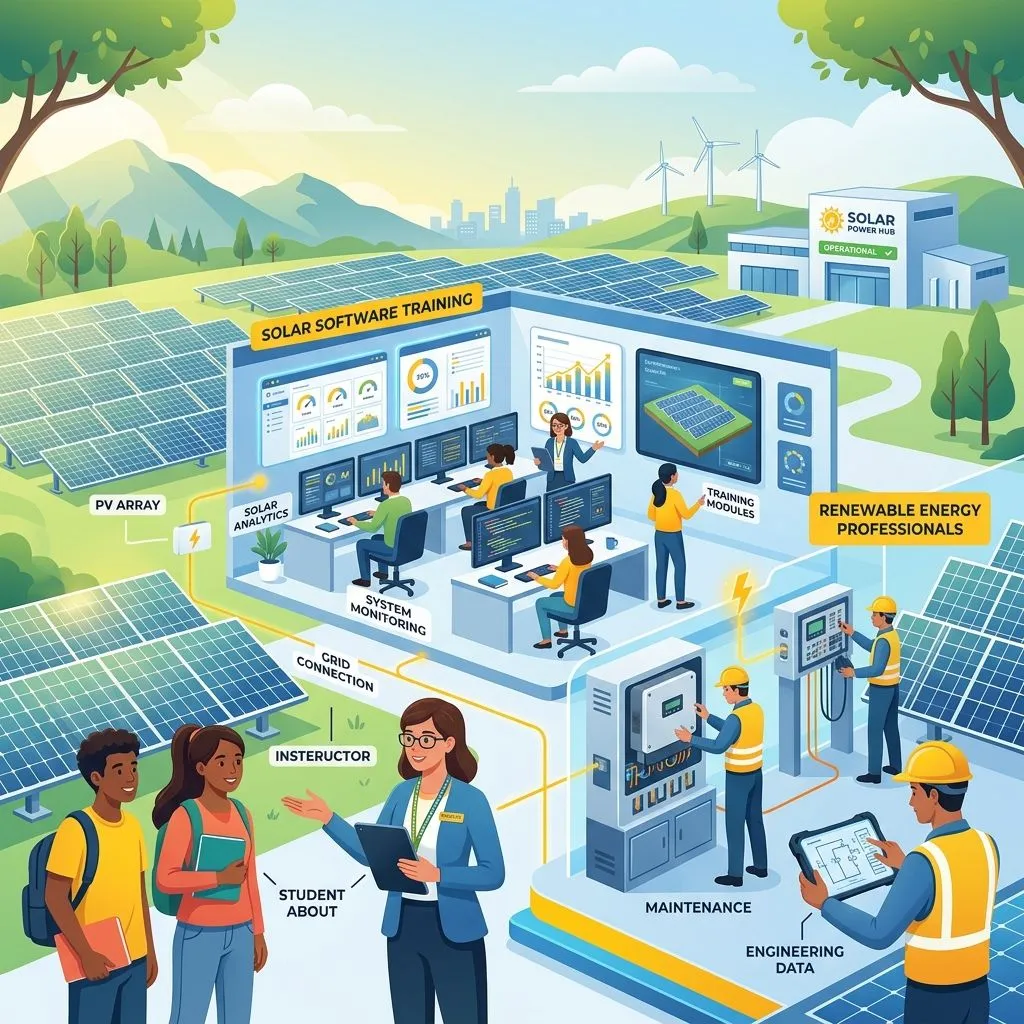
Explore Certificate, Diploma, PG Diploma, B.Voc and Solar Software Training Programs designed for successful careers in India's renewable energy industry.
Why Solar Energy Is a Top Career in 2026
India's Solar Mission
Massive government push to achieve 500GW of non-fossil fuel capacity by 2030, creating millions of jobs.
Renewable Energy Growth
The fastest-growing energy sector globally, offering unmatched career stability and growth.
Industry Demand
High demand for skilled professionals in design, installation, maintenance, and EPC management.
Quick Answers
Solar Course Explorer
PG Diploma in Solar Technology
Advanced engineering and project management program.
- Eligibility: Graduates
- Duration: 1 Year
- Outcomes: Project MGR
Diploma in Solar Technology
Comprehensive training for solar installation and operations.
- Eligibility: 12th Pass
- Duration: 1 Year
- Outcomes: Solar Engineer
Solar Engineer Course
Fast-track program for essential industry skills.
- Eligibility: Anyone
- Duration: 6 Months
- Outcomes: Solar Tech
PG Diploma in Solar Technology
Advanced engineering and project management program.
- Eligibility: Graduates/Engineers
- Duration: 1 Year
- Outcomes: Project Manager, Senior Design Engineer
Diploma in Solar Technology
Comprehensive training for solar installation and operations.
- Eligibility: 10th/12th Pass
- Duration: 6 Months
- Outcomes: Solar Technician, Site Supervisor
Certificate in Solar Energy
Fast-track program for essential industry skills.
- Eligibility: Anyone
- Duration: 3 Months
- Outcomes: Solar Sales, Assistant Installer