Best Engineering Courses for Career Growth: Top Specializations, Credentials & Industry Training Guide
Bridge the critical divide between university engineering degrees and role-ready industrial execution. Explore accredited post-graduate diplomas, technical certifications, and specialized engineering pathways in Solar PV, Electric Vehicles, Battery Storage (BESS), and Energy Management designed to accelerate professional advancement through best engineering courses for career growth.
UGC-affiliated 1-year PG Diplomas and specialized professional engineering certifications.
Hands-on software simulation training in PVsyst, AutoCAD, HelioScope, and MATLAB/Simulink.
On-site workshops for component testing, inverter synchronization, IV curve tracing & commissioning.
Dedicated interview preparation, technical portfolio validation, and placement assistance.
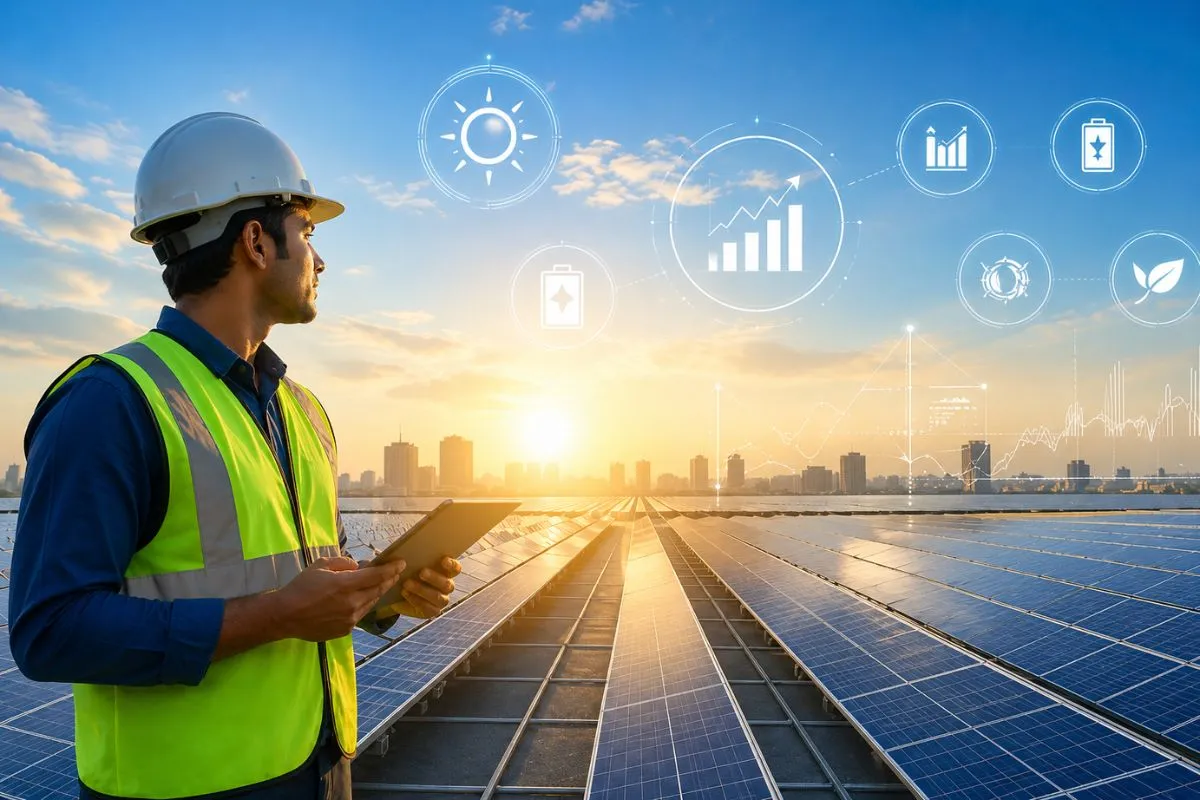
Quick Answer: What Are the Best Engineering Courses to Boost Your Career?
The best engineering courses for career growth are role-specific, tool-centric, and credentialed technical training programs that bridge university theory with modern industrial demand. In today’s competitive engineering employment landscape, general degrees (BE/B.Tech in Mechanical, Electrical, Civil, or Electronics) require vertical technical specialization to secure high-paying design, engineering, procurement, and construction (EPC), and managerial positions.
Table of Contents: Engineering Career Courses Master Guide
14 Comprehensive Chapters- 01.Why Engineers Need Specialized Professional Training
- 02.High-Growth Specializations: Solar, EV, Battery & Energy
- 03.Best Course Options for Different Career Stages
- 04.Official IISE Course Comparison Matrix (Duration, Fees, Eligibility)
- 05.Critical Technical Skills & Software Tool Stack
- 06.Career Opportunities & Key Industry Job Profiles
- 07.Salary Benchmarks & Long-Term Career Progression
- 08.Decision-Making Framework: How to Choose the Right Course
- 09.Why Choose IISE: Institutional Heritage & Accreditation
- 10.Learning Experience, Software Exercises & Practical Workshops
- 11.Course Learning Outcomes & Hiring Company Ecosystem
- 12.Admissions, Document Verification & Enrollment Steps
- 13.Frequently Asked Questions (FAQs for Engineers)
- 14.Related Resources, Internal Guides & Next Steps
1. Why Engineers Should Consider Specialized Professional Courses - Best engineering courses for career growth
Analyzing the widening gap between traditional academic degrees and high-demand industrial engineering roles.
The Degree vs. Industry Employability Gap
A bachelor’s degree in engineering (BE / B.Tech) or a polytechnic diploma represents a foundational milestone: it establishes rigorous analytical thinking, fundamental physics, calculus, thermodynamics, and circuit laws. However, university curricula are notoriously slow to adapt to industrial technological evolutions. Graduating engineers frequently discover that corporate engineering employers in renewable energy, automotive mobility, and infrastructure require capabilities never covered in semester examinations.
Industry-focused professional courses do not replace your engineering degree; they operationalize it. They transform theoretical textbook concepts into commercially viable engineering outputs: single-line electrical schematics, 3D shading simulations, battery pack thermal models, bill of materials (BOM), and statutory regulatory filings.
Industry Software Mastery
Employers do not pay engineers to calculate solar irradiance or heat dissipation with pencil and paper. They mandate complete proficiency in specialized simulation suites such as PVsyst, AutoCAD, HelioScope, and MATLAB/Simulink.
Codes, Standards & Compliance
Real engineering projects must comply with stringent national and international statutory codes: CEA technical regulations, DISCOM net-metering rules, IEEE 1547 grid interconnection, IEC 61215/61730 standards, and AIS 038/156 automotive EV mandates.
Accelerated Career Mobility
Engineers with verified technical credentials bypass low-paying trainee roles, qualifying directly for specialized design engineer, EPC project engineer, and technical consultant positions with 35% to 60% higher initial remuneration.
2. High-Growth Engineering Specializations & Career Pathways
A technical evaluation of sunrise engineering sectors offering long-term career resilience, innovation, and global mobility.
1. Solar PV and Renewable Energy Engineering
Solar Photovoltaic (PV) engineering represents India’s fastest-expanding power generation domain, supported by the national target of 500 GW non-fossil capacity by 2030 and massive commercial-industrial (C&I) rooftop solar adoption under the PM Surya Ghar Muft Bijli Yojana. This specialization involves the complete lifecycle of solar generation: solar resource meteorological assessment, string sizing, inverter selection, DC-AC balance of system (BoS), structural wind load analysis, high-voltage substation integration, and SCADA performance monitoring.
- Core Software: PVsyst, AutoCAD Electrical, HelioScope, SketchUp, Meteonorm
- Key Standards: IEC 62446 (Testing), IEC 61215/61730 (Modules), IEEE 1547 (Grid Interconnect), CEA Regulations
- Target Job Roles: Solar PV Design Engineer, Solar EPC Project Engineer, Solar O&M Engineer, Renewable Energy Consultant
- Eligible Degrees: Electrical (EEE), Mechanical, Civil, Electronics (ECE), Energy Engineering
2. Electric Vehicle (EV) Technology & Powertrain Systems
The global automotive transition from internal combustion engines (ICE) to electric powertrains has triggered unprecedented demand for multi-disciplinary engineers. EV engineering unites mechanical packaging, electrochemistry, and embedded power electronics. Engineers in this domain design high-voltage lithium battery packs, implement Battery Management System (BMS) safety firmware, optimize Permanent Magnet Synchronous Motors (PMSM), and develop DC Fast Charging infrastructure under CCS2, CHAdeMO, and Bharat standards.
- Core Software: MATLAB / Simulink, CANalyzer / CANoe, SolidWorks, ANSYS Fluent (Thermal)
- Key Standards: AIS 038 & AIS 156 Rev 3 (Traction Battery Safety), ISO 26262 (Functional Safety), IEC 61851 (EV Charging)
- Target Job Roles: EV Powertrain Engineer, BMS Firmware Developer, EV Battery Pack Design Engineer, Charging Infrastructure Lead
- Eligible Degrees: Electrical, Mechanical, Automobile, Mechatronics, Electronics & Instrumentation
3. Battery Energy Storage Systems (BESS) & Grid Integration
As intermittent renewable energy (solar and wind) penetrates power grids worldwide, Battery Energy Storage Systems (BESS) have emerged as the mission-critical technology for frequency regulation, ramp-rate control, peak shaving, and commercial time-of-day tariff optimization. Engineers specialized in BESS manage utility-scale battery chemistry selection (LFP, NMC, Sodium-ion), containerized HVAC thermal design, bi-directional Power Conversion Systems (PCS), energy management system (EMS) dispatch logic, and fire suppression protocols under NFPA 855.
- Core Software: PVsyst (Storage Module), HOMER Pro, MATLAB/Simulink, PSCAD
- Key Standards: UL 9540 / UL 9540A (Thermal Runaway), NFPA 855, IEEE 2030.2, IEC 62933
- Target Job Roles: BESS Integration Engineer, Energy Storage Specialist, Hybrid Microgrid Engineer, Grid Interconnection Lead
- Eligible Degrees: Electrical & Electronics (EEE), Power Systems, Chemical, Mechanical, Instrumentation
4. Industrial Energy Auditing & Power System Optimization
With aggressive corporate net-zero pledges and stringent Bureau of Energy Efficiency (BEE) Perform, Achieve and Trade (PAT) schemes, major industrial facilities (manufacturing, cement, steel, chemicals, data centers) require certified engineers to conduct detailed energy audits. Engineers quantify energy losses in boilers, compressed air systems, chillers, and electrical distribution, formulating techno-economic conservation measures (ENCON) that reduce operating expenses and carbon emissions.
- Core Instruments: Thermal Imagers, Flue Gas Analyzers, Power Quality Analyzers, Ultrasonic Flowmeters
- Key Frameworks: ISO 50001 (Energy Management), BEE Energy Conservation Act, GHG Protocol
- Target Job Roles: Certified Energy Auditor, Energy Manager, Industrial Efficiency Consultant, Sustainability Officer
- Eligible Degrees: Mechanical, Electrical, Chemical, Production, Energy Engineering
3. Best Course Options for Different Engineering Career Stages
Personalized upskilling roadmaps tailored to your current educational qualifications, professional experience, and target career direction.
1. Fresh Engineering Graduates (BE / B.Tech)
Primary Challenge: Fresh graduates possess textbook mathematical theory but lack practical software fluency (PVsyst, AutoCAD Electrical) and code familiarity required by EPC contractors and engineering consultancies.
Recommended Course: 1-Year UGC-Affiliated PG Diploma in Solar Technology or PG Diploma in EV Technology.
2. Working Engineers & Technical Professionals
Primary Challenge: Working engineers in maintenance, plant operations, or traditional manufacturing need modern credentials to advance into design or leadership without quitting their current employment.
Recommended Course: PG Diploma (Hybrid Model) or Solar Engineer Certificate Course.
3. Engineers Changing Specialization / Domain
Primary Challenge: Professionals from stagnant sectors (thermal power, generic CAD drafting, conventional civil construction) seeking entry into high-growth clean-tech and electric mobility ecosystems.
Recommended Course: PG Diploma in Solar Technology or Diploma in EV Technology.
4. Polytechnic Diploma Holders & Technicians
Primary Challenge: Diploma engineers frequently get trapped in low-paying field technician roles without clear pathways to supervisory, testing, or junior design engineering positions.
Recommended Course: Diploma in Solar Technology (1 Year) or B.Voc in Solar Technology (3 Years).
5. Technical Design vs. Site Execution Focus
Design Track: Focus on PVsyst, HelioScope, AutoCAD, and power loss budgets → Recommended: Solar Engineer Certificate Course or PG Diploma Design Specialization.
Execution Track: Focus on plant layout, transformer installation, HT/LT cabling, testing, commissioning, and subcontractor management → Recommended: PG Diploma in Solar Technology.
6. Aspiring Clean-Energy Entrepreneurs
Primary Objective: Engineers aiming to launch their own solar EPC company, residential rooftop installation firm, or EV charging franchise.
Recommended Course: Solar Entrepreneurship Development Program paired with technical design modules. Covers vendor procurement, DISCOM approvals, subsidies, financial modeling, and customer contracts.
4. Course Comparison Matrix: Verified IISE Engineering Programs
Directly compare program levels, durations, eligibility criteria, software tool suites, learning formats, and career outcomes across IISE’s verified technical offerings.
| Programme Name | Credential Level | Duration | Eligibility Criteria | Learning Format | Core Technical Focus | Target Roles | Action |
|---|---|---|---|---|---|---|---|
| PG Diploma in Solar Technology | Post-Graduate | 1 Year | BE / B.Tech (Electrical, Mech, Civil, ECE) / B.Sc / Diploma | Hybrid (Live Online + Practical Contact) | PVsyst, AutoCAD, HelioScope, Grid Compliance, MW Plant Design, BESS | Solar Design Engineer, EPC Project Engineer, O&M Manager | Explore Course |
| PG Diploma in EV Technology | Post-Graduate | 1 Year | BE / B.Tech (Electrical, Mech, Auto, ECE, Mechatronics) | Hybrid (Live Online + Practical Contact) | Battery Chemistry, BMS Algorithms, PMSM Motors, Inverters, Charging Infra | EV Powertrain Engineer, BMS Specialist, Battery Pack Designer | Explore Course |
| Diploma in Solar Technology | Technical Diploma | 1 Year / 6 Mo | Polytechnic Diploma / Graduate / 10+2 with ITI | Blended Online + Hands-on Lab | Rooftop Solar Sizing, Inverter Wiring, Earthing, IV Tracing, Safety | Solar Project Engineer, Site Supervisor, Technical Executive | Explore Course |
| Diploma in EV Technology | Technical Diploma | 6 Months | Polytechnic Diploma / ITI / Science Graduate | Blended Online + Hands-on Lab | Battery Pack Assembly, Spot Welding, BMS Wiring, EV Diagnostics | EV Assembly Technician, Diagnostic Specialist, Quality Inspector | Explore Course |
| Solar Engineer Certificate Course | Professional Certificate | 3 Months / Self-Paced | Engineering Students, Graduates & Working Engineers | Live Interactive Online + Simulation Labs | Solar PV System Design, PVsyst Simulation, AutoCAD SLD, Financial ROI | Solar PV Design Engineer, Technical Proposal Engineer | Explore Course |
| B.Voc in Solar Technology | Bachelor Degree | 3 Years | 10+2 (Science / Vocational) / Polytechnic Diploma | Full-Time Academic + Industrial Apprenticeship | Comprehensive Electrical & Mechanical Renewable Curriculum, UGC Degree | Renewable Energy Engineer, Production Engineer, Government Projects | Explore Course |
| Solar Entrepreneurship Program | Business Certificate | 1 Month | Engineers, Contractors & Business Seekers | Online Interactive + Mentorship | EPC Business Setup, DISCOM Net Metering, Vendor Procurement, Tendering | Solar EPC Contractor, Clean-Tech Business Owner | Explore Course |
5. Critical Technical Skills & Industry Software Stack
A detailed breakdown of the exact engineering competencies and commercial software platforms required by top infrastructure, renewable energy, and automotive employers.
Solar PV Engineering Competency Stack
- Solar PV Yield Simulation (PVsyst & HelioScope): Horizon shading analysis, string configuration, clipping loss calculation, performance ratio (PR) modeling, and 8760 hourly generation forecasting.
- Electrical Engineering CAD (AutoCAD Electrical): Drafting Single Line Diagrams (SLD), 3-line diagrams, string layouts, cable trenching routes, earthing grid layouts, and lightning protection system designs.
- DC & AC Balance of System (BoS) Sizing: Calculation of string voltage variations across ambient temperature extremes, DC cable sizing for <1.5% voltage drop, AC breaker coordination, and transformer impedance matching.
- On-Site Testing & Commissioning (IEC 62446): Insulation resistance testing (Megger), open-circuit voltage (Voc) verification, short-circuit current (Isc) measurement, IV curve tracing, and drone-assisted thermographic electroluminescence imaging.
EV & Battery Engineering Competency Stack
- Battery Pack Engineering & Sizing: Cylindrical (21700, 4680), prismatic, and pouch cell chemistry selection (LFP vs NMC), cell-to-pack (CTP) structural modeling, spot-welding busbar designs, and vibration dampening.
- BMS Firmware & Hardware: State of Charge (SoC) Coulomb counting and Extended Kalman Filter (EKF) estimation, State of Health (SoH), active and passive cell balancing, over-voltage/under-voltage cut-offs, and pre-charge circuit logic.
- Vehicle Communication Networks: Controller Area Network (CAN bus 2.0B / CAN-FD), DBC file decoding, CANalyzer logging, and On-Board Diagnostics (OBD-II) troubleshooting.
- EV Powertrain & Motor Control: Inverter space vector PWM switching, Field-Oriented Control (FOC) for Permanent Magnet Synchronous Motors (PMSM), and regenerative braking torque coordination.
6. Career Opportunities After Specialized Engineering Training
Explore 8 high-demand engineering job roles, their daily operational responsibilities, required technical skills, and corresponding IISE learning pathways.
1. Solar PV Design Engineer
₹4.5L - ₹8.5L / yrCore Responsibilities: Develop detailed solar plant designs using PVsyst and AutoCAD; perform 3D shadow analysis, module stringing, inverter selection, DC/AC cable sizing, and produce bankable detailed project reports (DPR).
Pathway: PG Diploma in Solar Technology / Solar Engineer Certificate Course
2. Solar EPC Project Engineer
₹4.8L - ₹9.5L / yrCore Responsibilities: Supervise turnkey engineering, procurement, and construction (EPC) execution; manage site civil foundations, module mounting structure (MMS) assembly, HT/LT electrical integration, quality audits, and DISCOM synchronization.
Pathway: PG Diploma in Solar Technology / Diploma in Solar Technology
3. Solar Operations & Maintenance (O&M) Lead
₹4.2L - ₹8.0L / yrCore Responsibilities: Monitor megawatt-scale plant performance via SCADA systems; conduct thermographic drone scans, IV curve diagnostics, preventive maintenance schedules, inverter breakdown troubleshooting, and warranty claims management.
Pathway: PG Diploma in Solar Technology / Diploma in Solar Technology
4. EV Powertrain & BMS Engineer
₹5.5L - ₹12.0L / yrCore Responsibilities: Design traction battery management algorithms (SoC, SoH, thermal cutoffs); integrate PMSM motor controllers with inverter stages; conduct hardware-in-the-loop (HIL) testing and CAN bus validation.
Pathway: PG Diploma in Electric Vehicle Technology
5. EV Battery Pack Design Engineer
₹5.0L - ₹10.5L / yrCore Responsibilities: Lead mechanical packaging of lithium-ion cells; design aluminum enclosure structures for IP67 sealing, crashworthiness, vibration isolation, thermal interface materials (TIM), and liquid cooling plates.
Pathway: PG Diploma in EV Technology / Diploma in EV Technology
6. EV Charging Infrastructure Engineer
₹4.5L - ₹8.8L / yrCore Responsibilities: Design and deploy public and fleet DC fast-charging plazas; coordinate transformer sub-stations, power conversion modules, Open Charge Point Protocol (OCPP 1.6/2.0.1) backends, and DISCOM electrical approvals.
Pathway: PG Diploma in EV Technology
7. Battery Energy Storage (BESS) Engineer
₹5.2L - ₹11.5L / yrCore Responsibilities: Model and engineer utility-scale containerized BESS projects for renewable firming, peak shaving, and microgrids; coordinate bi-directional PCS inverters, EMS dispatch controllers, and NFPA 855 fire safety.
Pathway: PG Diploma in Solar Technology (BESS Specialization)
8. Technical Sales & Proposal Engineer
₹4.5L - ₹9.0L / yrCore Responsibilities: Perform preliminary techno-commercial solar assessments; prepare competitive tender bids, calculate Levelized Cost of Energy (LCOE), present ROI models to C&I corporate clients, and negotiate vendor procurement contracts.
Pathway: Solar Engineer Certificate Course / PG Diploma in Solar Technology
7. Salary Benchmarks & Career Progression Guide
Attributable, market-reflective compensation bands for specialized technical engineers in India across experience tiers and technical specializations.
| Career Experience Level | Typical Years of Experience | Indicative Annual Salary (INR) | Representative Roles | Key Value Drivers for Promotion |
|---|---|---|---|---|
| Entry-Level Engineer | 0 – 2 Years | ₹3.8 LPA – ₹6.5 LPA | Junior Solar Design Engineer, Graduate Engineer Trainee (GET), Site Execution Engineer, Junior BMS Tester | Proficiency in PVsyst, AutoCAD Electrical, reading SLDs, basic testing instruments, and quick drafting turnaround. |
| Mid-Level Engineer | 2 – 5 Years | ₹6.5 LPA – ₹12.0 LPA | Lead Solar Design Engineer, EPC Project Engineer, EV Powertrain Specialist, BESS Integration Engineer | Autonomous MW-scale plant sizing, complex grid interconnection approvals, vendor negotiation, and failure root-cause analysis. |
| Senior / Lead Engineer | 5 – 8+ Years | ₹12.0 LPA – ₹22.0+ LPA | Engineering Manager, Head of Design (Solar EPC), Chief Technology Officer (Clean-Tech Startup), Lead Consultant | P&L oversight, high-voltage substation commissioning leadership, multi-megawatt project management, international project experience. |
Primary Factors Governing Engineering Compensation in India
1. Software Simulation Depth: Engineers fluent in advanced PVsyst yield loss budgets, HelioScope, and MATLAB command 25% to 40% salary premiums over engineers with only generic CAD skills.
2. Project Scale & Grid Experience: Practical experience commissioning utility-scale (50 MW+) or complex C&I rooftop plants with zero grid trip events accelerates promotions significantly.
3. Credential Recognition: Holding formal, recognized post-graduate credentials from specialized institutes (such as IISE’s UGC-affiliated PG Diplomas) ensures qualification during institutional corporate hiring screenings.
8. Decision-Making Framework: How to Choose the Right Engineering Course
A structured 6-point evaluation methodology to match your professional background, time availability, and career aspirations with the ideal technical program.
Audit Your Foundation
Are you an electrical, mechanical, or civil graduate? Electrical graduates naturally transition into solar PV electrical BoS and EV motor drives; mechanical engineers excel in structural mounting, battery packaging, and thermal management.
Define Your Career Goal
Do you prefer office-based simulation and design engineering (CAD/PVsyst), field-based construction and testing (EPC project management), or launching an independent clean-energy contracting business?
Choose Credential Depth
Need a quick tool addition? A 3-month certificate suffices. Seeking a formal career shift or high-paying corporate placement? Enroll in a comprehensive 1-year UGC-affiliated PG Diploma.
Assess Learning Flexibility
Can you attend full-time, or do you need weekend live online lectures paired with a short, intensive practical contact program? IISE’s hybrid model allows engineers across India to upskill without pausing their jobs.
Verify Hands-on Exposure
Beware purely video-recorded theoretical courses. Verify that the institute includes actual component handling: crimping, inverter programming, spot welding, and IV curve measurement on live arrays.
Check Career Support
Review the institute’s active placement assistance, alumni network, resume formatting guidance, and mock technical interview processes with real industry recruiters.
9. Why Choose the Indian Institute of Solar Energy (IISE)
Established institutional excellence in technical clean-energy and electric vehicle engineering education.
Institutional Heritage & Technical Mission
Founded under the auspices of the Centre for Energy Research and Training, the Indian Institute of Solar Energy (IISE) has stood at the vanguard of specialized renewable energy and clean mobility training in India. Rather than delivering generic academic degrees, IISE was purposefully established to equip engineering graduates and technical professionals with the exact tools, practical competencies, and statutory knowledge demanded by top EPC contractors, developers, and automotive OEMs.
UGC-Affiliated Credentials
Programs recognized by university partner boards, conferring formal post-graduate diploma qualifications valued across corporate India and abroad.
Practicing Field Faculty
Learn from senior project directors, design engineers, and EV homologation leads with decades of combined commercial experience in utility-scale solar and EV powertrain design.
Hybrid Delivery Model
Interactive live online weekend lectures allow working engineers across India and abroad to pursue qualifications without pausing their jobs or relocating.
Placement Assistance
Comprehensive career guidance, technical resume structuring, interview coaching, and corporate placement introductions with leading clean-energy employers.
10. The Learning Experience: Software Exercises & Practical Lab Training
A balanced 3-phase pedagogical framework uniting theoretical rigor, digital simulation, and on-site physical commissioning.
Live Interactive Online Lectures
Engage in real-time, interactive engineering lectures covering system architectures, mathematical calculations, electrical standards (IEC/IEEE), and statutory codes with faculty Q&A.
Software Simulation Assignments
Build portfolio-ready engineering deliverables: simulated rooftop & ground-mount solar arrays in PVsyst and AutoCAD Electrical, complete with shadow modeling and SLD generation.
Personal Contact Program (PCP) Lab
Intensive on-site practical contact sessions: physical module mounting, MC4 crimping, string inverter synchronization, IV curve tracing, thermal scans, and safety earthing testing.


11. Course Learning Outcomes & Corporate Employer Ecosystem
Industry validation: The technical competencies our alumni deliver to leading renewable energy and clean mobility employers across India.
Verified Graduate Technical Competencies
Upon completion of IISE’s specialized engineering programs, graduates demonstrate proven capability to:
Companies in the Solar, Storage & Electrical Sector Where Clean-Tech Engineers Build Careers


Logos represent major industry participants, technology manufacturers, and employers active within the renewable energy and electrical engineering ecosystem.
12. Admissions & Enrollment Process
A streamlined 5-step admission procedure for prospective engineering students and working professionals.
Explore Program
Review course syllabus, software modules, duration, and career pathways in the course comparison guide.
Check Eligibility
Verify your degree or diploma background against program prerequisites (BE/B.Tech, Polytechnic, or B.Sc).
Request Counselling
Connect with IISE senior academic advisors via WhatsApp or phone to clarify syllabus, fees, and batch schedules.
Submit Application
Fill out the official online application form and upload your degree/diploma certificates and identity proof.
Induction & Access
Receive your official student enrollment credentials, LMS login, software installation guides, and lecture schedule.
13. Frequently Asked Questions (FAQs for Engineers)
Direct, transparent answers to the most common questions asked by engineering graduates and technical professionals regarding career courses.
1. Which professional courses are best after engineering for career growth in 2026? +
2. Which engineering courses are best suited after B.Tech Electrical or Mechanical Engineering? +
3. Can a mechanical or civil engineer enter the solar and renewable energy industry? +
4. What is the exact difference between an engineering certificate, a diploma, and a PG Diploma? +
5. Which courses are suitable for working engineers who cannot attend full-time weekday classes? +
6. How long does it take to complete specialized solar or EV engineering training? +
7. Which technical software tools are mandatory for solar design engineers? +
8. What starting salary can an engineer expect in the solar and EV sector in India? +
9. Does IISE include practical hands-on training or only online theoretical lectures? +
10. Are polytechnic diploma holders eligible for IISE engineering programs? +
11. Does IISE provide placement assistance to students after course completion? +
12. What career opportunities exist in Battery Energy Storage Systems (BESS)? +
13. Can an engineer start a solar contracting or EPC business after taking an IISE course? +
14. How can I apply for an engineering course at IISE? +
14. Related Engineering Career Resources & Course Guides
Explore specialized guides and accredited program catalogs across the Indian Institute of Solar Energy portal.
Solar Career Courses After Engineering
A dedicated, in-depth guide on transitioning specifically from B.Tech/Diploma into the solar energy sector.
Read Complete Guide →Solar Training in India: The First Step
An introductory overview of vocational solar education, installation principles, and job prospects.
Read Solar Training Guide →Renewable Energy Courses in India
National overview of clean energy diploma, degree, and certification pathways across solar, EV, and storage.
View Renewable Courses →Choose the Right Technical Course for Your Engineering Career
Explore industry-focused training options in solar energy, EV technology, and battery systems. Speak directly with IISE senior academic advisors to identify an accredited programme aligned with your qualifications, schedule, and career aspirations.