Solar Structure Design Course for Engineers & Technicians
Master Solar Mounting Structure, Steel Design, Wind Load Analysis and Foundation Engineering.
Develop specialised knowledge of solar structural engineering through a three-month hybrid training programme covering rooftop structures, ground-mounted systems, steel design, structural loading, foundation engineering and practical project applications.

Why Solar Structural Engineering Is Critical to Every Solar Project
A solar PV plant is not merely an electrical assembly of photovoltaic modules and inverters. Its 25-year structural safety, operational uptime, and bankability depend on the engineering integrity of the structural system supporting the modules under extreme weather and environmental conditions.
Solar mounting structures must continuously resist complex multi-axial mechanical forces. Uncontrolled wind gusts generate intense suction uplift forces capable of ripping entire module tables off rooftops and ground pilings. Concurrently, structures must support sustained dead loads (module self-weight, purlins, rafters) and live maintenance loads, accommodate significant thermal expansion cycles, and prevent deflection-induced micro-cracking in photovoltaic cells.
Selecting appropriate structural steel sections, ensuring durable protective coatings against atmospheric corrosion (C3 to C5 environments), designing secure bolted connections (Grade 8.8 / 4.6), and executing sound foundation engineering (driven steel piles, concrete pedestals, ballast footings) are paramount to preventing catastrophic structural failures and ensuring 25-year plant performance.
Wind Load Engineering
Aerodynamic pressure coefficients, basic wind speed zones (up to 55 m/s in India), wind uplift suction, and terrain roughness factors under IS 875 (Part 3).
Steel Structure Design
Cold-formed light-gauge steel (C & Z purlins), hot-rolled structural sections, column strut buckling, and bolted connection design under IS 800.
Foundation Engineering
Soil bearing capacity evaluation, driven C-piles, bored cast-in-situ concrete piles, chemical anchor bolts, and overturning ballast resistance under IS 456.
Structural Safety & Durability
Long-term corrosion protection, Hot-Dip Galvanizing (HDG $ge 80mu m$), PosMAC/Galvalume coatings, and bi-metallic galvanic isolation.
Build Practical Solar Structural Design Competencies
Eight foundational and applied engineering competencies developed through rigorous technical instruction, engineering calculations, and practical design exercises.
1. Engineering Drawings
Interpret structural General Arrangement (GA) drawings, fabrication blueprints, coordinate layouts, and member schedules.
2. Strength of Materials
Understand mechanical stress-strain relationships, axial forces, bending moments, shear distribution, and elastic deflection limits.
3. Structural Steel Selection
Select cold-formed light-gauge and hot-rolled structural steel sections, assessing yield strengths and section modulus.
4. Structural Load Analysis
Identify and calculate dead loads, maintenance live loads, thermal variations, and critical load combination criteria.
5. Wind Engineering Principles
Calculate design wind pressure ($P_z$), terrain factors ($k_1, k_2, k_3, k_4$), aerodynamic suction uplift, and wind shielding effects.
6. Foundation Design Concepts
Analyse soil bearing capacities, concrete ballast blocks, bored piles, driven post embedment, and chemical anchor pull-out resistance.
7. Mounting Configurations
Evaluate fixed-tilt South facing, East-West configurations, elevated rooftop superstructures, and seasonal tilt systems.
8. BOQ & BOM Preparation
Prepare structural steel tonnage estimates, detailed Bill of Quantities (BOQ), hardware schedules, and Bill of Materials (BOM).
Learn the Engineering Behind Different Solar Mounting Structures
Understand the mechanical requirements, load transfer mechanisms, and engineering constraints across diverse solar PV installations.
Rooftop Solar Structures
Engineering rooftop mounting systems demands precise structural load transfer without compromising building integrity or roof waterproofing.
- Roof-mounted elevated and flush tilt structures
- Point load distribution vs RCC slab load capacity
- Ballast deadweight sizing & friction coefficients
- Chemical anchor bolts (embedment depth & shear capacity)
- Parapet wall aerodynamic wind deflection effects
Ground-Mounted Solar Structures
Utility-scale fixed-tilt mounting tables engineered for high-throughput installation, long-term durability, and varied soil conditions.
- Fixed-tilt 2P (2-in-Portrait) and 4L (4-in-Landscape) tables
- Driven C-piles, rammed steel posts & helical screws
- Cast-in-situ bored concrete piles for rocky/loose strata
- Purlin, rafter, and diagonal bracing load distribution
- Thermal expansion joints across long contiguous tables
Solar Carports and Canopies
Architectural and structural steel canopies combining vehicular shelter, EV charging infrastructure, and solar generation.
- Cantilever T-frame and portal frame structural systems
- Long-span beam sizing & maximum deflection control
- Clearance height requirements (2.5m to 3.5m vehicular traffic)
- Vehicular impact resistance and bollard protection
- Integrated rainwater drainage gutters and EV conduit paths
Complete Solar Structure Design Course Curriculum
The course combines fundamental engineering concepts with solar-specific structural applications through ten structured technical modules.
- Introduction to solar mounting structures and their role in solar EPC projects
- Classification of structural systems used in commercial and utility-scale solar
- Role of structural engineering in the overall solar project lifecycle
- System comparison: Rooftop, ground-mounted, carport, and tracker systems
- Engineering drawing fundamentals and drafting standards in civil/structural engineering
- Reading structural General Arrangement (GA) and fabrication drawings
- Understanding structural dimensions, coordinate datum, and site layouts
- Drawing interpretation: Elevation views, plan views, and connection details
- Standard engineering documentation and drawing revision management
- Fundamental mechanical properties of structural materials
- Stress and strain relationships, Hooke’s law, and elastic limit
- Bending moments, shear forces, and flexural stress distribution
- Material behaviour under axial tension, compression, and torsion
- Structural member fundamentals and deflection criteria ($L/200$, $L/250$)
- Structural steel fundamentals and Limit State Design principles
- Cold-formed light-gauge steel sections vs hot-rolled structural steel
- Steel member selection: Purlins, rafters, columns, and diagonal braces
- Bolted connections: Bearing type and friction grip (HSFG) bolts
- Welded connections: Fillet and butt welds in solar structure fabrication
- Introduction to steel design provisions under IS 800
- Engineering materials used in solar PV structural components
- Structural steel chemical composition and mechanical properties
- Material selection criteria for aggressive environmental conditions
- Corrosion mechanisms: Atmospheric, chemical, and galvanic corrosion
- Protective coatings: Hot-Dip Galvanizing (HDG), Galvalume (AZ150), and PosMAC
- Wind loading fundamentals and aerodynamic pressure generation
- Wind pressure concepts, basic wind speed ($V_b$) map of India under IS 875 Part 3
- Risk coefficient ($k_1$), terrain roughness ($k_2$), topography ($k_3$), and importance ($k_4$)
- Wind uplift suction on inclined solar module surfaces
- Structural stability against overturning and sliding under storm gusts
- Wind considerations for solar mounting systems and wind deflector panels
- Dead loads: Calculation of self-weight of modules, clamps, purlins, and rafters
- Live loads: Maintenance access loads and temporary construction loads
- Wind load calculations: Positive pressure and negative suction coefficients
- Critical load combinations: Dead + Wind, Dead + Live, and uplift cases
- Structural loading considerations and introduction to member sizing
- Foundation engineering fundamentals for solar PV structures
- Isolated footings and concrete ballast blocks for flat rooftops
- Pile foundations: Bored cast-in-situ concrete piles and driven steel posts
- Foundation loading: Downward axial, lateral shear, and upward pull-out forces
- Soil considerations: Soil bearing capacity (SBC) and geotechnical reports
- Retaining wall fundamentals and erosion protection on sloping sites
- Rooftop mounting systems: Ballasted, chemical anchor, and tin shed clamps
- Ground-mounted systems: Single post, double post, and seasonal tilt tables
- Fixed-tilt structures: Geometric design, inter-row pitch, and shadow clearances
- Structural configurations: Portrait vs landscape orientation trade-offs
- Mounting system selection based on terrain, wind zone, and project economics
- Solar tracker fundamentals and energy gain kinematics
- Single-axis horizontal trackers (SAT) and tilted single-axis tracking
- Dual-axis tracker concepts and mechanical actuator drives
- Tracker mounting structures: Torque tubes, bearings, and dampeners
- Structural considerations: Torsional flutter, aeroelastic stability, and gale stow angles
Understand How Structural Design Applies to Real Solar Projects
Explore the engineering challenges, calculation approaches, and practical site considerations across four major solar project categories.
1. Rooftop Solar Structural Assessment
Prior to installing rooftop solar, engineers must conduct non-destructive testing (NDT), evaluate concrete core compressive strength, check existing slab dead/live load margins, and position column pedestals over primary structural beams.
2. Ground-Mounted Solar Structure Design
Utility-scale solar farms involve thousands of steel mounting tables across undulating topography. Engineers optimize member thicknesses, conduct pile pull-out tests, evaluate soil resistivity, and establish adequate drainage ground clearances.
3. Solar Carport Structural Concepts
Carports feature significant cantilever spans subjected to asymmetrical wind gusts and heavy vehicular presence. Engineering encompasses foundation overturning moments, column baseplate gussets, and integrated stormwater gutter channels.
4. Solar Tracker Structural Systems
Single-axis trackers experience dynamic aeroelastic flutter and torsional galloping under sustained winds. Structural engineering focuses on torque tube torsional rigidity, hydraulic damper tuning, and automated zero-degree emergency stow sequences.
Understand the Solar Structural Design Workflow
A systematic 8-stage technical workflow guiding solar structural engineering from initial site investigation to final fabrication and erection sign-off.
Site & Requirement Assessment
Evaluate location wind zone, seismic zone, soil geotechnical report, and building layout constraints.
Configuration Selection
Select tilt angle, module orientation (portrait/landscape), ground clearance, and table row pitch.
Drawing Interpretation
Read and align architectural drawings, boundary surveys, column grid axes, and structural layouts.
Load Calculation
Calculate dead, live, and wind forces under IS 875 Part 3 and evaluate critical load combination states.
Member & Connection Design
Size purlins, rafters, columns, and bracings. Specify bolt grades, bracket geometry, and welds.
Foundation Engineering
Determine ballast mass or pile embedment depth to satisfy overturning, sliding, and pull-out safety.
BOQ & BOM Preparation
Prepare steel tonnage schedules, hardware fastener counts, concrete volume bills, and cost estimates.
Documentation & Review
Compile design basis reports, calculation sheets, fabrication shop drawings, and erection checklists.
Develop Knowledge of Structural Engineering Principles and Applicable Standards
Master the structural engineering principles embodied in Bureau of Indian Standards (BIS) codes governing structural stability, materials, and foundation safety.
Establishes calculation methods for dead loads (Part 1), imposed live loads (Part 2), and wind loading (Part 3) considering basic wind speed zones, terrain categories, and height factors.
Specifies Limit State Design criteria for structural steel members in axial tension, compression, flexure, and bolted/welded connections, ensuring adequate factor of safety.
Governs concrete mix grades, minimum reinforcement, cover requirements, and anchor bolt embedment for rooftop ballast pedestals and cast-in-situ pile caps.
Criteria for seismic zone classification, seismic acceleration response spectra, and lateral load evaluation for elevated solar structures and carports.
Material specifications for structural steel plates and shapes (IS 2062) and code of practice for cold-formed light-gauge structural steel sections (IS 801/811).
Standard procedures for pile foundations, evaluation of skin friction, end bearing capacity, and conducting lateral and pull-out pile load tests.
Go Beyond Theory with Practical Solar Structure Training
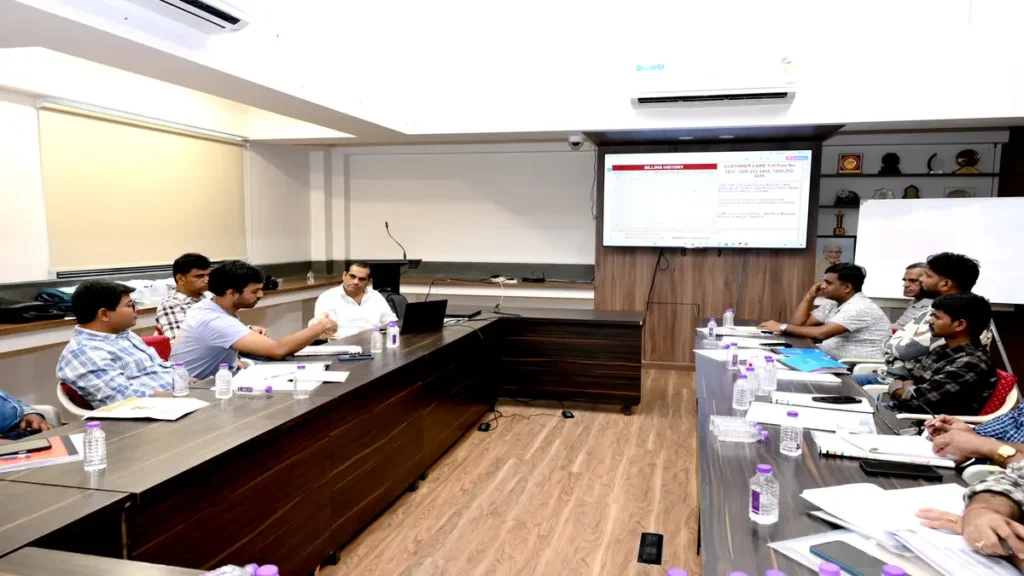
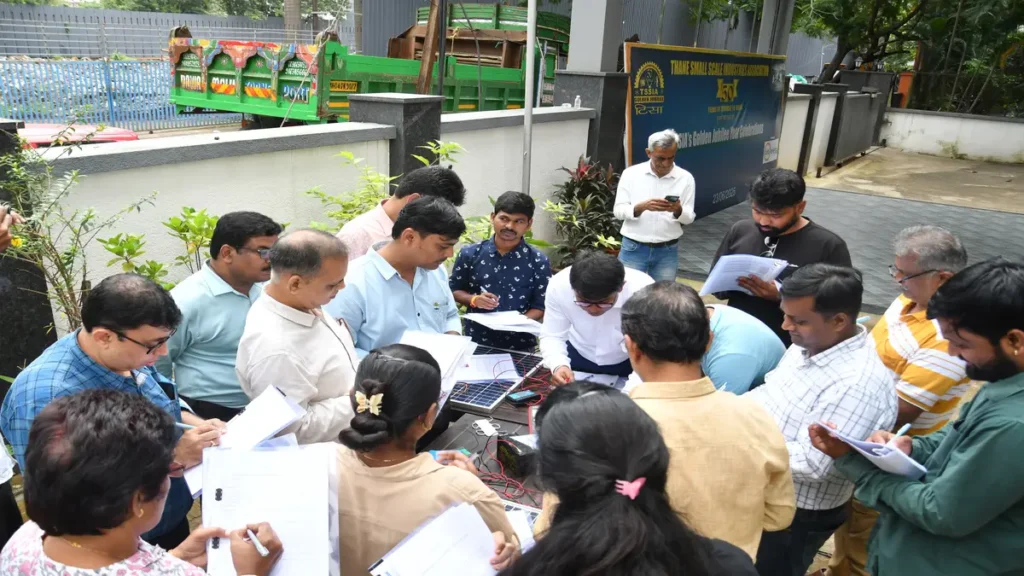
The hybrid learning approach combines theoretical instruction with classroom-based and hands-on practical learning to help participants understand how solar structural engineering concepts are applied in real project environments.
Online & Lecture Learning
Covers theoretical engineering instruction, structural mathematics, load calculation methodologies, BIS design codes, and 22 recorded lectures (~200 minutes) designed for structured conceptual mastery.
- Aerodynamic wind pressure formulas and coefficient charts
- Mathematical derivation of member bending and shear stress
- Analysis of structural failure case studies and remediation
Classroom & Practical Learning
Scheduled in-person practical sessions conducted at IISE's training facility in Mumbai / Navi Mumbai / Thane. Focuses on physical structural component handling, drawing reading, and assembly validation.
- Physical inspection of cold-formed channels, brackets, and clamps
- Blue-print reading sessions of actual multi-megawatt GA drawings
- Hands-on fastener torque checking and mechanical alignment
Structural Drawing Interpretation
Reading real industrial layout blueprints, sectional elevations, and fabrication schedules.
Mounting Hardware Familiarisation
Physical handling of C/Z purlins, mid-clamps, end-clamps, base plates, and EPDM isolation gaskets.
Foundation & Connection Concepts
Understanding anchor bolt tightening torque, chemical grouting procedures, and ballast placing.
Project Documentation Exercises
Drafting component schedules, site inspection checklists, and preliminary structural summaries.
Apply Your Learning Through an Engineering-Oriented Project
Synthesize your technical competencies by engineering a comprehensive structural documentation package for a simulated industrial solar PV installation under expert guidance.
BOQ & BOM Preparation with Industrial Guidance
The capstone bridges analytical calculations with commercial project execution. Working with real-world site constraints (wind zone, roof slab specifications, soil profile), participants systematically build full commercial documentation required in standard solar EPC tenders.
Project Deliverables
Technical Skills You Can Develop During the Programme
A balanced set of technical engineering competencies and professional coordination abilities essential for structural roles in solar EPC organizations.
Technical Engineering Skills
Professional & Project Skills
Explore Career Opportunities in Solar Structural Engineering
Specialized structural competencies are in high demand across solar developers, EPC contractors, mounting structure manufacturers, and engineering consultancies.
1. Solar Structural Design Engineer
Prepares structural layouts, calculates wind and dead loads, sizes steel members, and drafts fabrication drawings for solar projects.
2. Solar EPC Design Engineer
Coordinates structural, civil, and electrical balance-of-system requirements to deliver integrated turnkey solar plant designs.
3. Civil Design Engineer – Solar Projects
Oversees geotechnical analysis, land grading, drainage layouts, bored pile designs, and foundation stability for ground-mount plants.
4. Mechanical Design Engineer – Solar
Designs cold-formed purlins, brackets, torque tubes, and mechanical tracker linkages with corrosion-resistant finishes.
5. Solar Project Engineer
Manages on-site erection, pile driving alignment, torque audits, and structural quality compliance during construction.
6. Solar Engineering Consultant
Provides technical advisory, structural due diligence, independent failure audits, and BOQ validation for solar asset owners.
Who Should Join This Solar Structure Design Course?
Tailored for engineering professionals, technical diploma holders, and science graduates aiming to specialize in the structural domain of clean energy.
Civil Engineers
B.E., B.Tech, or Diploma civil engineers seeking domain expertise in solar foundation systems, structural wind load analysis, and steel mounting configurations.
Mechanical Engineers
B.E., B.Tech, or Diploma mechanical engineers focusing on cold-formed steel sections, bolted connection mechanics, material science, and solar tracker systems.
Electrical Engineers
Solar electrical and power systems professionals seeking to understand the balance-of-plant structural considerations that safeguard PV generation assets.
Diploma & Technical Graduates
Diploma holders in engineering and B.Sc. graduates with Physics and Mathematics seeking practical technical specialisation in solar engineering.
Eligibility for Solar Structure Design Training
Transparent entry criteria ensuring participants possess the necessary mathematical and engineering aptitude for advanced structural calculations.
Engineering Graduates & Diploma Holders
Candidates with recognized engineering credentials in relevant technical disciplines:
- Bachelor of Engineering (B.E.) graduates
- Bachelor of Technology (B.Tech) graduates
- Diploma holders in Civil, Mechanical, Electrical, or allied engineering branches
Engineering backgrounds are preferred because the curriculum covers structural mechanics, loading calculations, and technical engineering drafting.
Science Graduates (Physics & Mathematics)
Graduates with foundational mathematical and physical sciences education:
- Bachelor of Science (B.Sc.) graduates with Physics
- Bachelor of Science (B.Sc.) graduates with Mathematics
- Working solar professionals with equivalent technical experience
Non-engineering applicants are subject to institute admission review to ensure adequate foundation in analytical mathematics.
A Structured Three-Month Hybrid Training Programme
Engineered for working professionals and graduates, combining self-paced theoretical instruction with intensive in-person practical sessions.
Joint Certification from IISE and CERT
Earn an industry-recognized joint certificate attesting to your specialized structural engineering competencies in the solar sector.
Joint Institutional Endorsement
Participants who successfully complete the programme and fulfil the applicable academic and assessment requirements will receive a joint certificate from the Indian Institute of Solar Energy (IISE) and CERT – Centre for Energy Research and Training.
Solar Structure Design for Engineers & Technicians
Jointly issued by Indian Institute of Solar Energy (a Unit of CERMS India Foundation) and Centre for Energy Research and Training (CERT).
Career Guidance and Placement Assistance
IISE supports eligible course participants through placement assistance and access to verified hiring-partner opportunities in the renewable energy sector.
Comprehensive Placement Support
Verified Industry Network
IISE alumni have been recruited by prominent clean-tech, EPC, and renewable energy organizations across India:


Invest in Your Solar Structural Engineering Skills
Confirmed, transparent pricing for an intensive three-month advanced engineering training programme.
What Our Alumni Say
Authentic feedback from working engineers who completed structural and solar technical training with IISE.
“The course gave me a much better understanding of solar structure design, from basic concepts to practical design considerations. The real-world approach helped me connect engineering theory with actual solar projects. It has definitely improved my confidence at work.”
“I was looking for a course that could help me understand solar mounting structures from an engineering perspective. The training covered the important design aspects in a simple and practical way. I can now approach solar structure projects with much more confidence.”
“The Solar Structure Design Course helped me develop a specialized skill that is directly relevant to the growing solar industry. The practical knowledge I gained has been useful in understanding project requirements and discussing design solutions with clients and colleagues.”
Frequently Asked Questions – Solar Structure Design Course
Clear answers to common questions about course duration, fees, eligibility, syllabus, certification, and practical training.
Build Your Future in Solar Structural Engineering
Develop specialised knowledge in solar mounting structures, structural steel design, wind engineering and foundation design through IISE's three-month hybrid training programme.
Programme Summary
Direct Admission Helpline
Speak directly with our senior educational advisors to clarify eligibility, upcoming batch schedules, and seat allocations.
Course Admission Enquiry
Submit your details to receive the comprehensive course syllabus, fee structure, and batch schedule.
Explore Related Clean Energy Programmes at IISE
Solar Energy Courses →
Comprehensive solar technology diplomas, rooftop installation, and commercial plant design programmes.
Battery Systems Courses →
BESS energy storage, lithium-ion battery management systems, and grid storage integration.
EV Systems Courses →
Electric vehicle powertrain engineering, charging infrastructure design, and EV maintenance training.
Time is running out. Apply now!
- 00Days
- 00Hours
- 00Minutes
- 00Seconds
Solar Structure Design Course for Engineers & Technicians
The solar structure design course is a 3-month hybrid program in mounting-structure, foundation and steel design for the solar industry — built for engineers who want a specialised, hireable skill, and for EPC owners who want that competence in-house.
solar structure design training
Structural mistakes are the most expensive mistakes in solar - Wind uplift, foundation settlement, corrosion and connection fatigue don't show up as a design flaw on day one — they show up as a warranty claim, a collapsed array, or a re-engineering bill years into a plant's life. Getting the mounting structure and foundation right the first time is one of the highest-leverage skills in a solar project, on both the rooftop and ground-mount side.
That's true whether you're the engineer doing the calculations or the EPC owner signing off on them. This course sits alongside our broader Solar Energy course catalog as the dedicated structural-design specialisation — and it matters just as much for hybrid solar-plus-storage sites, where the mounting structure has to account for battery enclosure loads too. If that's your project type, our Battery Systems courses cover the storage side in depth.
solar mounting structure course - Built for two audiences, on purpose
- Mechanical, civil or electrical engineers who want a specialised, hireable skill beyond general solar training
- Diploma holders and fresh graduates entering solar EPC design roles
- Working engineers pivoting from construction or manufacturing into renewable energy
- Building in-house structural design competence instead of relying entirely on third-party consultants
- Reducing project risk and margin loss from structural rework or warranty claims
- Understanding enough of the engineering to evaluate a design review, even without doing the calculations yourself
solar structural design training - Which structure type fits your site?
Pick a site condition — the course covers the design approach for all three.
Roof-Mount Structure
Lightweight tilt frames anchored to the existing roof structure — load path and point-loading on the building are the main design drivers.
- Primary steel type: cold-formed steel tilt frames
- Key syllabus modules: Steel Design, Structural Load Calculations, Solar Structure Types
Ground-Mount Structure
Independent foundations, piles or ballast blocks carrying the full wind and dead load of the array — foundation design and geotechnical conditions drive the engineering here.
- Primary steel type: cold-formed steel racking on driven piles or spread footings
- Key syllabus modules: Foundation Design, Wind Engineering, Structural Load Calculations
Carport / Canopy Structure
Taller clearance, larger spans and often the heaviest wind loading of the three — frequently paired with EV charging underneath, which adds cabling and conduit routing to the structural plan.
- Primary steel type: hot-rolled steel columns and beams, cold-formed purlins
- Key syllabus modules: Steel Design, Wind Engineering, Foundation Design
solar foundation design course - 10 modules, structured field-to-frame
What this unlocks
Structural Design Engineer
Design and sign off mounting structures and foundations for solar EPC projects.
Solar EPC Design Engineer
Own the structural package end-to-end alongside electrical and civil teams.
Civil/Mechanical Design Lead
Lead structural review and QA across multiple concurrent solar projects.
For EPC owners, this competence also reduces dependence on third-party structural consultants on every job. And if your projects extend into EV charging canopies or carports, the same structural fundamentals carry over — worth pairing with our EV Systems courses if that's part of your roadmap.
PV structure design course - How the program runs
| Duration | 3 months, hybrid (classroom + hands-on practical) |
|---|---|
| Location | Mumbai / Navi Mumbai / Thane |
| Cohort size | 10 seats per batch |
| Eligibility | BE/B.Tech/Diploma engineers preferred. BSc Physics & Maths graduates also eligible. Strong communication skills expected. |
Reeady to specialise in structural design course for solar engineers
Small cohorts, hands-on practical sessions in Mumbai/Navi Mumbai/Thane, and a curriculum built around what solar EPC projects actually need.
Build the rest of the stack
Solar Energy Courses
Our full catalog of solar training programs, from fundamentals to advanced specialisations.
Solar Energy Courses →EV Systems Courses
For structural engineers extending into EV charging infrastructure and canopy design.
EV Systems Courses →Battery Systems Courses
The storage-side counterpart for hybrid solar-plus-battery site design.
Battery Systems Courses →From the IISE blog
Specialise in the skill that protects every solar project
10 seats per cohort. Hybrid delivery in Mumbai / Navi Mumbai / Thane.
Enquire Now →Course at a Glance
Applied & Practical Focus
Beyond the recorded lectures, the applied stage of this course is built around practical exercises: system sizing worksheets, installation checklist walkthroughs, and techno-commercial proposal practice — the same tasks a design engineer or EPC contractor handles on a real project.
Related Learning Paths
Structural and systems-design skills extend naturally into adjacent parts of the clean energy industry.
Go Deeper on Battery Systems
Module 8 of this course covers solar battery fundamentals. If you want to go further into BESS design, sizing, and hybrid-plant integration, explore our dedicated Battery Systems courses.
Explore Battery Systems CoursesBranch Into EV Infrastructure
Engineers building solar systems-design skills are well positioned for adjacent EV infrastructure work — from charging-canopy structural design to depot electrification. See our EV Systems courses to explore that path.
Explore EV Systems CoursesPlacement Support
Graduates get access to IISE's placement assistance program and hiring-partner network of 200+ companies across solar EPC, design, and O&M.
Ask About Placement SupportWho Can Apply
Career Track
Engineering students and graduates (civil, electrical, or mechanical), diploma holders, and working professionals in construction or electrical trades looking to move into solar design roles.
Entrepreneur Track
Electrical contractors, EPC business owners, and aspiring solar entrepreneurs who want in-house design capability rather than depending entirely on outside consultants. Engineers pursuing adjacent EV infrastructure roles may also find the systems-design grounding useful — see EV Systems courses for that path.
What Our Alumni Say
[“The course gave me a much better understanding of solar structure design, from basic concepts to practical design considerations. The real-world approach helped me connect engineering theory with actual solar projects. It has definitely improved my confidence at work.”]
[“I was looking for a course that could help me understand solar mounting structures from an engineering perspective. The training covered the important design aspects in a simple and practical way. I can now approach solar structure projects with much more confidence.”]
[“The Solar Structure Design Course helped me develop a specialized skill that is directly relevant to the growing solar industry. The practical knowledge I gained has been useful in understanding project requirements and discussing design solutions with clients and colleagues.”]
Frequently Asked Questions
Engineers, diploma holders, and working professionals aiming for solar design roles, as well as electrical contractors and entrepreneurs who want the technical grounding to specify and run their own solar installations.
The course is pitched at Advanced level. Engineering degree is preferred, But others with passion can also apply..
3 months, with 22 recorded lectures (~200 minutes of video) plus an applied systems-design curriculum roadmap, so you can learn at your own pace.
You'll learn how to design a solar strucure installation.
Graduates get access to IISE's placement assistance program and 200+ hiring partner network.
Fees and any current scholarships are best confirmed directly — fill out the course inquiry form and our team will get back to you.
Module 8 covers solar battery fundamentals, which connects directly into our Battery Systems courses. Systems-design skills also transfer well into EV infrastructure work like charging-canopy design. You can also browse our Battery & Storage and Electric Vehicles articles for more context.
Ready to Design Solar Systems That Last?
Get the full syllabus, fee details, and next batch information.
Get Course DetailsTime is running out. Apply now!
- 00Days
- 00Hours
- 00Minutes
- 00Seconds