Florida Solar Energy Center: Advancing Solar Energy Research, Testing & Applied Innovation
A world-class institutional environment where advanced photovoltaic research, building sciences, and engineering systems intersect with data-driven policy and industry deployment.
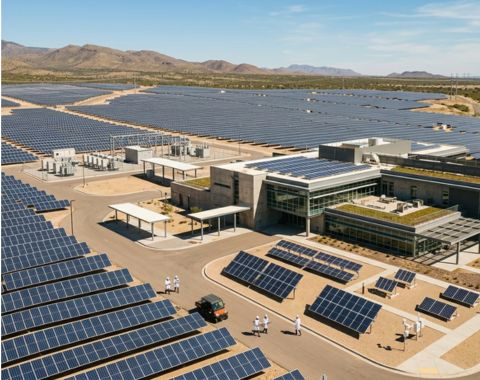
Translating Laboratory Discovery into Grid-Scale Systems
Applied solar research achieves meaningful value only when empirical laboratory findings are subjected to rigorous field testing, high-fidelity computer simulations, and real-world environmental validation. FSEC pioneers this translation lifecycle across residential, commercial, and utility-scale installations.
Research
Controlled laboratory inquiry, cell-level efficiency modeling, thin-film material science, and degradation physics.
Testing
Environmental stress chambers, accelerated thermal cycling, optical flash simulation, and long-term mechanical load testing.
Validation
Third-party yield certification, statutory safety compliance, and performance bankability against established federal standards.
Deployment
Translating proven architectures into national energy codes, commercial EPC practices, and accredited workforce education.
Institutional Impact at a Glance
A half-century legacy of quantitative solar innovation, laboratory excellence, and international authority.
Core Expertise Domains
Our interdisciplinary approach tackles complex energy paradigms through rigorous analysis and technological innovation.
Energy Research
Advancing photovoltaic technologies, solar thermal systems, and alternative fuel generation through empirical analysis, field instrumentation, and advanced material science.
Building Science
Optimizing structural energy efficiency, HVAC interaction, and developing zero-energy building paradigms through whole-building performance monitoring.
Engineering
Systems integration, balance-of-system (BOS) architecture, and mechanical design for scalable, utility-grade clean energy solutions.
Policy Analysis
Data-driven insights informing regulatory frameworks, net metering tariffs, interconnection guidelines, and sustainable energy legislation.
Education
Training the next generation of researchers, accredited solar design engineers, and technical installation professionals.
Rigorous Research Methodology
Research at FSEC is based on field monitoring, computer simulations and controlled experiments in highly instrumented laboratories.
Field Monitoring
Real-world data acquisition across diverse operational environments, commercial rooftops, and extreme microclimates.
Computer Simulation
Advanced predictive modeling, thermodynamic system simulation, and long-term yield degradation forecasting.
Controlled Experiments
Empirical validation within highly regulated laboratory conditions, accelerated aging chambers, and optical flash testing.
Where Energy Technologies Are Tested
Our state-of-the-art facilities provide the controlled environments necessary for precise validation of next-generation energy solutions. From single-cell silicon characterization to full 100 kW power conversion systems, infrastructure is calibrated to meet strict international standards.
View Facility SpecificationsPrecision Measurement
High-fidelity sensor networks capturing granular performance metrics, irradiance, and thermal dynamics in real time.
Material Experimentation
Evaluating thermal dynamics, ultraviolet degradation, and mechanical stress across synthetic composites and photovoltaic substrates.
System Validation
Certifying technology readiness levels (TRL) against established federal, IEEE, and UL compliance benchmarks.
Authoritative Research Fraternity & Partnerships
The Center's 150-member staff includes 95 professionals with expertise in engineering, energy research, building science, energy and policy analysis, and education and training. The remainder of the staff consists of technical and administrative support personnel and university student assistants.
Research at FSEC is based on field monitoring, computer simulations and controlled experiments in highly instrumented laboratories. These research efforts are developed in partnership with industry, nonprofit organizations, private sponsors and national laboratories.
Connecting Research With Real-World Energy Challenges
Theoretical models only matter when proven at scale. FSEC bridges the critical gap between academic inquiry and commercial deployment, ensuring that research findings directly inform industry practice, engineering guidelines, and infrastructure development.
Industry-Sponsored Technology Validation
Independent yield verification, commercial warranty testing, and accelerated stress analysis for Tier-1 solar technology manufacturers.
Grid Integration Pilot Programs
High-penetration solar feeder simulations, smart inverter voltage ride-through testing, and battery storage microgrid dispatch trials.
Public-Sector Infrastructure Consulting
Technical counsel for municipal energy master plans, disaster-resilient school shelters, and state building energy code revisions.
The Applied Solar Innovation Pipeline
How scientific inquiry systematically cascades into national infrastructure, statutory policy, and technical workforce capability.
Advancing Energy Research Through Evidence and Collaboration
Join our network of researchers, industry partners, and policy makers in shaping a resilient energy future. Access IISE's industry-aligned technical courses and national engineering directory.