Second Life EV Batteries in India: Opportunities, Applications and Challenges
India’s electric vehicle revolution is reaching an electrochemical turning point. With millions of electric two-wheelers, three-wheelers, and commercial buses operating on Indian roads, hundreds of thousands of traction battery packs are approaching the end of their automotive service lives. While an EV battery is typically retired when its State of Health (SoH) degrades to roughly 70% to 80%—no longer providing the dynamic acceleration, rapid regenerative charge acceptance, and peak driving range required by vehicle duty cycles—these packs still retain substantial electrochemical capacity. Repurposing retired EV batteries for stationary Battery Energy Storage Systems (BESS) represents a transformative commercial and circular-economy opportunity for India’s clean energy transition. However, bridging the gap between automotive retirement and safe, bankable stationary storage requires rigorous diagnostic testing, cell grading, BMS retrofitting, and adherence to evolving national compliance standards.
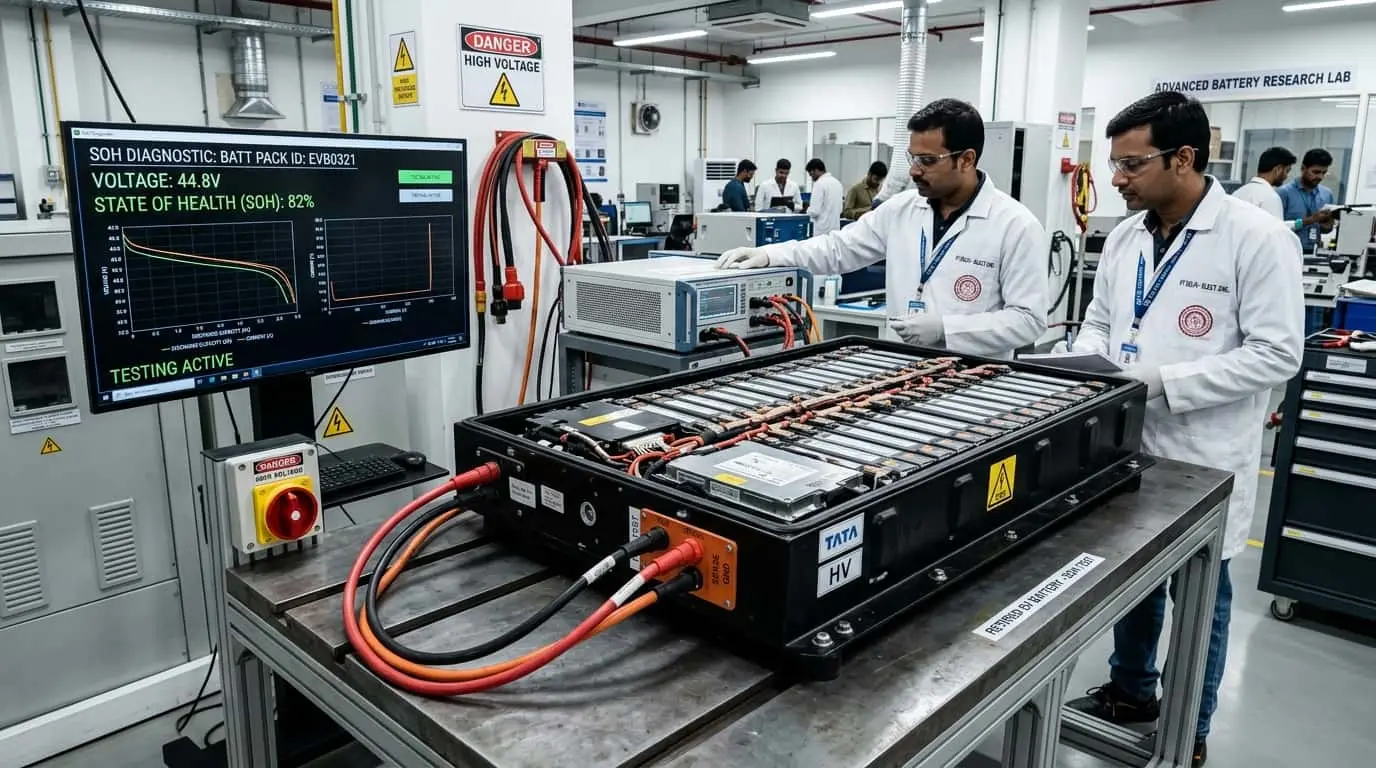
Executive Summary
The rapid electrification of India's commercial passenger fleets, delivery logistics, and public transit under national initiatives such as the FAME schemes and PM-eBus Sewa is producing an inevitable byproduct: a monumental wave of retired lithium-ion battery packs. Unlike consumer electronics where batteries are operated until total electrochemical failure, electric vehicles retire packs when their capacity drops below approximately 70% to 80% of nameplate rating. At this threshold, internal resistance has increased and energy density has declined to the point where vehicle driving range and rapid-charging capabilities are impaired.
However, a retired EV battery is far from dead. For stationary Battery Energy Storage Systems (BESS)—such as solar photovoltaic self-consumption buffers, telecom tower backup units, and rural microgrids—the operating demands are substantially gentler. Stationary systems typically discharge at modest C-rates (C/5 to C/2) compared to the intense 1C to 3C acceleration peaks of vehicles. Consequently, retired packs can provide an additional 5 to 10 years of reliable service, unlocking significant economic value and delaying premature mineral recycling.
Despite this potential, the second-life battery ecosystem in India faces critical technical and commercial constraints. Chief among these are heterogeneous cell degradation, undocumented thermal operating histories, proprietary battery management system (BMS) communication locks, and the absence of harmonized national testing standards. Furthermore, the rapid cost decline of brand-new Lithium Iron Phosphate (LiFePO4) cells compresses the margin for refurbished packs. Repurposing is not a universal solution: rigorous diagnostic gating is vital to distinguish viable candidates from hazardous, dendrite-damaged packs that must be routed immediately to authorized recycling.
Key Strategic Takeaways
70–80% Retained Usability
Automotive retirement is dictated by vehicle acceleration and range limits. In stationary solar and telecom roles, lower discharge C-rates (0.2C–0.33C) reduce internal resistive Joule heating, allowing 1,500–3,000 additional stable operational cycles.
Mandatory Safety Screening
State of Health (SoH) alone does not verify safety. Any battery with mechanical pouch swelling, historical thermal runaway excursions, or internal micro-shorts must be disqualified and routed directly to certified hydrometallurgical recycling.
BMS & PCS Retrofitting
OEM vehicle BMS firmware is proprietary and locked. Successful repurposing requires retrofitting open-protocol industrial stationary BMS units equipped with active cell balancing, multi-point NTC thermistors, and CAN/Modbus communication.
EPR Compliance Obligation
Under the Battery Waste Management Rules 2022, repurposers and refurbishers must register on the Central Pollution Control Board (CPCB) portal, maintain end-to-end chain of custody, and ensure final handover to registered recyclers.
2. What is a Second-Life EV Battery?
3. Why Second-Life EV Batteries Matter in India
4. How a Second-Life Battery Works: 11-Stage Lifecycle
5. Stationary Applications in the Indian Market
6. Deep-Dive: Second-Life Batteries for Solar PV Storage
7. Comprehensive Battery Testing & Grading Regimen
8. Interactive Battery Suitability Calculator
9. Engineering Challenges & Practical Mitigations
10. High-Voltage Safety Engineering & Standards
11. Indian Regulations: Battery Waste Rules 2022 & EPR
12. Commercial Business Models in India
13. 12-Step Roadmap to Launch a Repurposing Venture
14. Lifecycle Economic Evaluation & LCOS Framework
16. Future Outlook for India (2026–2035)
17. Technical Skills & High-Growth Career Pathways
18. IISE Educational Training Programs
19. Frequently Asked Questions (15 Detailed Answers)
20. Strategic Conclusion & Synthesis
21. Author & Editorial Verification Details
22. Authoritative References & Government Citations
23. Related Technical Articles from IISE
24. Final Educational Call-to-Action
What is a Second-Life EV Battery?
In electrochemistry, battery retirement is distinctly different from true end-of-life. A lithium-ion traction battery is decommissioned from an electric vehicle not when it ceases to store electrical energy, but when its operational characteristics no longer fulfill the dynamic performance requirements of vehicular transport. Automotive duty cycles impose extreme electrical and thermal stresses: rapid acceleration demands discharge current pulses up to 3C (where C-rate denotes current relative to battery capacity in ampere-hours), regenerative braking injects sudden high-amperage charging spikes, and drivers expect predictable highway driving range and DC fast-charging speeds.
As lithium-ion cells age, two primary physical degradation processes occur simultaneously: capacity fade (the loss of active cyclable lithium ions and active electrode material) and resistance growth (thickening of the solid electrolyte interphase [SEI] layer on the graphite anode, micro-cracking of cathode particles, and electrolyte dry-out). When a pack reaches approximately 70% to 80% State of Health (SoH), internal resistance has increased sufficiently to cause noticeable voltage drop (sag) under load. For an EV, this manifests as sluggish acceleration, premature BMS low-voltage cut-offs during hill climbs, and severely reduced range.
The Four Circular Economy Pathways
When an electric vehicle battery pack is removed from service, it enters one of four distinct technical pathways, characterized by ascending levels of disassembly, capital expenditure, and engineering intervention:
The battery pack or intact multi-cell modules are utilized with minimal physical modification. The original mechanical casing and module interconnects are preserved, while the proprietary vehicle BMS is replaced or reconfigured to communicate with stationary power conversion systems. This pathway offers the lowest capital cost and fastest route to market.
The battery pack is opened, and individual modules are tested under load. Defective, high-resistance, or severely degraded modules are extracted and replaced with healthy donor modules of matched capacity and impedance. Inter-module busbars and wiring harnesses are renewed, and an active balancing system is integrated.
Packs and modules are dismantled completely down to individual prismatic, cylindrical, or pouch cells. Every single cell undergoes automated capacity cycling, impedance spectroscopy, and delta-V sorting. Cells are re-binned within a tight tolerance (±1% capacity, ±2 mΩ impedance) and assembled into completely new stationary rack enclosures with new thermal barriers and busbars.
When cells fail electrical safety screening, exhibit mechanical swelling, or have reached the end of their second life (typically <50%–60% SoH), they are transferred to authorized recyclers. Through automated shredding, black mass separation, and hydrometallurgical or pyrometallurgical refining, elemental lithium, cobalt, nickel, manganese, copper, and graphite are recovered for new cell precursor synthesis.
Core Electrochemical Parameters Explained
-
State of Health (SoH): Expressed as a percentage, SoH represents the ratio of the battery's current fully discharged capacity (in Ampere-hours, Ah) relative to its original nameplate capacity under standard test conditions (25°C, C/3 rate).
SoH (%) = (C_actual / C_nominal) × 100 - State of Charge (SoC): The instantaneous percentage of available electrical charge remaining in the battery relative to its current maximum usable capacity.
- Internal Resistance ($R_{\text{int}}$) and Joule Heating: Measured in milliohms ($m\Omega$), internal resistance increases as the cell ages. Under electrical current ($I$), resistive power loss is dissipated as heat: $P_{\text{loss}} = I^2 \cdot R_{\text{int}}$. In an EV discharging at 150A, an aged pack generates severe internal heat. In a stationary solar system discharging at 20A, Joule heating is reduced by over 98%, allowing degraded cells to operate within safe thermal limits.
- Non-Linear Degradation Knee Point: Lithium-ion cells typically exhibit linear aging for the first 1,000–3,000 cycles, followed by an abrupt, non-linear acceleration in degradation—known as the "aging knee." Once a cell crosses this knee point, capacity drops exponentially, and internal short-circuit risks escalate due to lithium metal plating. Repurposing diagnostic protocols must confirm the cell is operating safely above this transition point.
100% → 70-80% SoH (5–8 yrs)
Safety, Capacity, Impedance
80% → 50-60% SoH (5–10 yrs)
Raw Material Extraction
Why Second-Life EV Batteries Matter in India
India's clean mobility and energy transition is distinct from North American and European markets in both vehicle composition and grid architecture. While Western markets are dominated by high-capacity passenger electric cars (60 to 100 kWh battery packs), India's EV adoption has been led by electric two-wheelers (e-2Ws with 2 to 4 kWh packs), electric three-wheelers (e-3Ws/e-rickshaws with 4 to 10 kWh packs), and urban electric transit buses (100 to 300 kWh packs). According to official Ministry of Road Transport and Highways (MoRTH) VAHAN portal data, over 1.5 million EVs are now registered annually in India, with commercial logistics and delivery fleets operating under rigorous high-mileage duty cycles.
Because commercial three-wheelers and delivery two-wheelers often complete multiple charging cycles daily under elevated ambient temperatures, their traction packs reach the 70–80% SoH automotive retirement threshold within 3 to 5 years—significantly faster than personal passenger vehicles. Consequently, India is entering its first massive wave of battery retirements between 2025 and 2028.
1. Strategic Mineral Sovereignty and Circularity
India currently imports more than 90% of its raw lithium-ion cells, primarily from China, South Korea, and Taiwan. Although domestic manufacturing is expanding rapidly under the Central Government’s Production Linked Incentive (PLI) Scheme for Advanced Chemistry Cells (ACC) with a 50 GWh budgetary allocation, domestic supply remains constrained. Every kilowatt-hour (kWh) of storage capacity repurposed for stationary backup delays the need to import new cells, saving vital foreign exchange reserves and insulating domestic infrastructure from global supply-chain shocks.
2. Enabling India's 500 GW Renewable Energy Mandate
India has committed to achieving 500 GW of non-fossil fuel electricity capacity by 2030 under its international climate commitments. According to the Central Electricity Authority (CEA) National Electricity Plan (Generation Vol. 1), India will require an estimated 47 GW / 236 GWh of Energy Storage Systems (BESS + Pumped Storage) by 2031–32 to balance intermittent solar and wind generation and prevent massive renewable curtailment. While utility-scale projects deploy multi-megawatt new BESS installations, distributed commercial, agricultural, and rooftop solar installations can leverage cost-effective repurposed EV batteries to store excess daytime generation for evening peak consumption.
3. Displacing Diesel Backup Across Commercial & Telecom Towers
India's telecom tower infrastructure encompasses more than 750,000 active towers nationwide. A substantial percentage of rural and semi-urban towers endure frequent grid outages and rely heavily on diesel generator (DG) sets, consuming millions of liters of subsidized diesel fuel annually while generating localized particulate emissions and greenhouse gases. Repurposed EV battery banks offer an ideal clean replacement: telecom loads are predictable and steady (typically 2 to 5 kW per tower), operating at gentle C-rates (C/8 to C/4) that match the electrochemical capabilities of second-life packs.
The Indian Battery Circular Economy Loop
A closed-loop framework connecting automotive fleet operators, CPCB-registered repurposers, stationary solar installations, and authorized hydrometallurgical recyclers under the Battery Waste Management Rules 2022:
How a Second-Life Battery Works: The Technical Lifecycle
Transforming a retired high-voltage electric vehicle battery into a safe, bankable stationary energy storage system is an intensive multidisciplinary engineering workflow. It is not simply a matter of wiring a used pack to a solar inverter. The process requires a rigorous 11-stage technical pipeline spanning high-voltage de-energization, digital serial traceability, electrochemical diagnostics, mechanical integration, and telemetry commissioning:
| Stage # | Engineering Phase | Core Operations & Test Procedures | Critical Safety / Quality Gate |
|---|---|---|---|
| 01 | Decommissioning & De-energization | Manual Service Disconnect (MSD) removal, high-voltage PPE (1000V rated Class 0 gloves), physical unbolting from chassis, pack terminal insulation. | Zero live voltage verification on external chassis; mechanical stability check. |
| 02 | Identification & Traceability | Barcode/QR logging, cell chemistry verification (LFP vs NMC), manufacturing lot, nominal voltage, and historical OEM firmware architecture. | Log registration on internal database and CPCB EPR compliance portal. |
| 03 | Visual & Mechanical Screening | Physical inspection for casing puncture, denting, terminal corrosion, pouch bloating/swelling, vent rupture, or sweet electrolyte solvent odor. | Immediate Disqualification: Any swollen or physically ruptured pack is routed to recycling. |
| 04 | Diagnostic Safety Testing | Insulation resistance testing (megohmmeter @ 500V/1000V DC between live bus and casing), Open-Circuit Voltage (OCV) across all modules. | Minimum insulation resistance >1,000 Ω/V; module voltage delta within OEM spec. |
| 05 | Capacity & SoH Cycling | Controlled charging to cutoff, 1-hour rest, constant-current discharge at C/3 rate (0.33C) on regenerative cycler at 25°C ambient. | Accurate empirical measurement of usable Ampere-hours (Ah) and Watt-hours (Wh). |
| 06 | Impedance & Delta-V Grading | Electrochemical Impedance Spectroscopy (EIS) or 1 kHz AC internal resistance ($R_{\text{int}}$); delta-V dispersion analysis across series cells. | Cull any module where internal resistance exceeds 1.5x nominal or delta-V >40 mV. |
| 07 | Suitability & Application Assignment | Categorization into Grade A (80–85% SoH), Grade B (70–79% SoH), Grade C (60–69% SoH), or Reject (<60% SoH). | Matching battery operational envelope to specific end-use C-rate demands. |
| 08 | Mechanical Rack & Thermal Assembly | Installation in standard 19-inch stationary server racks or NEMA enclosures, torqued copper busbars, fire-resistant ceramic/aerogel barriers. | Proper torque verification (calibrated torque wrench) and vibration-free mounting. |
| 09 | BMS Integration & Safety Wiring | Retrofitting industrial stationary BMS with individual cell voltage taps, multi-point NTC thermistors, shunt current sensor, and contactors. | Over-voltage, under-voltage, over-temperature, and short-circuit cutoff validation. |
| 10 | PCS / Inverter Integration & Telemetry | Configuring CAN 2.0B / Modbus RS485 communication with hybrid solar inverter or Power Conversion System (PCS); pre-charge circuit testing. | Closed-loop charge current limiting (CCL) and emergency stop (E-stop) interlock trip. |
| 11 | O&M Monitoring & Final Decommissioning | Cloud telematics tracking real-time cell delta-V, temperature rise, and cyclic capacity fade over 5–10 years of stationary duty. | Mandatory transfer to CPCB-registered recycler when capacity drops below 50–60% SoH. |
The Role of Critical Subsystems in Repurposed Storage
- Battery Management System (BMS): The electronic brain of the BESS. In second-life applications, cell aging is inherently uneven. An advanced stationary BMS must provide active cell balancing (transferring energy from high-charge to low-charge cells) rather than mere passive resistor burning, preventing the weakest cell from terminating the charge/discharge cycle prematurely.
- Thermal Management Architecture: In ambient Indian operating environments where summer temperatures frequently exceed 42°C, lithium-ion degradation accelerates drastically. A repurposed BESS requires either forced-air cooling ducts with high-efficiency particulate air (HEPA) filtration or closed-loop mini-split HVAC systems maintaining cell temperatures between 20°C and 28°C.
- DC Contactors and Pre-Charge Circuits: Large capacitive DC-link banks in solar inverters create extreme inrush currents when energized. A pre-charge resistor and timing contactor limit initial inrush current, preventing catastrophic contactor welding and semiconductor fuse rupture.
- Insulation Monitoring Devices (IMD): Continuously inject a low-frequency AC signal to monitor electrical isolation between the floating DC battery bus and the grounded enclosure chassis, triggering an immediate trip if insulation degrades below 100 $Omega/ ext{V}$.
Applications of Second-Life EV Batteries in India
Second-life EV batteries are not a universal panacea for every energy storage demand. Successful commercial deployment depends on strictly matching the battery's degraded electrochemical characteristics—specifically reduced energy density, increased internal resistance, and diminished high-rate discharge tolerance—to applications with gentle operational duty cycles. In India, eight primary stationary use cases have emerged, each presenting distinct economic viability, technical requirements, and boundary constraints:
Use Case: Storing excess daytime rooftop solar generation to power residential, institutional, or commercial loads during evening peak tariff hours.
Why It Fits: Solar charging occurs smoothly over 4 to 6 hours during peak solar irradiance (0.15C to 0.25C), and discharge occurs gradually overnight (0.1C to 0.2C). These gentle C-rates minimize internal resistive Joule heating, allowing repurposed packs to operate with high round-trip efficiency (82%–88%).
Use Case: Replacing polluting, high-maintenance diesel generator sets and bulky lead-acid UPS banks in factories, software parks, and hospitals.
Why It Fits: Industrial users require backup power during sudden grid interruptions. Repurposed lithium packs deliver instant sub-20ms switchover through hybrid power conversion systems (PCS), with zero diesel fuel emissions and 4x the volumetric energy density of conventional lead-acid battery rooms.
Use Case: Providing 48V DC uninterruptible power to cellular transceivers across India's 750,000+ base transceiver stations (BTS).
Why It Fits: Indian telecom towers typically operate on a standard 48V DC bus with steady 2 kW to 5 kW loads. Repurposing 48V e-rickshaw or e-auto battery modules provides a modular drop-in replacement that withstands higher ambient operating temperatures far better than flooded lead-acid batteries.
Use Case: Autonomous community microgrids powering off-grid villages in remote Himalayan valleys, the Sundarbans, and the Northeast.
Why It Fits: In remote rural electrification, upfront capital expenditure (CapEx) is the primary economic hurdle. Repurposed EV battery banks reduce battery CapEx by 30% to 50% compared to new Tier-1 BESS, enabling microgrid project viability when paired with local solar or micro-hydro generation.
Use Case: Buffering fast-charging demand spikes at highway DC charging hubs to avoid costly DISCOM grid substation transformer upgrades.
Why It Fits: Charging stations draw immense intermittent power (60 kW to 240 kW). A second-life stationary battery trickle-charges from the grid during quiet hours and discharges to support vehicle charging during peak demand, flattening the site's maximum demand tariff penalties.
Use Case: Charging the battery bank during low-tariff off-peak night hours and discharging during high-tariff evening peak windows.
Why It Fits: Several Indian State Electricity Regulatory Commissions (SERCs) have implemented dynamic Time-of-Day (ToD) tariffs with 20% to 30% spreads between peak and off-peak rates. Repurposed batteries can capture this financial spread with moderate upfront investment.
Use Case: Providing centralized backup and peak load management for university campuses, educational institutions, and residential townships.
Why It Fits: Institutional campuses have ample physical space for dedicated, fire-isolated battery container enclosures, overcoming the footprint constraints that sometimes affect dense urban commercial sites.
Use Case: Research testbeds, university laboratories, and training institutes (including IISE practical labs) evaluating battery degradation mechanics.
Why It Fits: Provides invaluable hands-on platforms for training electrical engineering students, technicians, and entrepreneurs in high-voltage safety, cell balancing, BMS telemetry programming, and fire suppression protocols.
Application Suitability & Constraint Matrix
| Application | Typical C-Rate | Key Engineering Requirement | Primary Benefit | Main Technical Constraint | When New Batteries are Preferred |
|---|---|---|---|---|---|
| Solar PV Storage | 0.15C – 0.33C | Wide MPPT voltage window matching; closed-loop BMS communication. | 35%–45% lower initial storage CapEx; smooth diurnal solar absorption. | Slightly lower round-trip efficiency (84% vs 94%); requires thermal shade. | Utility-scale megawatt tenders with strict 15-year performance warranties. |
| Telecom Towers | 0.1C – 0.25C | Standard 48V DC bus compatibility; remote telemetry monitoring. | Eliminates diesel fuel logistics and theft; 3x longer life than lead-acid. | High ambient outdoor cabinet heat in North/Central Indian summers. | Remote mountain towers where technician replacement access is impossible. |
| C&I Backup (UPS) | 0.5C – 1.0C | Sub-20ms transfer switch; high-surge pulse tolerance. | Displaces diesel generator maintenance, noise, and localized emissions. | Higher internal resistance requires conservative inverter sizing. | Critical data centers or surgical hospital suites requiring 99.999% uptime. |
| Rural Microgrids | 0.2C – 0.33C | Rugged, tamper-resistant enclosure; active cell-level balancing. | Drastically lowers village electrification CapEx; high social impact. | Lack of skilled local service personnel; requires automated fail-safes. | Financially well-endowed multilateral grant projects with Tier-1 mandates. |
| EV Fast Charging Buffer | 0.5C – 1.5C | Active liquid or forced-air cooling; high continuous discharge capability. | Avoids hundreds of thousands in DISCOM grid substation upgrade costs. | High-rate discharge stresses aged cells; accelerates secondary degradation. | High-throughput highway charging hubs with continuous back-to-back sessions. |
Second-Life Batteries for Solar Energy Storage
For solar professionals, integrating retired EV batteries with photovoltaic generation represents both the largest commercial market and the most exacting engineering challenge. Solar PV power generation is inherently variable, governed by diurnal solar insolation curves and intermittent cloud cover. Coupling a solar array with a second-life battery bank requires meticulous electrical matching between the solar array, the power conversion system (PCS) or hybrid inverter, and the battery management system (BMS).
1. System Architectures: AC-Coupled vs. DC-Coupled
The solar PV array is connected to a standard grid-tied solar inverter that outputs 230V/415V AC. The second-life battery bank is connected to a separate bidirectional battery inverter (PCS) on the same AC bus.
- Advantages: Ideal for retrofitting storage to existing operational solar plants; complete electrical isolation between solar DC voltages and battery DC voltages; easier modular scalability.
- Drawback: Triple conversion losses (PV DC → AC → Battery DC → AC) reduce overall round-trip solar-to-load efficiency to approximately 78%–82%.
The solar PV array and the second-life battery bank share a common DC bus through a multi-port hybrid inverter or high-voltage MPPT charge controller.
- Advantages: Higher round-trip efficiency (86%–90%) as daytime solar energy charges the battery directly over the DC bus; lower overall balance-of-system (BOS) equipment cost.
- Drawback: Requires precise matching between the hybrid inverter's DC operating voltage window and the repurposed battery's full charge/discharge voltage swing.
2. Inverter Voltage Window Matching
Standard solar inverters and battery PCS units operate within strict DC voltage boundaries ($V_{\text{DC,min}}$ to $V_{\text{DC,max}}$). When repurposing a traction battery, engineers must verify that the pack's voltage across its entire State of Charge curve remains strictly inside the inverter's operating window:
- Low-Voltage (LV) Systems (48V Nominal): Commonly built from 15S or 16S Lithium Iron Phosphate (LiFePO4) or 13S/14S Nickel Manganese Cobalt (NMC) modules extracted from electric 2-wheelers or 3-wheelers. A 16S LFP pack operates from 44.0V (empty at 2.75V/cell) to 55.2V (charged at 3.45V/cell), perfectly aligning with standard 48V telecom and off-grid solar inverters.
- High-Voltage (HV) Systems (300V–800V Nominal): Built from intact passenger EV or electric bus packs (e.g., 96S to 192S configurations). A 96S LFP bus pack operates between 264V DC and 336V DC, requiring a dedicated commercial PCS with programmable high-voltage DC input limits.
3. BMS Closed-Loop Communication & Dynamic Current Limiting
Conventional lead-acid solar inverters rely on crude, open-loop voltage thresholds to regulate charging. In contrast, second-life lithium battery systems require closed-loop digital communication (typically via CAN 2.0B or Modbus RS485 protocols) between the battery management system and the solar inverter.
Because aged cells have higher and potentially mismatched internal resistance, the BMS must dynamically broadcast real-time Charge Current Limits (CCL) and Discharge Current Limits (DCL) to the inverter every 500 milliseconds. If the weakest cell in the pack approaches its upper voltage limit (e.g., 3.60V for LFP) or if temperature sensors detect localized thermal accumulation (>45°C), the BMS instantly commands the solar inverter to throttle down its charging amperage, preventing cell over-voltage, lithium plating, and catastrophic thermal runaway.
4. Operational Derating: C-Rate, DoD, and Thermal Management
- C-Rate Derating: While new LFP cells easily handle 1C charge and discharge rates, second-life packs should be capped at 0.2C to 0.33C continuous (e.g., a 100 Ah pack should charge and discharge at no more than 20A to 33A). This dramatic derating reduces internal resistive heating by 85%–95%, prolonging remaining cycle life.
- Conservative Depth of Discharge (DoD): Restricting daily cycling between 15% and 85% SoC (70% DoD of retained capacity) rather than cycling from 0% to 100% can double the remaining calendar life of the pack.
- Thermal Management in Indian Climates: In regions like Rajasthan, Gujarat, and Maharashtra where ambient shade temperatures reach 45°C–48°C, an uncooled outdoor enclosure will suffer accelerated capacity fade and frequent BMS over-temperature shutdowns. Repurposed BESS installations require insulated containerized enclosures equipped with auxiliary HVAC or ducted air cooling maintaining cell operating temperatures between 20°C and 28°C.
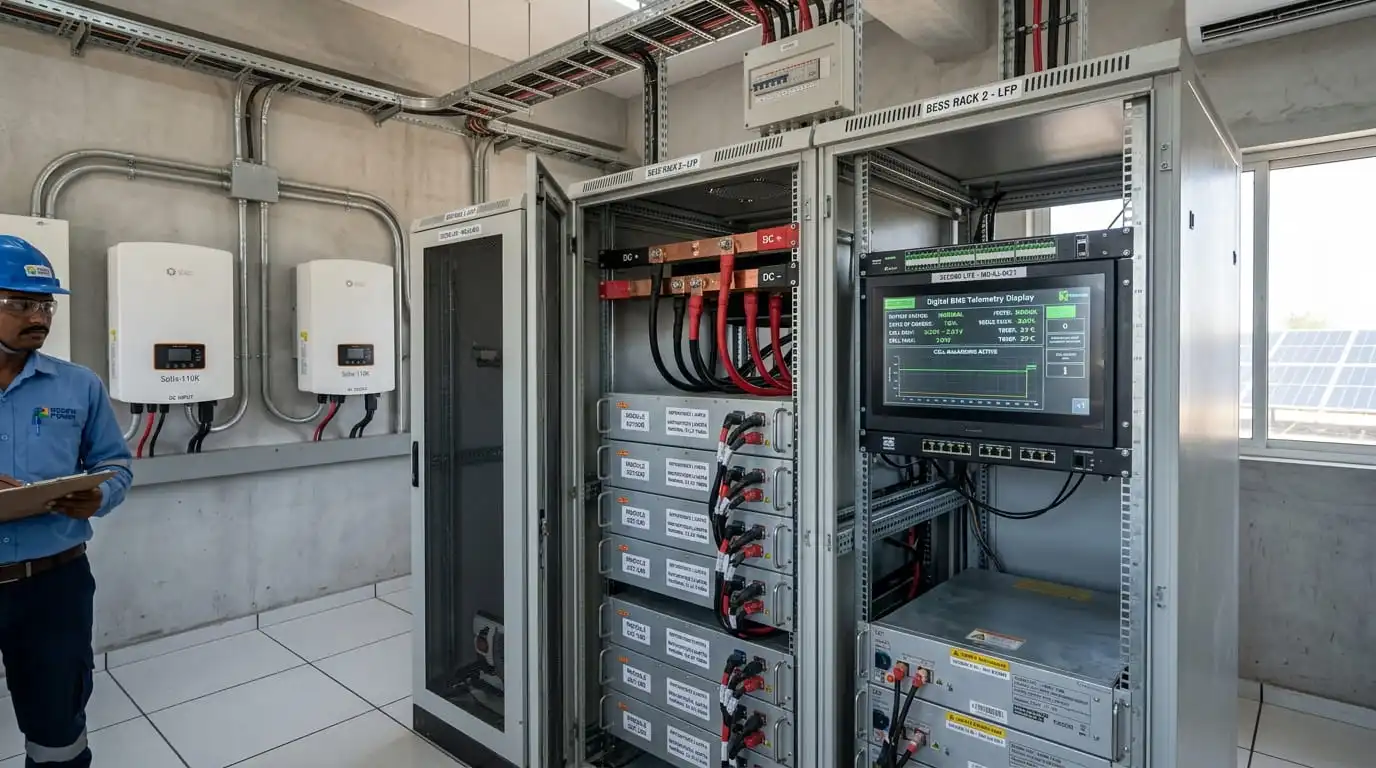
Battery Testing and Grading Regimen
The cornerstone of a viable second-life battery industry is rigorous, objective testing. In the absence of comprehensive historical vehicle telemetry logs, every incoming retired pack represents an unknown electrical entity. Repurposers must execute a multi-tier diagnostic regimen to establish mechanical integrity, measure true electrochemical capacity, determine internal resistance, and screen for latent safety hazards before a pack can be graded and certified for reuse.
The 10-Step Comprehensive Testing Protocol
- Mechanical & Visual Inspection: Precise micrometer measurement of cell pouch/prismatic can thickness to detect swelling (>5% thickness increase indicates internal gas generation). Inspection for terminal strip corrosion, hairline seal fractures, and vent valve compromise.
- Safety History & Diagnostic Trouble Code (DTC) Extraction: Interrogating the factory vehicle ECU/BMS via CAN bus to identify historical over-temperature alarms, short-circuit events, severe cell over-discharge incidents (<2.0V/cell), or crash collision sensor triggers.
- Cell & Chemistry Identification: Verification of cathode chemistry (LFP, NMC 111/532/622/811, LMO, or LTO), nominal cell voltage, maximum charging cutoff voltage, and original manufacturer specifications.
- Insulation Resistance & Dielectric Safety Test: Using a calibrated 500V/1000V DC megohmmeter to measure electrical isolation between high-voltage busbars and the grounded enclosure chassis. Measured resistance must exceed 1,000 $\Omega/\text{V}$ (minimum 500 k$\Omega$).
- Open-Circuit Voltage (OCV) Consistency Audit: Measuring individual cell/module resting voltages after a 24-hour stabilization period. A voltage variance exceeding 30 mV across series cells indicates severe imbalance or localized self-discharge.
- Automated Constant-Current Capacity Testing: Subjecting the battery to a full charge-rest-discharge cycle using an automated regenerative battery cycler. Discharge is performed at C/3 rate (0.33C) at a stabilized ambient temperature of 25°C down to the manufacturer’s cutoff voltage. Retained Ampere-hour (Ah) and Watt-hour (Wh) capacity are digitally logged.
- Internal Resistance & Impedance Spectroscopy: 1 kHz AC internal resistance measurement (using an AC milliohm meter) and Electrochemical Impedance Spectroscopy (EIS). Distinguishes ohmic electrolyte resistance ($R_\Omega$) from charge-transfer resistance ($R_{\text{ct}}$). Modules with internal resistance exceeding 1.4x of nominal new cell specifications are culled.
- 14-Day Self-Discharge Screening: Fully charging the modules to 100% SoC, disconnecting all loads and sensing leads, and storing them in an environmentally controlled room for 14 days. Measuring $\Delta V_{\text{rest}}$. Any cell exhibiting a voltage drop greater than 15 mV indicates internal dendritic micro-shorting and must be rejected.
- Thermal Behavior Imaging Under Load: Monitoring the pack with a calibrated FLIR radiometric thermal camera during a sustained 0.5C discharge cycle. Localized hot spots (>5°C variance across adjacent cells or busbar terminals) reveal high-resistance connections or internal anode degradation.
- Remaining Useful Life (RUL) & Degradation Modeling: Utilizing differential voltage analysis ($dV/dQ$) and incremental capacity analysis ($dQ/dV$) to verify that the cell operates comfortably above its non-linear aging knee point.
Illustrative Battery Grading Framework
| Grade Category | State of Health (SoH) | Internal Resistance ($R_{\text{int}}$) | Cell Delta-V | Recommended Stationary Deployment | Target Cycle Life |
|---|---|---|---|---|---|
| Grade A (Premium) | 80% – 85% SoH | < 1.15x of nominal | < 20 mV | High-duty commercial solar shifting, grid frequency support, microgrids. | 2,500 – 3,500 cycles |
| Grade B (Standard) | 70% – 79% SoH | 1.15x – 1.30x nominal | 20 – 35 mV | Telecom tower backup UPS, residential solar self-consumption, agricultural backup. | 1,500 – 2,500 cycles |
| Grade C (Light Duty) | 60% – 69% SoH | 1.30x – 1.50x nominal | 35 – 50 mV | Low-drain off-grid DC lighting, intermittent rural backup (max 0.15C discharge). | 800 – 1,200 cycles |
| Reject (Recycle) | < 60% SoH or Damaged | > 1.50x nominal | > 50 mV / Pouch Swell | Unsuitable for reuse. Mandatory transfer to CPCB-registered recycler for material recovery. | 0 cycles (Hazardous) |
Second-Life EV Battery Suitability Calculator
Evaluate the preliminary engineering feasibility of repurposing a retired electric vehicle battery pack for stationary energy storage. Enter the measured operating parameters and physical inspection findings below to receive an instant, conservative diagnostic suitability rating, recommended next steps, and safety warnings.
Diagnostic Battery Parameters
Preliminary Diagnostic Assessment
With 76% SoH and clean mechanical integrity, this pack is well within the prime second-life window for solar storage and telecom backup. Operating at gentle C-rates (C/5 to C/3) will keep internal Joule heating within manageable limits.
- Execute full C/3 capacity verification cycle at 25°C.
- Conduct 1 kHz AC internal resistance or EIS screening to detect high-impedance cells.
- Retrofit an open-protocol stationary BMS with active cell balancing and CAN communication.
Challenges and Engineering Limitations
While the circular economy vision for second-life batteries is compelling, commercial execution in India faces substantial technical, logistical, and economic headwinds. Scaling a repurposing enterprise requires addressing 13 interrelated engineering and commercial barriers with realistic mitigation strategies:
| # | Critical Challenge | Underlying Root Cause | Practical Engineering & Business Mitigation |
|---|---|---|---|
| 01 | Heterogeneous Cell Degradation | Thermal gradients in vehicle packs cause cells located near exhaust pipes or central pack cores to age significantly faster than outer edge cells. | Module-level sorting and active cell balancing BMS that shuttles energy dynamically between cells rather than passive resistor burning. |
| 02 | Unknown Operational & Thermal History | Retired batteries rarely come with documented historical logs detailing past DC fast-charging frequencies, temperature excursions, or deep over-discharges. | Mandatory 14-day resting self-discharge screening and Electrochemical Impedance Spectroscopy (EIS) to detect latent micro-shorts. |
| 03 | Thermal Runaway & Fire Risks | Aged cells have thinner separator margins and potential lithium plating, lowering the thermal runaway onset temperature ($T_{\text{onset}}$). | Conservative charging cut-offs (3.45V for LFP), multi-point thermistor sensing, aerosol fire suppression (Stat-X), and blast-rated quarantine zones. |
| 04 | Cell Chemistry Incompatibility | Indian vehicles utilize diverse chemistries: LFP (buses/3Ws), NMC (cars/2Ws), LMO, and emerging sodium-ion. Mixing chemistries is catastrophic. | Strict chemistry segregation in testing and rack assembly; dedicated firmware voltage profiles for each specific electrochemical family. |
| 05 | Pack-to-Pack Physical Heterogeneity | Automotive packs have proprietary shapes, mounting brackets, coolant ports, and busbar layouts designed for specific car chassis. | Standardized 19-inch rack-mount sub-enclosures that house disassembled modular blocks rather than trying to rack intact irregular vehicle shells. |
| 06 | Proprietary OEM BMS Protocol Locks | Vehicle OEMs encrypt CAN bus communication. When removed from the vehicle wiring harness, the stock BMS enters lockout mode and opens contactors. | Removal of factory slave/master BMS and retrofitting universal industrial stationary BMS with standardized Modbus RTU/TCP and open CAN 2.0B protocols. |
| 07 | High Diagnostic & Grading Labor Costs | Manual disassembly, multi-hour capacity cycling, and impedance testing incur substantial labor, facility, and electrical energy costs. | Automated multi-channel regenerative cyclers that feed discharge energy back into the facility AC grid, paired with machine-learning rapid SoH estimators. |
| 08 | Fragmented Reverse Logistics | India's retired batteries are scattered across informal scrap dealers, local mechanics, and regional fleet yards without a unified collection system. | Formal B2B off-take agreements with commercial fleet operators (BluSmart, Yulu, Zypp), e-commerce logistics providers, and state transit corporations. |
| 09 | Uncertain Long-Term Supply Volume | Inconsistent retirement flows make it challenging for repurposers to guarantee steady volume and uniform pack models to commercial clients. | Modular BESS designs that accept multiple standard module configurations (e.g., 8S, 16S) across flexible multi-inverter configurations. |
| 10 | Product Liability & Warranty Ambiguity | When a repurposed battery fails, disputes arise over whether the original vehicle OEM, the cell manufacturer, or the repurposer bears financial liability. | Clear contractual boundaries: the repurposer assumes total system liability, backs units with restricted warranties, and requires continuous BMS telemetry logging. |
| 11 | Bankability & Insurance Hesitancy | Indian commercial banks and non-banking financial companies (NBFCs) are hesitant to finance energy projects powered by used batteries. | Third-party laboratory testing verification (e.g., CPRI, ARAI, or IISE test certificates) and alignment with international safety standards like UL 1974. |
| 12 | Compressing Margins vs. New LFP Cells | Global brand-new LFP cell prices have dropped toward $50–$65/kWh, shrinking the cost delta that makes second-life packs attractive. | Focusing on low-disassembly pack-level repurposing where testing and engineering overhead is minimized to preserve a 30%+ cost advantage over new systems. |
| 13 | Mandatory EPR & Disposal Obligations | Repurposers must legally account for the end-of-life recycling of every battery they sell under the Battery Waste Management Rules 2022. | Forming formal contractual partnerships with CPCB-registered recycling facilities and logging all certificate transfers on the national online portal. |
Safety Engineering and Standards
Safety engineering is the absolute dividing line between a legitimate battery energy storage facility and a hazardous fire trap. Electric vehicle battery packs operate at lethal direct current voltages (often 48V to 400V DC for 2W/3W/passenger cars, and up to 600V–800V DC for commercial electric buses). Unlike alternating current, high-voltage DC does not pass through a zero-crossing voltage point, making DC electrical arcs self-sustaining, intensely energetic, and extraordinarily difficult to extinguish.
1. High-Voltage Personal Protective Equipment (PPE) & Arc Flash Protocols
- Certified Insulating Gloves: All technicians handling live battery terminals must wear ASTM D120 / IEC 60903 Class 0 (rated for 1,000V AC / 1,500V DC) dielectric rubber gloves with leather outer protectors to prevent mechanical puncturing.
- Arc-Rated Face Shields: Full-face shields rated to minimum 8 cal/cm² arc thermal performance value (ATPV) worn with safety spectacles to protect against arc flash plasma and molten metal splatters during unbolting.
- Insulated Hand Tools: Every wrench, ratchet, socket, and screwdriver utilized in disassembly must comply strictly with IEC 60900 (1000V rated) with dual-layer insulation.
- Manual Service Disconnect (MSD): Before any enclosure fasteners are unbolted, the orange high-voltage manual service disconnect plug must be physically pulled and locked out (Lockout/Tagout - LOTO). This splits the pack's series cell circuit into isolated sub-60V touch-safe segments.
2. Facility Infrastructure & Quarantine Protocols
Every testing facility must maintain an external, covered battery quarantine area situated at least 5 meters away from the main building. Suspect, swollen, or thermally compromised batteries are placed in fire-rated steel containers lined with vermiculite or dry sand beds to absorb electrolyte spills and mitigate thermal propagation.
Standard ABC dry chemical extinguishers are ineffective against thermal runaway because they cannot cool the internal cathode decomposition reaction. Testing labs and stationary battery rooms require specialized condensed aerosol generators (e.g., Stat-X, FirePro) paired with high-volume deluge water sprinkler systems designed for prolonged boundary cooling.
3. Relevant Indian and International Standards Landscape
Understanding the exact scope of applicable standards is vital for legal compliance and project insurance. A repurposed battery cannot claim automatic certification simply because its donor vehicle was certified:
| Standard Code | Standard Title & Scope | Regulatory & Engineering Context |
|---|---|---|
| IS/IEC 62619 | Secondary cells and batteries containing alkaline or other non-acid electrolytes – Safety requirements for secondary lithium cells and batteries, for use in industrial applications. | Primary Indian Standard for Stationary BESS: Mandates rigorous safety testing for overcharge, short-circuit, thermal abuse, drop, and thermal propagation in stationary, UPS, and solar storage systems. |
| IS 17092 / IEC 62933-5-2 | Electrical energy storage (EES) systems – Part 5-2: Safety requirements for grid-integrated EES systems. | Governs system-level electrical, mechanical, and environmental safety for commercial and utility grid-connected battery energy storage installations. |
| AIS-038 (Rev 2) & AIS-156 | Automotive Industry Standards: Specific requirements for electric power train vehicles and rechargeable electrical energy storage systems (REESS). | Automotive Only: Certified vehicle battery packs must comply with thermal runaway propagation tests. Note: Compliance with AIS standards does not certify a pack for stationary building deployment. |
| UN 38.3 & UN 3480 | United Nations Recommendations on the Transport of Dangerous Goods: Lithium metal and lithium ion batteries. | Mandatory testing (altitude, vibration, thermal, impact) for the legal commercial road, rail, and sea transport of lithium-ion battery modules across India. |
| UL 1974 | Standard for Evaluation for Repurposing Batteries. | International gold standard for second-life facilities: establishes the sorting, grading, and testing methodology to verify that retired packs are safe for stationary reuse. |
Indian Regulations and Compliance: Battery Waste Rules 2022
On August 24, 2022, the Ministry of Environment, Forest and Climate Change (MoEFCC) notified the landmark Battery Waste Management Rules, 2022 (Notification G.S.R. 664(E)), superseding the antiquated Batteries (Management and Handling) Rules of 2001. The 2022 Rules fundamentally restructured the legal landscape by formally recognizing Electric Vehicle Batteries and establishing a comprehensive, legally binding Extended Producer Responsibility (EPR) framework administered through a centralized digital portal by the Central Pollution Control Board (CPCB).
1. Legal Definitions and Role Classifications
The Rules establish distinct legal identities, rights, and compliance obligations for entities operating across the battery lifecycle:
- Producer: Any entity that manufactures and sells batteries (including EVs with built-in batteries) under its own brand, or imports batteries into India. Producers bear mandatory statutory EPR collection and recycling targets based on the total kilogram volume of batteries placed on the market.
- Refurbisher: Any registered entity that carries out refurbishment of used batteries to extend their useful life. Refurbishers are legally entitled to receive retired batteries from producers or bulk consumers, test and rebuild them, and generate EPR Certificates for Refurbishment based on the refurbished capacity.
- Recycler: An authorized facility registered with the CPCB and State Pollution Control Board (SPCB) that recycles end-of-life batteries to recover valuable raw materials. Recyclers generate EPR Certificates for Recycling based on verified recovery quantities of lithium, cobalt, nickel, and copper.
- Bulk Consumer: Commercial entities (including e-commerce delivery fleets, taxi aggregators, solar EPCs, and state transport undertakings) that purchase batteries in commercial quantities. Bulk consumers are legally forbidden from disposing of retired batteries in municipal waste or selling them to unauthorized scrap dealers; they must surrender them exclusively to registered producers, refurbishers, or recyclers.
2. EPR Certificate Trading Mechanism
The CPCB operates a centralized online portal (eprbattery.cpcb.gov.in) where registered refurbishers log the serial numbers and capacity of second-life batteries processed. Upon verification, the portal issues digital EPR Certificates. Because EV vehicle producers face stiff financial penalties (Environmental Compensation) if they fail to meet their annual recycling targets, producers actively purchase these EPR Certificates from registered refurbishers to satisfy their regulatory quotas. This creates an immediate secondary revenue stream for second-life battery operators in India.
3. Compliance Checklist for Second-Life Battery Businesses
- Obtain Consent to Establish (CTE) and Consent to Operate (CTO) from your respective State Pollution Control Board (SPCB).
- Register formally as a Refurbisher on the CPCB centralized EPR portal (eprbattery.cpcb.gov.in).
- Maintain transparent digital logs of battery serial numbers, cell chemistries, incoming donor fleets, and outgoing customers.
- File mandatory semi-annual returns on the CPCB portal detailing quantities refurbished and secondary waste generated.
- Execute formal off-take contracts with CPCB-authorized recyclers to guarantee that all rejected cells and degraded packs are transferred for scientific material recovery.
Statutory Disclaimer: This regulatory analysis is provided for educational and business planning purposes. Environmental rules and EPR enforcement guidelines are subject to periodic circulars and amendments by the MoEFCC and CPCB. Enterprises must consult qualified legal advisers and verify their specific compliance filings with relevant authorities.
Commercial Business Opportunities in India
The convergence of accelerating electric vehicle retirements, aggressive national renewable storage targets, and mandatory EPR compliance is opening a multi-segment commercial landscape across India. Second-life battery entrepreneurship is not restricted to building battery packs: viable commercial opportunities span testing services, software telematics, reverse logistics, and turnkey system integration:
Service: Providing certified capacity, EIS impedance, and safety screening for vehicle fleet operators, insurers, and scrap buyers.
Target Clients: EV fleet managers, warranty adjusters, battery refurbishers.
Revenue Model: Fee-per-test (₹1,500 to ₹5,000 per module/pack tested).
Service: Procuring retired modules, assembling them into standardized 19-inch rack-mount BESS units with custom BMS and safety contactors.
Target Clients: Solar EPC contractors, commercial factory owners, telecom companies.
Revenue Model: Hardware sales (₹8,000 to ₹12,000 per usable kWh).
Service: Installing and maintaining 48V second-life battery systems at telecom tower sites, charging a monthly service fee that undercuts diesel fuel costs.
Target Clients: Telecom tower infrastructure providers (Indus Towers, ATC).
Revenue Model: Recurring OPEX service contracts (fixed monthly fee per site).
Service: Designing, supplying, and commissioning integrated solar PV + repurposed storage systems for agricultural pumps and commercial buildings.
Target Clients: Farmers under PM-KUSUM, small commercial establishments, petrol pumps.
Revenue Model: Turnkey project contract margin.
Service: Providing IoT gateway hardware and SaaS analytics that continuously track cell delta-V, temperatures, and degradation for deployed BESS assets.
Target Clients: BESS asset owners, financial institutions, insurance underwriters.
Revenue Model: Annual software-as-a-service (SaaS) subscription per kWh tracked.
Service: Digital tracking platforms that assign tamper-proof QR codes and blockchain/cloud records tracing battery origin to final recycling.
Target Clients: EV OEMs seeking automated CPCB EPR portal compliance filings.
Revenue Model: Per-unit serialization fee and compliance audit retainers.
Service: Establishing compliant hazardous goods transport networks collecting retired packs from Tier-2 and Tier-3 cities for delivery to central grading hubs.
Target Clients: Automotive OEMs, CPCB-registered refurbishers and recyclers.
Revenue Model: Logistics fee per ton/kilometer + aggregation handling fee.
Service: Safely discharging and dismantling rejected sub-60% SoH modules, removing copper busbars and plastic casings, producing shredded black mass.
Target Clients: Large-scale hydrometallurgical lithium refining plants.
Revenue Model: Sale of concentrated black mass based on elemental metal spot prices.
Service: Delivering certified, hands-on vocational courses in battery diagnostics, high-voltage safety, and BESS commissioning (the core mission of IISE).
Target Clients: Engineering graduates, solar technicians, automotive mechanics.
Revenue Model: Professional tuition and corporate workforce upskilling contracts.
Financial Transparency Note: All revenue figures and pricing ranges mentioned above are illustrative market estimates based on prevailing 2026 Indian clean-tech operational benchmarks. Actual business margins depend on raw material prices, regional electricity tariffs, and specific commercial contracts.
How to Start a Second-Life Battery Business in India: 12-Step Roadmap
Launching an authorized, commercially resilient battery repurposing enterprise requires navigating an interconnected matrix of technical engineering, hazardous materials safety, customer validation, and statutory compliance. Aspiring clean-energy entrepreneurs should execute the following 12-step practical sequence:
| Step # | Strategic Milestone | Key Actions & Deliverables | Critical Risk to Avoid |
|---|---|---|---|
| 01 | Define Target Application Niche | Select a focused initial market (e.g., 48V telecom DC backup or 10–20 kWh residential solar storage) where C-rate demands are low and customer economics are strong. | Attempting to build high-rate EV fast charging buffers or megawatt grid systems without proven track record. |
| 02 | Analyze Competing Economics | Benchmark your all-in repurposed pack CapEx and OpEx against falling brand-new LFP cell prices. Confirm your solution delivers at least a 30% levelized cost advantage. | Assuming second-life is automatically cheaper without factoring in testing labor and BMS retrofitting costs. |
| 03 | Secure Upstream Battery Off-Take | Sign direct B2B supply agreements with commercial e-3W/e-2W delivery fleet operators, ride-hailing companies, or municipal electric bus depots. | Relying on informal scrap dealers who cannot provide consistent supply or uncorrupted battery history. |
| 04 | Develop Testing & Diagnostic SOPs | Formulate written Standard Operating Procedures for visual inspection, 1000V megger insulation testing, C/3 capacity cycling, and 14-day self-discharge screening. | Skipping resting self-discharge tests, resulting in dead on arrival (DOA) cells delivered to customers. |
| 05 | Build Safety & Quarantine Facility | Install fire-isolated quarantine bays with vermiculite/sand containment beds, 1000V rated insulated flooring, explosion-proof ventilation, and aerosol fire extinguishers. | Storing live high-voltage packs in unventilated, high-temperature general storage rooms. |
| 06 | Source Industrial Stationary BMS & Racks | Partner with reputable BMS manufacturers (e.g., Daly, Seplos, Pace, Orion) providing open CAN/Modbus protocols, active balancing, and programmable disconnect thresholds. | Using cheap consumer-grade passive BMS units that cannot handle commercial industrial duty cycles. |
| 07 | Complete SPCB & CPCB EPR Registrations | Obtain Consent to Establish (CTE) from State Pollution Control Board and register formally as an authorized Refurbisher on the CPCB EPR portal. | Operating illegally in the informal market, risking severe statutory environmental penalties and seizure. |
| 08 | Build Minimum Viable Prototype (MVP) | Assemble a working 5 kWh or 10 kWh pilot storage rack; integrate with a standard hybrid solar inverter and test under simulated daily cycling for 30 days. | Commercializing unverified prototypes directly to paying end-customers. |
| 09 | Validate Round-Trip Efficiency & Thermal Rise | Log precise input Watt-hours vs output Watt-hours; verify cell temperature rise under maximum rated continuous discharge does not exceed 8°C above ambient. | Ignoring thermal accumulation, leading to customer BMS over-temperature shutdowns in summer. |
| 10 | Structure Warranties & Recycling Handover | Draft clear, limited 3-year performance warranties contingent on continuous telemetry log compliance; sign off-take agreements with CPCB-authorized recyclers. | Offering unlimited warranties without telemetry logging to verify customer operating conditions. |
| 11 | Deploy Commercial Pilot Installations | Install 3 to 5 pilot systems with local commercial solar clients or telecom operators under a discounted demonstration agreement with active data monitoring. | Premature national scaling before local operating bugs and customer support workflows are ironed out. |
| 12 | Scale with Automated Testing Infrastructure | Invest in multi-channel regenerative cyclers that return discharge power to the grid, automated barcode traceability software, and specialized technicians. | Relying permanently on manual single-pack cyclers that create severe operational bottlenecks. |
Business-Readiness Verification Checklist
- ✅ Valid CPCB Refurbisher Registration certificate issued under Battery Waste Management Rules 2022.
- ✅ State Pollution Control Board (SPCB) Consent to Operate (CTO) for hazardous e-waste management.
- ✅ All technicians certified in high-voltage DC safety (NFPA 70E / CEA Safety Regulations compliance).
- ✅ Fully equipped Class 0 1000V PPE, insulated tools (IEC 60900), and dedicated outdoor quarantine bay.
- ✅ Written recycling off-take agreement with a CPCB-registered lithium hydrometallurgical recycling facility.
- ✅ Formal testing protocol documenting C/3 capacity verification, internal resistance, and 14-day resting self-discharge.
Economic Evaluation: Lifecycle Cost & LCOS Framework
The viability of second-life batteries cannot be determined by upfront purchase price alone. While buying retired vehicle packs at ₹3,000 to ₹5,000 per kWh appears exceptionally cheap compared to ₹10,000 to ₹14,000 per kWh for brand-new LFP packs, the total lifecycle economics are governed by multiple ancillary costs: diagnostic testing labor, BMS retrofitting, lower round-trip efficiency, and accelerated secondary degradation.
1. Capital Expenditure (CapEx) Breakdown
| Cost Component | Repurposed EV Battery (₹/kWh) | Brand-New LFP Battery (₹/kWh) | Engineering Commentary |
|---|---|---|---|
| Raw Battery Pack / Cells | ₹3,500 – ₹5,500 | ₹9,000 – ₹12,000 | Retired traction modules purchased from commercial fleets or OEMs. |
| Collection & Hazardous Freight | ₹800 – ₹1,200 | ₹400 – ₹600 | Fragmented reverse logistics and hazmat transport packaging in India. |
| Diagnostic Testing & Sorting | ₹1,000 – ₹1,800 | ₹0 | Disassembly labor, C/3 capacity cycling electricity, and EIS screening. |
| Stationary BMS & DC Contactors | ₹1,500 – ₹2,200 | ₹1,200 – ₹1,800 | Retrofitting open-protocol industrial BMS with active balancing and CAN. |
| Rack Enclosure & Cabling | ₹1,200 – ₹1,800 | ₹1,200 – ₹1,600 | 19-inch server rack enclosure, busbars, DC fuses, and cooling fans. |
| Total Integrated System CapEx | ₹8,000 – ₹12,500 | ₹11,800 – ₹16,000 | Repurposed system provides 25% to 35% lower upfront capital cost. |
2. Operating Expenditure (OpEx) & Efficiency Penalty
While CapEx favors second-life batteries, operating parameters impose financial penalties that accumulate over years of cycling:
- Round-Trip Efficiency (RTE) Losses: A new LFP battery delivers 92% to 95% RTE. Due to higher internal resistance, a repurposed battery delivers 82% to 88% RTE. In a solar charging installation, this 8%–10% efficiency deficit means more solar kilowatt-hours are lost as heat during each cycle, increasing the effective levelized cost of stored electricity.
- Cycle Life Disparity: A new Tier-1 LFP battery provides 4,000 to 6,000 full cycles. A second-life battery entering service at 75% SoH provides approximately 1,500 to 2,500 cycles before reaching its 55%–60% end-of-life threshold.
3. Levelized Cost of Storage (LCOS) Mathematical Model
To accurately compare storage alternatives over their operational lifetimes, engineers utilize the Levelized Cost of Storage (LCOS) equation, which divides all discounted lifecycle costs by total cumulative electricity delivered:
Low-Frequency / Standby Applications: In telecom towers and solar backup systems where cycling occurs only 150 to 250 times per year (intermittent power cuts), cycle life is not the binding constraint—calendar aging is. Because the battery will last 8 to 10 calendar years before degradation, the 30% upfront CapEx savings translate to a 25% to 35% lower LCOS compared to new batteries.
High-Frequency Daily Cycling: In utility-scale solar peak-shifting or commercial energy arbitrage cycling 2 times daily (730 cycles/year), a second-life pack exhausts its 2,000 cycles within 2.7 years. Frequent system replacement and efficiency losses result in a higher lifecycle LCOS than an all-new LFP system that operates reliably for 10+ years without intervention.
New Batteries vs. Second-Life Batteries vs. Direct Recycling
A common misconception in the energy sector is that second-life repurposing and direct battery recycling are competing alternatives. In an authentic circular economy, they are complementary phases of a single lifecycle. Repurposing is a life-extension phase that extracts 5 to 10 years of additional utility from an already manufactured asset, while recycling is the inevitable, mandatory final destination that recovers the elemental minerals once electrochemical life is exhausted:
| Evaluation Parameter | Brand-New LFP Batteries | Repurposed Second-Life Batteries | Direct Material Recycling |
|---|---|---|---|
| Primary Purpose | Maximum performance, energy density, and cycle durability for new installations. | Life-extension for low-C stationary storage and backup applications. | Recovering elemental Lithium, Cobalt, Nickel, Copper, and graphite. |
| Operating SoH Range | 100% down to 80% (First Life) | 80% down to 55%–60% (Second Life) | Sub-60% SoH or physically damaged cells (End-of-Life) |
| Diagnostic Testing Overhead | Zero (Factory pre-certified under standard quality assurance). | High: Requires multi-hour C/3 cycling, EIS, delta-V grading, and self-discharge screening. | Minimal (Verification of battery chemistry and hazardous safety check). |
| System Integration Complexity | Standardized plug-and-play rack configurations with factory-matched BMS. | Moderate to High: Requires custom module racking, open-protocol BMS retrofit, and PCS tuning. | Mechanical shredding, electrolyte deactivation, and chemical refining. |
| Safety & Failure Predictability | Extremely high predictability; uniform cell aging and low internal resistance. | Requires active cell balancing and continuous thermal telemetry logging. | Inert once shredded under inert gas atmosphere (nitrogen/carbon dioxide). |
| Upfront Capital Cost | Full market price (₹12,000 – ₹16,000/kWh integrated). | 25% to 35% lower (₹8,000 – ₹12,000/kWh integrated). | Negative cost / gate fee (purchased as scrap per ton). |
| Expected Cycle Durability | 4,000 – 6,000 cycles (at 80% DoD) | 1,500 – 2,500 cycles (at 70% DoD) | N/A (Electrochemically decommissioned). |
| Warranty & Bankability | Standard 5 to 10-year OEM performance warranty; fully bankable by commercial lenders. | Restricted 2 to 3-year repurposer warranty; requires non-standard underwriting. | Material purity certification (99.5%+ battery-grade metal salts). |
| Best Suited Applications | Electric vehicles, utility grid-scale BESS, critical hospital/data center UPS. | Solar self-consumption, telecom towers, rural microgrids, agricultural pumping. | Domestic precursor feedstocks for new battery cell Gigafactories. |
| Embodied Carbon Impact | Highest embodied carbon (mining, smelting, and cell manufacturing). | Lowest net carbon: Amortizes initial manufacturing carbon over 15+ total years. | Reduces virgin mining carbon by 40%–60% compared to newly extracted ores. |
| Final End-of-Life Destination | Transitions to Second-Life Repurposing (if healthy) or Direct Recycling. | Mandatory transfer to CPCB-registered recycler at end of second life. | Refined into battery-grade Lithium Carbonate, Cobalt Sulfate, Nickel Sulfate. |
Future Outlook for India (2026–2035)
The Indian second-life battery ecosystem is positioned for structural expansion between 2026 and 2035, driven by the compounding convergence of vehicular retirement volumes, state-level renewable mandates, and digital traceability regulations. Five transformative macroeconomic developments will define the decade ahead:
1. The Surge in Commercial Electric Bus & Fleet Retirements
While early retirements originated predominantly from informal e-rickshaws with lead-acid or rudimentary lithium packs, the period from 2026 to 2030 will witness the first wave of retirements from institutional electric buses (deployed under FAME-II and PM-eBus Sewa across state transit undertakings in Delhi, Mumbai, Bengaluru, and Ahmedabad). E-bus batteries represent the gold standard for repurposing: they consist of large, high-capacity, liquid-cooled Lithium Iron Phosphate (LFP) modules manufactured by Tier-1 suppliers with comprehensive digital operating histories. A single retired 250 kWh bus pack provides enough healthy Grade B modules to build 15 to 20 standalone telecom or residential solar battery banks.
2. Maturation of the CPCB Digital Battery Passport
In alignment with international circular-economy best practices, the Ministry of Heavy Industries and CPCB are advancing toward a unified Digital Battery Passport framework. Under this system, every EV traction pack manufactured or imported into India is assigned a unique, tamper-proof QR code and digital twin record. This passport logs the battery's chemistry, carbon footprint, manufacturing provenance, and in-vehicle cycle history. For second-life operators, this transparency eliminates the "unknown history" penalty, drastically lowering diagnostic screening costs and unlocking commercial bank financing.
3. National Testing & Grading Standards by BIS
The Bureau of Indian Standards (BIS), in consultation with premier technical institutions including IIT Madras, IIT Delhi, and the Automotive Research Association of India (ARAI), is actively formulating specialized technical guidelines for evaluating and certifying repurposed secondary batteries for stationary applications. Once standardized grading thresholds are formally gazetted, second-life batteries will transition from an informal custom-engineered niche into a certified, off-the-shelf industrial commodity with standardized insurance underwriting.
4. Synergies with Domestic ACC PLI Gigafactories
As India's domestic Advanced Chemistry Cell (ACC) manufacturing facilities (championed by Reliance, Ola Electric, Rajesh Exports, and others) ramp up commercial production toward 50 GWh/year, the domestic supply of standardized cell formats will stabilize. Rather than displacing second-life systems, domestic manufacturing strengthens the circular loop: Gigafactories provide steady domestic demand for recycled black mass, while second-life systems absorb off-spec or warranty-returned automotive modules, maximizing overall resource productivity.
Technical Skills and Career Opportunities in India
The rapid expansion of the battery energy storage systems (BESS) and repurposing sector has exposed a profound human capital deficit across India. Traditional electrical engineering curricula rarely cover electrochemical impedance modeling, high-voltage battery pack safety, or closed-loop BMS CAN protocol programming. The second-life battery economy demands specialized multidisciplinary professionals capable of operating at the intersection of electrochemistry, power electronics, embedded software, and environmental law:
Core Technical Competencies in High Demand
Mastery of NFPA 70E / CEA safety protocols, arc flash mitigation, manual service disconnect lockout/tagout, dielectric PPE usage, and safe chemical quarantine procedures.
Operating multi-channel regenerative cyclers, interpreting Electrochemical Impedance Spectroscopy (EIS) Nyquist plots, calculating differential capacity ($dQ/dV$), and identifying aging knee points.
Configuring stationary BMS firmware, programming active cell balancing parameters, mapping CAN 2.0B / Modbus registers, and tuning dynamic Charge Current Limits (CCL).
Matching battery DC operating windows to hybrid solar inverters, calculating pre-charge resistor sizing, selecting Class T DC fuses, and engineering thermal cooling ducts.
Navigating the national CPCB EPR online portal, filing statutory refurbisher/recycler returns, conducting hazardous waste tracking audits, and maintaining chain of custody.
Formulating Levelized Cost of Storage (LCOS) financial models, conducting time-of-day tariff arbitrage assessments, and sizing solar-plus-storage microgrids for industrial clients.
High-Growth Professional Role Profiles
- Battery Diagnostic & Test Engineer: Oversees laboratory cycling, EIS characterization, and automated grading of incoming retired vehicle packs.
- BESS System Integration Engineer: Designs mechanical rack layouts, thermal ventilation ducts, and electrical protection architecture for commercial stationary storage.
- Stationary BMS Specialist: Programs and tests communication gateways linking repurposed battery banks to solar hybrid inverters and SCADA monitoring networks.
- Circular Economy Compliance Manager: Manages CPCB EPR portal filings, SPCB environmental consents, hazardous logistics compliance, and recycling partnerships.
Build Technical Skills for the Evolving Battery Energy Storage Industry
Whether you are an electrical engineer seeking specialized skills in high-voltage battery storage, a solar installer expanding into hybrid battery integration, or an entrepreneur planning a licensed battery repurposing venture, the Indian Institute of Solar Energy (IISE) provides comprehensive, industry-accredited technical training programs. Gain hands-on laboratory experience in cell capacity testing, BMS CAN programming, high-voltage safety engineering, and CPCB EPR regulatory compliance.
Frequently Asked Questions: Second-Life EV Batteries in India
Comprehensive, engineering-grade answers to the most common technical, regulatory, and commercial inquiries regarding EV battery repurposing, testing, solar integration, and circular economy compliance in India:
What are second-life EV batteries?
When is an EV battery suitable for a second life?
Conclusion and Strategic Synthesis
The second-life electric vehicle battery sector in India stands at the nexus of mineral security, circular economy industrial policy, and renewable energy decarbonization. As India rapidly scales non-fossil generation toward its 500 GW target and requires over 236 GWh of energy storage by 2032, retired traction battery packs represent an indispensable domestic energy reservoir.
However, sustainable commercial success cannot be built on optimistic assumptions. A retired battery is an electrochemically aged asset requiring precise engineering scrutiny. The boundary between a lucrative stationary storage installation and a catastrophic fire hazard lies entirely in the rigor of diagnostic testing, cell impedance matching, conservative operational derating, and certified BMS integration. Moreover, compliance with the Battery Waste Management Rules 2022 is non-negotiable: every second-life battery deployed today must have a legally documented, environmentally sound recycling pathway guaranteed for tomorrow.
Published by IISE Expert Engineering Team
Technical Review: Senior Faculty in Energy Storage & Power Systems, Indian Institute of Solar Energy
Editorial Methodology & Quality Integrity: The Indian Institute of Solar Energy (IISE) is dedicated to advancing rigorous, peer-verified technical knowledge in solar photovoltaic engineering, electrochemical energy storage, and electric mobility. This guide was developed through empirical review of Indian regulatory statutes, Bureau of Indian Standards (BIS) specifications, Central Electricity Authority planning documents, and direct laboratory battery cycling methodologies.
Authoritative References & Government Citations
All regulatory, technical, and market claims in this guide are drawn strictly from published government notifications, statutory standards bodies, and accredited energy institutions:
- Ministry of Environment, Forest and Climate Change (MoEFCC): Battery Waste Management Rules, 2022, Notification G.S.R. 664(E), published in the Gazette of India Extraordinary, August 24, 2022.
- Central Pollution Control Board (CPCB): Implementation Guidelines for Extended Producer Responsibility (EPR) on Batteries, Centralized EPR Portal for Battery Waste: https://eprbattery.cpcb.gov.in/
- NITI Aayog & Rocky Mountain Institute: Advanced Chemistry Cell Battery Reuse and Recycling Market in India: A Circular Economy Framework, Government of India, New Delhi: https://www.niti.gov.in/
- Bureau of Indian Standards (BIS): IS/IEC 62619: Secondary cells and batteries containing alkaline or other non-acid electrolytes – Safety requirements for secondary lithium cells and batteries, for use in industrial applications, Manak Bhavan, New Delhi: https://www.bis.gov.in/
- Central Electricity Authority (CEA), Ministry of Power: National Electricity Plan (Generation Vol. 1: Resource Adequacy & Energy Storage Requirements 2022–2032), Sewa Bhawan, New Delhi.
- Automotive Research Association of India (ARAI): AIS-038 (Revision 2) & AIS-156: Specific Requirements for Electric Power Train Vehicles Regarding Rechargeable Electrical Energy Storage System (REESS), Pune.
- Indian Institute of Solar Energy (IISE): Battery Storage Engineering & Design Knowledge Center: https://indianinstituteofsolarenergy.com/battery-storage/
Related Technical Articles from IISE
Expand your technical knowledge across solar engineering, battery energy storage systems, and electric vehicle powertrain design with these related in-depth guides:
Off-Grid Solar with Battery Storage: Complete Design Guide India
Master daily load audits, LiFePO4 battery sizing formulas, MPPT voltage matching, and inverter surge headroom calculations.
Read Technical Guide →Battery Technology Engineer Career in India 2026
Explore job roles, required technical skills, salary benchmarks, and growth trajectories in India's battery manufacturing and storage industry.
Read Career Guide →What is a Battery Cell, Module & Pack? Hierarchy Explained
Understand mechanical assembly, series/parallel electrical interconnection, thermal isolation, and busbar design from cell to pack level.
Read Architecture Guide →Explore the Technologies Shaping India's Battery Storage Future
From diagnostic cell grading and stationary BESS engineering to rooftop solar-plus-storage integration, professional technical training bridges the gap between clean energy ambition and job-ready execution. Explore IISE's comprehensive engineering curriculum.