Advanced Solar Practical Training Workshop in India
Master Real-World Solar PV Installation, System Design, Testing and Commissioning.
Learn solar technology through instructor-led practical training, real equipment demonstrations, and industrial power plant exposure. Gain job-ready competence in rooftop solar system sizing, string wiring, inverter integration, testing diagnostics, and DISCOM net-metering approvals.
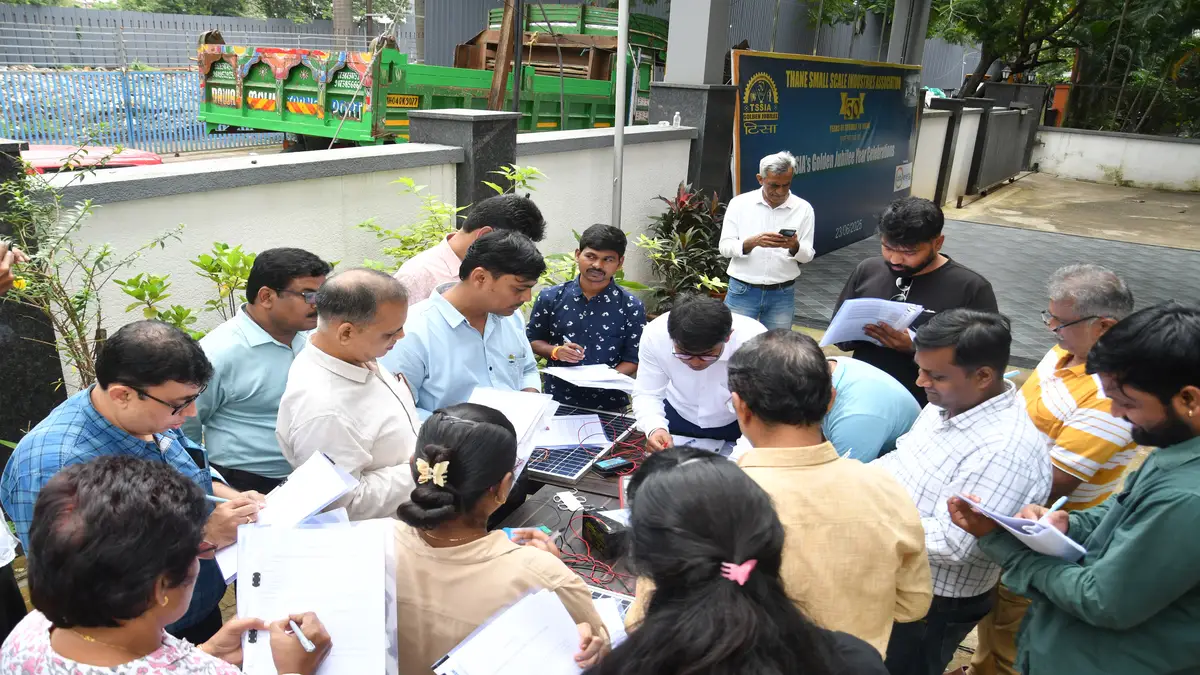
SECTION 02 • WORKSHOP INTRODUCTION
Bridging the Gap: Why Practical Solar Installation Skills Matter
Solar photovoltaic (PV) power has emerged as India’s fastest-growing renewable energy resource. Driven by national decarbonization goals, rooftop solar incentives (including the PM Surya Ghar initiative), and favorable commercial economics, rooftop and ground-mounted solar installations are accelerating at record pace across Maharashtra and throughout India.
However, the biggest bottleneck facing India's clean energy transition is the severe shortage of technically skilled, practically trained solar installation and commissioning personnel. Engineering textbooks and online video lectures provide theoretical understanding, but they cannot teach the tactile reality of handling high-voltage DC arrays, crimping MC4 connectors to withstand 25 years of weather exposure, or safely troubleshooting inverter fault codes on a live rooftop.
About IISE & Technical Partner CERT
The Indian Institute of Solar Energy (IISE), established in 2018 as a unit of CERMS India Foundation, was founded specifically to bridge this national skills divide. In technical partnership with CERT (Centre for Energy Research and Training), IISE delivers intensive, practice-first technical workshops designed to convert students, diploma holders, electricians, and engineers into confident, field-ready solar practitioners.
This three-day workshop is intentionally participatory. Every participant engages in hands-on equipment handling, string sizing calculations, electrical measurements with digital multimeters and clamp meters, system wiring, and an in-person industrial visit to an operational solar power plant.
SECTION 03 • THE IISE ADVANTAGE
Why Choose the Indian Institute of Solar Energy?
Dedicated Solar Focus (Est. 2018)
Unlike generic training centers offering dozens of unrelated courses, IISE specializes exclusively in solar energy education, design engineering, and electrical practicals.
Practice-Led Methodology
We replace passive slide decks with active physical exercises: tool handling, crimping, wire stripping, multimeter measurements, and DC/AC distribution assembly.
Instructor-Led Live Demos
Sessions are led by experienced solar project engineers who walk through real troubleshooting scenarios, safety risks, and installation challenges from actual field projects.
Real Commercial Equipment
Work directly with Mono-PERC modules, grid-tied string inverters, lithium batteries, charge controllers, DCDB/ACDB boxes, and industrial clamp meters.
Solar Power Plant Field Visit
Go beyond the classroom to inspect an operating commercial solar power plant, observing live generation, LT/HT switchgear, and DISCOM bi-directional net metering.
Design & Sizing Calculations
Learn residential and C&I load calculation, solar array string sizing, voltage-window matching, DC cable voltage-drop math, and techno-commercial quotes.
Joint IISE + CERT Certificate
Receive formal technical practical certification co-issued by IISE and CERT, certifying hands-on competence in solar installation and commissioning.
Career & Solar EPC Business Guidance
Gain strategic insights into the solar job market, EPC contractor registration, vendor empaneled lists, subsidy documentation, and business launch models.
SECTION 04 • TECHNICAL COMPETENCY MATRIX
What You Will Learn: 16 Core Technical Modules
Our comprehensive syllabus equips participants with practical expertise across the entire lifecycle of a solar photovoltaic project—from initial site survey and system sizing to installation, commissioning, and plant maintenance.
Solar PV Fundamentals
Photovoltaic effect, semiconductor physics, photon absorption, and solar cell generation fundamentals.
Solar Panel Technology
Polycrystalline, Monocrystalline PERC, TOPCon, and Bifacial panel architectures and efficiencies.
Module Specifications & STC
Interpreting datasheets: Voc, Isc, Vmp, Imp, fill factor, NOCT, and temperature power loss coefficients.
Irradiance & Site Survey
Global Horizontal Irradiance (GHI), tilt angle optimization, compass orientation, and shading risk evaluation.
Electrical Safety & Hazards
High-voltage DC arc hazards, personal protective equipment (PPE), insulated tools, and rooftop fall safety.
Balance of Systems (BOS)
Mounting structures, DC isolators, AC distribution boards, surge arresters, conduits, and accessories.
Solar Inverter Fundamentals
On-grid string inverters, hybrid inverters, microinverters, MPPT tracking windows, and anti-islanding.
Battery Storage Systems
Lead-acid tubular vs Lithium Iron Phosphate (LiFePO4), Depth of Discharge (DoD), C-ratings, and BMS integration.
Charge Controllers
PWM vs MPPT tracking algorithms, efficiency comparison, voltage stepping, and multi-stage battery charging.
Solar Cabling & Connectors
Cross-linked polyolefin UV-resistant DC solar cables (4/6 sq mm), MC4 connector crimping, and polarity checks.
Earthing & Lightning Protection
Chemical earthing electrodes, dedicated equipment vs structure grounding, and Type-2 DC/AC Surge Protection.
System Sizing Calculations
Electricity bill energy audit, daily kWh consumption, required kWp array sizing, and string voltage calculations.
Installation & Mounting Procedures
RCC flat roof, sheet roof, and ground structure anchoring, mechanical clamping, torque specs, and waterproofing.
Pre-Commissioning & Testing
Digital multimeter Voc and Isc verification, insulation resistance (Megger) checks, and continuity testing.
Commissioning & Net Metering
Inverter power-up sequence, grid synchronization parameters, DISCOM inspection standards, and net meters.
Plant O&M & Troubleshooting
Preventive maintenance schedules, module cleaning best practices, hot-spot identification, and fault diagnostics.
SECTION 05 • DAY-BY-DAY CURRICULUM
Complete Three-Day Practical Training Curriculum
Solar Fundamentals & System Design
Master core physics, solar radiation analysis, site feasibility criteria, and mathematical sizing of residential and commercial rooftop solar systems.
- Introduction to solar PV technology and India's renewable roadmap
- Solar irradiance measurement, sun path, azimuth, and tilt calculations
- Deciphering manufacturer panel datasheets (Voc, Isc, Vmp, Imp, temp coefficients)
- Balance of Systems (BOS) components and selection criteria
- Electricity bill audit: calculating connected load and daily kWh profile
- Step-by-step solar array sizing, inverter matching, and battery bank sizing
- Architecture comparison: On-Grid (Grid-Tied), Off-Grid, and Hybrid systems
- Introduction to Single Line Diagrams (SLD) and techno-commercial quotes
Hands-On Solar Installation & Wiring
Physical hardware assembly: module mounting, cable routing, MC4 crimping, electrical measurements, and DCDB/ACDB distribution integration.
- Safe handling of solar PV modules and structural mounting assembly
- Series and parallel string configurations; string voltage verification
- Solar DC cable sizing, stripping, and professional MC4 connector crimping
- AC wiring fundamentals, MCBs, MCCBs, fuses, and isolator switches
- Distribution box assembly: wiring of DCDB (with SPDs) and ACDB
- Inverter terminal connections: DC input strings and AC grid output
- Solar battery bank interconnection (series/parallel) and safety isolators
- Earthing pit connections, GI/Copper strips, and surge protection wiring
- Multimeter and clamp meter measurements: Voc, Isc, and operating amps
Commissioning, Plant Visit & Careers
Pre-commissioning checklists, anti-islanding tests, industrial solar power plant field visit, EPC entrepreneurship models, and career roadmaps.
- System inspection checklist and insulation resistance (Megger) testing
- Inverter power-up sequence and grid synchronization testing
- Plant Operation & Maintenance (O&M): cleaning protocols, hot-spot detection
- Guided Industrial Solar Power Plant Visit (operating commercial installation)
- Observation of commercial arrays, HT/LT switchgear, SCADA, and net meters
- Solar EPC business launch: vendor registration, equipment procurement, pricing
- Central & State subsidy procedures, net-metering approval documentation
- Career pathways in solar EPC, O&M, and design engineering
SECTION 06 • HANDS-ON WORKSHOP PRACTICALS
Hands-On Practical Training: Real Tools, Real Hardware
Theory without physical practice creates hesitation on actual customer rooftops. At IISE, every participant practices essential electrical and mechanical skills under strict instructor supervision.
Module Mounting & Hardware Assembly
Learn to position, align, and torque solar PV modules onto anodized aluminium rail and galvanised iron structures with mid-clamps and end-clamps.
MC4 Connector Assembly & Crimping
Hands-on practice using specialized ratchet crimping tools to terminate UV-resistant DC solar cables into IP67/IP68 weather-sealed male and female MC4 connectors.
Voc & Isc Electrical Measurements
Use digital multimeters and clamp meters to test open-circuit voltage (Voc) and short-circuit current (Isc) across individual modules and connected strings.
DCDB & ACDB Distribution Wiring
Integrate DC distribution boxes containing fast-acting DC fuses and SPDs; connect AC distribution boxes with miniature circuit breakers (MCBs) and residual current breakers.
Inverter & Battery Bank Termination
Connect DC strings to inverter MPPT inputs; configure battery bank interconnections with proper safety disconnect switches and polarity validation.
Insulation & Earthing Testing
Execute pre-commissioning Megger insulation resistance diagnostics between conductors and ground; test earth pit resistance using digital earth testers.
SECTION 07 • INDUSTRIAL HARDWARE & TOOLS
Equipment and Diagnostic Instruments You Will Use
Our training facility provides real commercial equipment and calibrated testing instruments matching the current standards of India's solar EPC industry.
SECTION 08 • ENGINEERING SIZING & DESIGN
Solar System Design, Sizing & Technical Calculations
Practical competence requires mastering the engineering mathematics behind solar design. Participants learn step-by-step methodologies to size arrays, select inverters, calculate cable cross-sections, and design protection systems.
1. Load Assessment & Energy Audit
How to analyze historical DISCOM electricity bills, calculate monthly units (kWh), identify peak daytime kilowatt demand, and account for seasonal consumption fluctuations.
2. Array Sizing & Yield Estimation
Calculating total required kWp capacity based on regional Peak Sun Hours (PSH ~4.5 - 5.5 kWh/m²/day across India) and derating factors (temperature, soiling, inverter losses).
3. Inverter Window & String Sizing
Matching module open-circuit voltage (Voc at min temp) and operating voltage (Vmp at max temp) to inverter MPPT voltage windows. Understanding DC-to-AC oversizing (1.20 - 1.35 ratio).
4. Cable Sizing & Voltage Drop Math
Selecting DC cable gauge (4 sq mm or 6 sq mm) based on string current and run distance to keep voltage drop strictly under 2%; AC cable selection for three-phase inverter output.
Illustrative Case Study: Typical 5 kW Grid-Tied Residential Rooftop System
This configuration demonstrates the relationship between module wattage, string voltage, and inverter capacity. Note: Specific project designs vary based on site location, panel wattage, roof geometry, and shadow conditions. Values are illustrative for educational purposes and do not constitute guaranteed generation.
| Design Parameter | Technical Specification | Engineering Rationale |
|---|---|---|
| Solar PV Array Capacity | 5.40 kWp (10 x 540W Mono-PERC) | Provides ~20-22 units (kWh) per average sunny day in Western India |
| Inverter Type & Rating | 5.0 kW On-Grid String Inverter | DC:AC oversizing ratio of 1.08; dual MPPT tracker for flexible orientation |
| String Configuration | 1 String of 10 Modules in Series | String Voc ~495V, Vmp ~415V (fits comfortably in 160V - 550V MPPT window) |
| Solar DC Cable | 4.0 sq mm Copper UV-resistant | String current ~13A; voltage drop strictly under 1.2% over 25m run |
| Protection Hardware | 1000V DC SPD (Type-2) + 600V DC Fuse | Guards against transient atmospheric surges and short-circuit faults |
| Estimated Annual Generation | ~7,200 – 7,800 kWh / Year | Subject to local irradiation, tilt, orientation, and regular module cleaning |
SECTION 09 • INDUSTRIAL FIELD IMMERSION
Industrial Solar Power Plant Visit: Real-World Engineering Exposure
Classroom learning becomes unforgettable when you stand before a commercial, operational solar installation. On Day 3 of the workshop, participants visit a live, grid-connected solar power plant under the guidance of our senior engineers.
Observe multi-string layout geometry, inter-row spacing to prevent self-shading, walkway maintenance corridors, and mechanical grounding structure bonds.
Examine commercial inverters in active operation, heat dissipation sinks, DC array junction boxes (AJB), and AC LT switchgear panels.
Inspect bi-directional DISCOM net meters, four-quadrant energy meters, anti-islanding protection relays, and step-up transformer connections.
See live data logging, solar irradiance sensors, module temperature probes, and cloud-based performance ratio (PR) monitoring systems.
Understand real-world module cleaning schedules, soiling loss mitigation, thermal imaging for hot-spot detection, and cable insulation testing.
Observe live industrial safety compliance, Lockout-Tagout (LOTO) procedures, lightning arresters, and chemical earthing pit networks.
SECTION 10 • PEDAGOGICAL FRAMEWORK
Our 5-Stage Practical Learning Journey
A structured learning path ensures that beginners build strong fundamentals before touching equipment, while experienced technicians refine their sizing and commissioning techniques.
Stage 1 • Online Pre-Learning & Preparation
Before coming to the practical workshop, participants receive access to curated online preparatory resources covering electrical terminology (Voltage, Current, Resistance, Power, Energy), solar PV basics, and system types. This ensures everyone starts the in-person training with clear concepts.
Stage 2 • Instructor-Led Classroom Deep-Dive
Interactive in-person sessions covering site survey methodologies, tilt angle optimization, shading analysis, electricity bill load auditing, string sizing mathematics, and balance of systems component selection.
Stage 3 • Hands-On Equipment Practicals & Wiring
Physical tool handling: module mounting onto rails, cutting and stripping UV-resistant solar cables, crimping MC4 connectors, wiring DCDB and ACDB distribution panels, making inverter and battery connections, and measuring Voc/Isc.
Stage 4 • Industrial Solar Power Plant Immersion
Direct observational visit to an operational commercial grid-connected solar power plant, inspecting live generation monitoring, LT/HT switchgear, DISCOM net metering meters, and maintenance protocols.
Stage 5 • Assessment, Review & Joint Certification
Comprehensive practical assessment and technical review, followed by the awarding of the official Joint Technical Certificate from IISE and CERT, with ongoing career and business advisory guidance.
SECTION 11 • WHO SHOULD ATTEND
Designed for 12 Diverse Learner & Professional Profiles
Eligibility is not restricted to degree engineers. This workshop is crafted to empower ambitious beginners as well as experienced technical professionals seeking practical solar competence.
10th & 12th Pass Candidates
Build a direct entry path into India's fastest-growing technical trades with practical skills in solar installation and rooftop wiring.
ITI Students & Graduates
Ideal for Electrician, Wireman, Electronic Mechanic, and Fitter trades to upgrade trade knowledge into specialized solar PV systems.
Diploma Engineers
Diploma holders in Electrical, Mechanical, and Civil engineering seeking real practical field training to secure immediate industry placement.
B.E. / B.Tech Students & Grads
Bridge academic theory with tangible EPC execution experience, component sizing, Single Line Diagrams, and commissioning protocols.
Electrical Engineers
Expand core power systems, distribution, and transformer knowledge into grid-tied solar photovoltaic technology and net metering.
Mechanical Engineers
Master rooftop structural mounting, tilt calculations, dead-load assessments, wind uplift forces, and turnkey solar balance of system.
Solar Technicians & Installers
Upgrade informal or apprentice field experience with standardized electrical testing, Megger insulation diagnostics, and safety standards.
Solar EPC Professionals
Project engineers, site supervisors, and quality controllers seeking to formalize technical knowledge and lead installation crews effectively.
Electrical Contractors
Licensed electrical contractors looking to expand high-margin rooftop solar installation, net-metering approvals, and maintenance contracts.
Fresh Graduates (Any Stream)
Science, commerce, or arts graduates looking for an action-oriented practical foothold in renewable energy project management and sales.
Working Professionals
Professionals from construction, HVAC, real estate, manufacturing, or IT planning a career pivot into the booming green energy sector.
Aspiring Solar Entrepreneurs
Founders planning to establish rooftop solar EPC firms, equipment dealerships, or solar cleaning and maintenance service enterprises.
SECTION 12 • EXPERT FACULTY & TRAINERS
Learn Directly from Practicing Solar EPC Engineers
Our sessions are led by senior renewable energy practitioners and engineers with multi-megawatt rooftop and ground-mounted solar execution experience across India.
IISE Renewable Energy Technical Trainers
Centre for Energy Research and Training (CERT) & IISE Engineering Division
Our trainers bring over a decade of real field experience in solar power plant design, rooftop EPC project execution, DISCOM liaison, and balance-of-systems engineering. They combine deep technical rigor with pragmatic troubleshooting know-how, ensuring every participant learns industry-standard practices that work reliably in the real world.
SECTION 13 • JOINT CERTIFICATION
Joint Technical Certification from IISE & CERT
Advanced Solar Practical Training Workshop Certificate
Upon successful completion of the three-day practical workshop, laboratory installation exercises, and the industrial solar power plant visit, participants are awarded the official joint certificate certifying practical technical proficiency in:
SECTION 14 • CAREER & BUSINESS PATHWAYS
Career Pathways and Solar EPC Entrepreneurship
The practical competencies developed in this workshop open doors across employment in solar EPC firms as well as self-employment in rooftop solar contracting and maintenance.
Solar Installation Technician
Execute mechanical structure assembly, PV panel mounting, DC wiring, and MC4 terminations on residential and commercial rooftops.
Solar Site Survey Assistant
Conduct technical rooftop assessments, azimuth and tilt measurements, shading analysis, and customer electrical load calculations.
Solar Design & Sizing Assistant
Assist engineering teams in determining array sizing, string voltage configurations, inverter selection, and Single Line Diagrams (SLDs).
Commissioning & Testing Assistant
Perform pre-commissioning Voc/Isc checks, insulation resistance Megger diagnostics, grid synchronization verification, and DISCOM handover.
Solar O&M Service Technician
Manage preventive maintenance contracts, thermal hot-spot inspection, string fault tracing, inverter error code clearance, and cleaning.
Solar EPC Project Coordinator
Coordinate equipment procurement, delivery timelines, installation teams, electrical safety compliance, and client milestone updates.
Solar Technical Sales & Proposals
Convert customer electricity bills into techno-commercial solar proposals, ROI calculations, and subsidy guidance with high technical credibility.
Independent Solar EPC Contractor
Operate your own turnkey solar contracting firm executing 3 kW to 50 kW rooftop solar projects for residential and commercial clients.
Launch Your Solar EPC & Installation Business
With government rooftop solar incentives (such as PM Surya Ghar) and rising commercial electricity tariffs, demand for local, dependable solar EPC installers has never been higher. Day 3 covers practical steps to register your solar business, procure modules and inverters at distributor pricing, prepare compliant techno-commercial quotes, and navigate DISCOM net-metering approval paperwork.
SECTION 15 • PARTICIPANT EXPERIENCES
Practical Learning Outcomes: What Past Participants Value
Feedback from participants who completed IISE practical solar training, highlighting the transition from textbook theory to actual field confidence.
"The biggest advantage for me was actually holding the MC4 crimping tool, measuring Voc/Isc with the clamp meter, and wiring the DCDB box. In college, we only saw circuit diagrams on the blackboard. At IISE, doing it physically gave me the confidence to handle rooftop jobs."
"I am an electrical contractor. I wanted to add rooftop solar installations to my business but wasn't clear on string voltage matching with inverters and DISCOM net metering documentation. The Day 1 sizing math and Day 3 plant visit completely cleared my doubts."
"The faculty are real engineers who work on actual solar plants, not just book teachers. When I asked questions about inverter error codes and ground faults, the trainer answered based on real field troubleshooting. Highly recommended for any fresh engineer."
SECTION 16 • PHOTO GALLERY
Workshop & Industrial Field Training Gallery
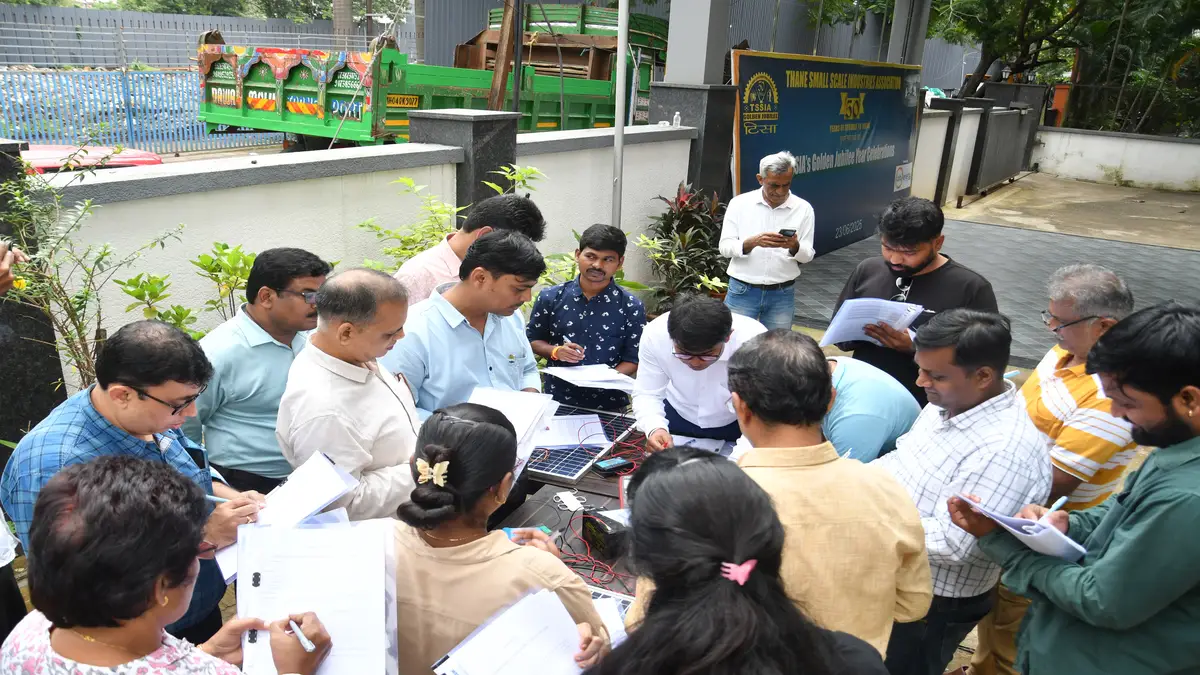
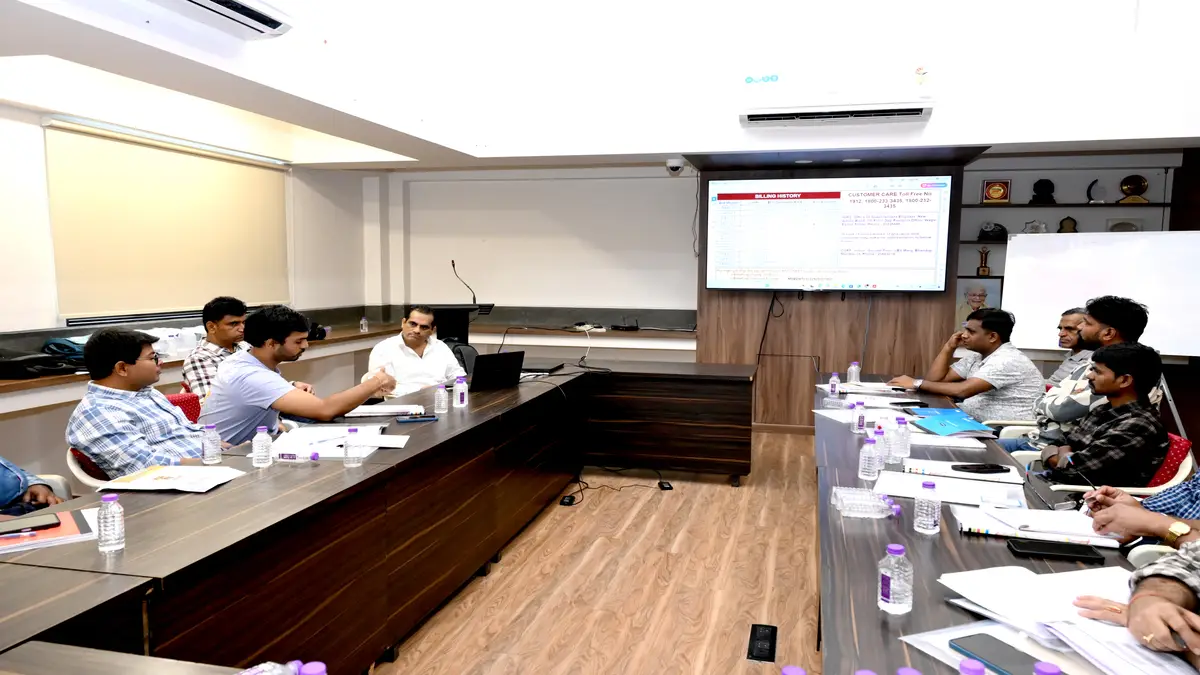
Glimpses from actual classroom sessions, laboratory equipment demonstrations, wiring exercises, and industrial solar power plant field visits.


SECTION 17 • UPCOMING WORKSHOP SCHEDULE
Workshop Dates and Upcoming Batches
Advanced Solar Practical Workshops are conducted in small, focused batches to guarantee individual equipment access and personalized instructor mentoring.
3-Day Practical Classroom Workshop
Evergreen Batch Enquiries
New workshop batches are announced periodically throughout the year. If the current batch dates do not align with your schedule or if seats are filled, you can join our priority reservation list or enquire about upcoming weekend and weekday schedules.
SECTION 18 • WORKSHOP FEES & RESERVATION
Transparent Commercial Investment & Seat Booking
Advanced Solar Practical Training Workshop
SECTION 19 • ENROLLMENT ROADMAP
Simple 7-Step Admission & Registration Process
Submit Online Application / Enquiry
Fill out the online course inquiry form with your name, contact details, and current educational or professional background.
Confirm Upcoming Batch Schedule
Connect with the IISE admissions coordination desk on WhatsApp at +91 8850902306 to confirm exact batch dates, venue directions, and seat availability.
Complete Seat Booking (₹999)
Secure your reservation via the confirmed Razorpay payment portal at https://rzp.io/rzp/ykHrN7k using UPI, credit card, debit card, or net banking.
Receive Joining Instructions & Kit
Receive immediate booking receipt, reporting schedule, venue address in Mumbai/Thane, and practical workshop guidelines via email and WhatsApp.
Access Online Pre-Learning Materials
Review the online preparatory modules on basic electricity fundamentals, solar terminology, and system components prior to arriving for practical training.
Attend 3 Days of Practical Training & Plant Visit
Participate actively in classroom sizing, hands-on lab wiring exercises, tool handling, and the Day 3 industrial solar power plant field inspection.
Complete Assessment & Receive Joint Certification
Complete the practical evaluation review and receive your formal Joint Technical Workshop Certificate from IISE and CERT, followed by ongoing career/business advisory support.
SECTION 20 • FREQUENTLY ASKED QUESTIONS
Frequently Asked Questions (FAQ)
The Advanced Solar Practical Training Workshop is an intensive three-day technical training program co-organized by the Indian Institute of Solar Energy (IISE) and CERT (Centre for Energy Research and Training). It delivers hands-on, practical instruction in solar photovoltaic (PV) system design, rooftop module mounting, DC/AC electrical wiring, MC4 crimping, inverter and battery integration, electrical testing diagnostics, and commercial solar plant inspection.
The workshop spans 3 full consecutive days of in-person practical and classroom training, conducting daily sessions from 10:00 AM to 5:00 PM (IST). In addition, participants receive preparatory online learning resources to study basic electrical and solar concepts before attending.
The in-person practical sessions and laboratory exercises are conducted at the IISE training center located in the Mumbai / Thane metropolitan region, Maharashtra, India. Precise reporting address and transit guidelines are provided in your joining instructions.
The workshop is designed for a broad technical and non-technical audience: 10th and 12th pass students, ITI trade students and graduates, Diploma engineers, B.E./B.Tech engineering students and graduates, practicing electrical and mechanical engineers, solar technicians, electrical contractors, fresh graduates, working professionals, and aspiring solar entrepreneurs.
No prior solar experience is required. The curriculum begins with core photovoltaic fundamentals and electrical safety. Online pre-learning modules are provided in advance so that beginners build the required conceptual understanding before practical exercises commence.
Yes, exceptionally so. ITI students and holders of trades like Electrician, Wireman, Fitter, and Electronic Mechanic gain practical skills in solar DC cabling, string configurations, battery bank integration, and net-metering distribution boxes that directly enhance their trade employability.
Yes. Diploma holders and degree engineering students (Electrical, Mechanical, Civil, Electronics) frequently join to bridge the gap between academic theory and physical rooftop execution. Sizing calculations, Single Line Diagrams (SLDs), and testing diagnostics provide valuable practical credentials.
Yes. The workshop is fundamentally practice-first. Every participant physically handles solar PV modules, assembles mounting rail hardware, uses professional ratchet crimpers to terminate MC4 connectors, wires DCDB and ACDB distribution panels, connects inverters, and measures electrical parameters with digital multimeters and clamp meters.
Yes. On Day 3 of the workshop, participants visit an active, commercial grid-connected solar power plant under the guidance of our senior engineers, observing utility-scale arrays, commercial string inverters, LT switchgear, DISCOM net metering, and SCADA monitoring.
You will work with Tier-1 solar PV modules (Mono-PERC/Polycrystalline), grid-tied and hybrid solar inverters, lithium and tubular batteries, MPPT charge controllers, DCDB/ACDB boxes with SPDs, digital multimeters, True-RMS clamp meters, digital insulation Meggers, and solar irradiance pyranometers.
Yes. Before attending the three-day practical sessions in Mumbai/Thane, participants receive access to curated online pre-learning materials. This ensures all participants master core electrical formulas and solar concepts in advance.
Participants receive a joint technical workshop certificate issued co-branded by the Indian Institute of Solar Energy (IISE — Unit of CERMS India Foundation, established 2018) and the Centre for Energy Research and Training (CERT). Certification requires full attendance and successful completion of practical exercises.
The regular workshop fee is ₹19,999. Under the current special batch offer, the fee is ₹6,999. This covers 3 days of in-person classroom and practical lab training, online pre-learning access, real equipment handling, the industrial solar power plant visit, and the joint IISE + CERT certificate.
Yes. You can reserve your seat in the upcoming batch by paying a booking amount of ₹999 online. The remaining balance of ₹6,000 is payable prior to or on the first day of the workshop as outlined in your joining instructions.
You can apply online by completing the course inquiry form at https://indianinstituteofsolarenergy.com/course-inquiry-form-2026-27/ or by booking your seat directly through the secure Razorpay payment gateway at https://rzp.io/rzp/ykHrN7k.
You can request the latest updated workshop brochure directly by messaging the IISE admissions coordination team on WhatsApp at +91 8850902306 or by clicking the ‘Download Workshop Brochure’ button on this page.
Yes. IISE announces workshop batches periodically throughout the year. If you cannot attend the immediately announced batch, contact our admissions desk on WhatsApp (+91 8850902306) to be placed on the priority registration list for subsequent monthly dates.
You can connect with IISE via WhatsApp or telephone at +91 8850902306, visit the official website at https://indianinstituteofsolarenergy.com, or submit an online enquiry through our website admissions portal.
SECTION 21 • TAKE THE NEXT STEP
Build Practical Solar Skills. Prepare for Opportunities in the Renewable Energy Industry.
Move beyond theoretical knowledge and gain practical exposure to solar PV technology through structured training with IISE and CERT. Reserve your seat in the upcoming 3-day practical workshop in Mumbai/Thane.